Front pages, 25 November: De Gennaro’s documents and the day against violence towards women
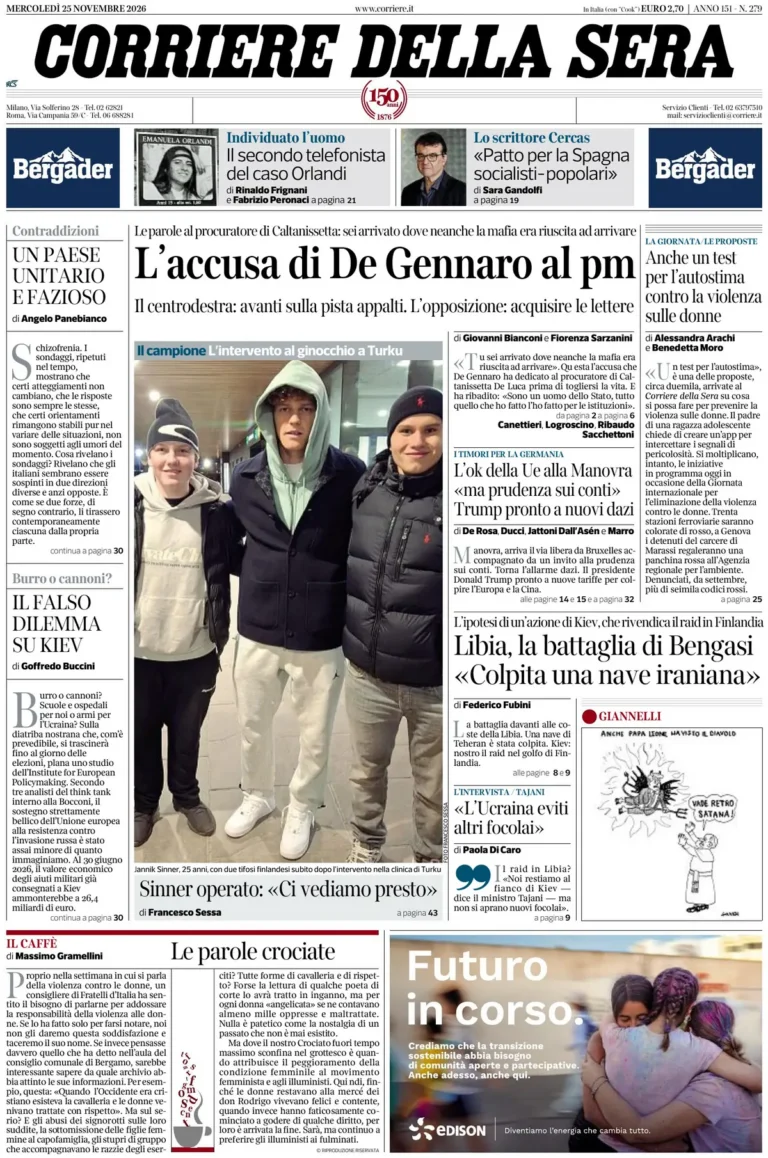
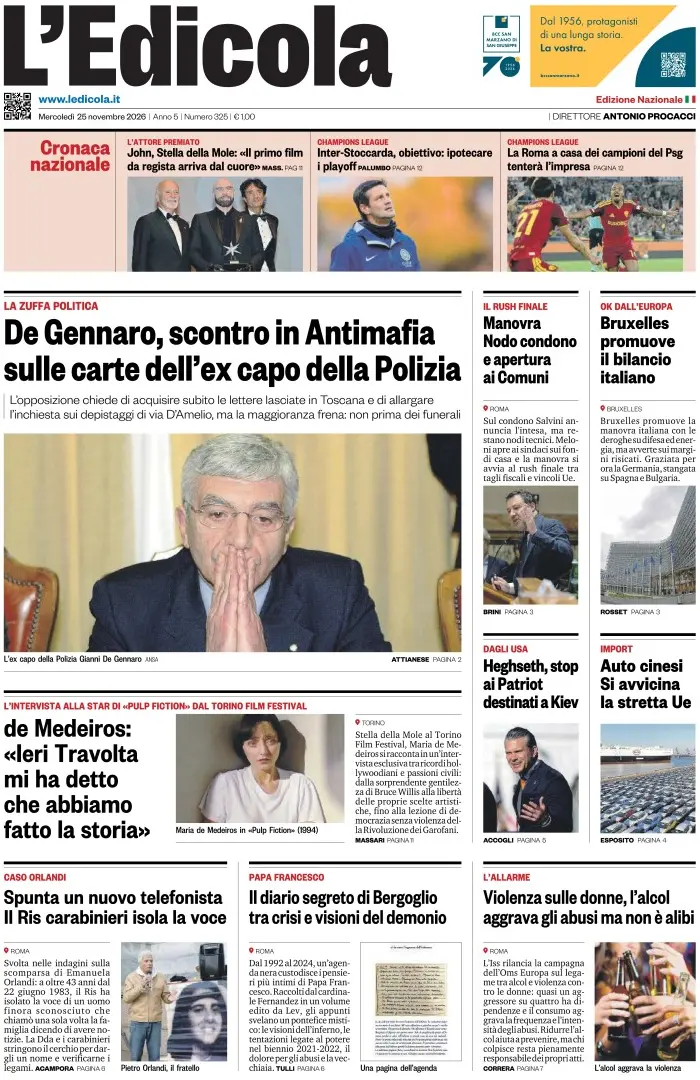
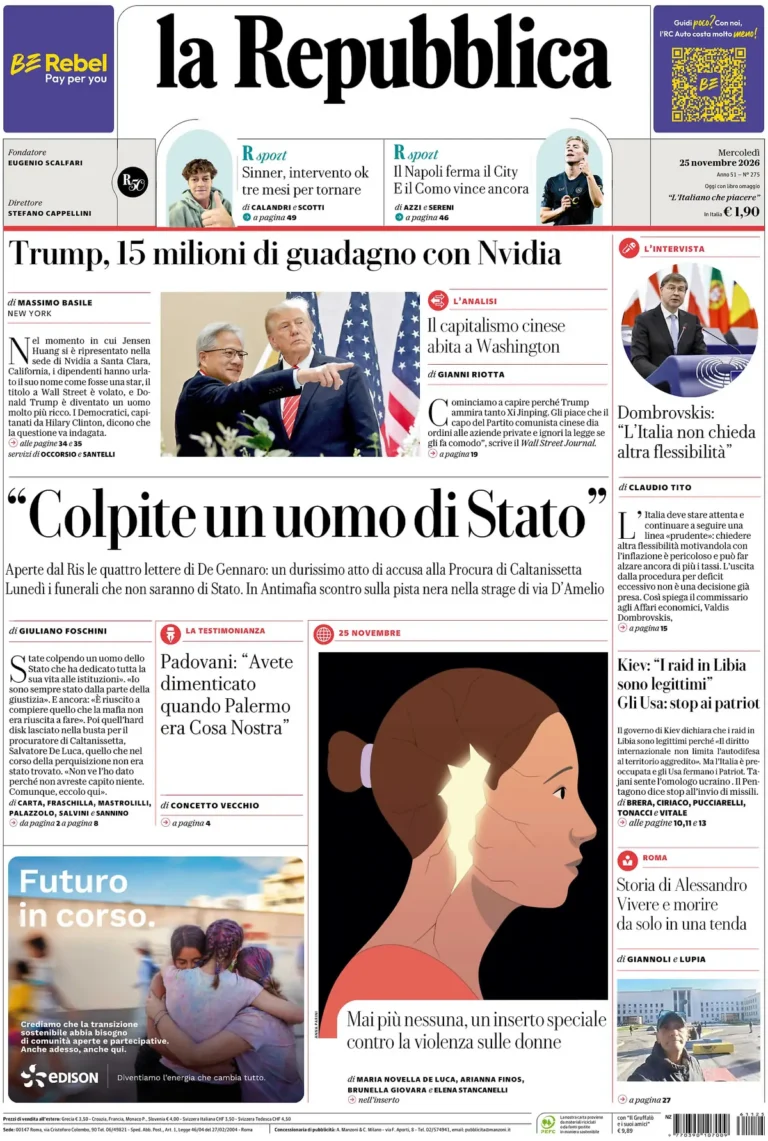
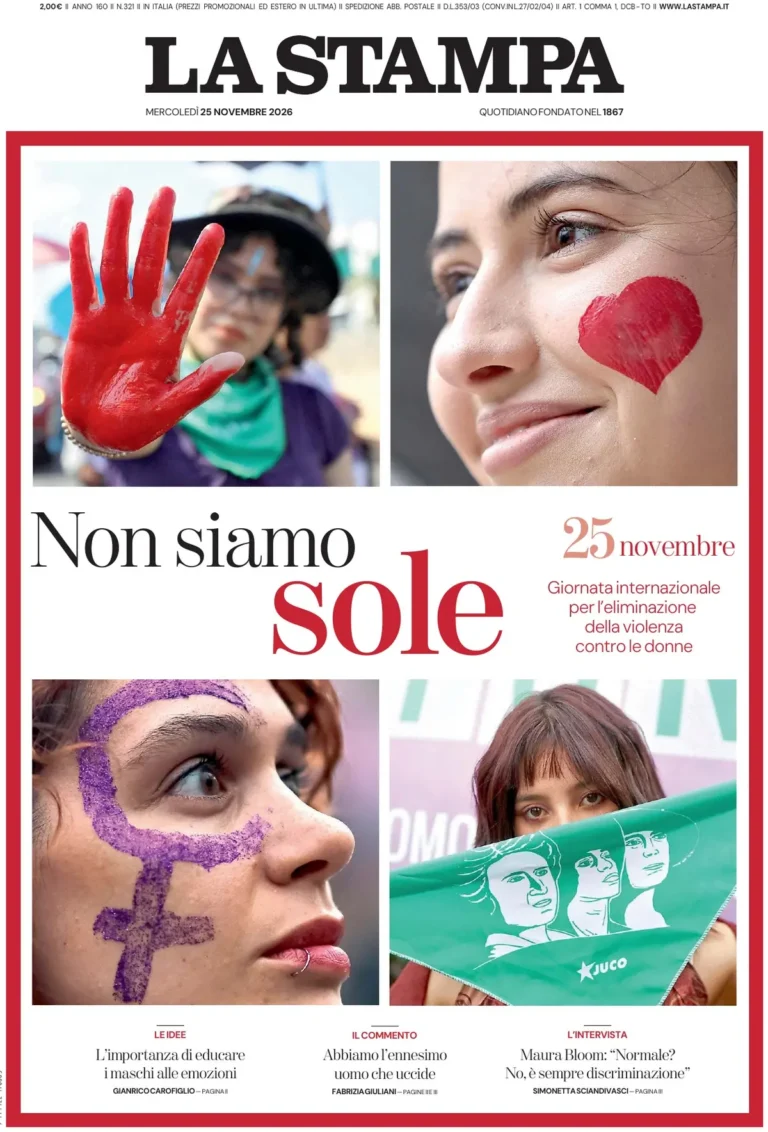
Letters and computer storage devices left by Gianni De Gennaro dominate Italy’s front pages on Wednesday, 25 November, but they do not produce a shared interpretation. Newspapers divide their attention between the former police chief’s accusations, the examination of his documents and political arguments over the history of mafia bombings. La Stampa offers a different hierarchy, devoting its entire cover to the day against violence towards women. Il manifesto puts Gaza’s health emergency first.
## De Gennaro: letters, hard drives and parliamentary scrutiny
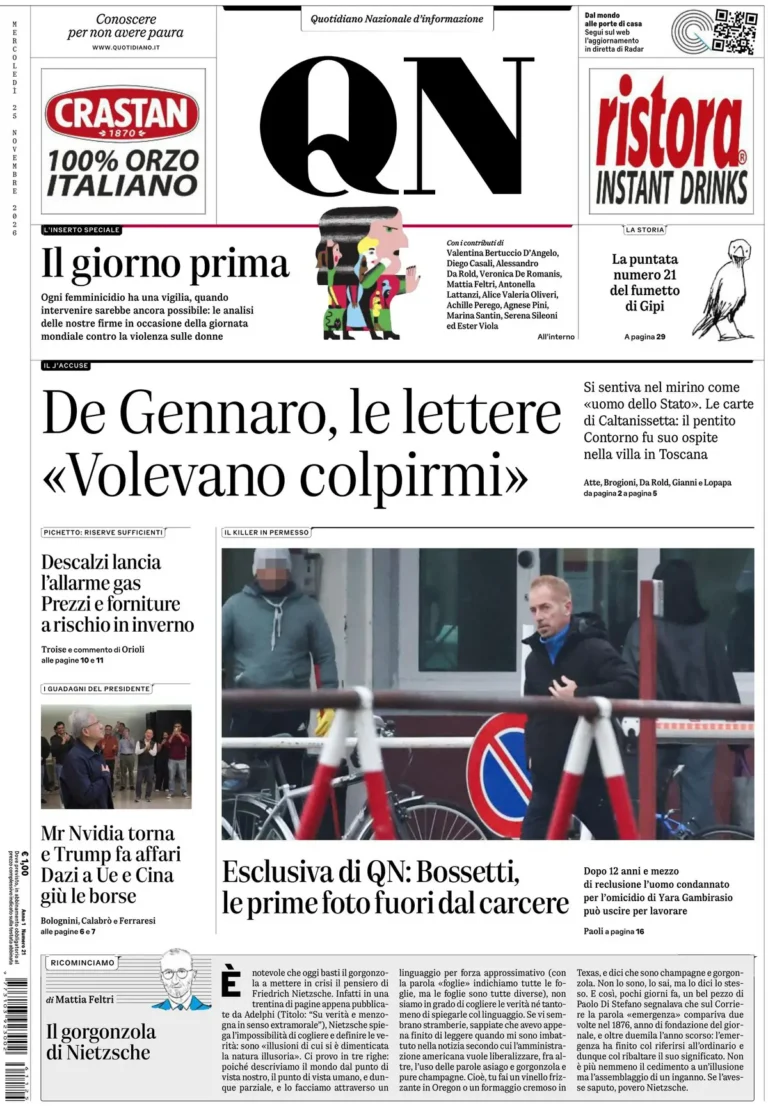
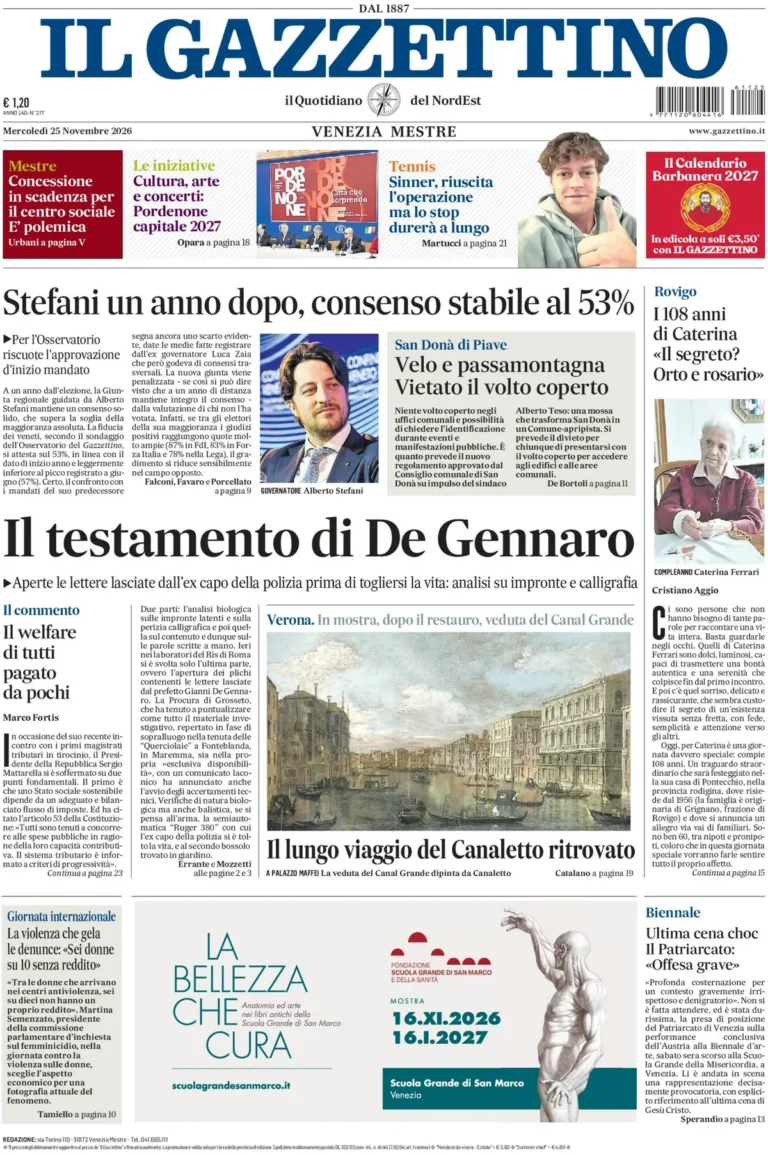
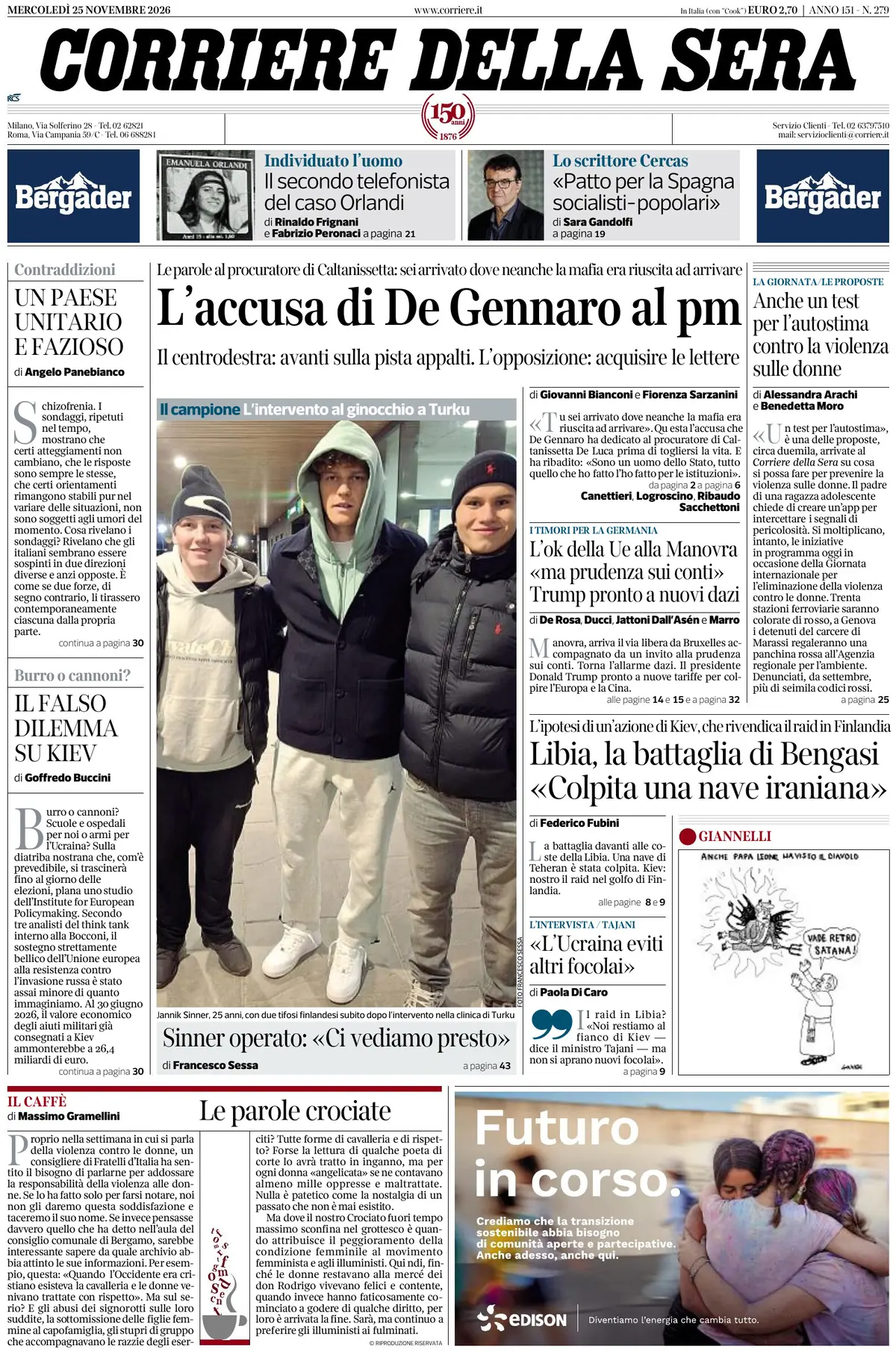
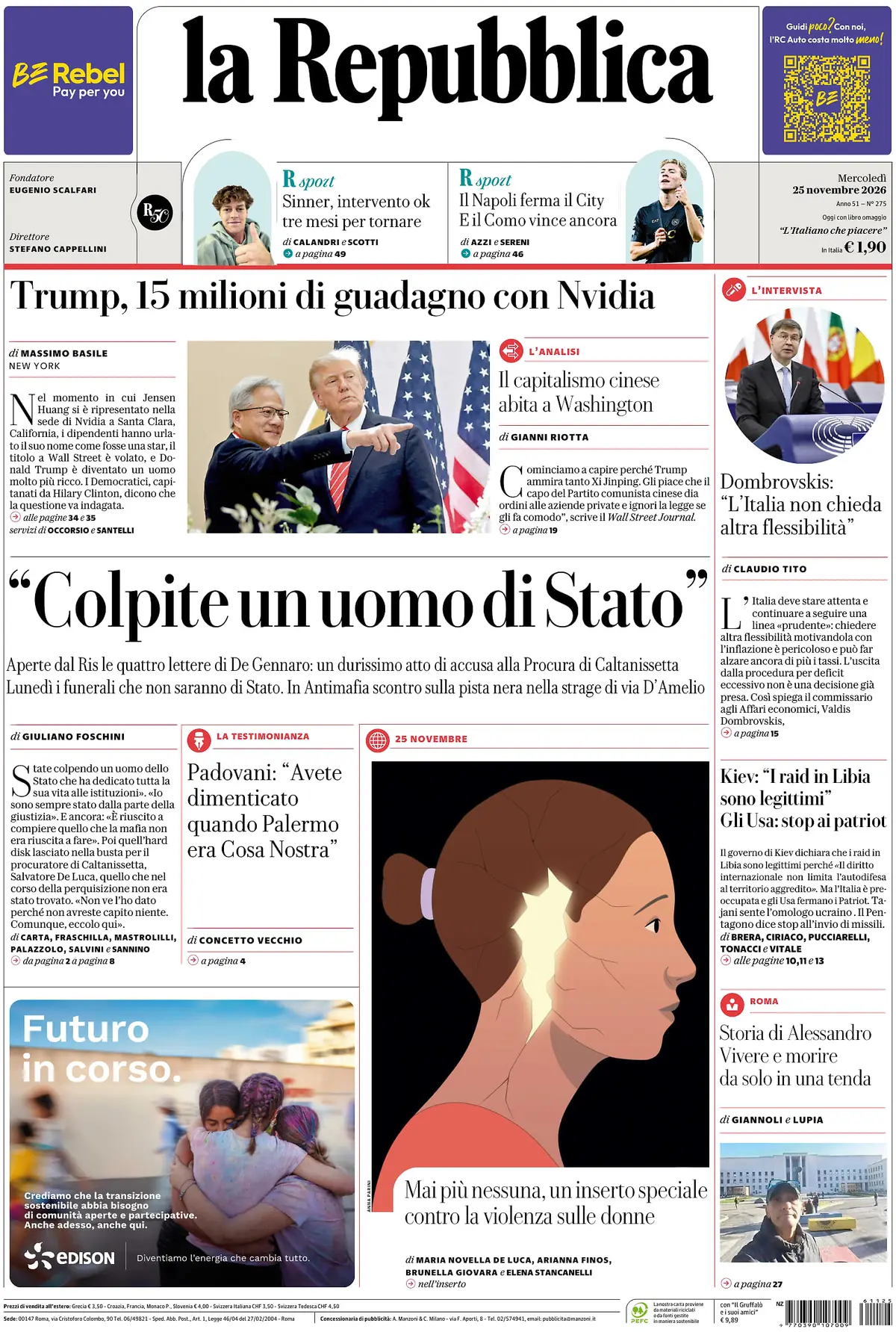
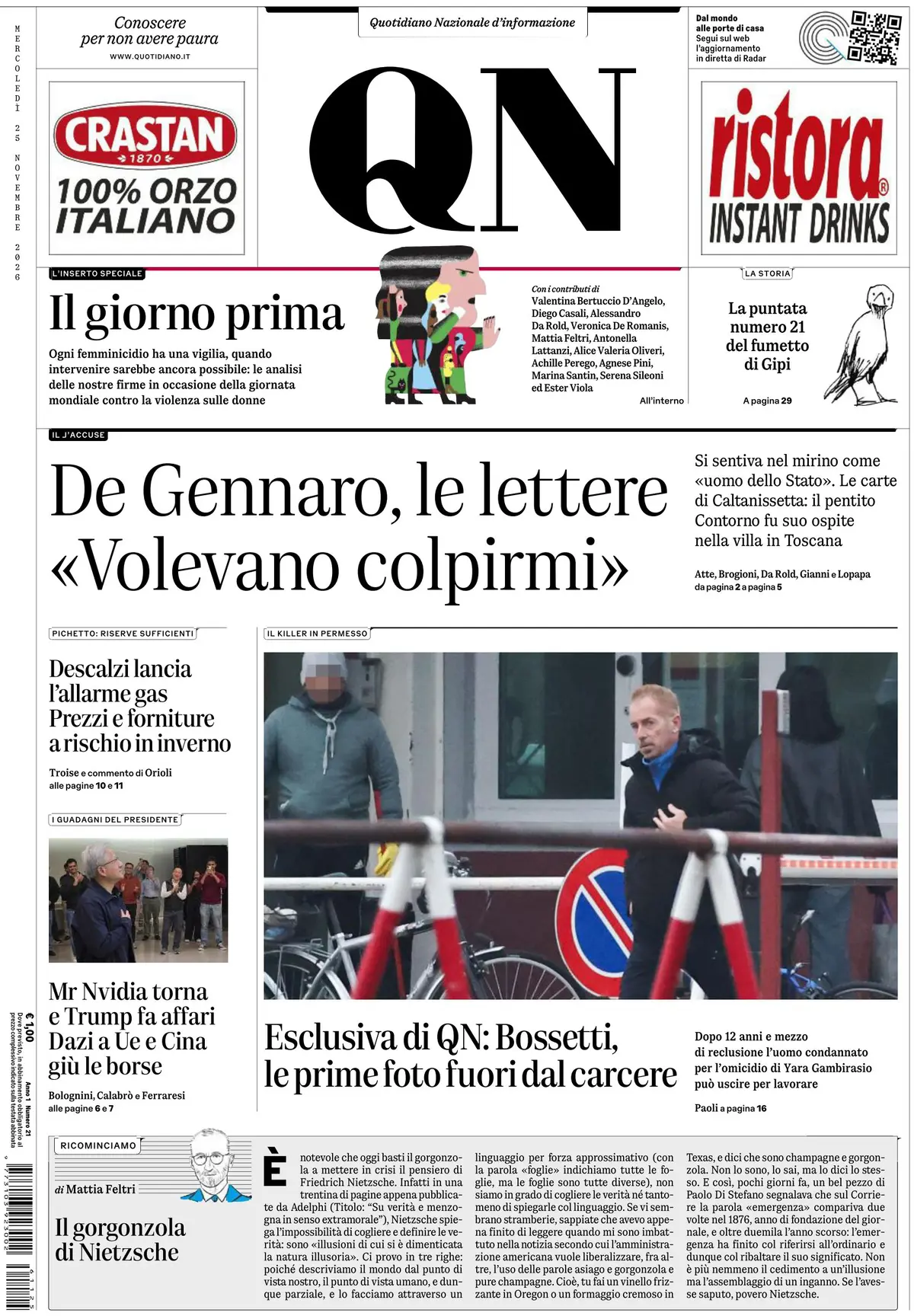
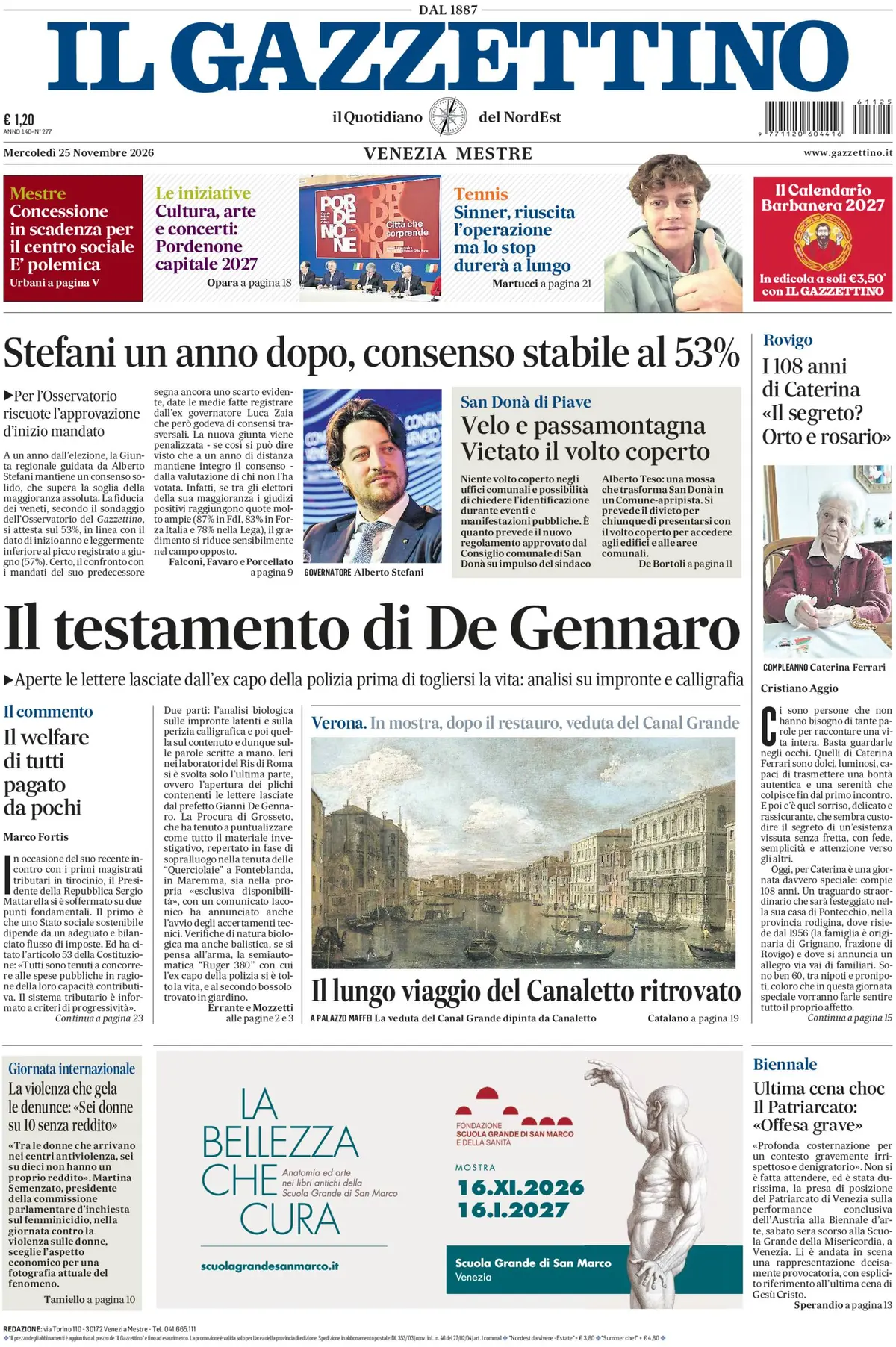
Corriere della Sera leads on De Gennaro’s accusation against a prosecutor. Repubblica chooses his phrase about targeting a man of the state, alongside coverage of the opening of his letters and the dispute over investigations. QN foregrounds his belief that he was being targeted. Il Gazzettino presents the story as De Gennaro’s testament.
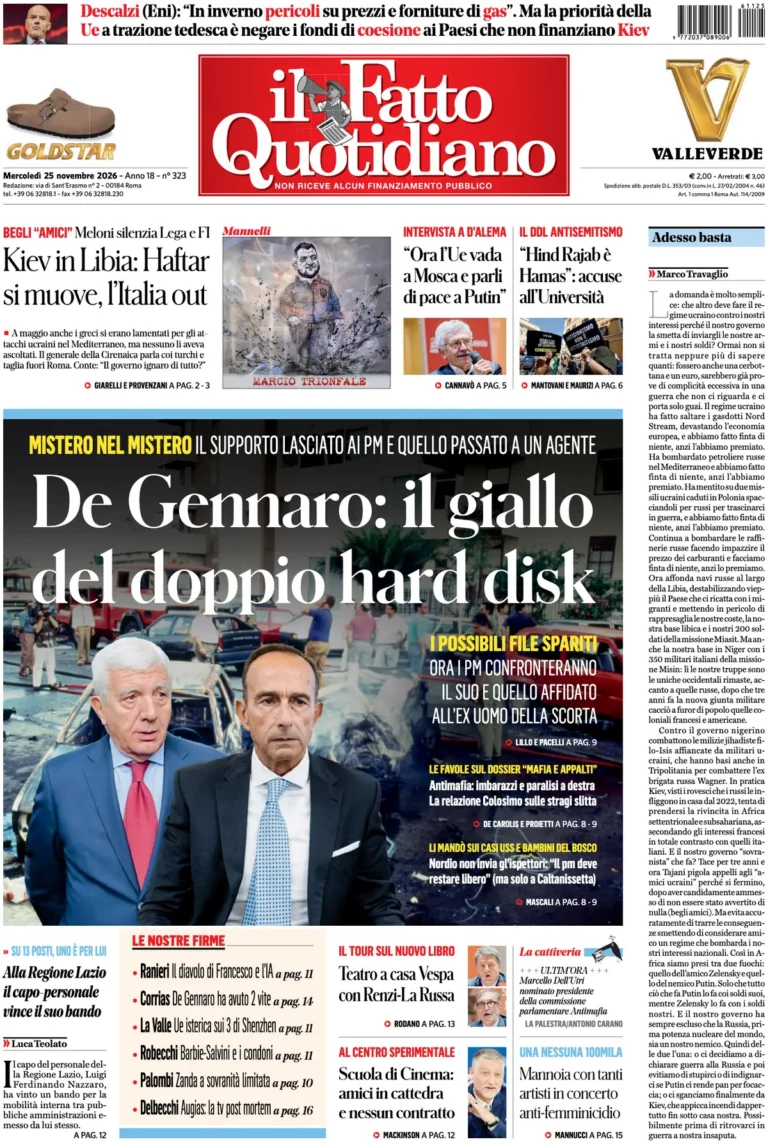
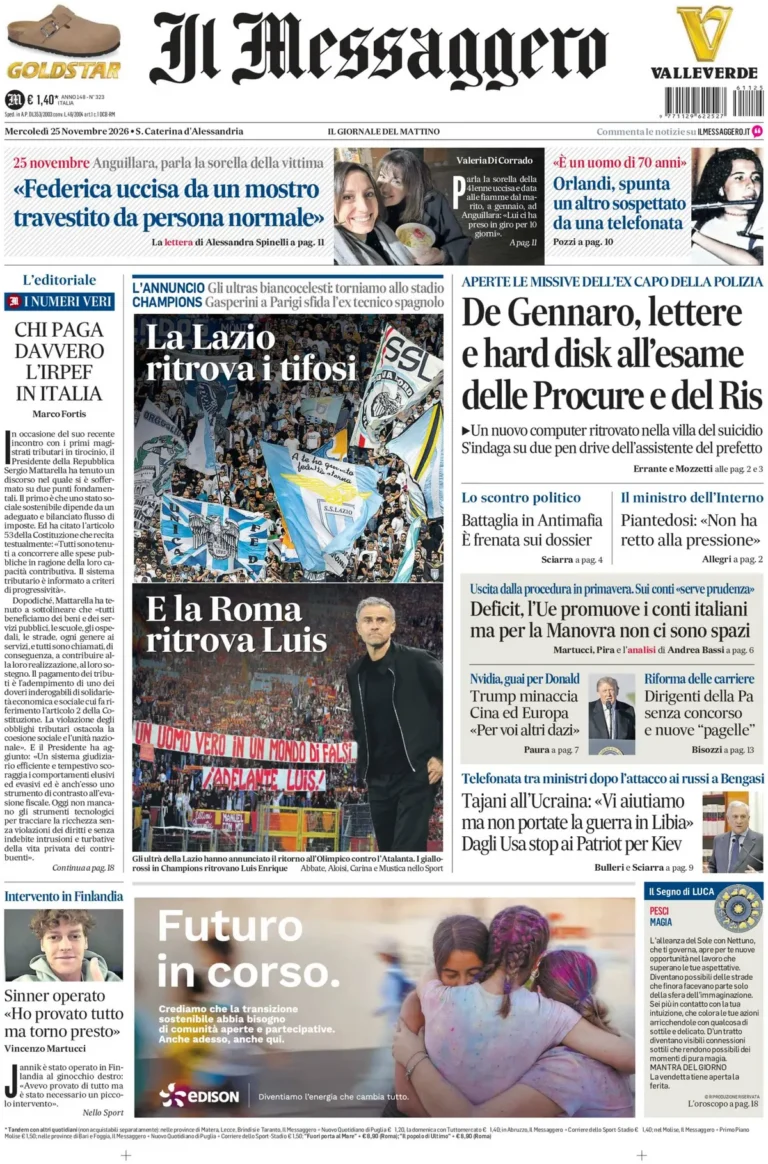
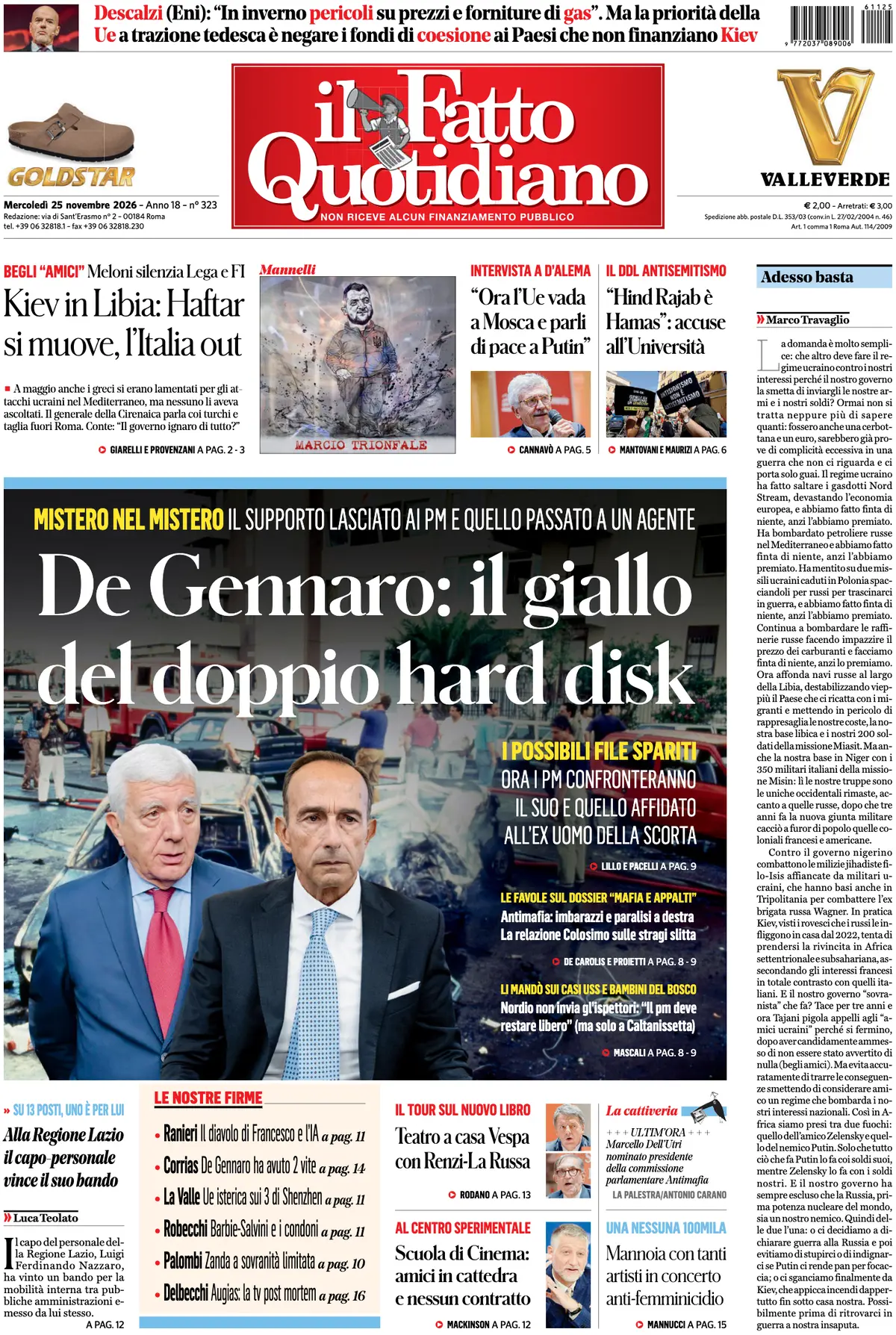
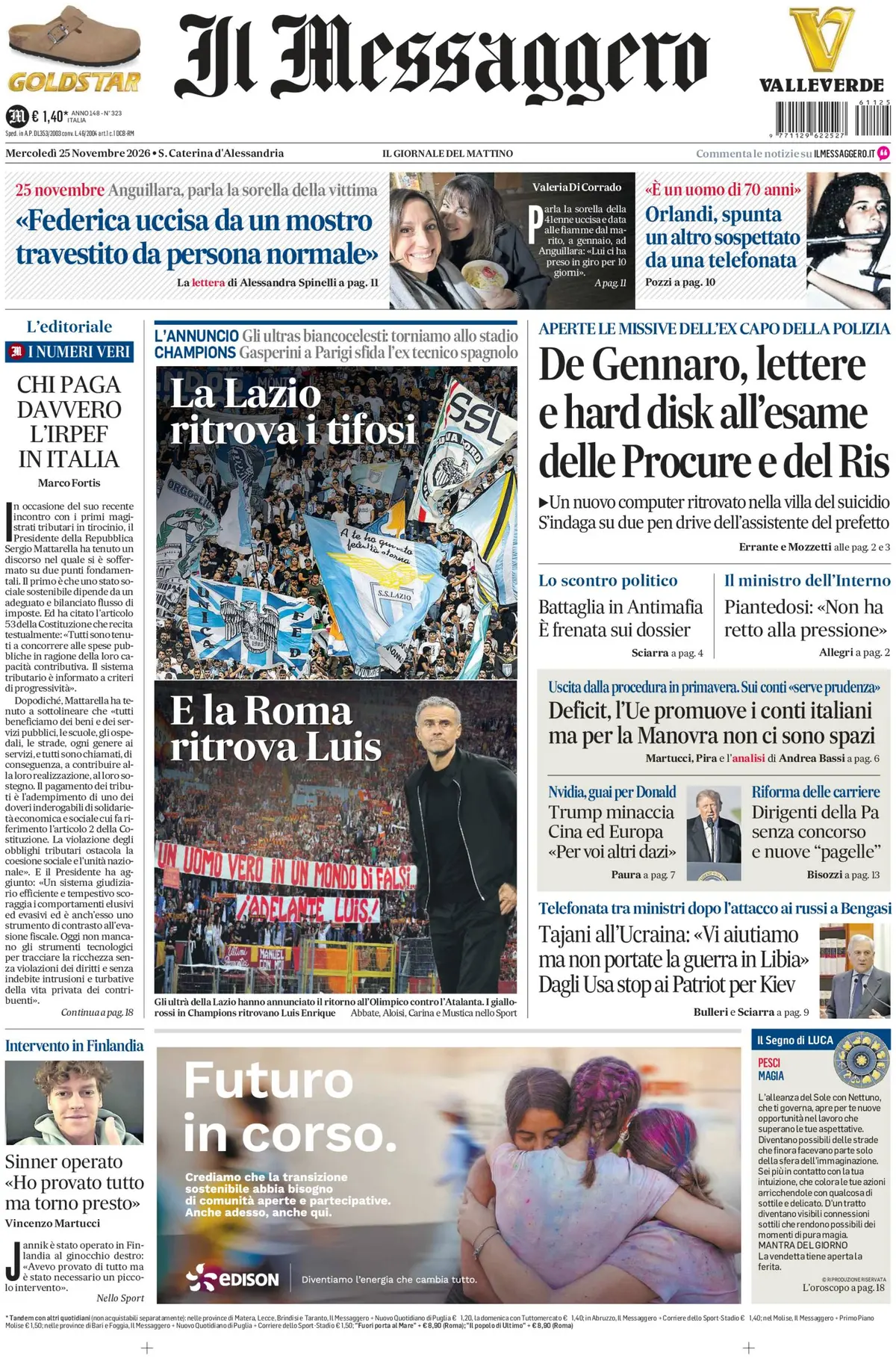
Il Messaggero emphasises the examination of letters and hard drives by prosecutors and forensic investigators. Il Fatto Quotidiano focuses on two storage devices: one left to prosecutors and another entrusted to an officer. L’Edicola turns to the parliamentary Anti-Mafia Commission, reporting the opposition’s demand for the documents and the governing majority’s resistance. Investigative work, the documents themselves and institutional access provide three different ways into a story where legal reporting and politics remain closely connected.
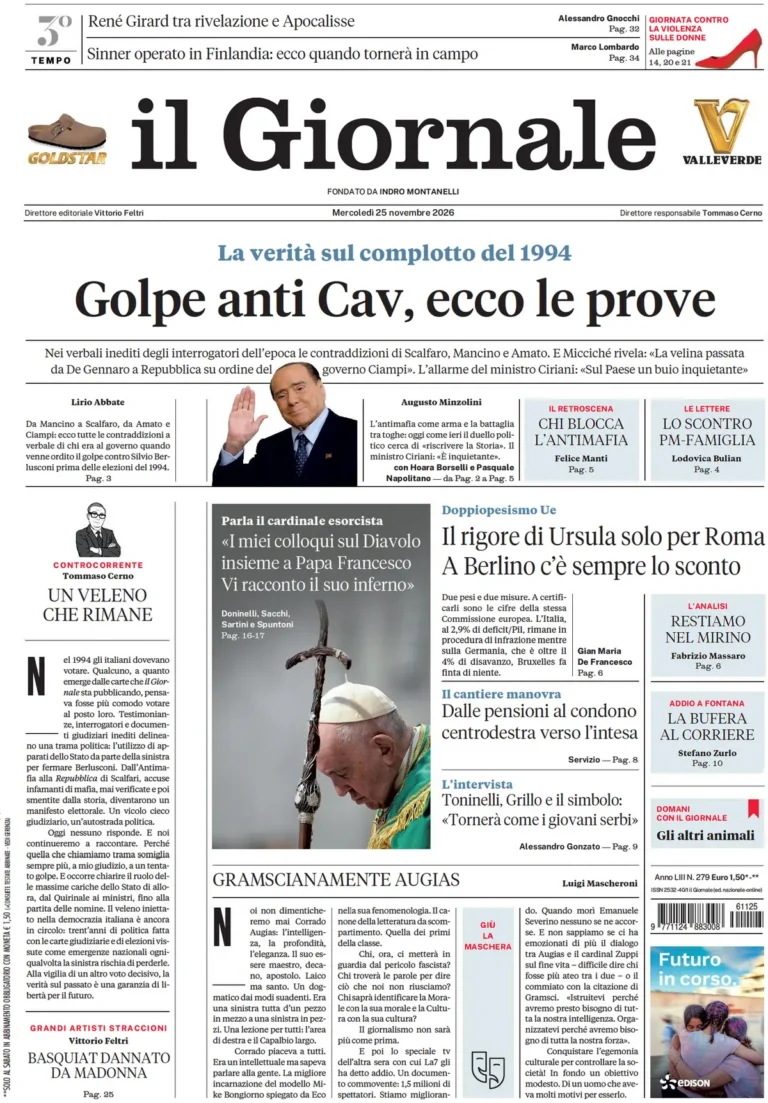
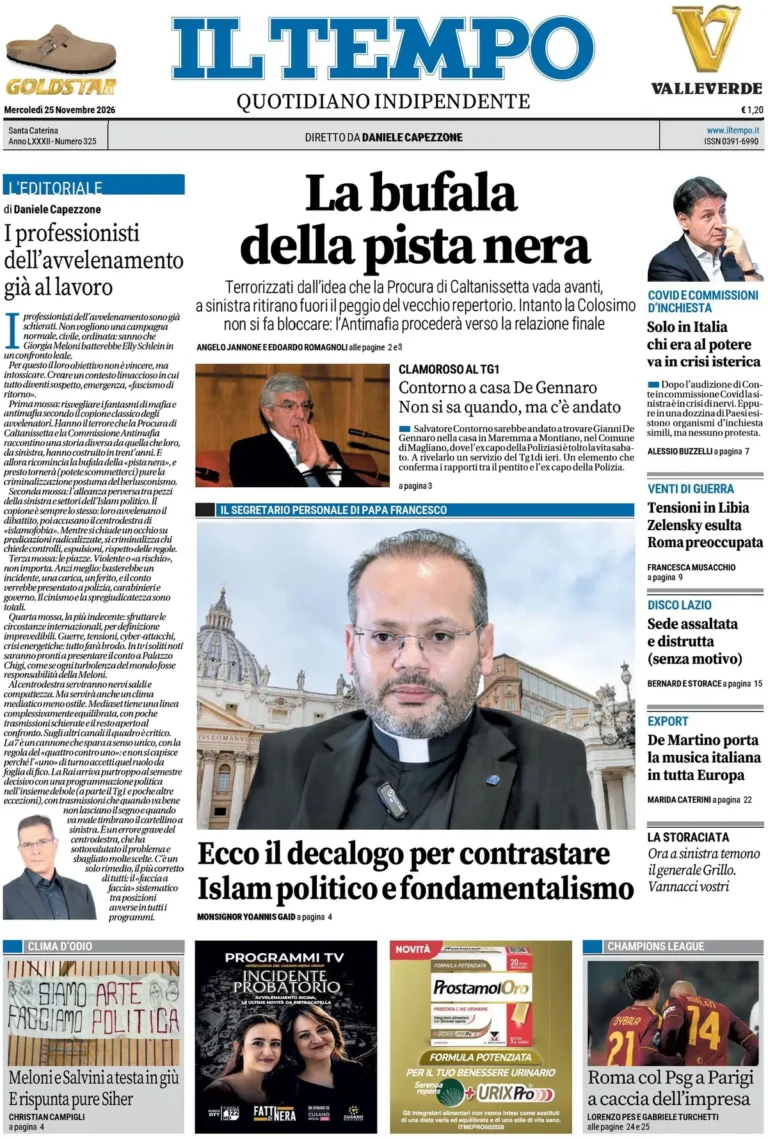
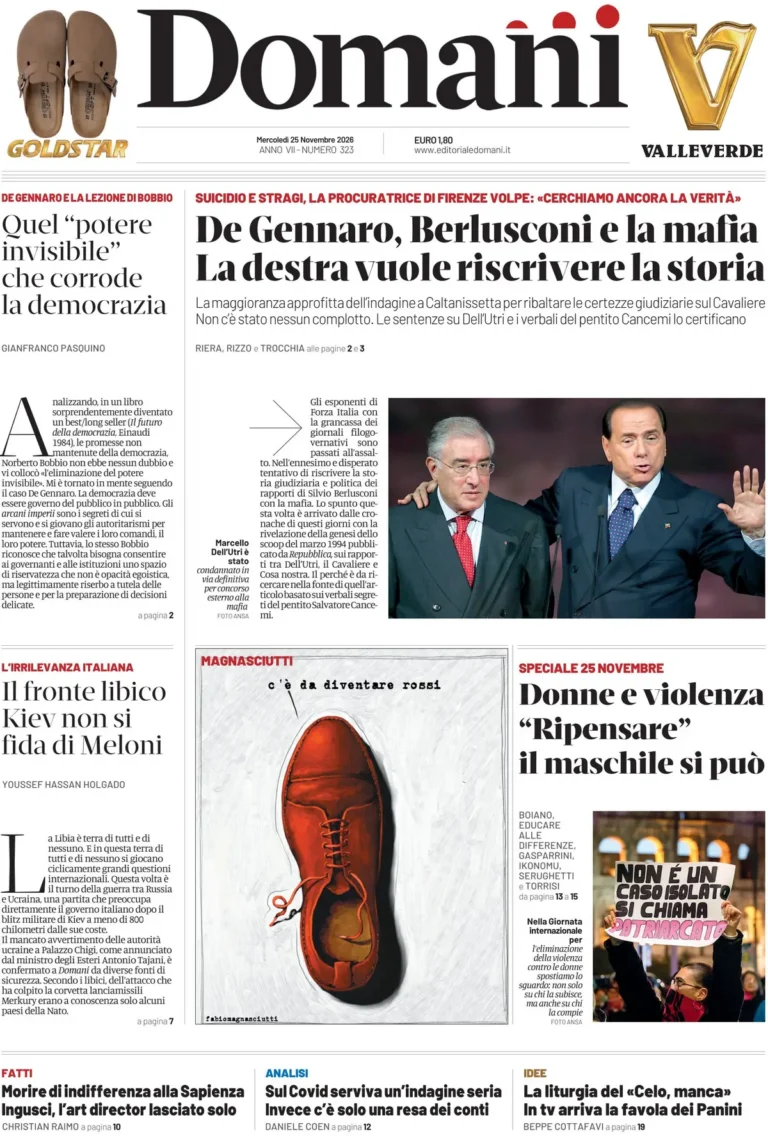
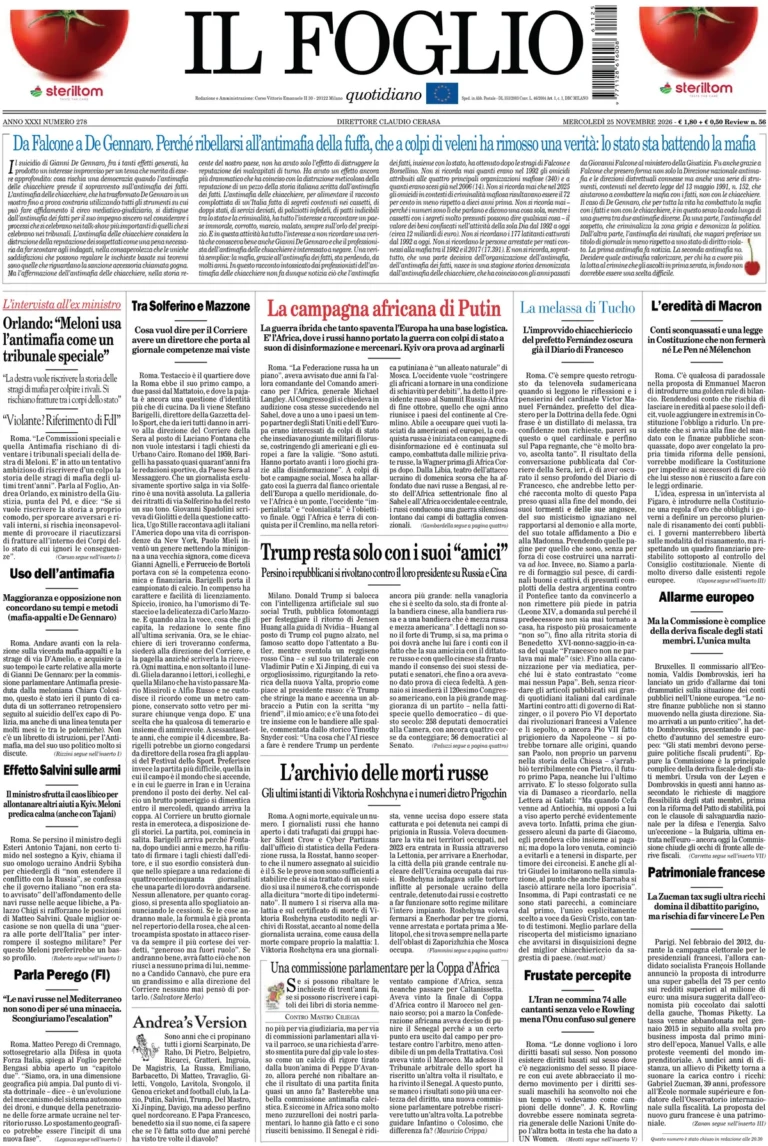
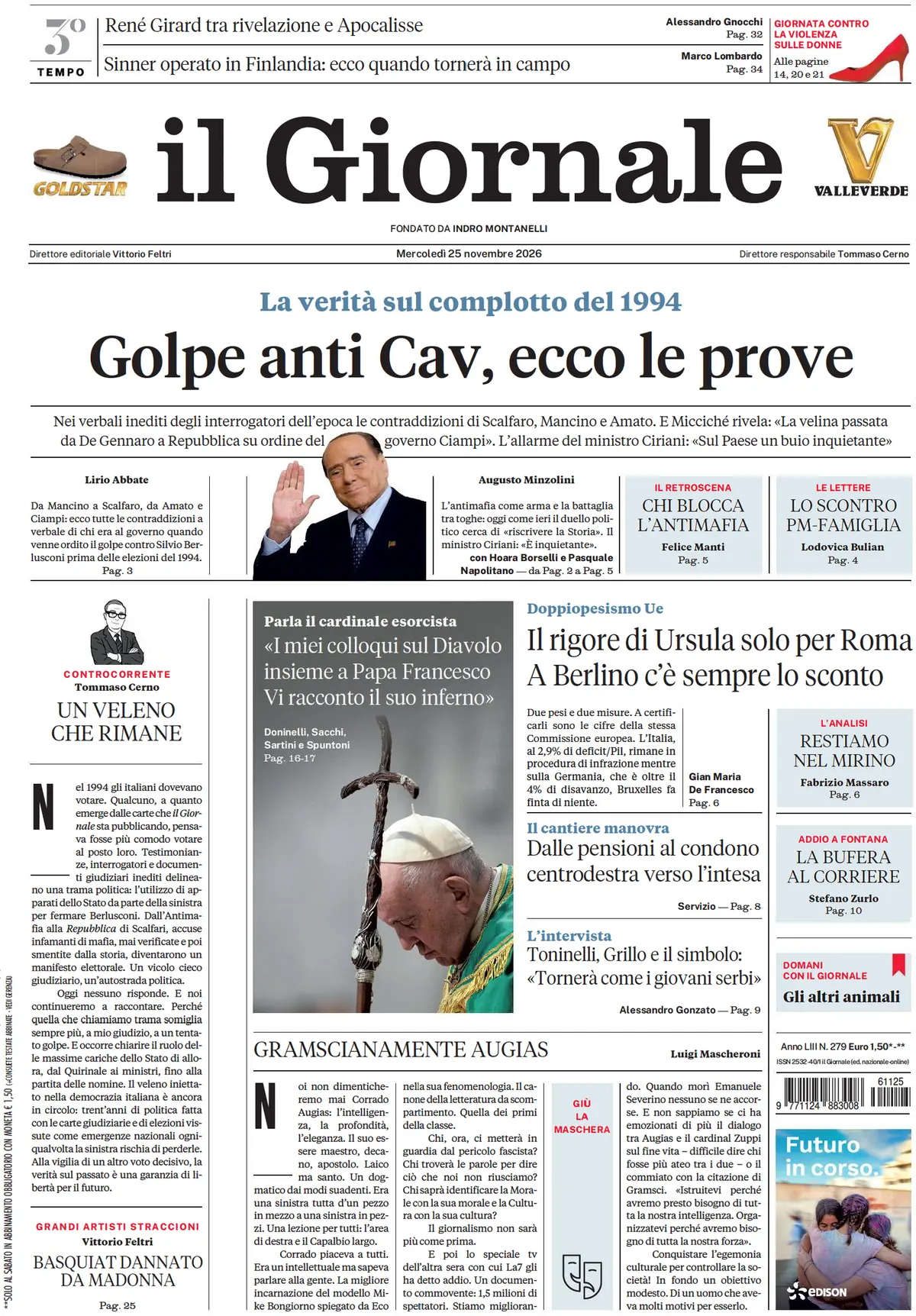
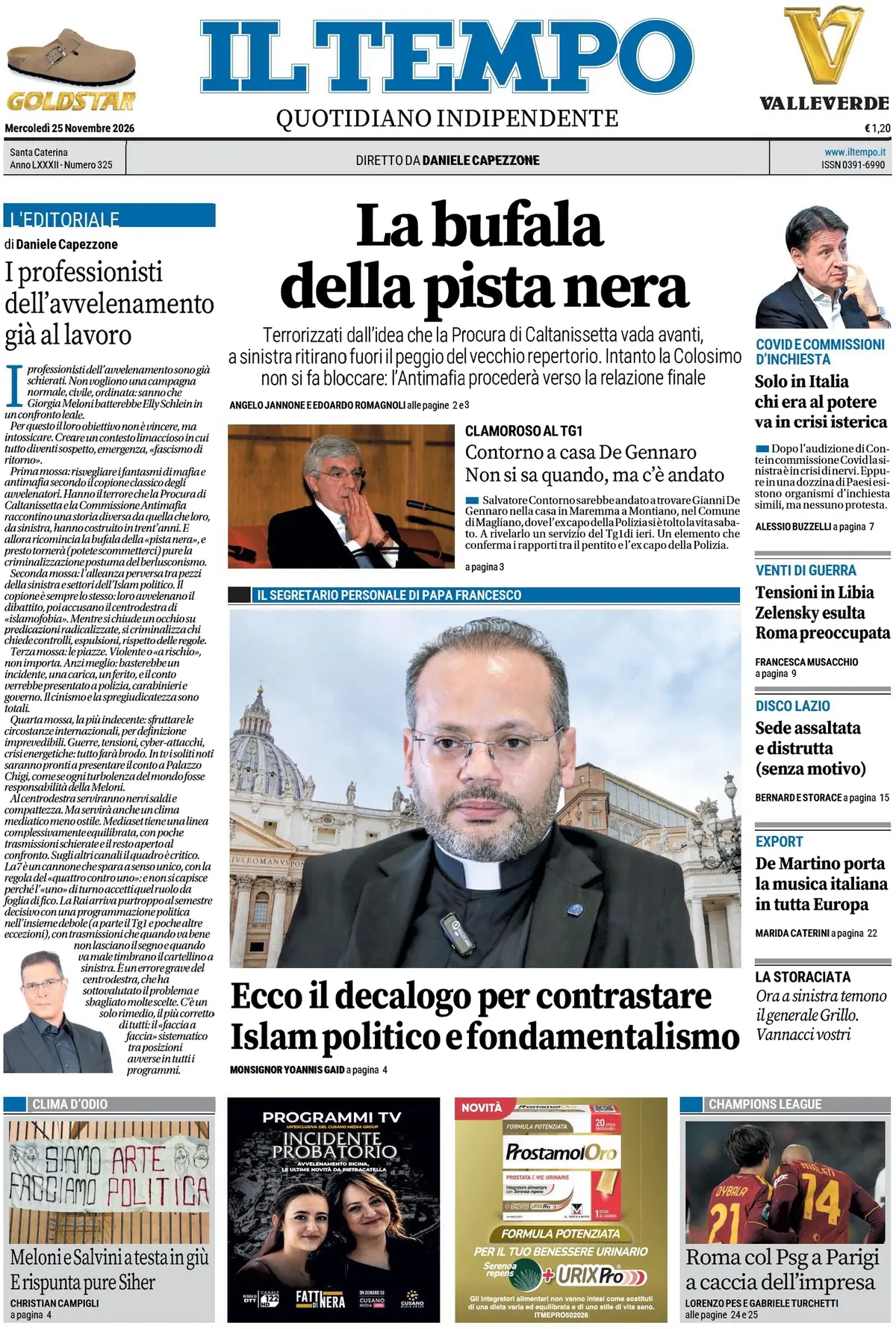
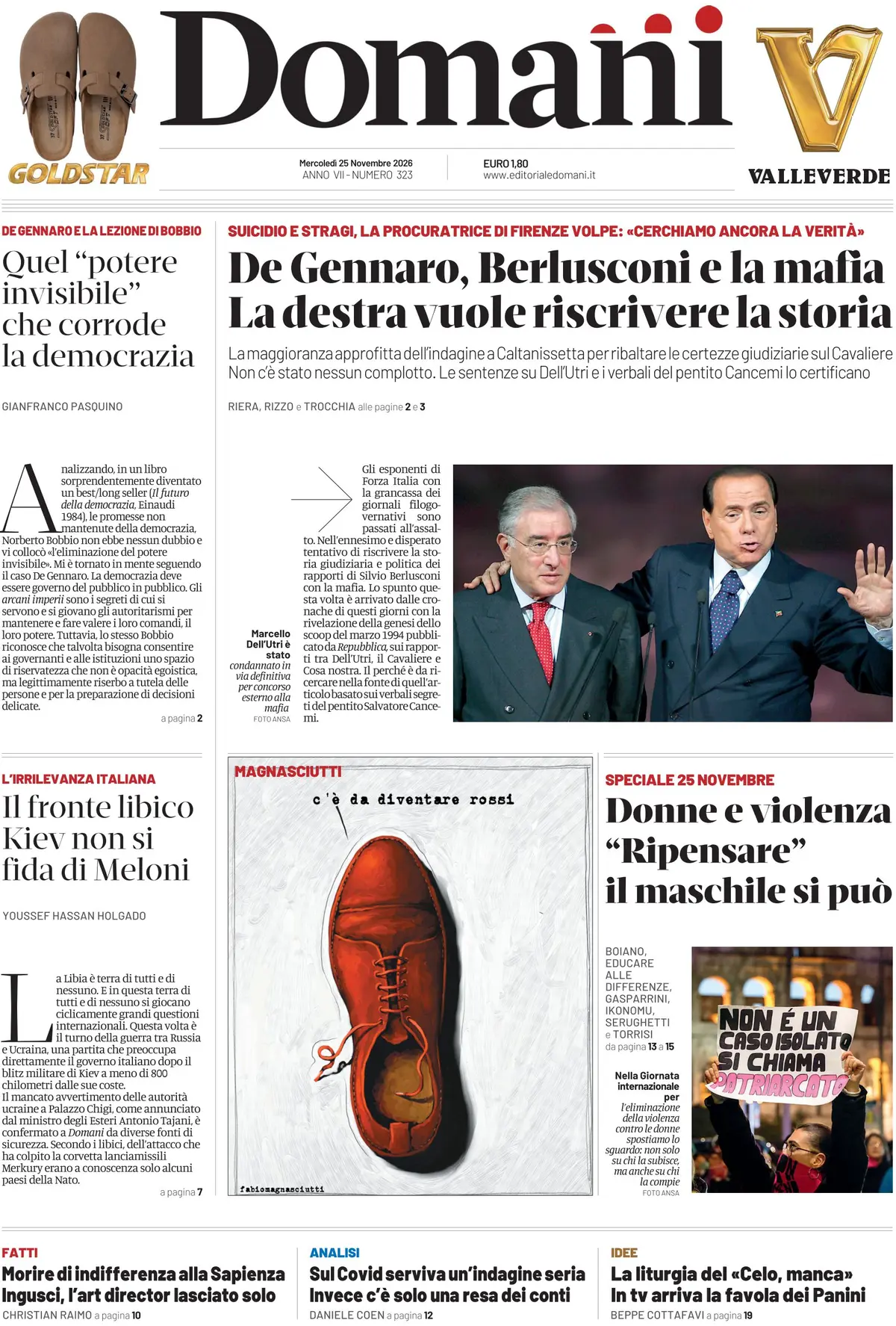
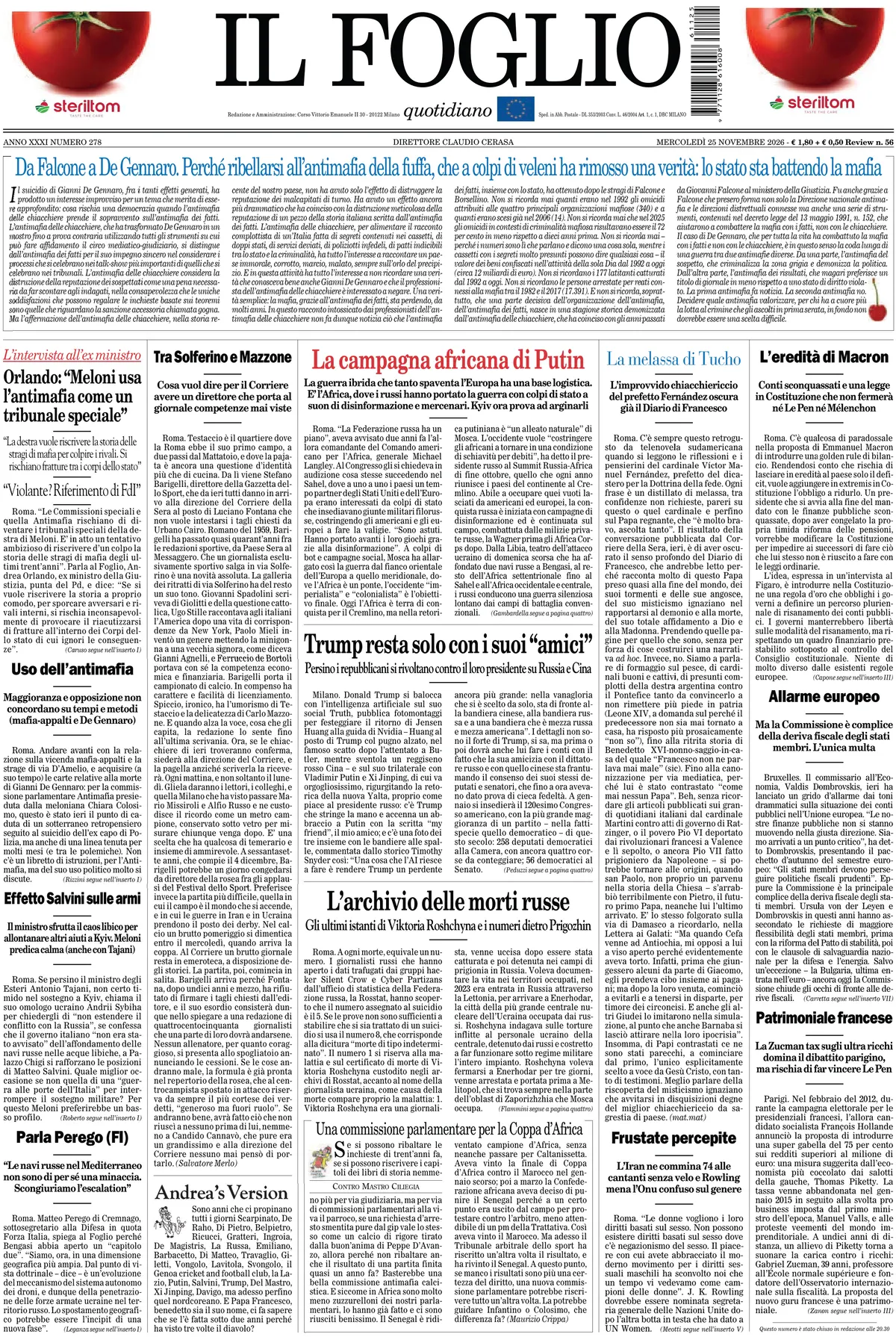
The disagreement becomes explicit in the opinion-led openings. Il Giornale advances a theory of a plot against Berlusconi. Domani accuses the right of trying to rewrite the history of his relationship with the mafia. Il Tempo dismisses the far-right line of inquiry, while Il Foglio challenges the use of anti-mafia politics as a polemical weapon. These are the newspapers’ positions, not a common judicial finding. The gap between their headlines is itself a defining feature of the morning’s coverage.
## A different hierarchy for 25 November
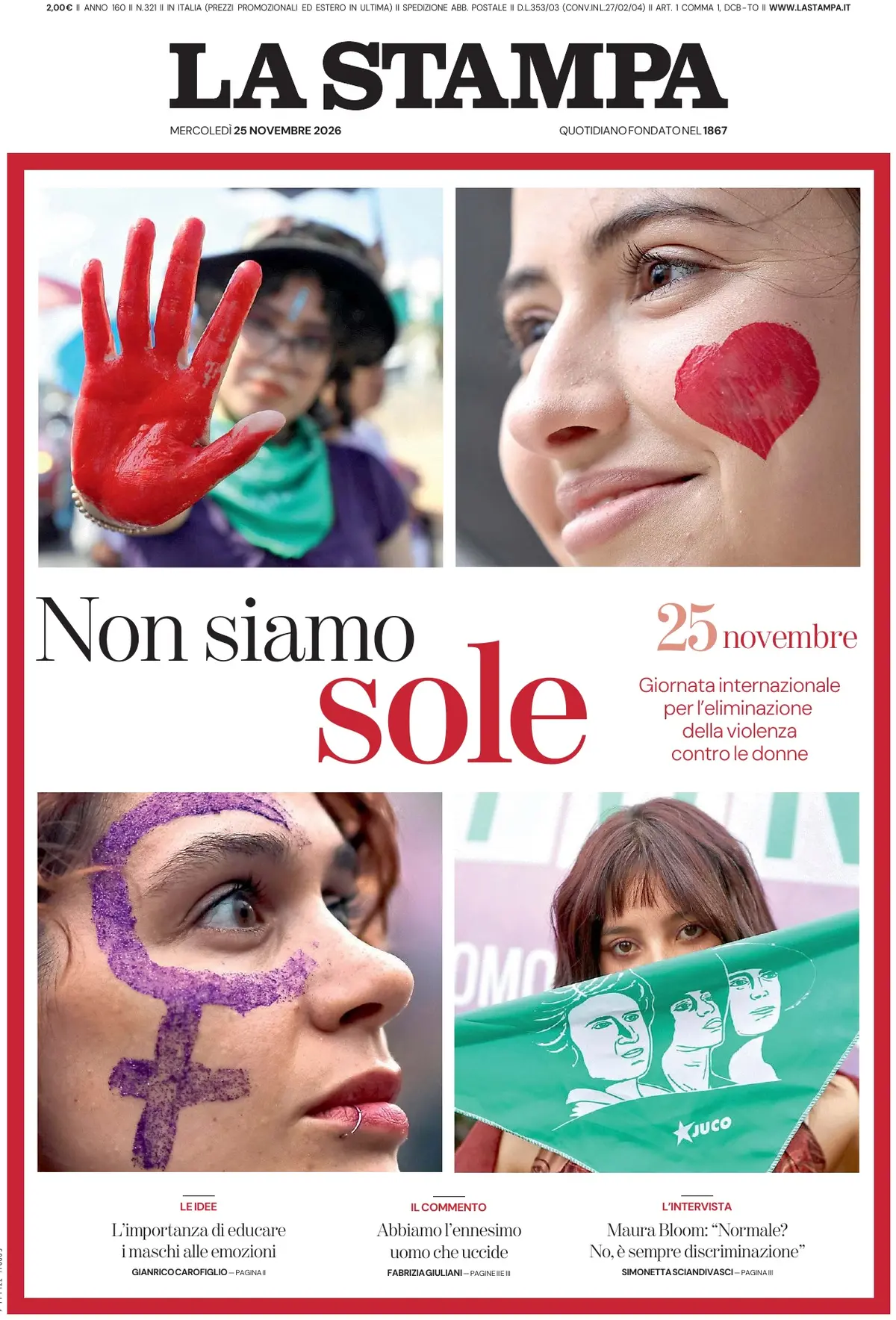
La Stampa’s message is that women are not alone. Four faces, red and purple markings and a reference to the International Day for the Elimination of Violence against Women shape the whole cover. This is not a secondary item. The contrast with other newspapers shows how the allocation of space matters as much as the choice of words.
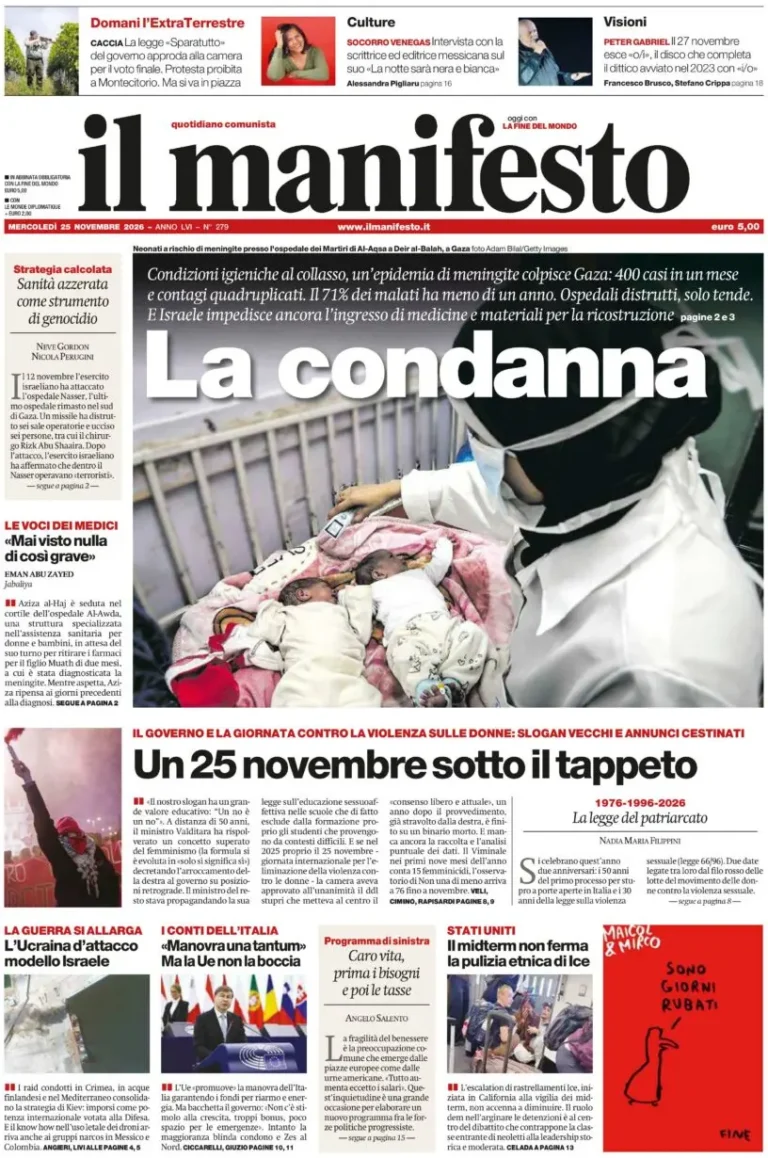
Repubblica announces a special supplement. QN focuses on the day before a femicide and the possibility of intervening before a woman is killed. Il Messaggero gives space to a victim’s sister. Domani explores a reconsideration of masculinity, while il manifesto criticises the political response to the anniversary. L’Edicola discusses alcohol and abuse while stressing that alcohol is no excuse. Prevention, testimony, education and public responsibility emerge as distinct approaches rather than a single commemorative slogan.
## Gaza, Libya and economic priorities
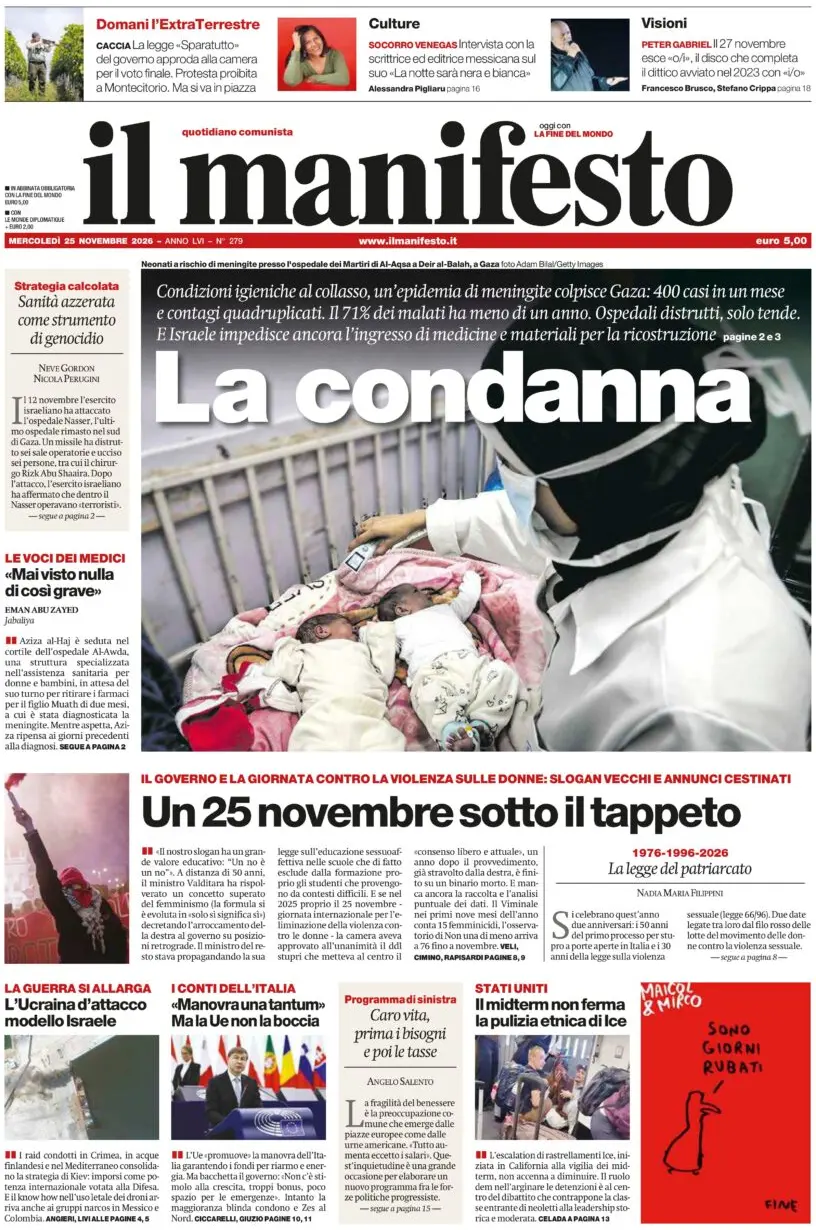
Il manifesto leads with a headline invoking condemnation and a photograph of newborn babies receiving care in Gaza. The newspaper reports collapsing hygiene conditions and a meningitis outbreak, making the health emergency its principal story. Libya remains prominent in secondary items in Corriere, Il Fatto, Domani and Il Tempo, with differing assessments of Kyiv’s role and Italy’s position.
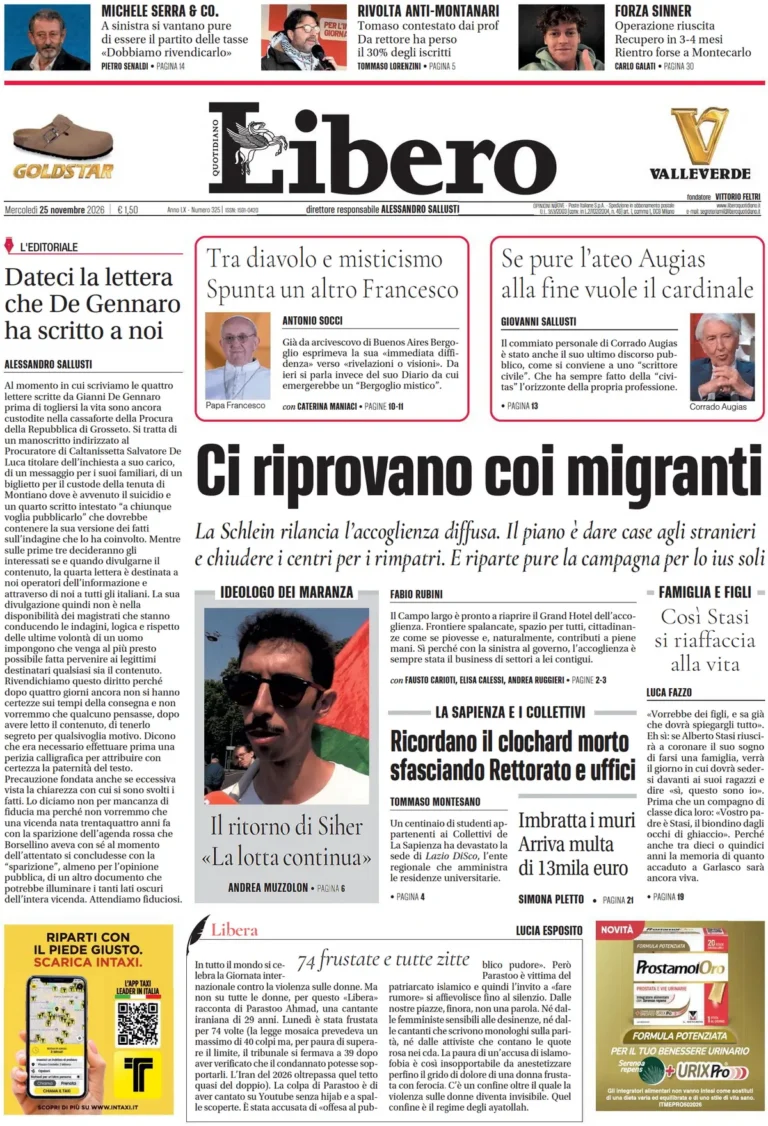
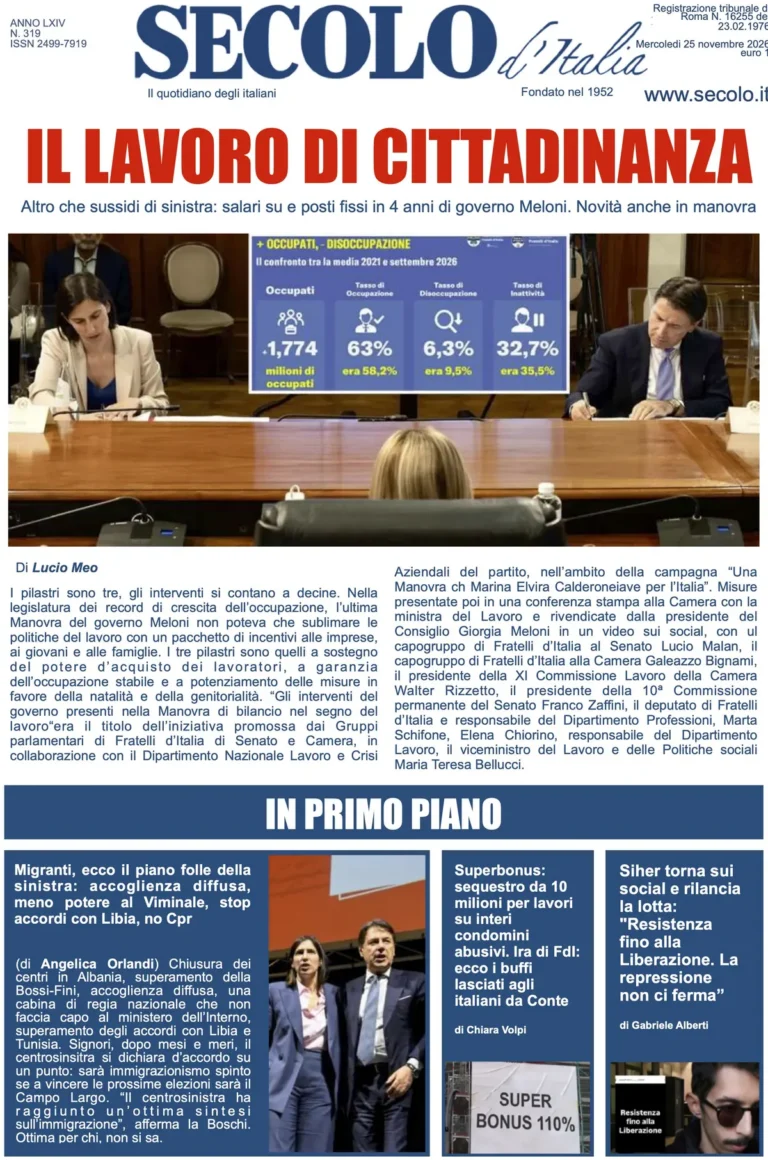
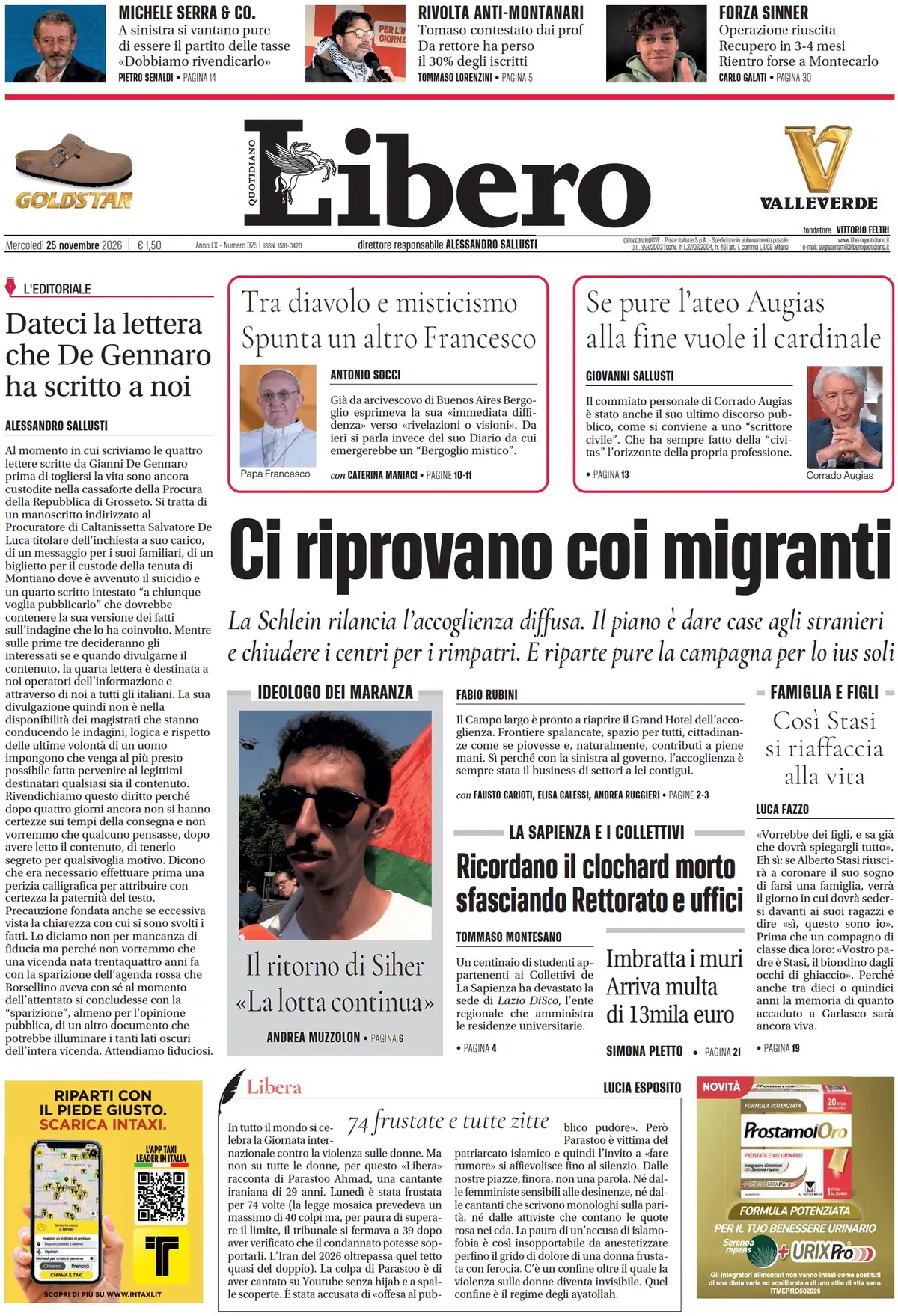
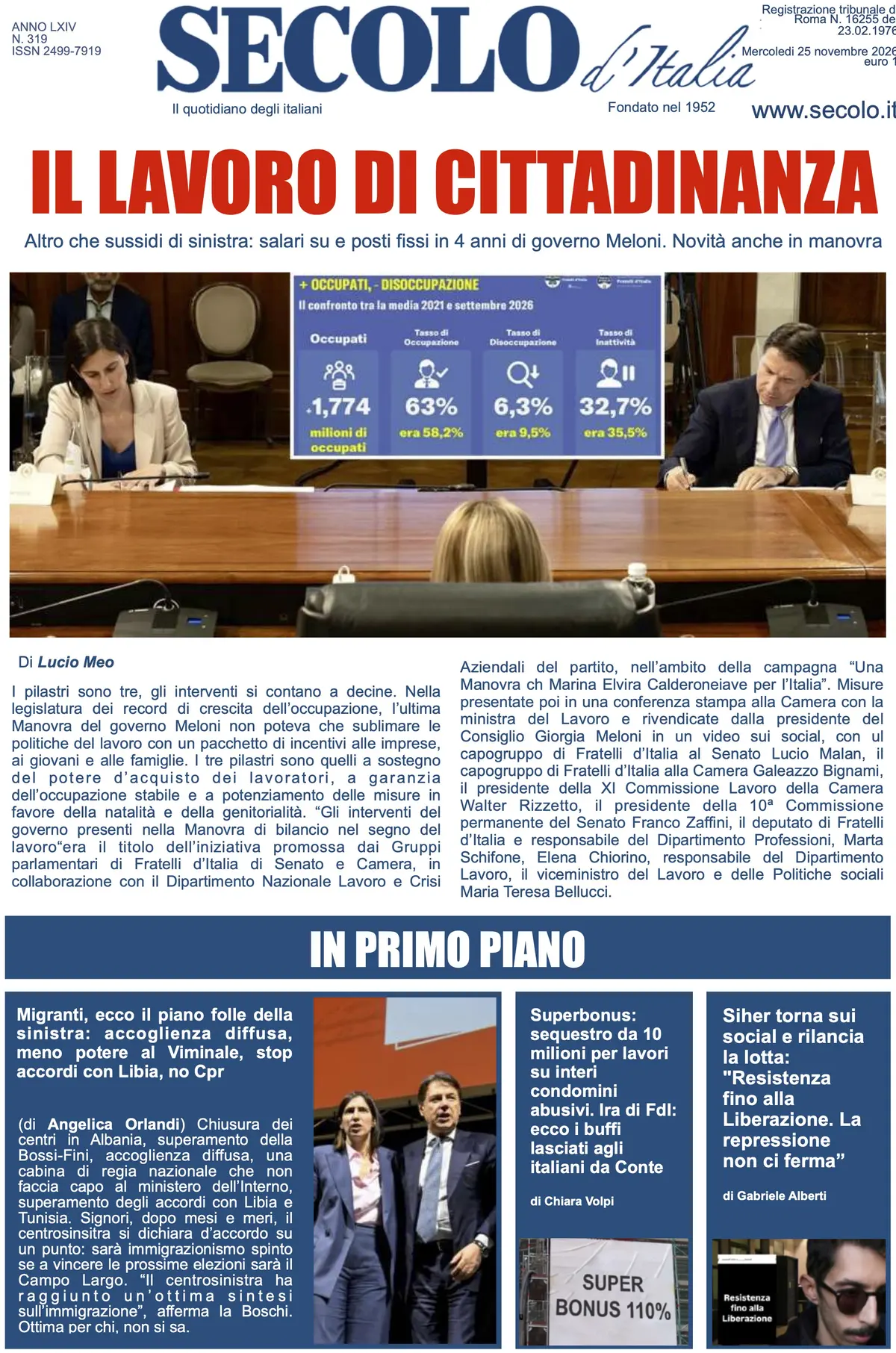
The budget runs through several other front-page stories. Corriere highlights the European assessment of Italy’s public finances. Il Messaggero pairs that assessment with limited room for additional measures. L’Edicola combines Brussels’ approval with the argument over an amnesty. Secolo d’Italia makes employment its main story, presenting jobs, wages and budget measures from a perspective favourable to the government. Libero shifts the political argument towards migration, criticising the left’s reception proposals.
## Francis’s diary and Sinner’s expected return
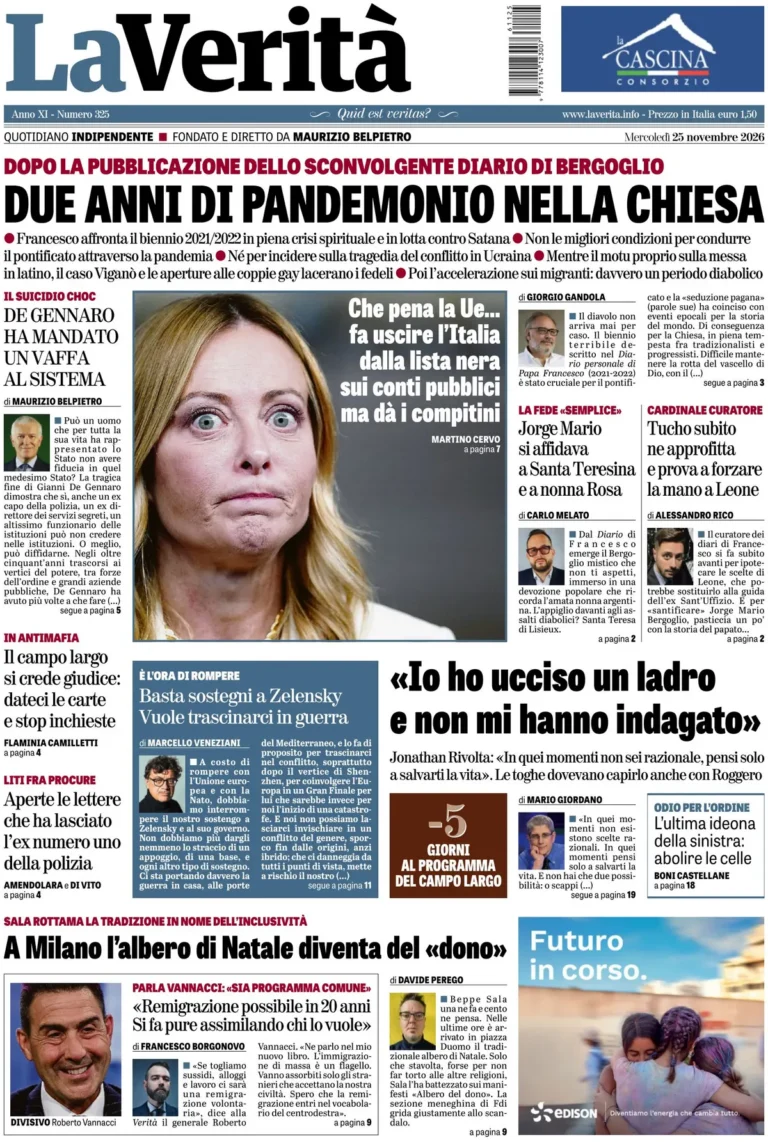
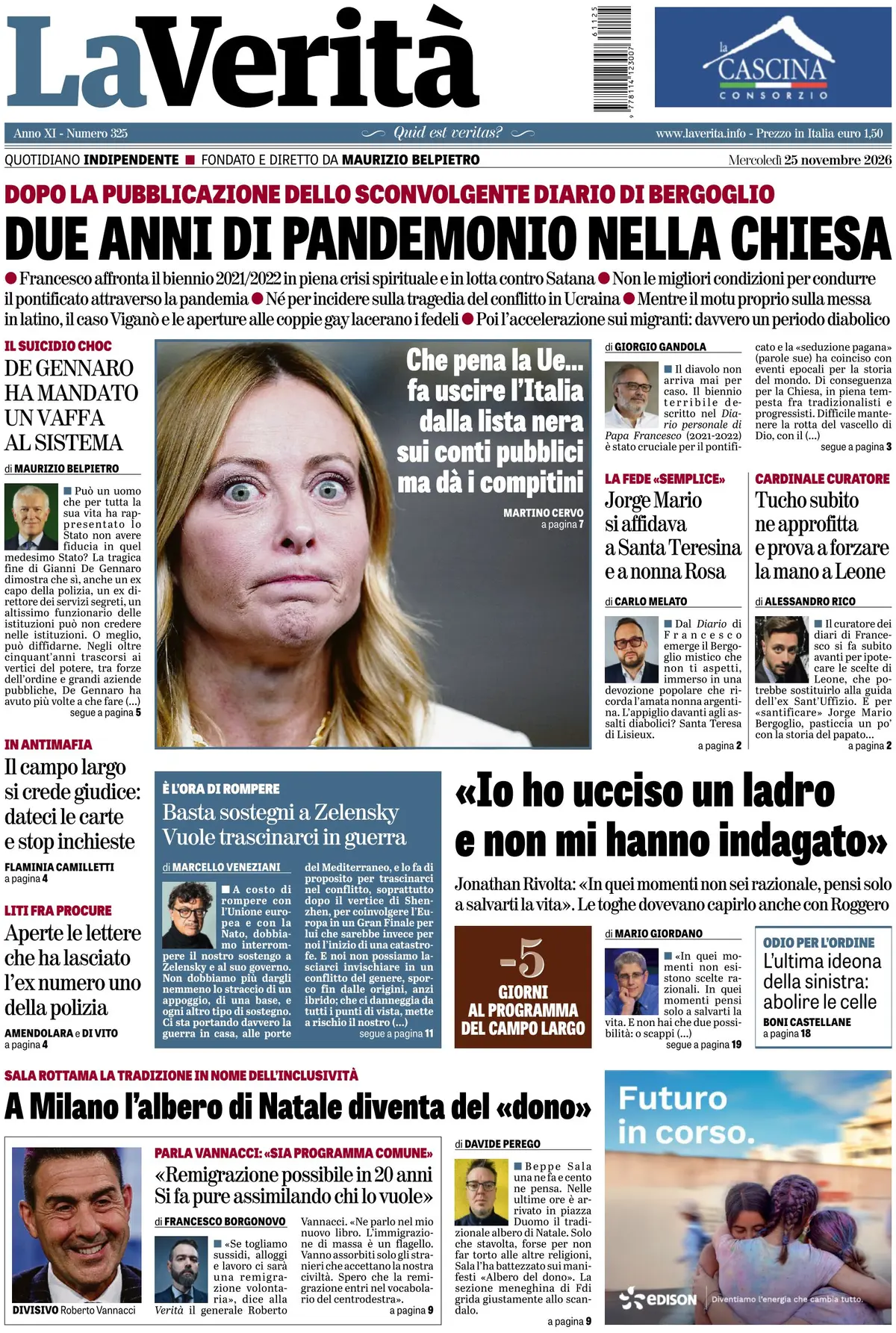
La Verità gives its main headline to Pope Francis’s diary and spiritual crisis. The subject also appears in Libero and Il Giornale, while Il Tempo interviews Bergoglio’s personal secretary. It forms a separate strand from the legal and political coverage, yet occupies substantial space in the day’s debate.
Jannik Sinner’s knee operation appears in Corriere, Repubblica, Il Messaggero and Il Gazzettino. Photographs and references to his recovery provide a sporting counterpoint to an edition dominated by institutional conflict and social responsibility. There is no single opening shared by all: the history of the mafia bombings, women’s safety and the consequences of war compete for readers’ attention.