Front pages on 18 November: the budget, war and freedom to dissent
The front pages for Wednesday, 18 November 2026 set three agendas against one another: changes to Italy’s budget, the war in Ukraine and the political dispute over antisemitism and freedom of expression. This review compares sixteen distinct newspapers, after reading the date printed on every front-page image. Polemical headlines, interpretations and allegations remain attributed to the newspapers presenting them; they are not independent findings of this review.
The budget: a shared story, different priorities
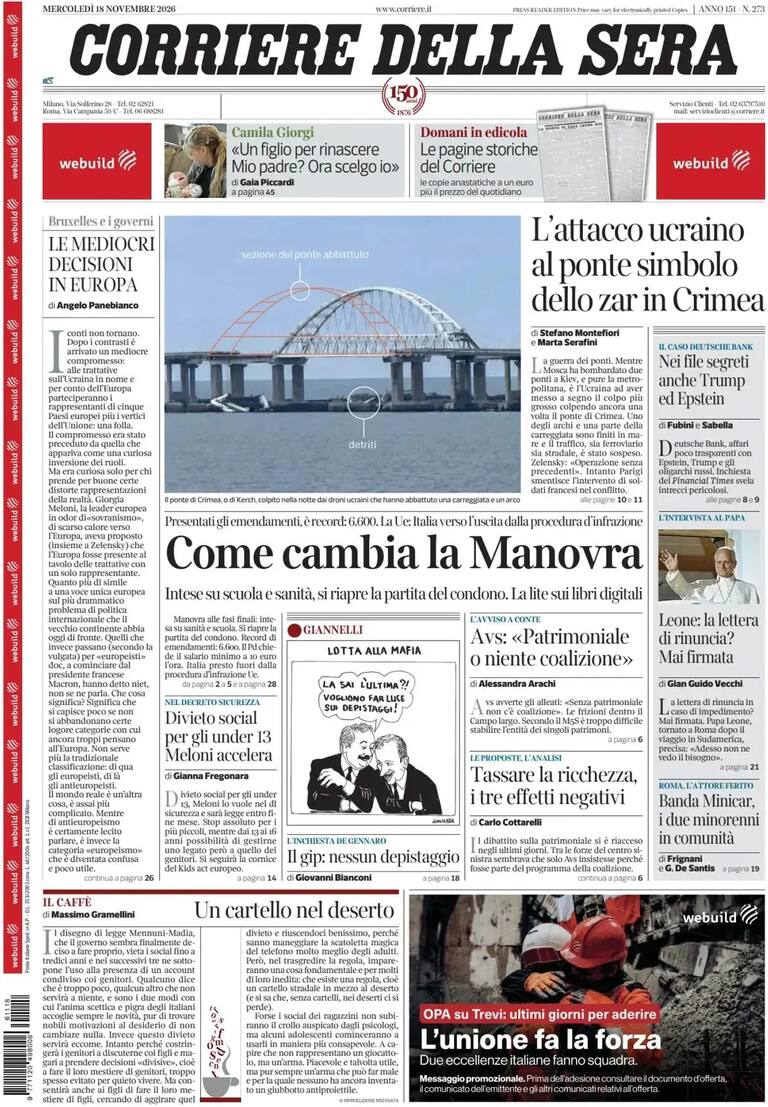
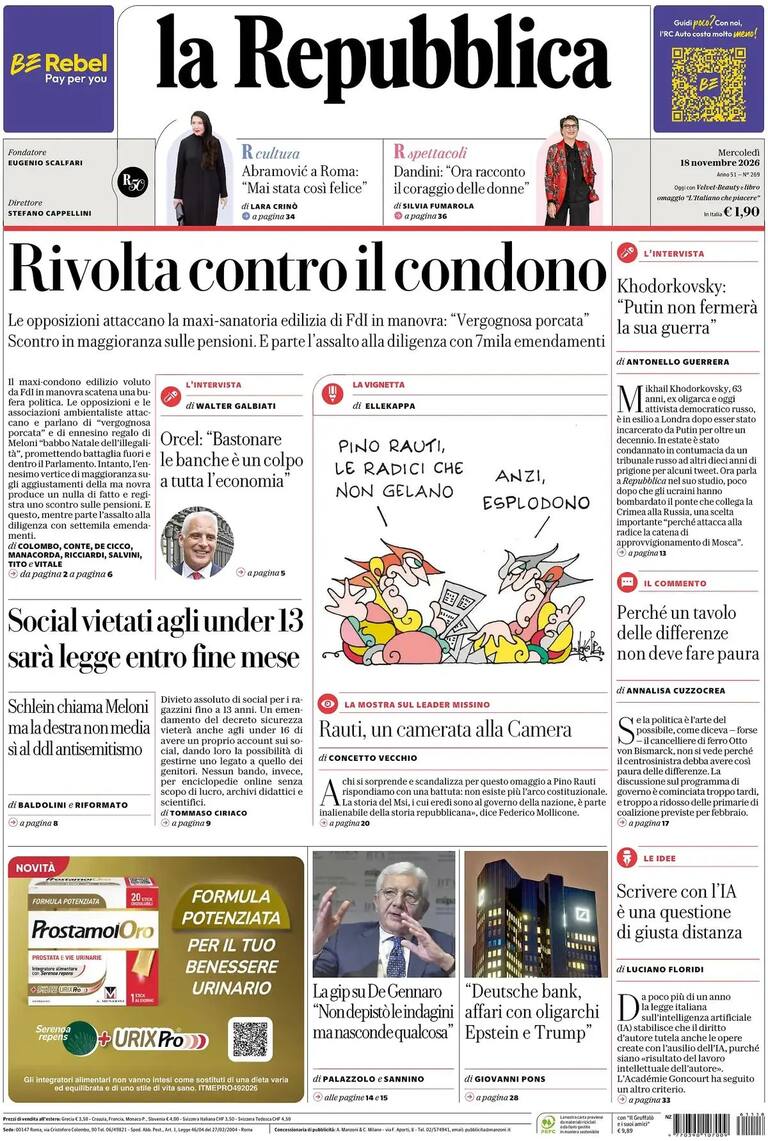
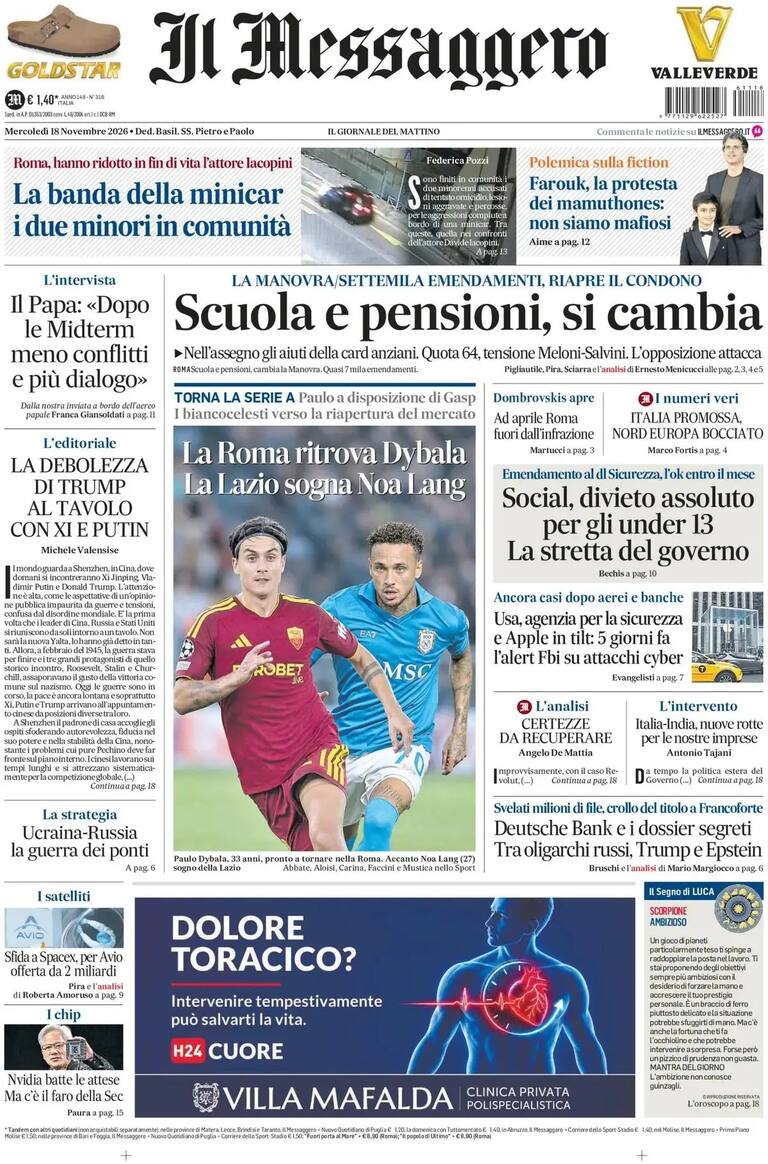
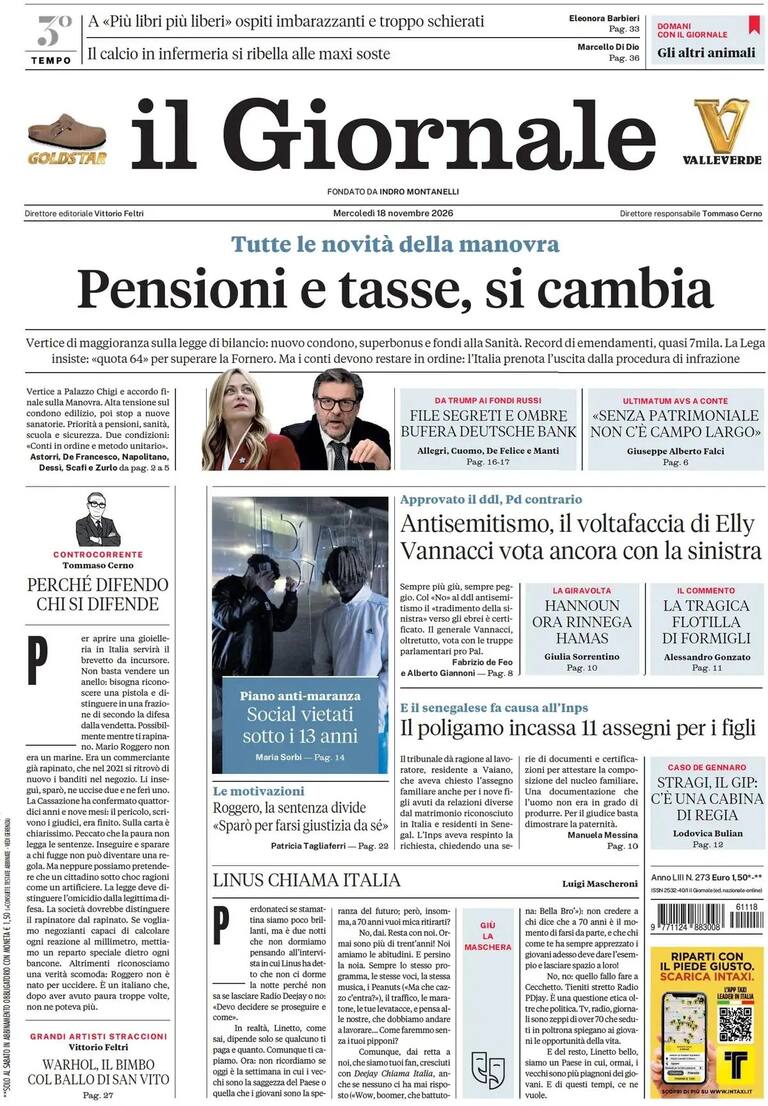
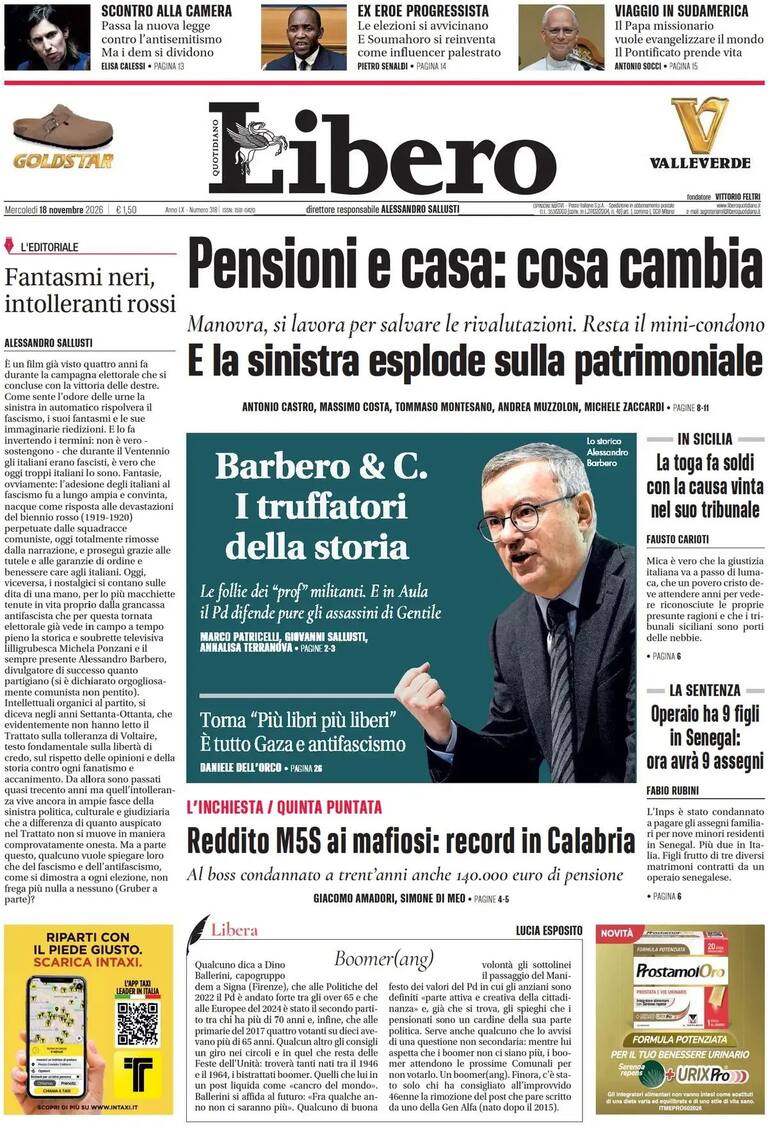
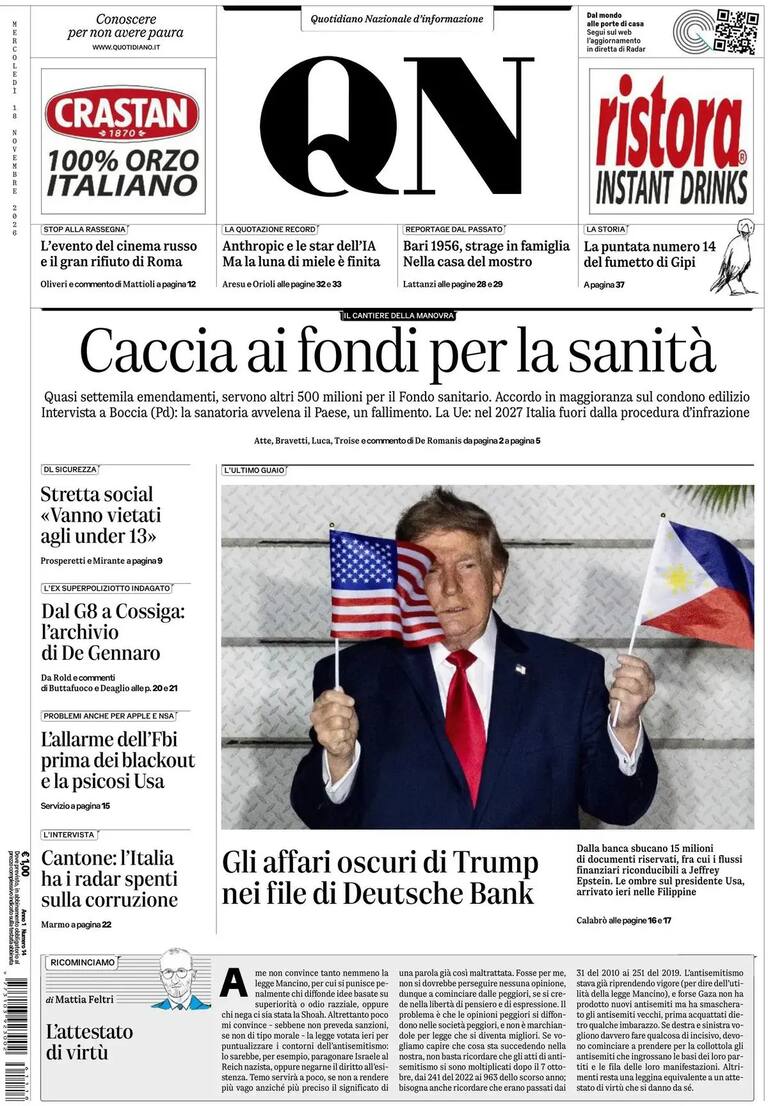
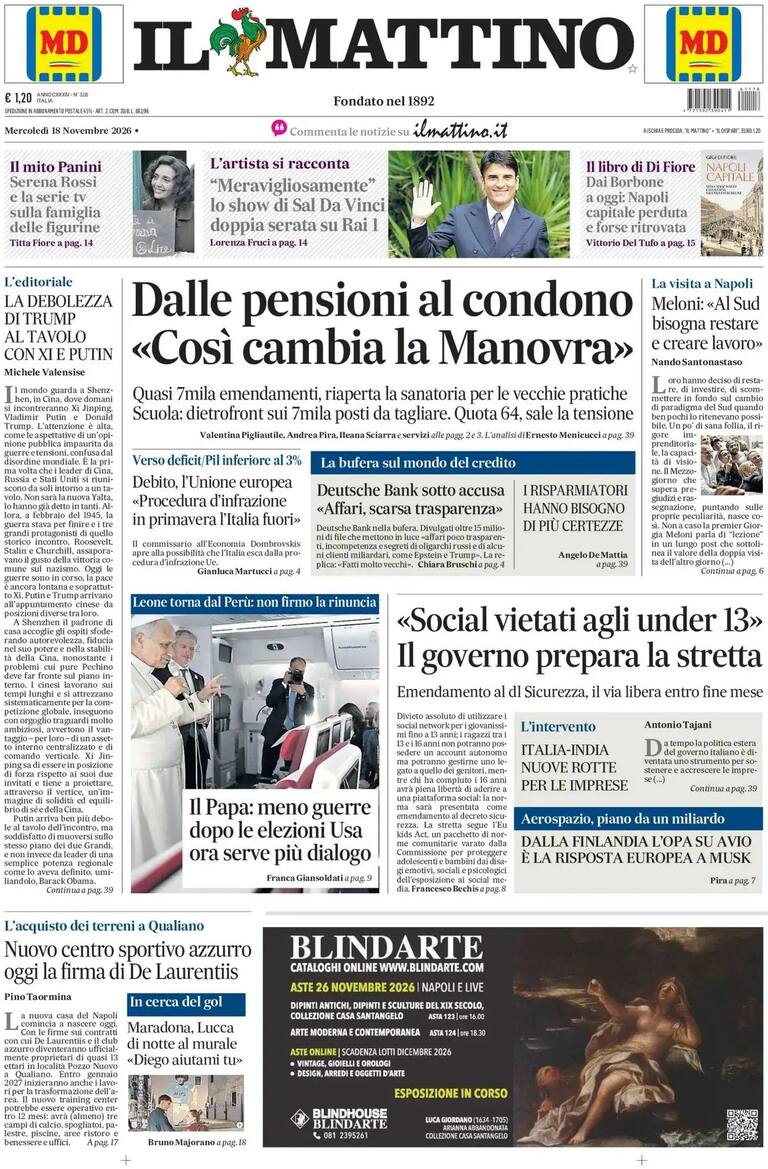
Corriere della Sera takes an overview of changes to the budget bill. Repubblica focuses on opposition to a building amnesty. QN leads on finding resources for healthcare, while Il Messaggero connects schools and pensions. Il Giornale and Libero emphasise the consequences for pensions, taxation and housing; Il Gazzettino highlights pension funding. Il Riformista places the budget at the centre of the debate, pointing to the volume of amendments and political friction.
The same negotiations therefore generate different accounts: the distribution of resources, amnesties, relations within the governing coalition and divisions in the opposition. These papers describe proposals and ongoing negotiations; discussing changes does not establish that every measure mentioned has become law. The wealth-tax dispute highlighted by Libero and Il Giornale is likewise a political debate, not evidence of a new tax already in force.
War returns to the foreground
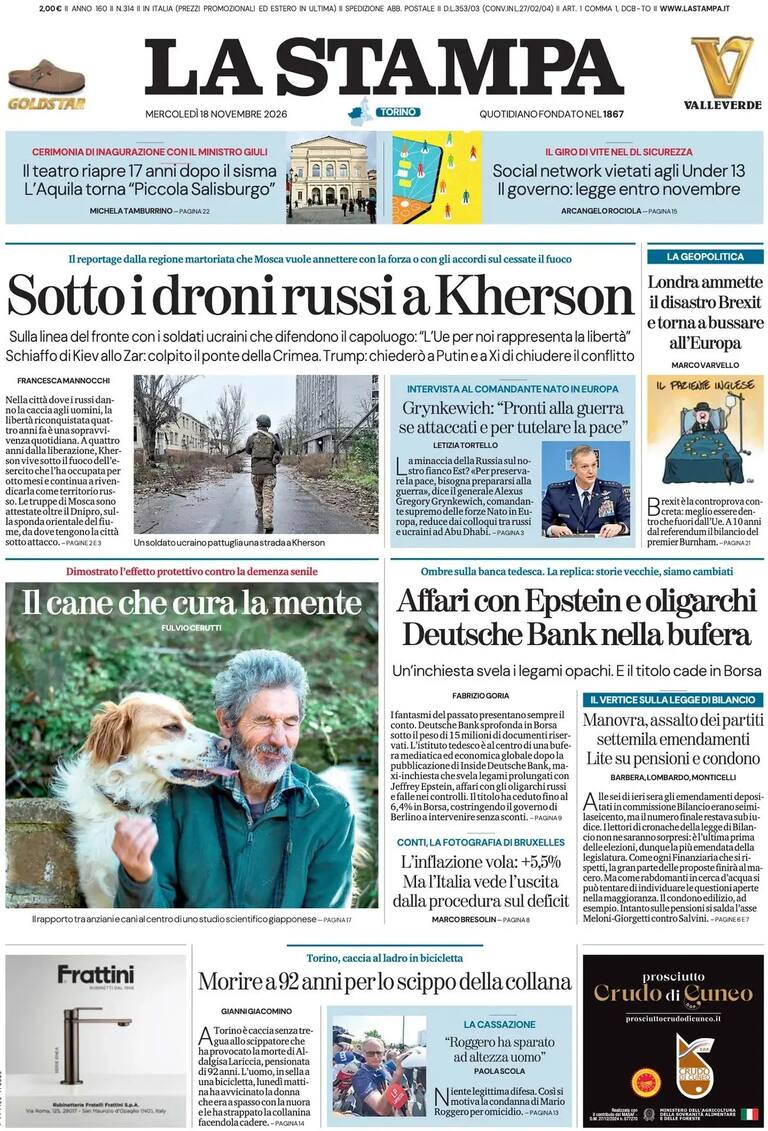
La Stampa leads with reporting from Kherson and the threat of Russian drones. Corriere gives considerable prominence to the Ukrainian attack on the bridge in Crimea, a story also featured by Il Secolo XIX. These are complementary but not interchangeable perspectives: people’s experience under attack on one side, the strategic and symbolic importance of infrastructure on the other. This review records the editorial prominence of these stories without inferring an overall military outcome or the conclusion of negotiations from their headlines.
Antisemitism and dissent: reporting is not judgment
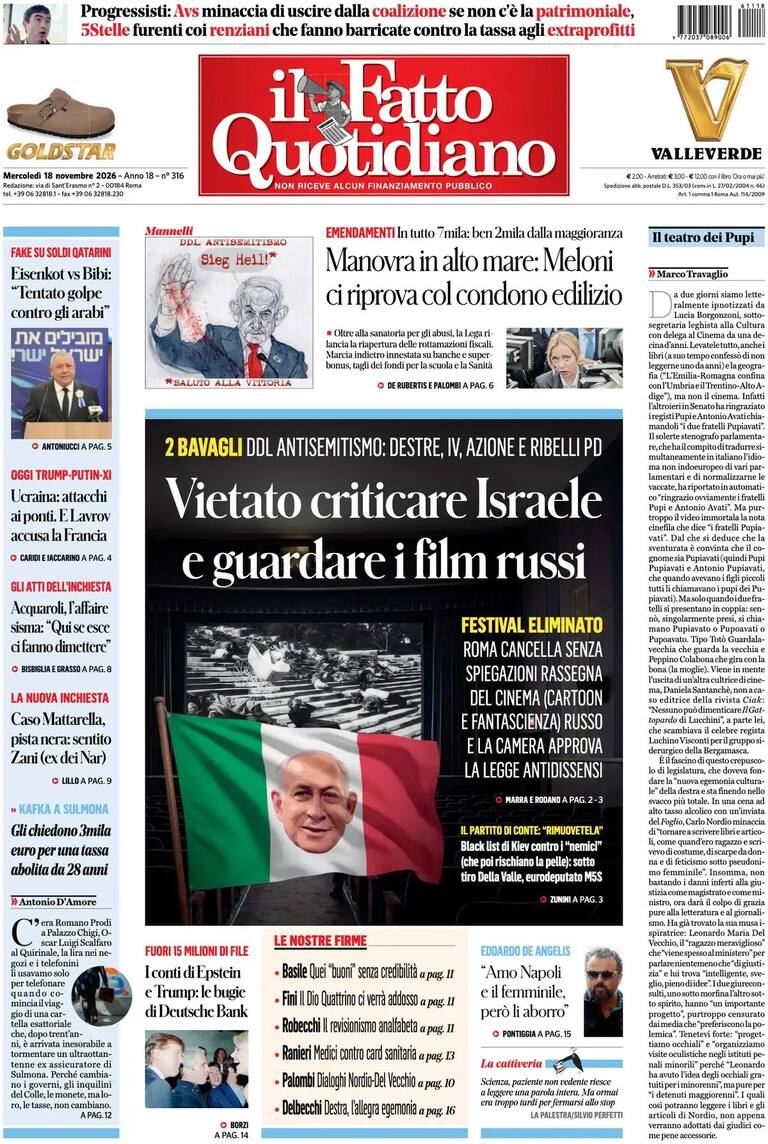
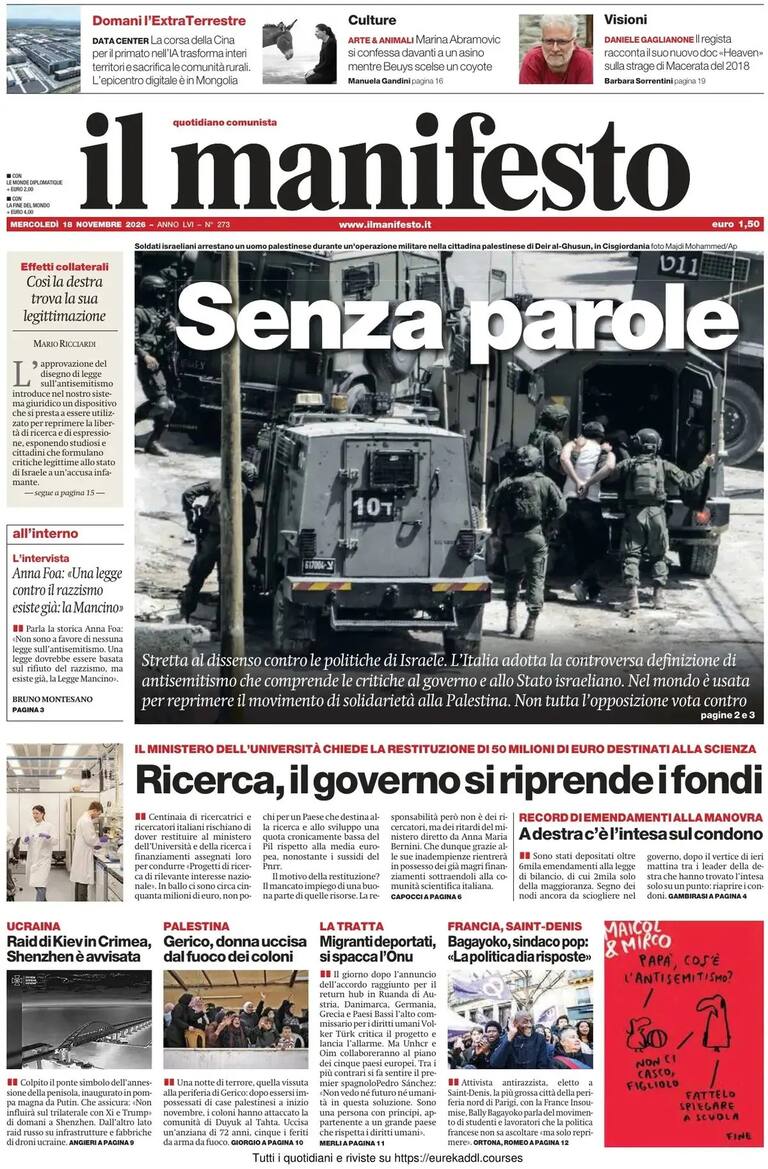
Il Fatto Quotidiano frames the measure against antisemitism as a restriction on criticism of Israel, linking it to the controversy over Russian films. Il manifesto chooses “Senza parole”, or “Speechless”, foregrounding the relationship between combating antisemitism, Israeli policies and freedom to dissent. Il Giornale instead emphasises political divisions and the votes of Schlein and Vannacci. The distance between these front pages is part of the story: the criteria used to judge the same parliamentary development differ. Il Fatto’s headline is not adopted here as a literal, comprehensive account of the law’s prohibitions.
Economics, labour and power
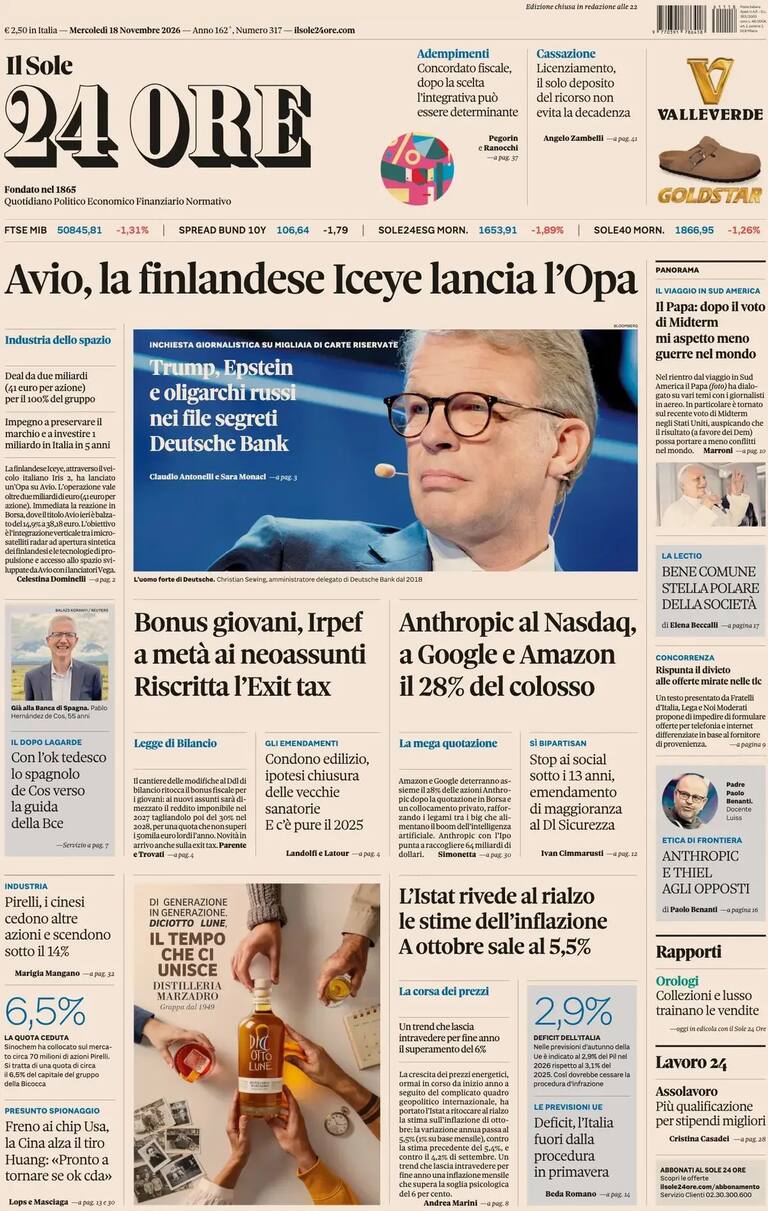
Il Sole 24 Ore stands apart with Finland’s Iceye making an offer for Avio: an industrial and financial focus rather than the political lead chosen by most papers. Il Foglio’s headline examines the relationship between business groups, the government and the opposition. La Verità leads with criticism of judges’ role in determining pay. These are three separate levels: a corporate transaction, political analysis and a labour dispute. La Verità’s polemical wording is recorded as the newspaper’s position, not turned into an endorsed legal assessment.
Front pages that broaden the agenda
Avvenire gives its main headline to Leo XIV’s mission of unity, stressing dialogue. Il Secolo XIX chooses the sea in Mattarella’s vision, connecting the national agenda to Genoa’s maritime identity. Meanwhile, proposed social-media restrictions for children appear in Repubblica, La Stampa and Il Messaggero. Here too, announcing a proposal is not the same as bringing it into force.
The day is marked by competition between priorities rather than a single shared lead. The budget connects much of the coverage, but war, industry, public freedoms and religious dialogue alter the ranking of stories and the way responsibility is assigned.