Front pages on 19 November: the three-power summit and budget tensions
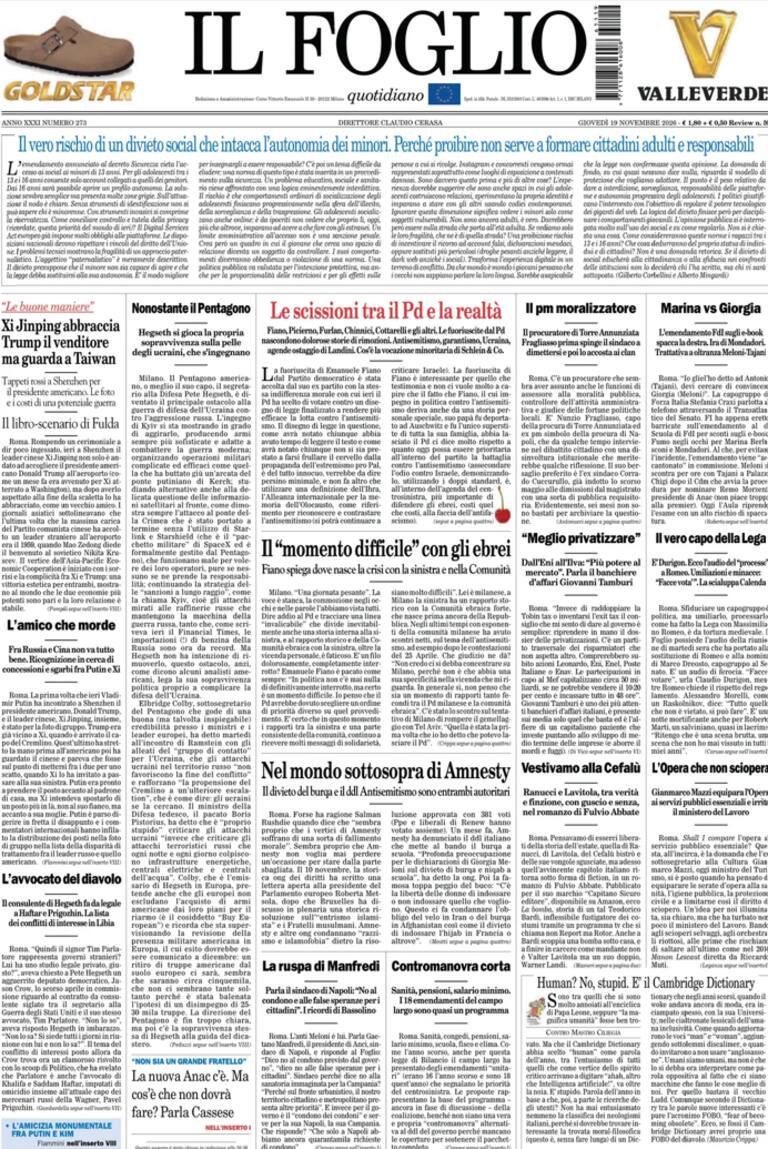
Italy’s front pages on 19 November 2026 bring together two negotiating tables: international power politics and the domestic budget. The image of Xi Jinping meeting Donald Trump, with Vladimir Putin central to the diplomatic discussions, dominates many papers. Yet it does not produce a single interpretation: some see a changing balance of power, others chiefly Europe’s marginal position. This review compares sixteen newspapers whose printed edition dates have been checked. Editorial judgments remain distinct from independently established facts.
The summit and Europe outside the frame
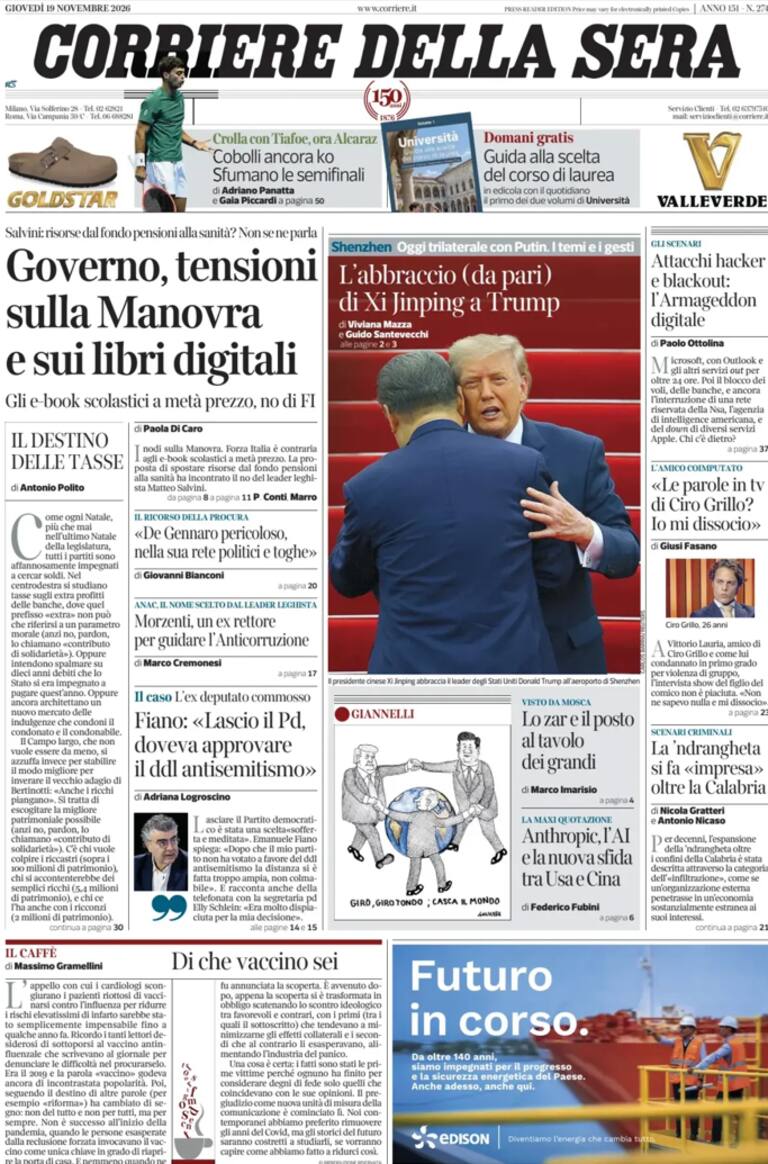
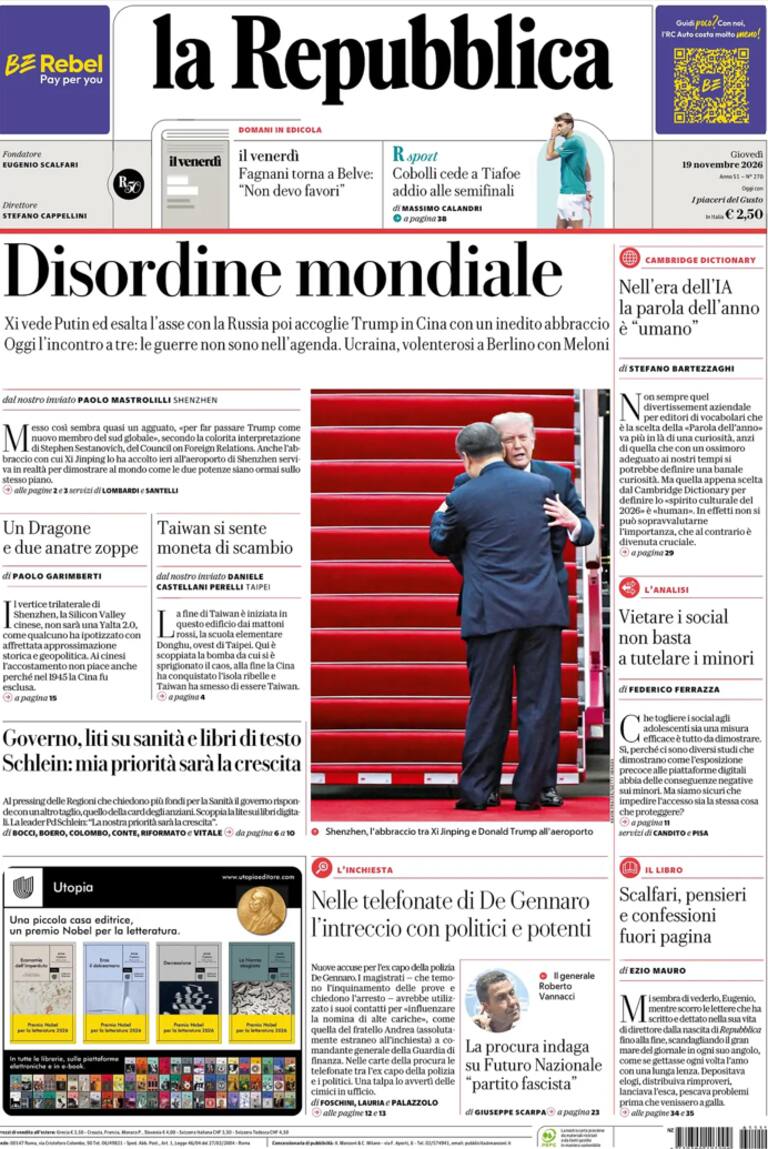
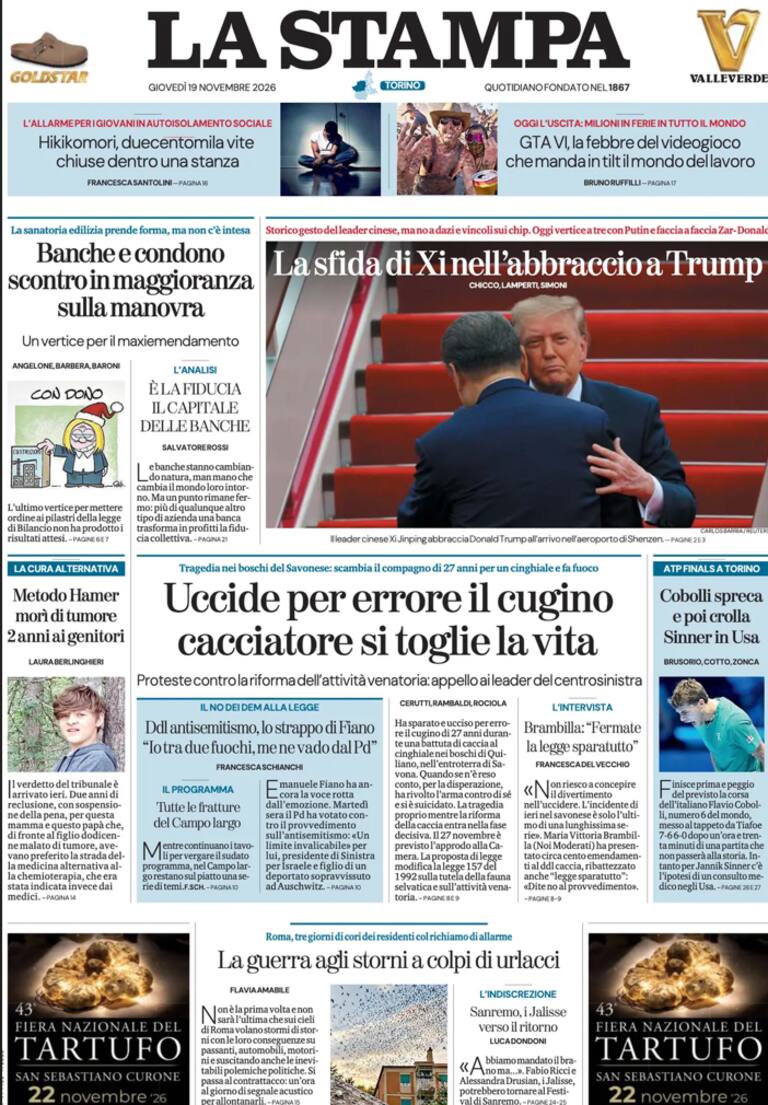
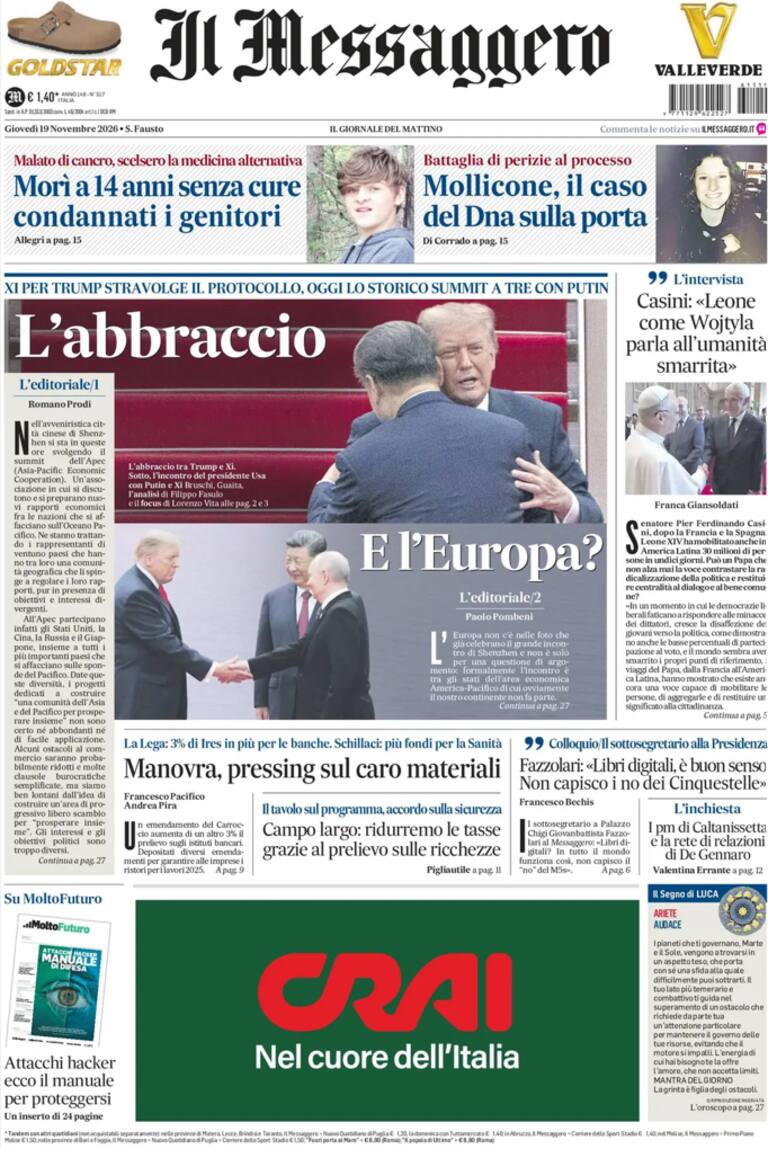
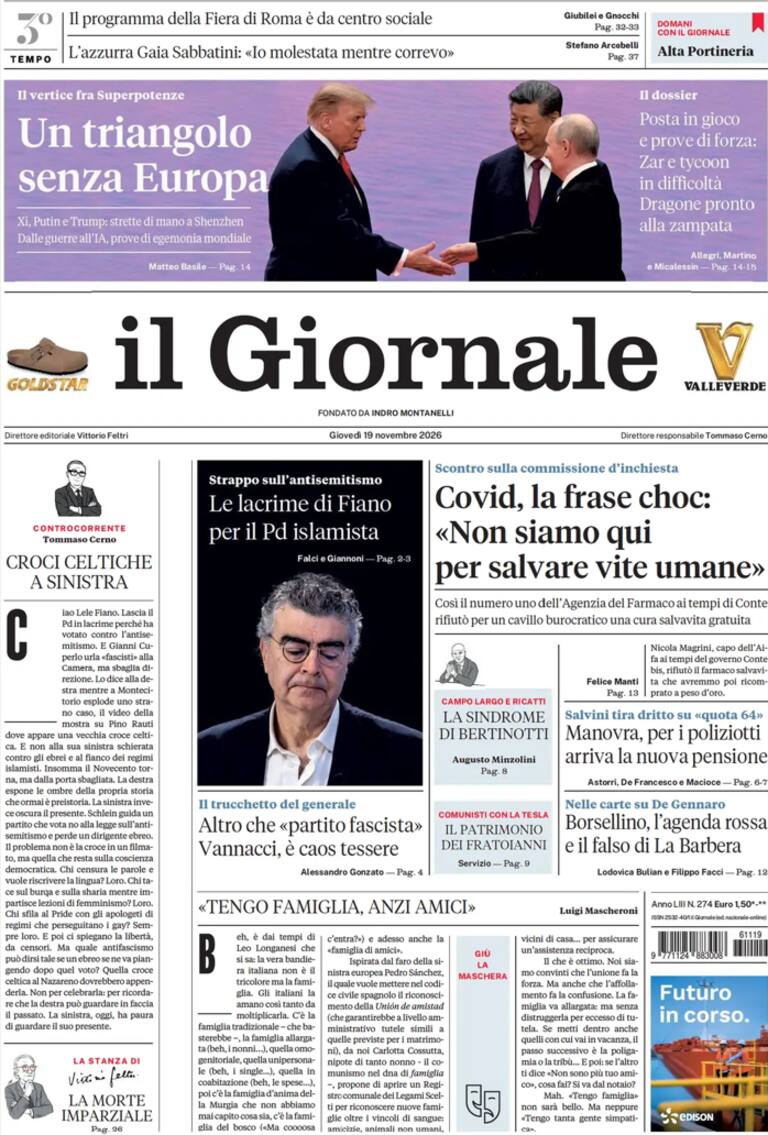
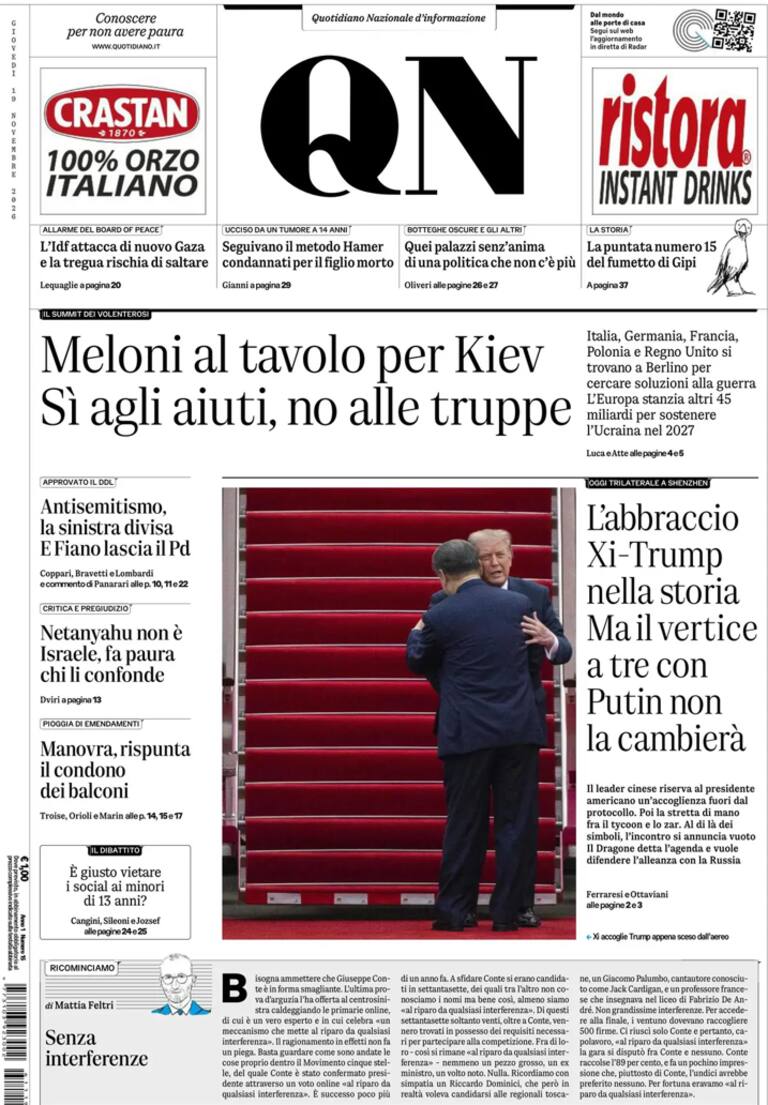
Repubblica leads on world disorder, while Il Giornale describes a triangle without Europe. Il Messaggero places a question about Europe alongside the leaders’ embrace; Il Gazzettino makes the same absence explicit. Il Mattino treats the scene as a photograph that will tell history. Corriere della Sera and La Stampa give prominence to Xi’s gesture towards Trump while retaining a strong domestic economic agenda.
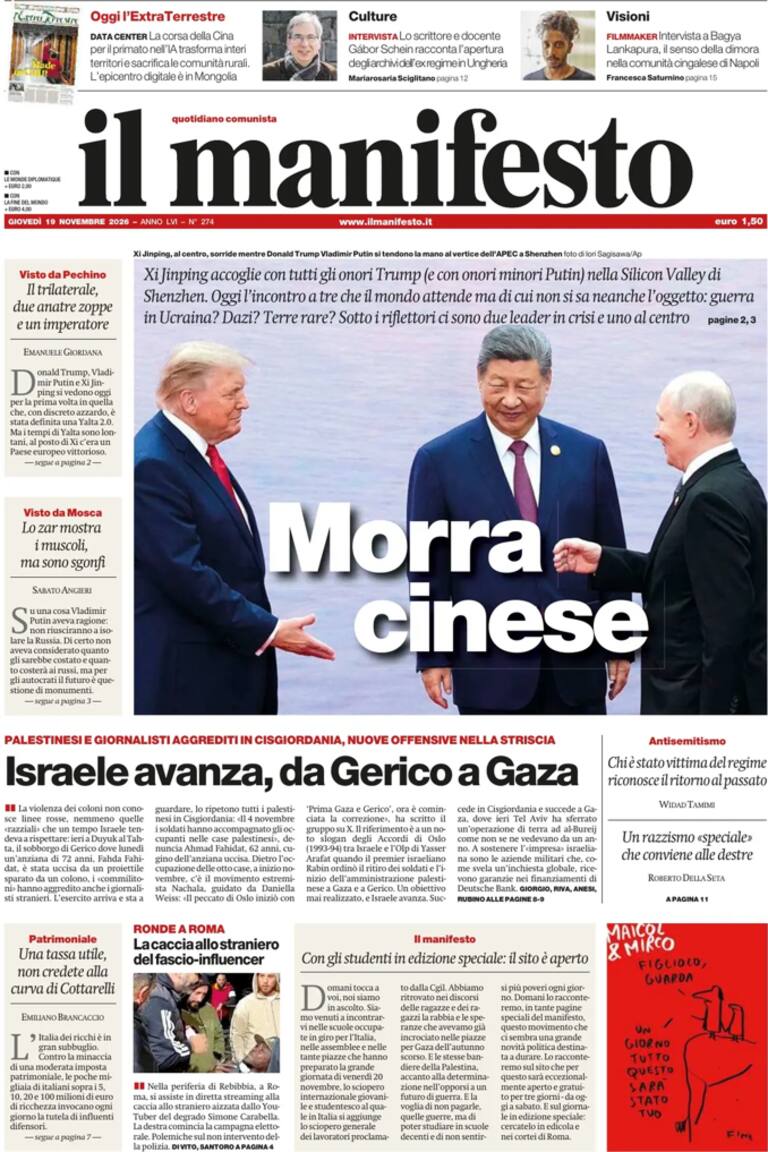
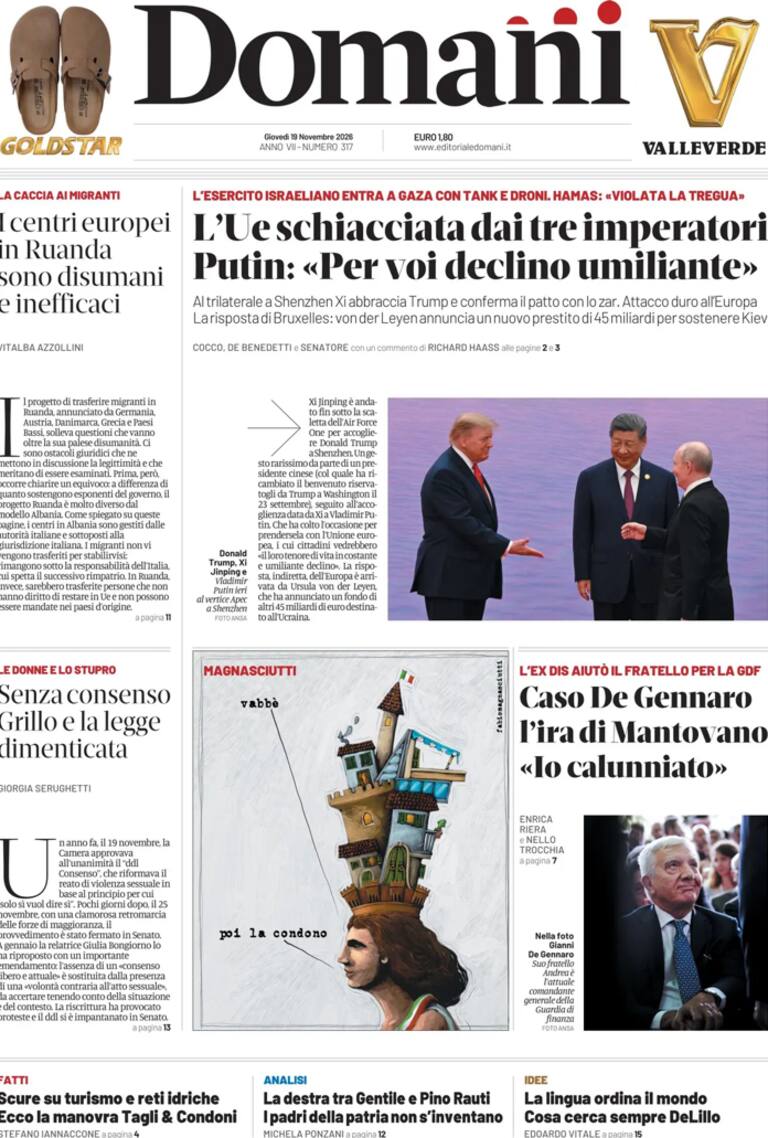
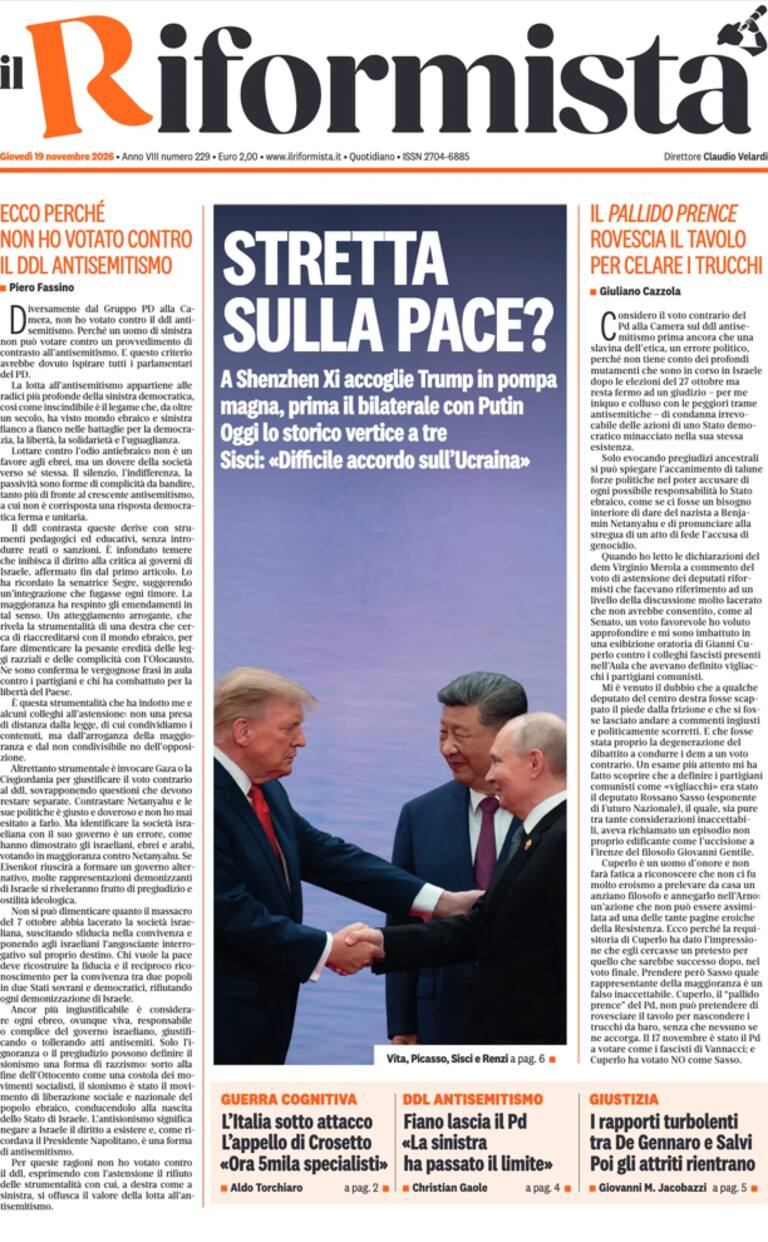
Il manifesto turns three-power diplomacy into a geopolitical game with its “Morra cinese” headline. Domani offers a severe interpretation of the Union’s position and attributes a judgment about its decline to Putin. Il Riformista instead asks whether a diplomatic push towards peace is taking shape. A question, an interpretation and an outcome are not interchangeable: the summit’s prominence does not establish that an agreement has been reached or allow its results to be anticipated.
The budget: coalition tensions and who bears the cost
Corriere leads on government tensions over the budget and digital textbooks. La Stampa highlights banks and a building amnesty as sources of disagreement within the governing majority; Il Mattino also features the amnesty dispute. The different ranking matters: the same negotiations can be framed around coalition stability or around who benefits from measures and who pays for them.
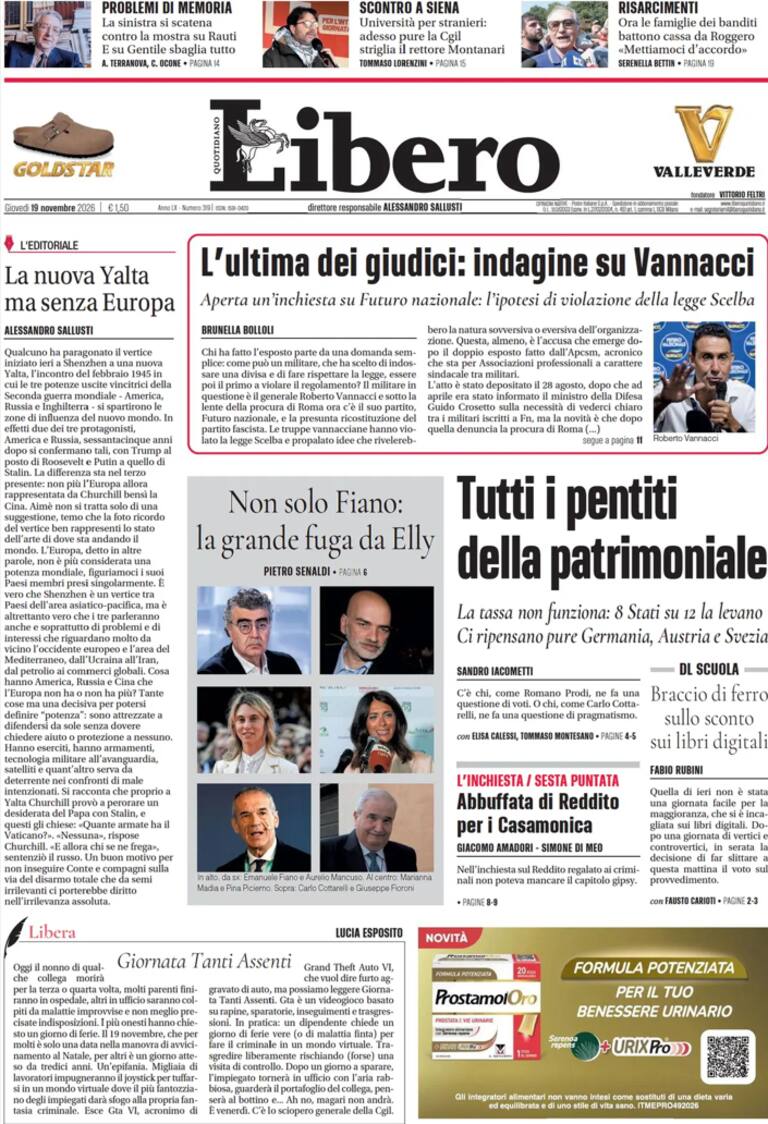
Libero centres its political argument on a wealth tax. That editorial choice is not evidence that a new levy is in force. Headlines about budget changes likewise describe a moving negotiation: proposals, amendments and political understandings must not be confused with legislation finally adopted.
War and public opinion
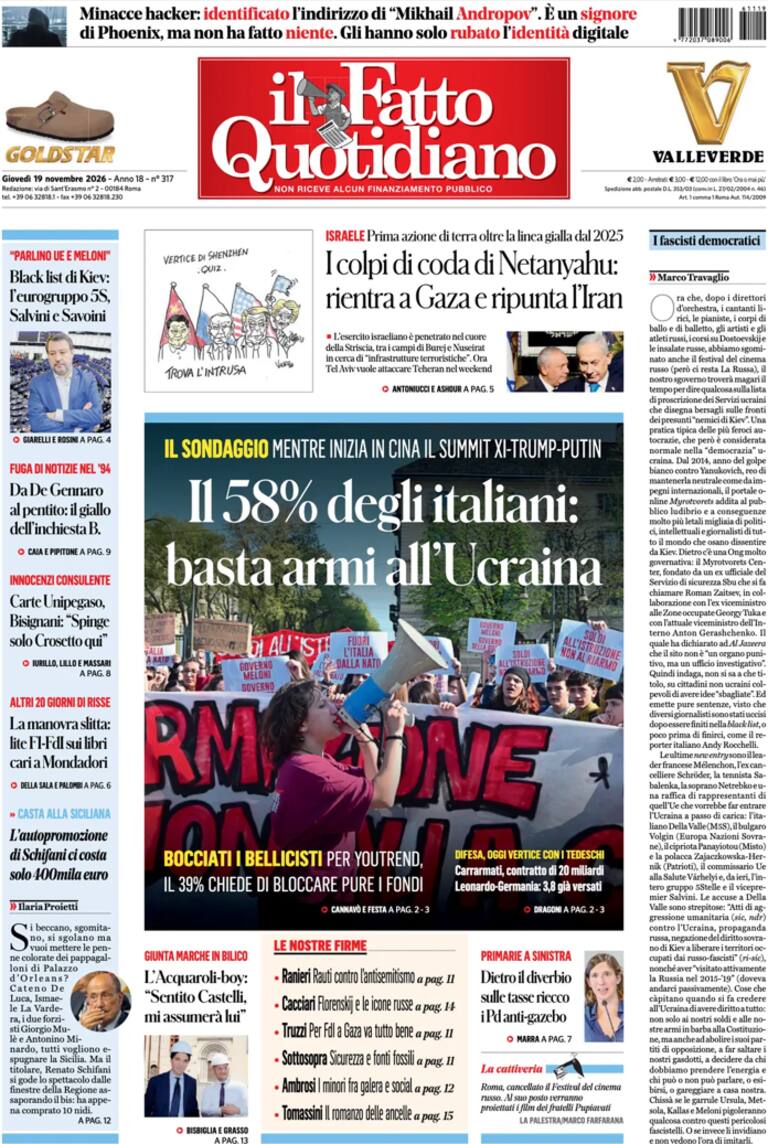
Il Fatto Quotidiano gives considerable prominence to a poll it presents as showing majority support for stopping arms supplies to Ukraine. This is recorded as a front-page claim, not as an independent measurement or an answer to other polling questions. The newspaper also features Israeli military moves and Iran; Domani highlights Israeli action in Gaza and Hamas’s allegation of a ceasefire violation. This review keeps allegations attributed and does not infer independent military verification from headlines alone.
Rights, integration and editorial language
Avvenire shifts its main focus to protecting children’s access to social media. The practical question of effective limits and checks remains: the wording of a measure does not establish that it is being implemented. Il Tempo chooses Arabic-language courses and Qatari funding, framing them as a question of cultural influence. La Verità connects a legal controversy over family benefits with polygamy and immigration through a sweeping polemical formulation. That framing belongs to the newspaper; it is not adopted here as a legal or statistical conclusion.
Il Sole and the professional agenda
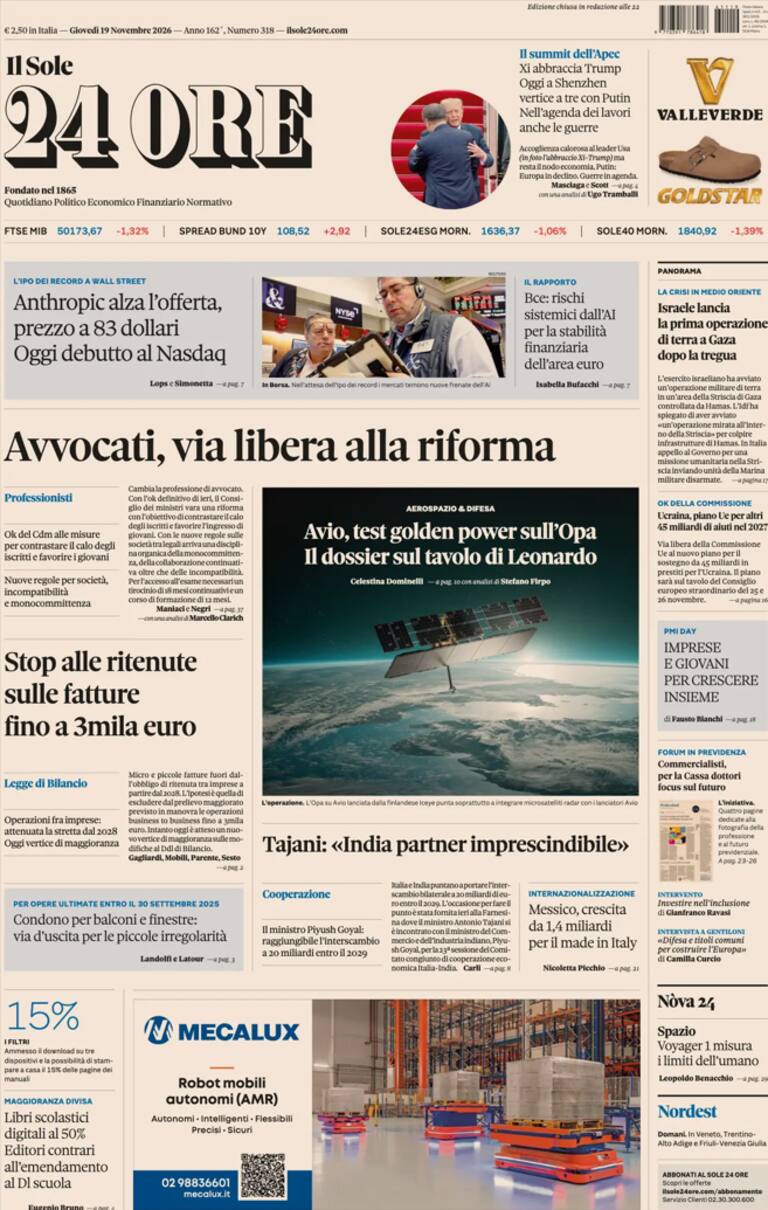
Il Sole 24 Ore stands apart with approval for reform of the legal profession; its secondary stories also include Anthropic’s Nasdaq debut. The focus moves from diplomatic theatre to professional rules and markets. Without the underlying legislative text, the approval headline is not extended into claims about every effect or the reform’s implementation dates.
The distance between these front pages defines the day: a widely shared international image, but sharply different priorities and assignments of responsibility. A useful comparison does more than collect headlines. It distinguishes ongoing negotiations, diplomatic expectations and the political judgments each newspaper places in the foreground.