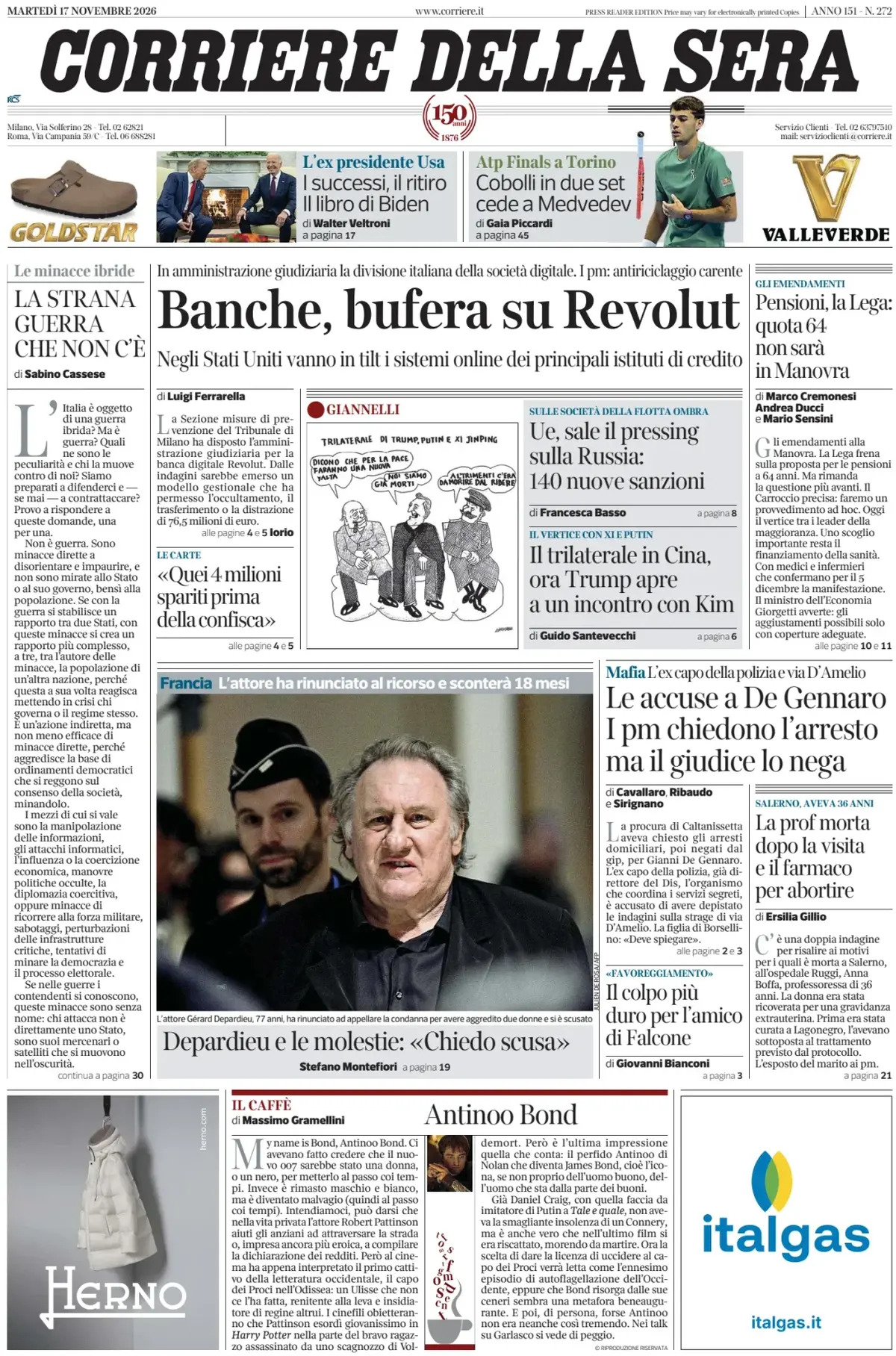
Front pages on 17 November: Revolut, the budget and competing migration narratives
Press review for Tuesday, 17 November 2026, prepared during the 07:00 recovery run, Rome time. Sixteen front pages, each checked against its printed date, reveal a fragmented agenda: Revolut, the budget, the investigation into the Via D’Amelio cover-up and Europe’s debate on migration. This comparison concerns editorial choices: headlines, allegations and opinions remain attributed to the newspapers presenting them.
Revolut: financial reporting leads general-interest papers
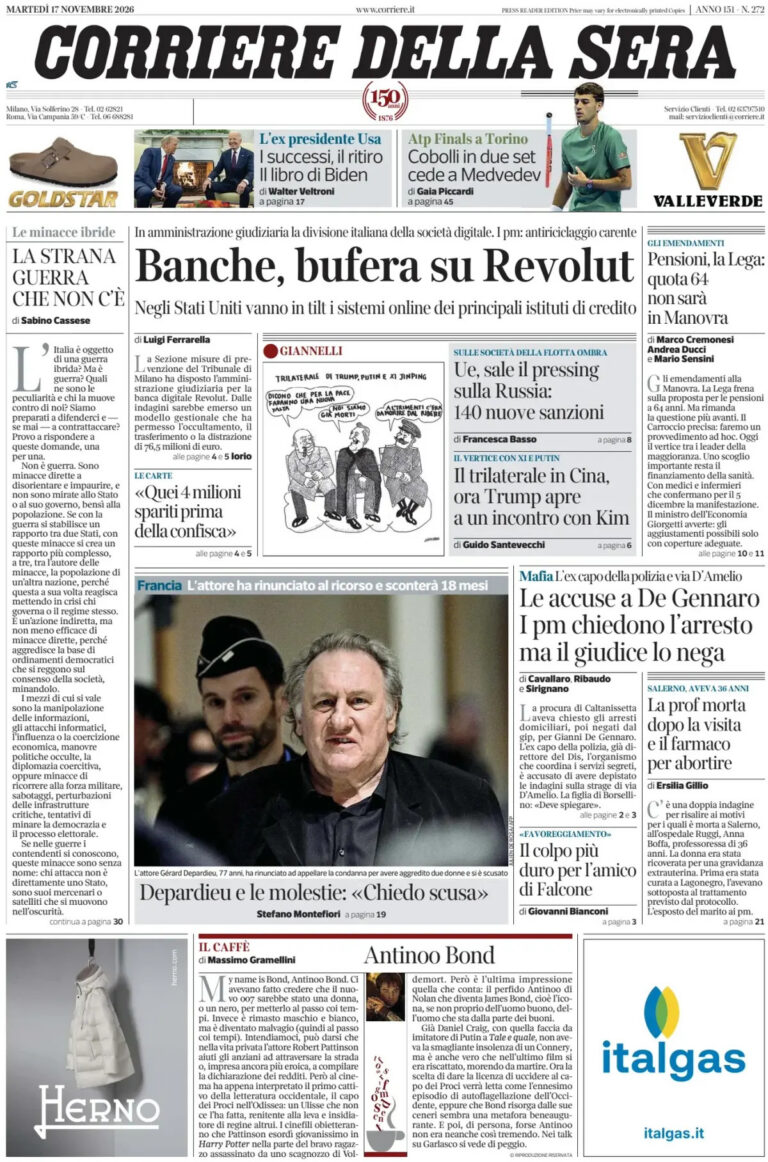
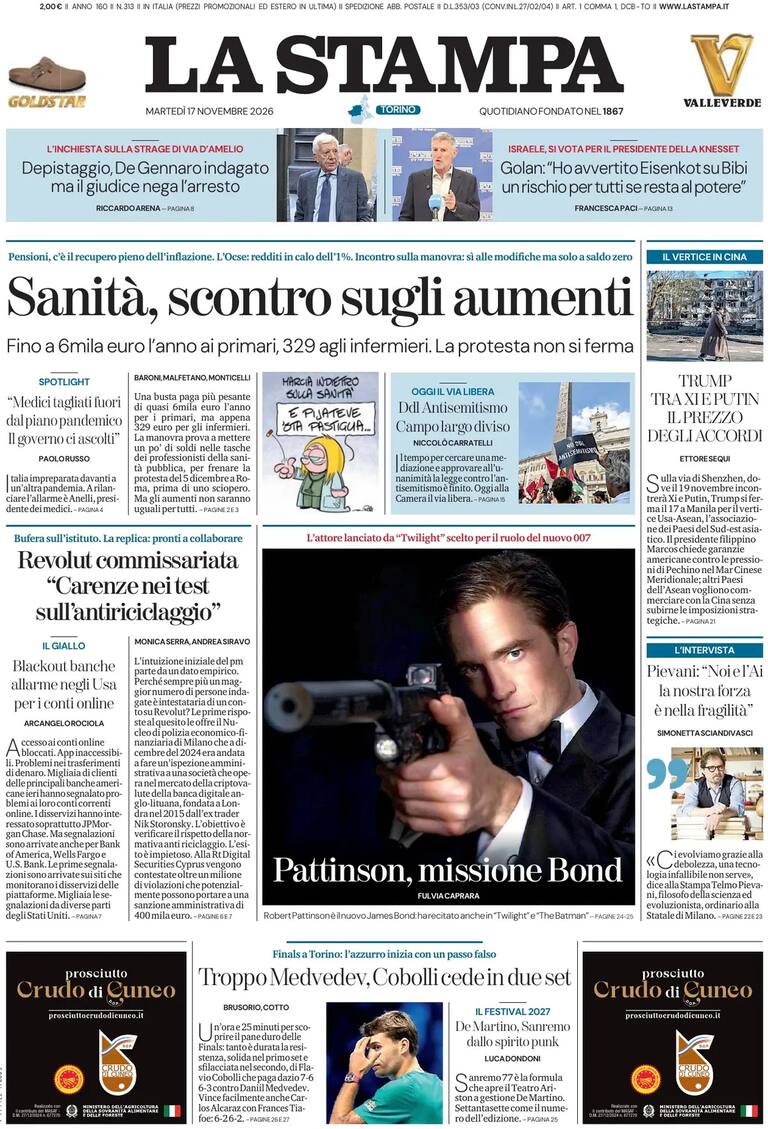
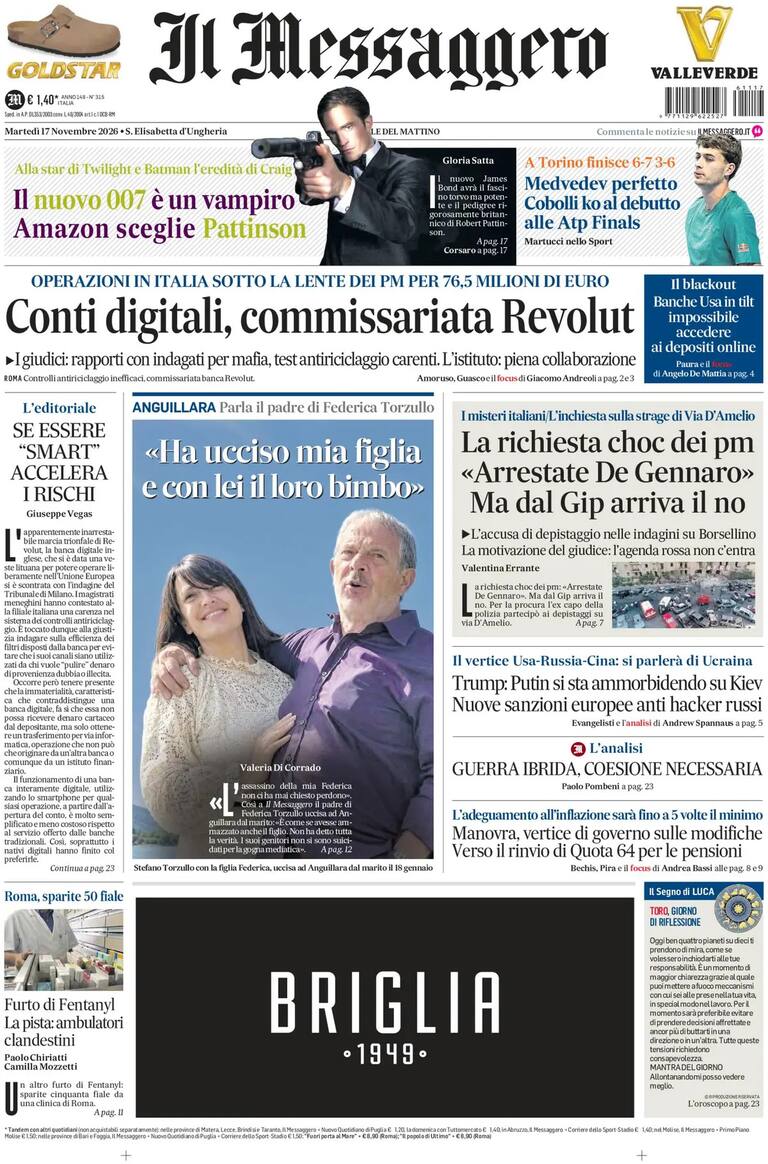
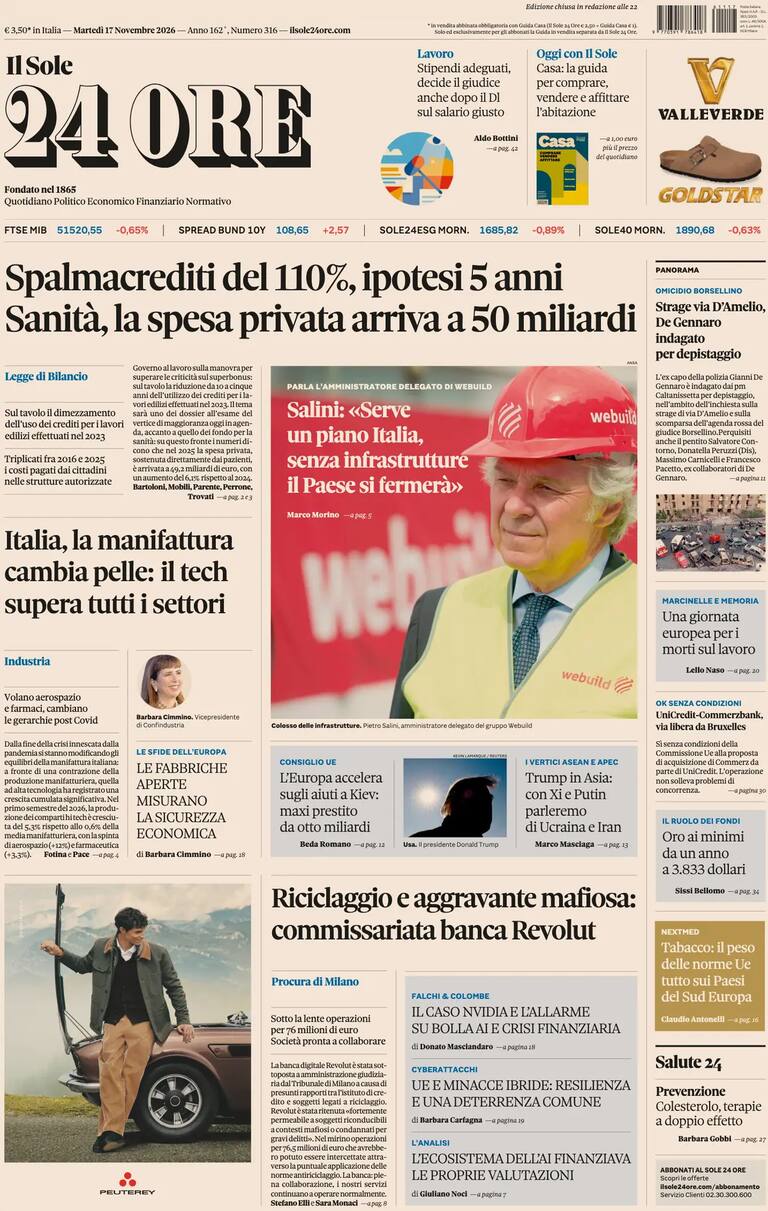
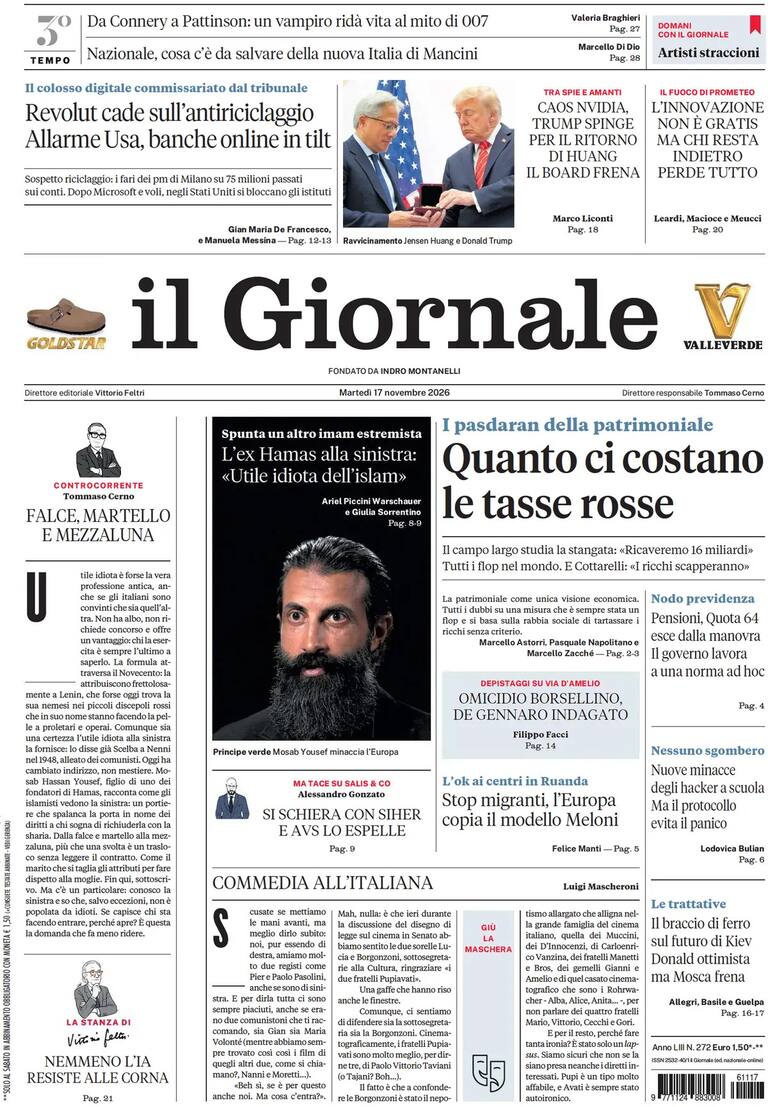
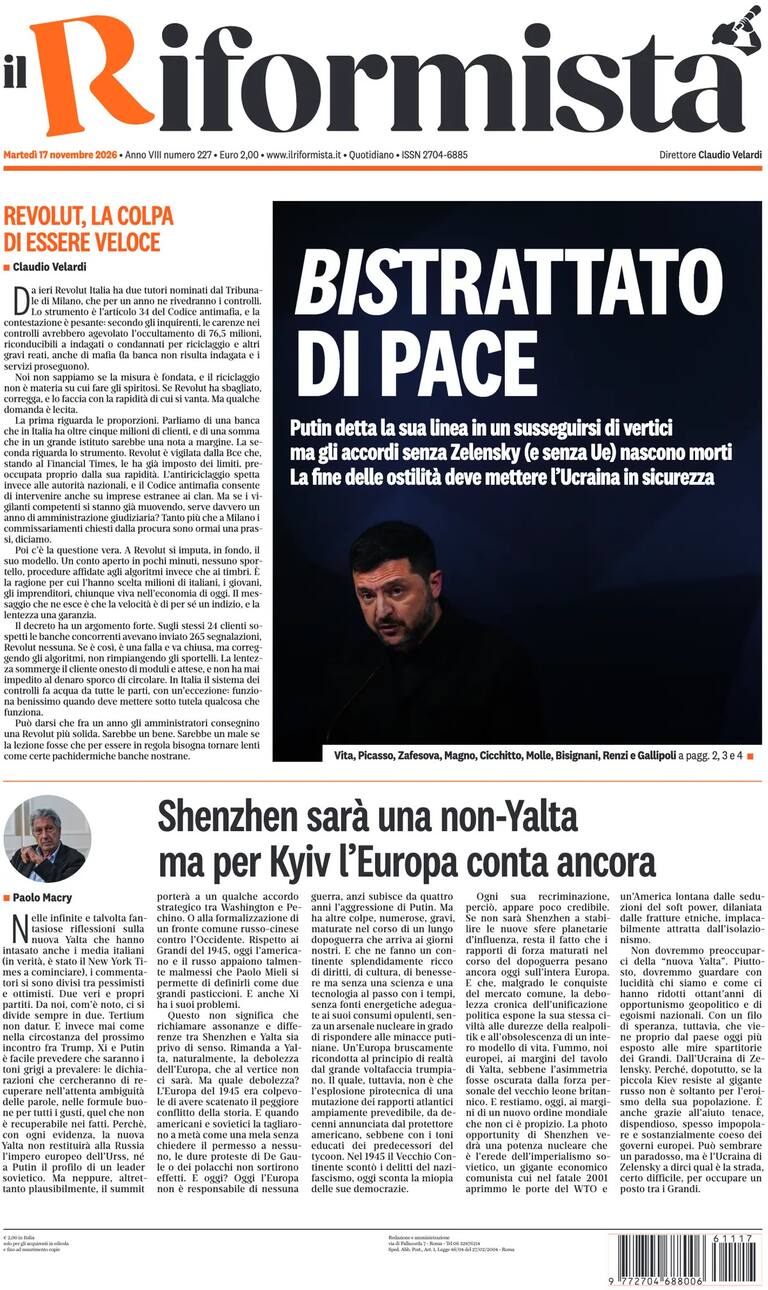
Corriere della Sera leads on the banking controversy, Il Messaggero foregrounds digital accounts and Il Gazzettino chooses the court-appointed administration of Revolut Italia. The same story also appears in La Stampa and Il Giornale. Different headline formulations bring together anti-money-laundering controls and the consequences for customers. The official Corriere and Il Sole 24 Ore websites refer to judicial administration: a compressed headline must not be turned into a declaration of bankruptcy or an established loss of deposits. This is the financial story that most clearly crosses the boundary between national and local news.
The budget and taxation: amnesties, wealth and healthcare
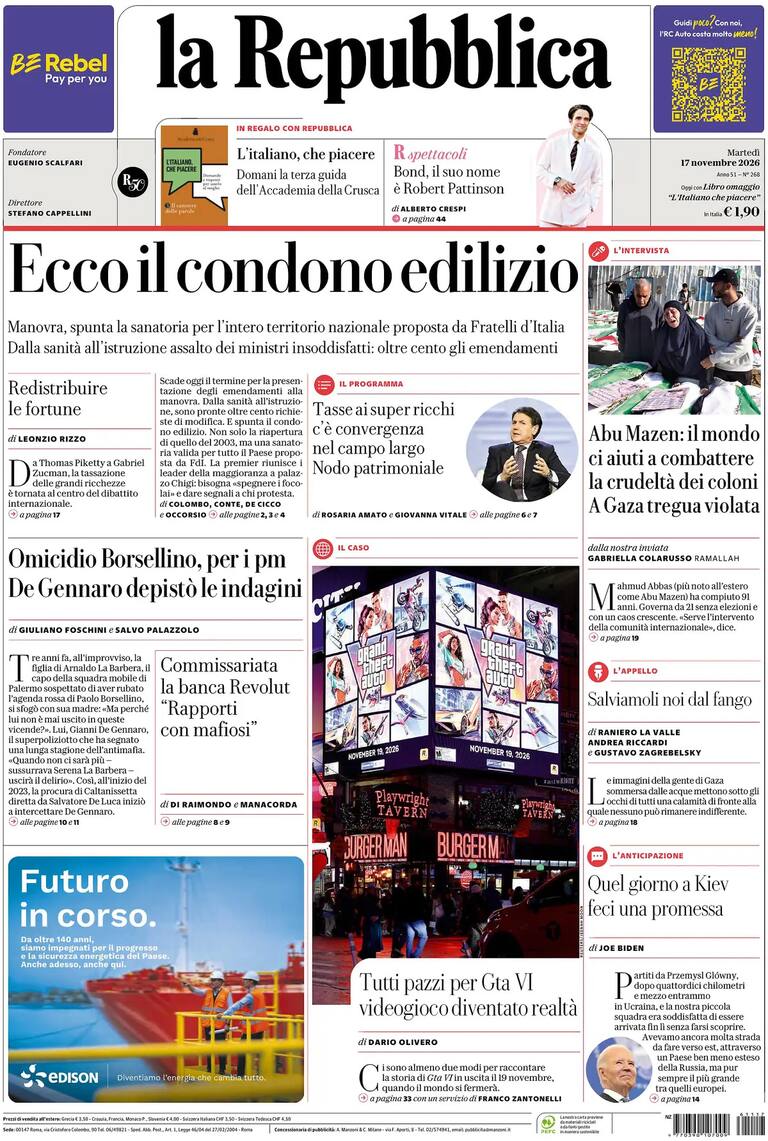
Repubblica leads on a building amnesty, presenting a nationwide proposal within the budget debate. Il Giornale instead attacks the left’s tax plans, while Il Foglio gives space to the Democratic Party’s temptation to introduce a wealth tax. These are not three equivalent accounts: the first foregrounds an initiative from the governing majority, the others the opposition’s fiscal position. They are proposals and political assessments, not measures this review declares already enacted.
Il Sole 24 Ore adds a technical dimension, discussing the possibility of spreading 110 per cent tax credits over five years and the burden of private healthcare spending. La Stampa instead leads on the dispute over healthcare pay increases and continuing protests. The difference in emphasis matters: financial mechanisms and spending on one side, pay and industrial conflict on the other. Reducing the entire budget discussion to wealth taxation would erase this part of the agenda.
Via D’Amelio: a prosecution request is not a judicial decision
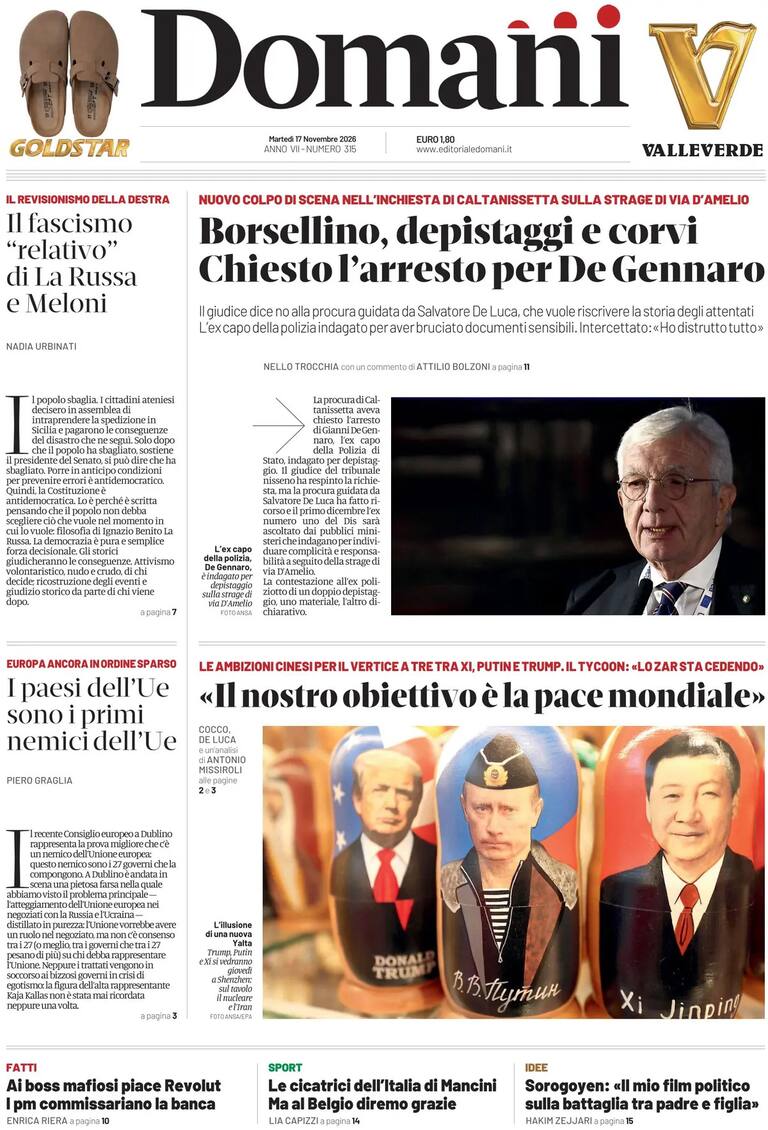
Domani leads on the cover-up investigation and the request to arrest Gianni De Gennaro. The story is also prominent in Il Messaggero, Corriere, Repubblica and Il Gazzettino. Il Messaggero’s headline explicitly includes the preliminary-investigations judge’s refusal; the official Corriere and Repubblica homepages consulted also report the rejection. The distinction is essential: a prosecution request is not an arrest carried out, and an investigation does not establish criminal responsibility. The contrast between headlines focused on the allegation and those including the judicial outcome is itself part of a critical reading of the day’s coverage.
Migration: one dossier, opposing frames
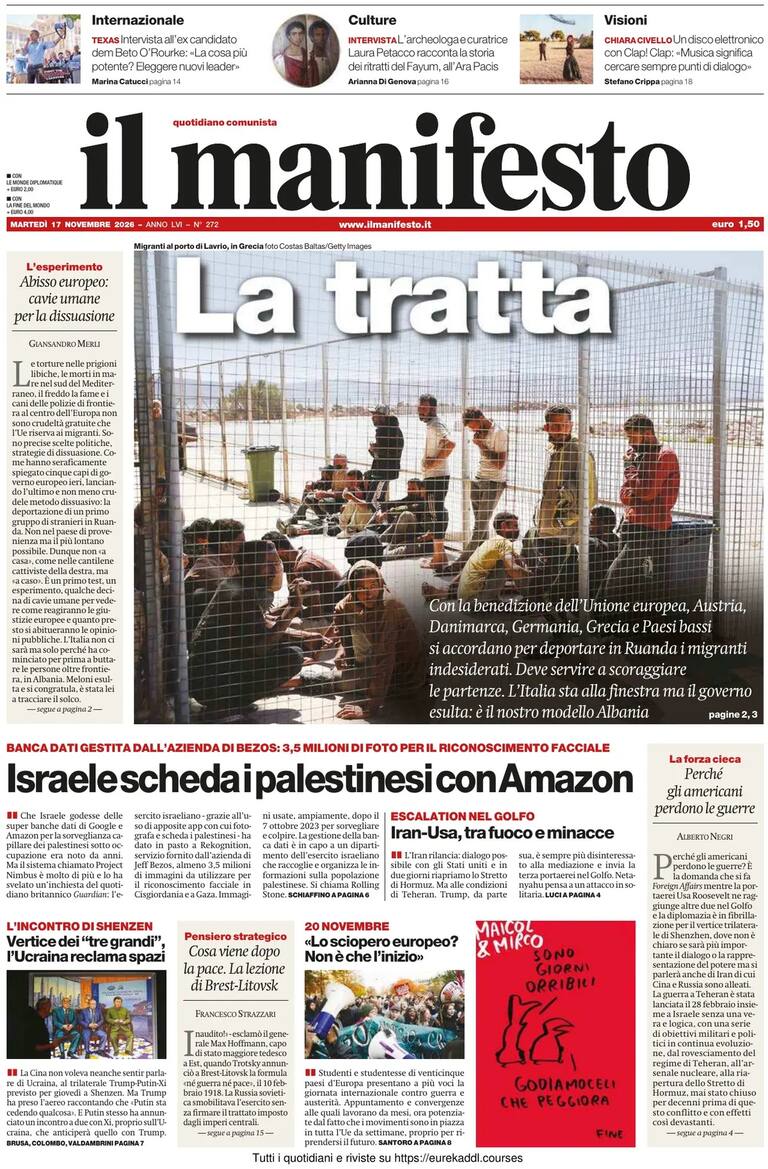
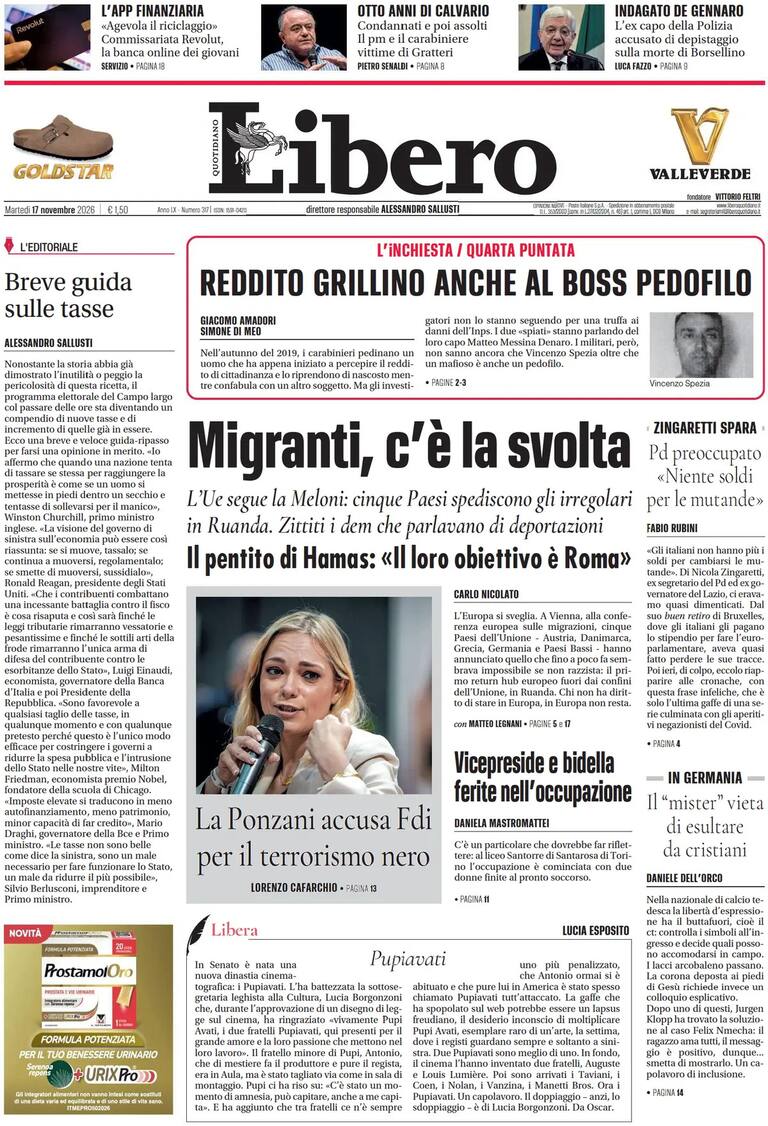
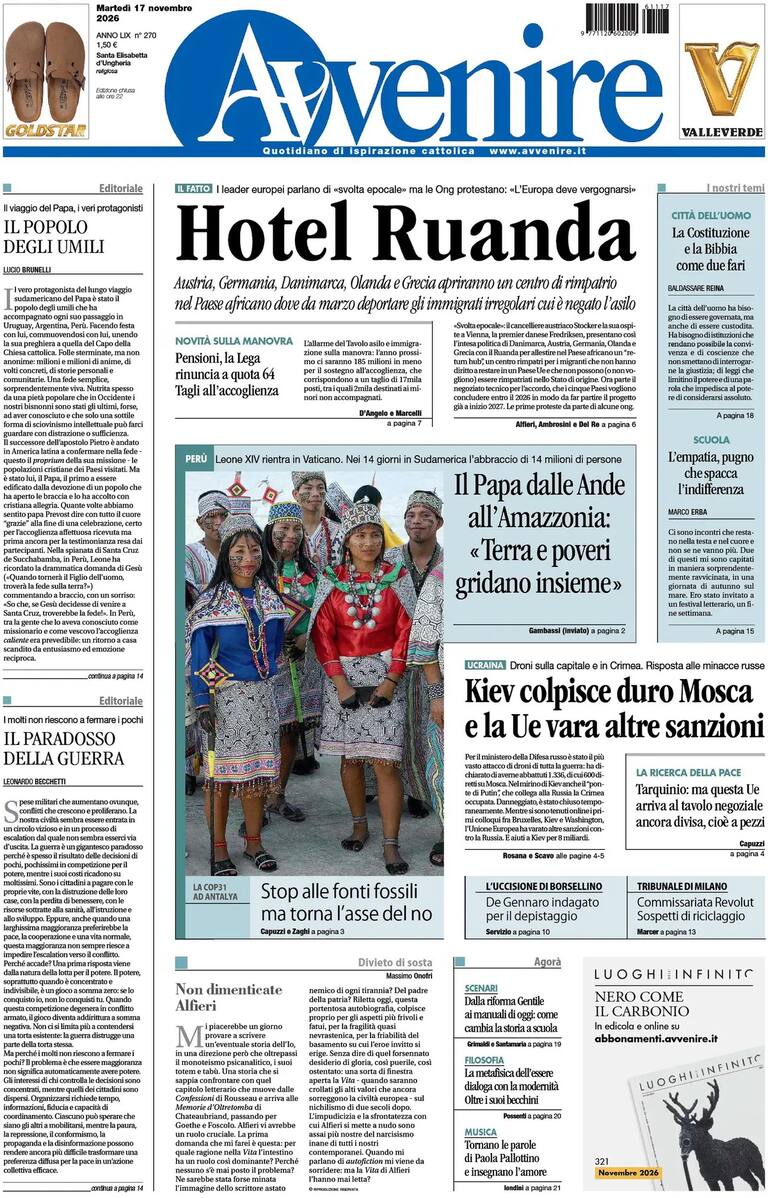
Avvenire chooses the phrase “Hotel Rwanda”, while il manifesto leads with “La tratta”, a reference to trafficking. Libero describes a turning point, and La Verità connects the discussion of the Albania model to the Rwandan prospect, alongside a workers’ protest on Lampedusa. This comparison does not justify confusing announced projects with facilities already operating: Corriere’s homepage places the planned start of the five-country European agreement in 2027. What changes most across the front pages is the perspective and political judgment: transferred people and rights, claims of effectiveness, or repercussions for local employment.
Ukraine, justice and influence: other priorities
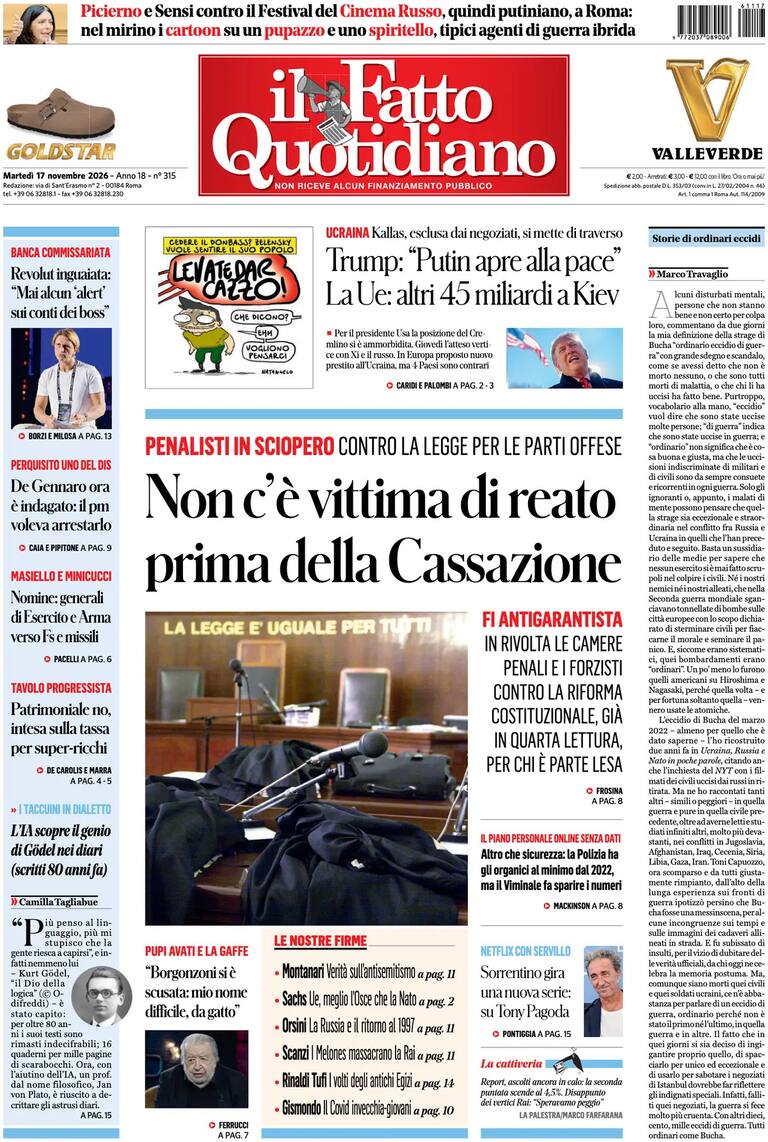
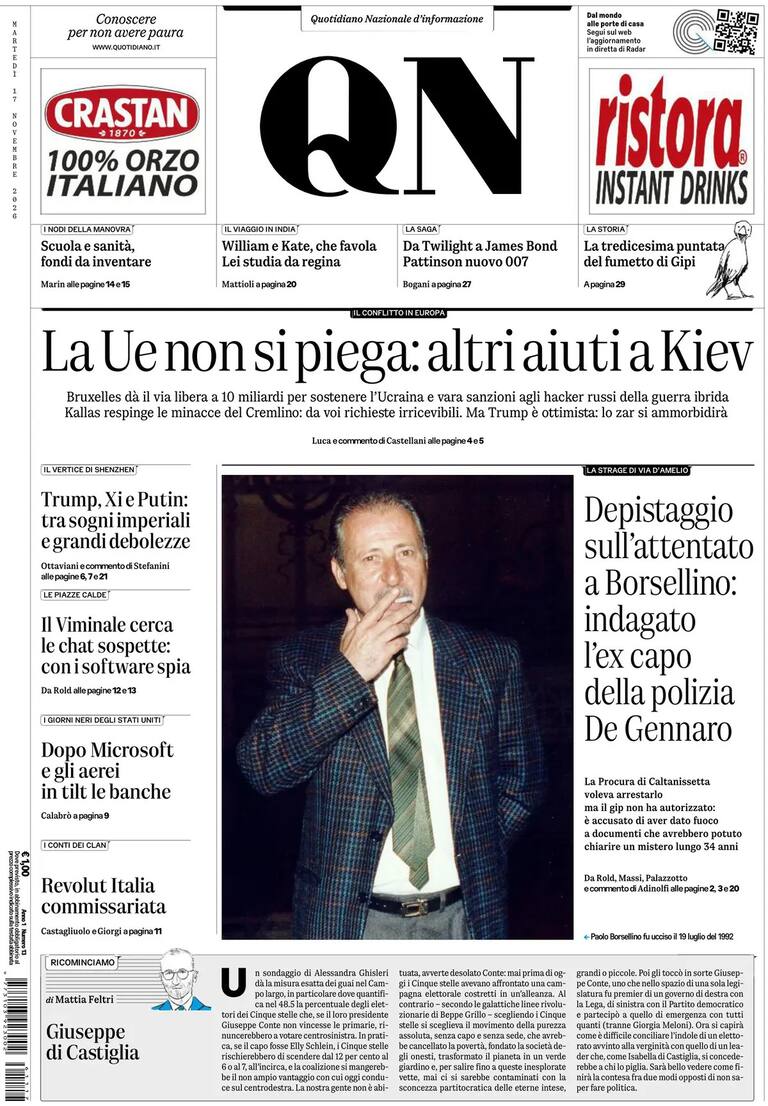
QN foregrounds continued European support for Kyiv. Il Fatto Quotidiano features Trump and Ukraine near the top, but gives its largest headline to a controversial assertion about a victim’s status before a Court of Cassation ruling. This review records that editorial choice without adopting the statement as a legal definition. Il Foglio opens its international discussion with a critical commentary on the global order. Il Tempo instead leads on Qatar and the Venice Biennale, interpreting donations through the lens of influence: that is the newspaper’s argument, not a conclusion independently established by this review.
The common thread is therefore not a single dominant headline. It is the intersection of trust in financial institutions, the distribution of resources and scrutiny of public decisions, with pronounced differences in how each newspaper selects responsibilities, affected groups and consequences.