Front pages on 16 November: Moscow’s threat, taxation and Italy’s priorities
Press review for Monday, 16 November 2026, 06:30 edition, Rome time. Sixteen front pages, each checked by reading its printed date, reveal two dominant themes: Moscow’s pressure on Europe and Italy’s dispute over taxation and opposition alliances. Alongside them, financial and local newspapers highlight priorities that a diplomatic narrative alone could obscure. This review compares editorial choices: statements, allegations and interpretations remain attributed to the newspapers presenting them.
Europe and Ukraine: one warning, different frames
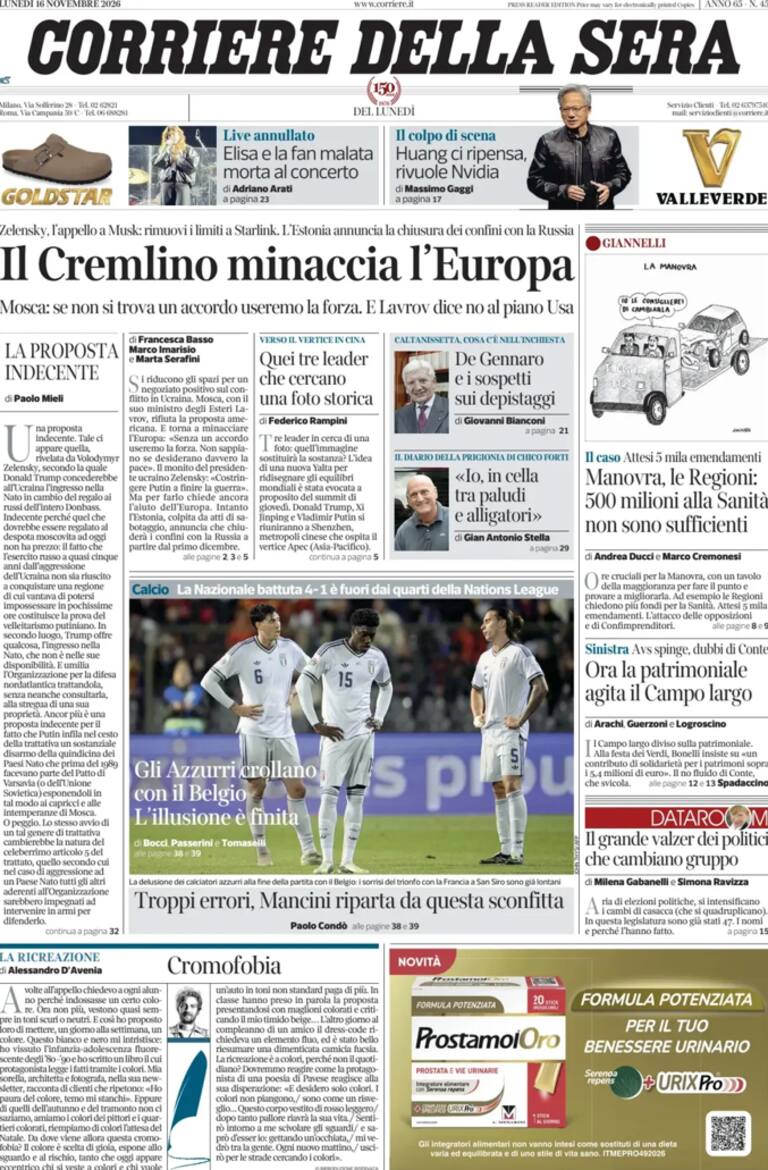
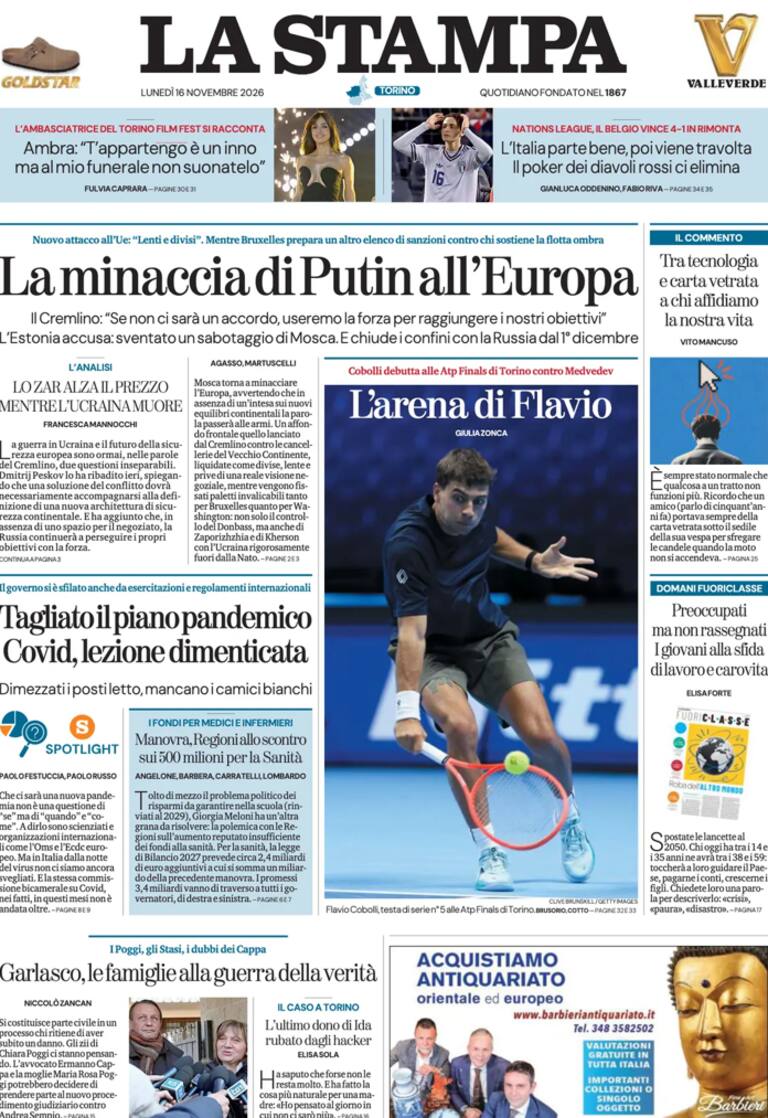
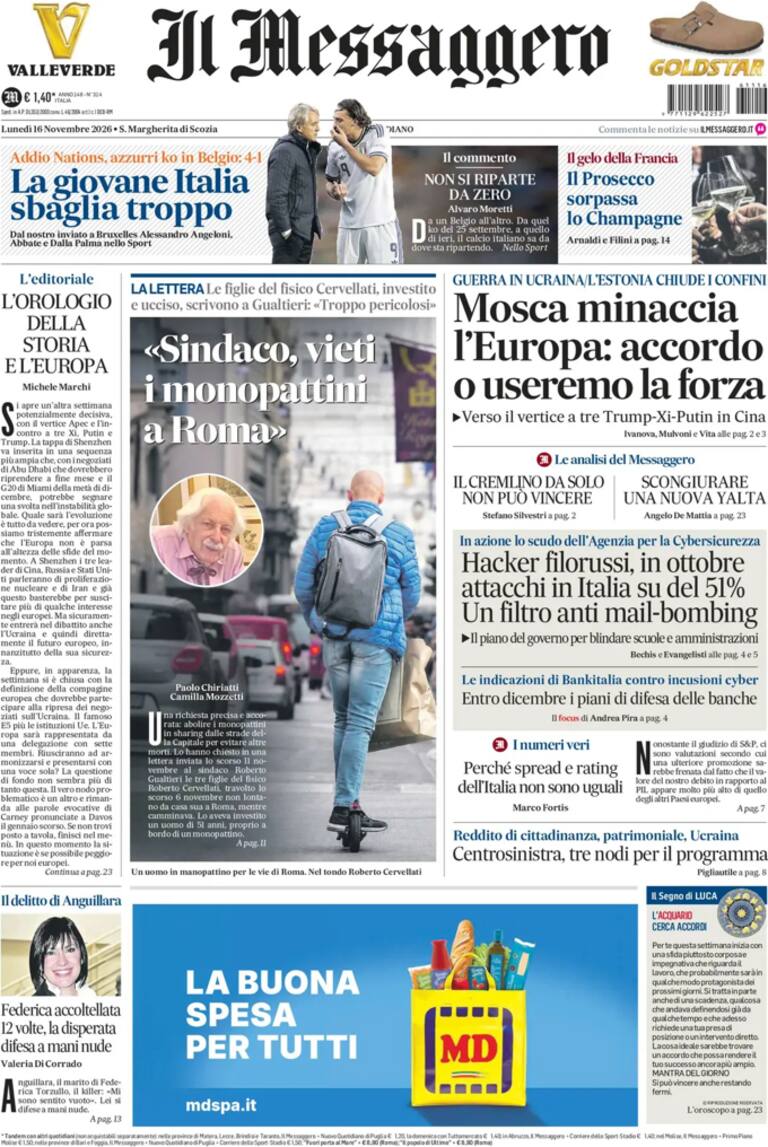
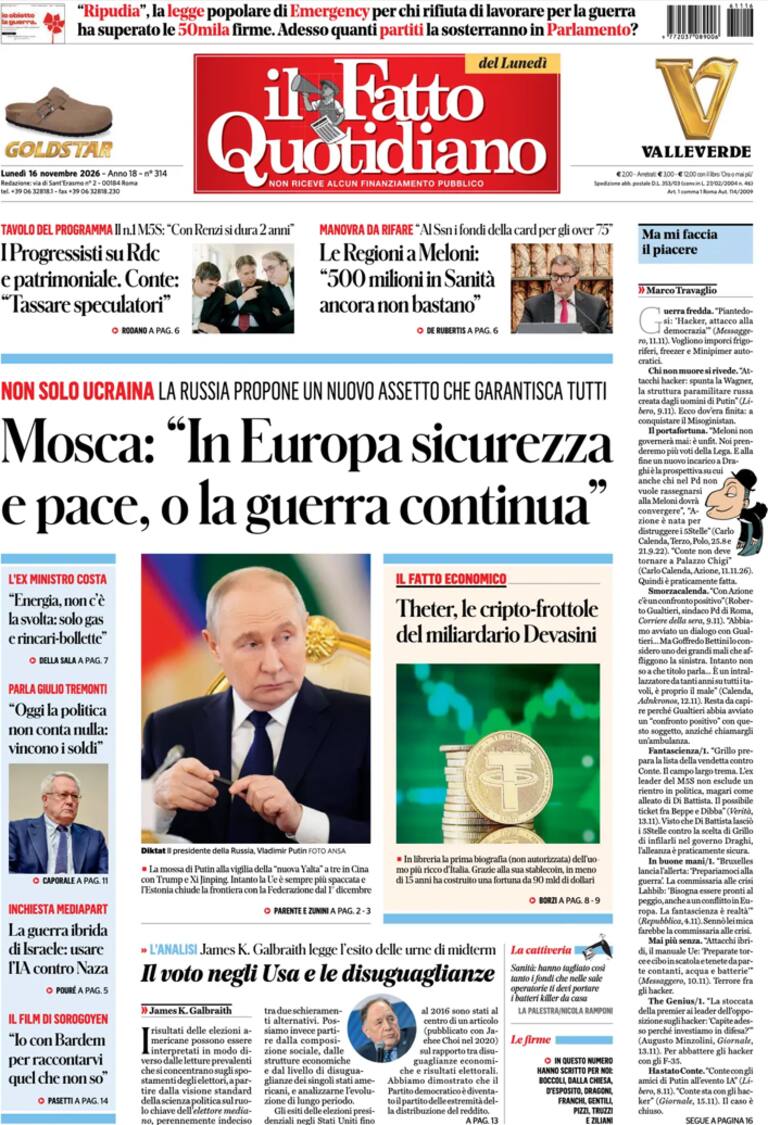
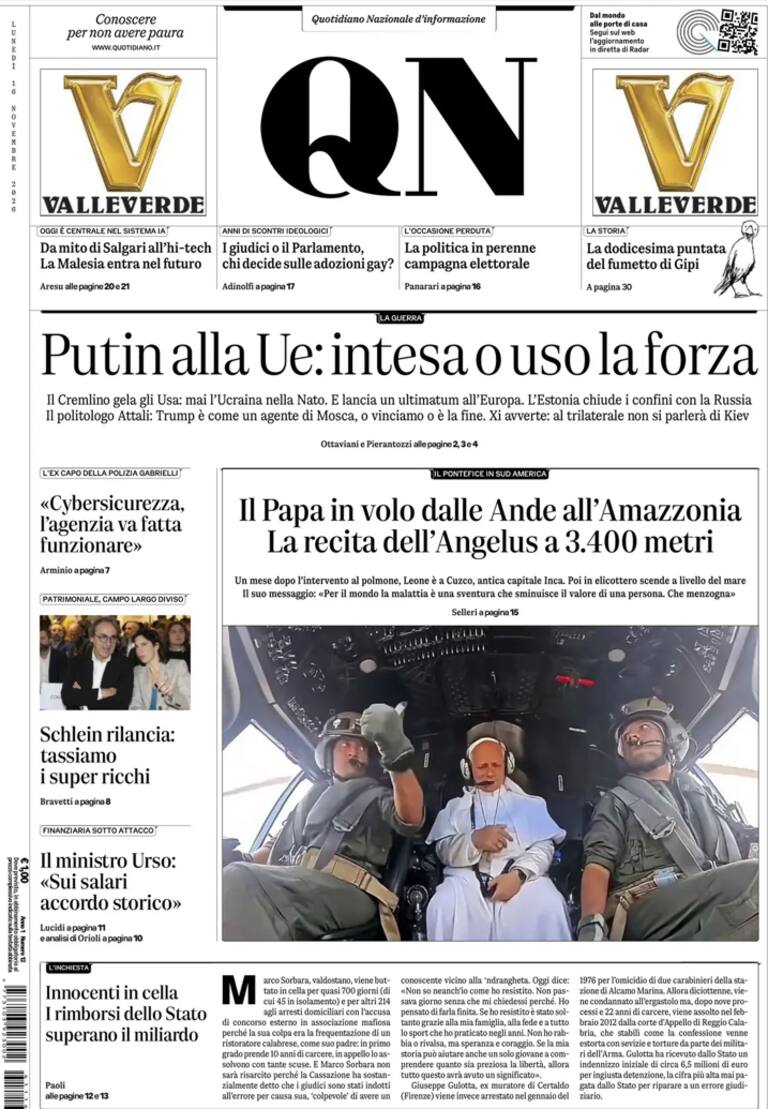
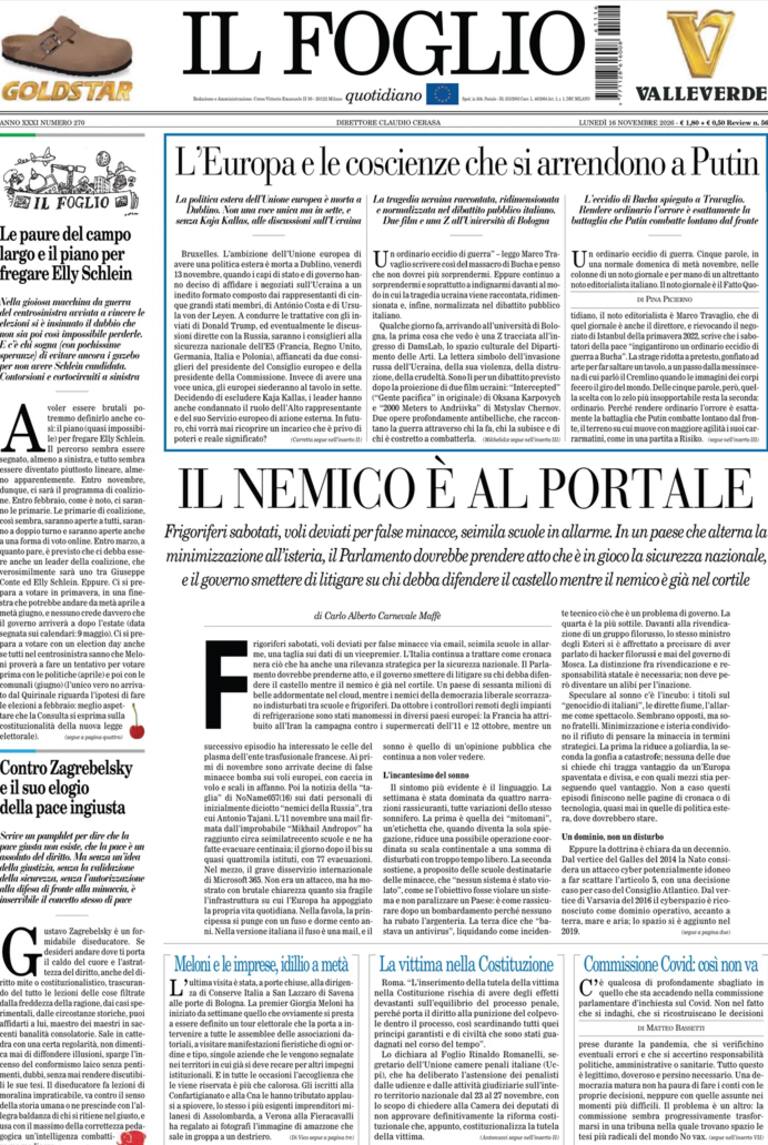
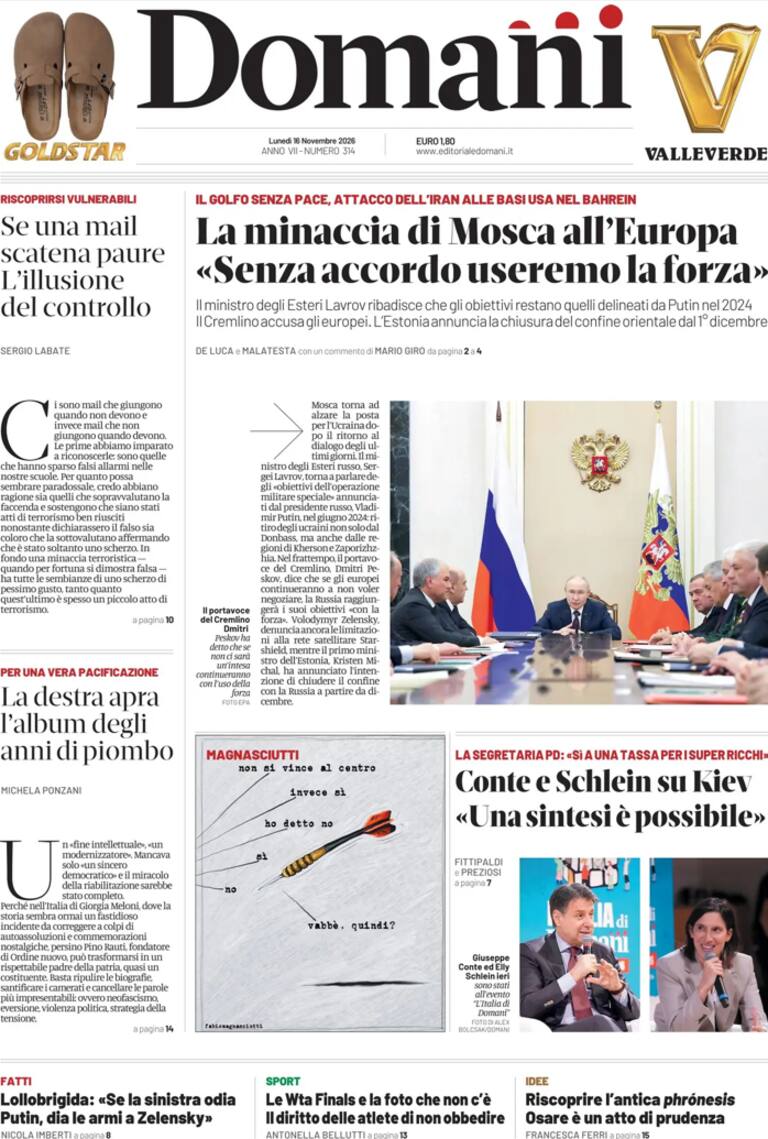
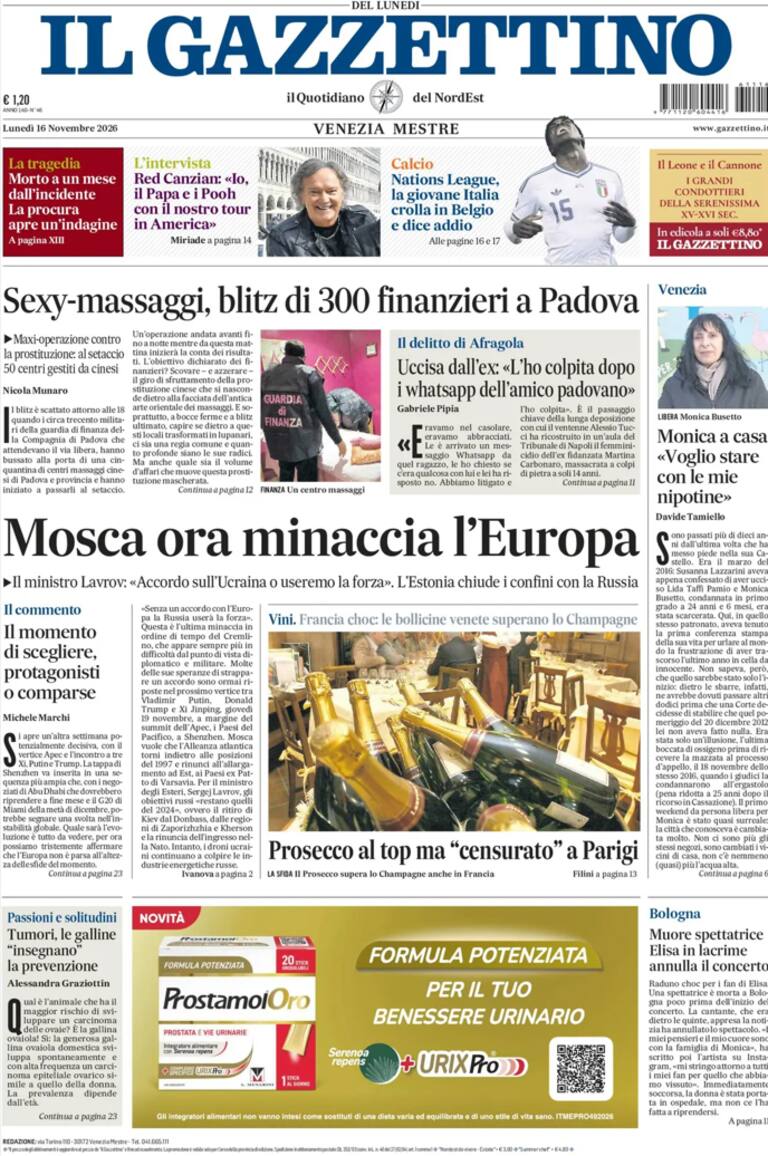
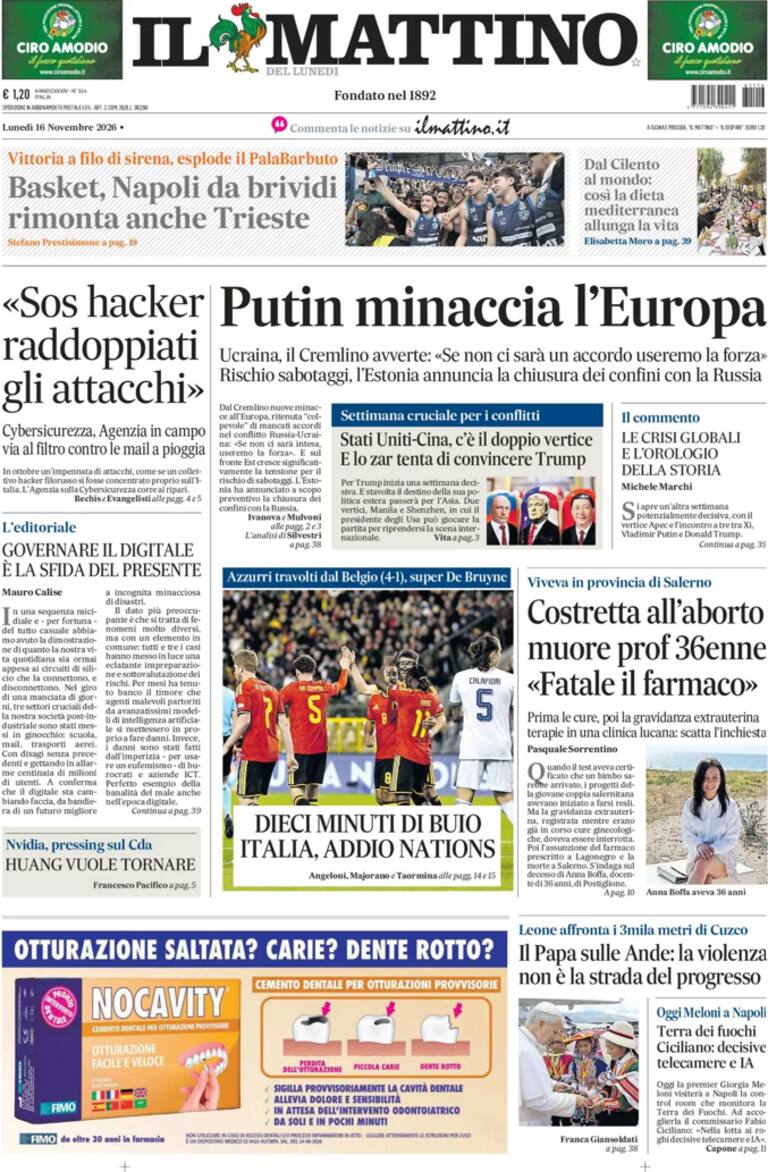
Corriere della Sera and La Stampa place Russia’s threat to Europe at the centre. QN frames it as a choice between agreement and force; Il Messaggero and Il Gazzettino stress the same hardening of negotiations. Il Mattino gives the warning prominent treatment, while Il Secolo XIX highlights both pressure on the European Union and Russia’s distance from the American NATO proposal. Domani leads on Moscow’s threat alongside the Middle Eastern front. Il Fatto Quotidiano instead chooses a quotation linking security and peace in Europe to the continuation of the war. Il Foglio stresses European political responsibility, judging what it sees as a surrender of conscience to Putin. The shared story is not an achieved peace but a tougher negotiation; the emphasis shifts between intimidation, conditions and Western responsibilities.
Wealth taxation and the opposition: competing accounts
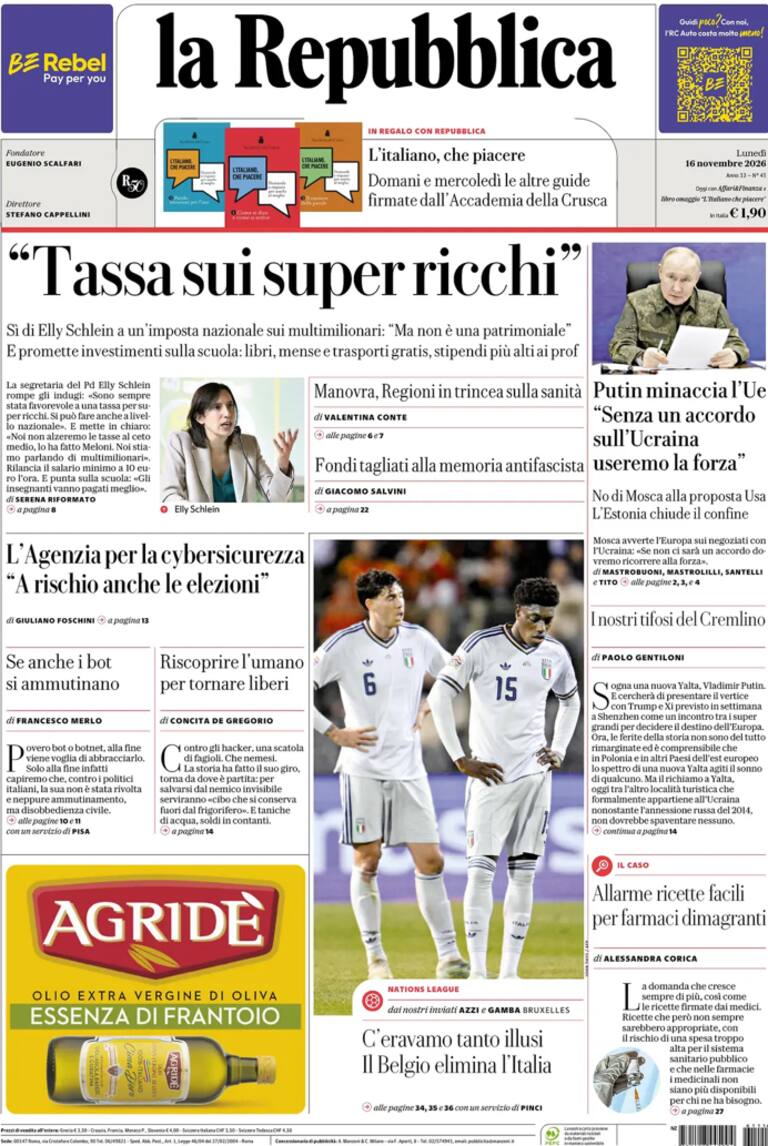
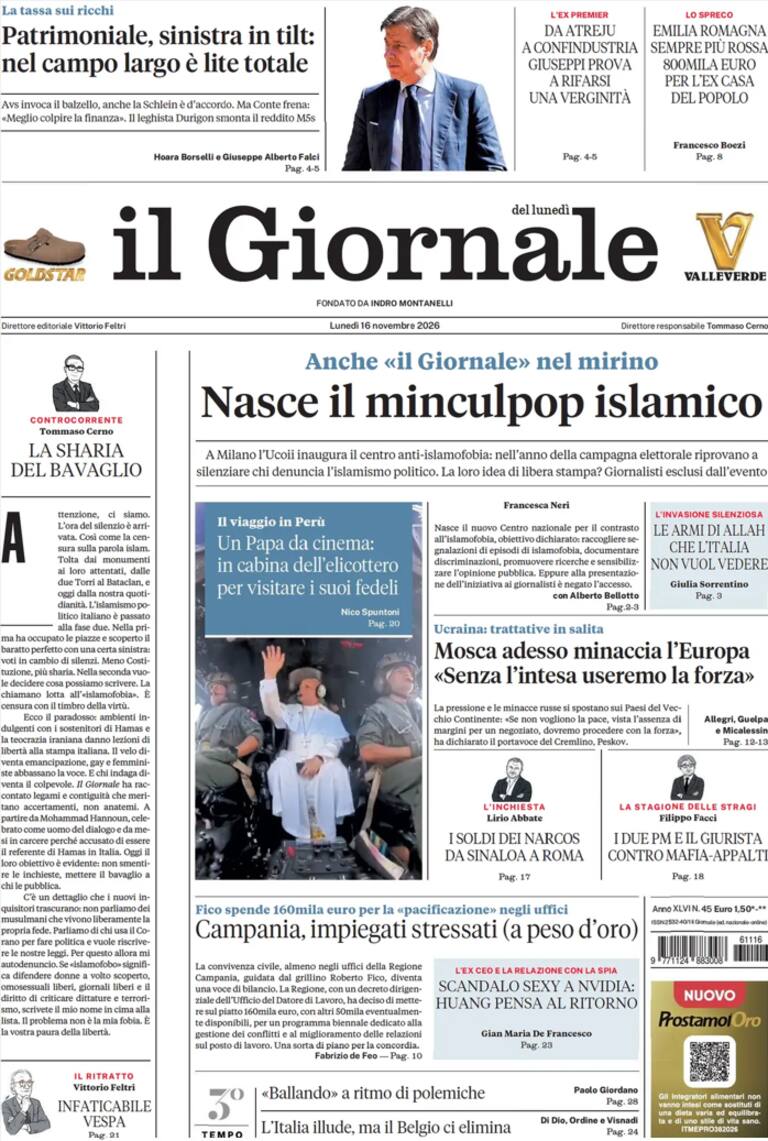
Repubblica leads on Schlein’s support for taxing the super-rich and notes Conte’s distance over a wealth tax. Il Tempo turns the debate into criticism of the opposition alliance, linking it to the citizens’ income scheme. Il Giornale highlights divisions within the broad opposition camp over the levy, while La Verità offers a critical electoral reading through a poll reference. These are not four independent confirmations of one conclusion: they are different agenda choices and judgments. Without examining the survey’s method and sample, the newspaper’s reference is not converted here into an independent estimate of electoral support.
Other leads: investigations, information and family finances
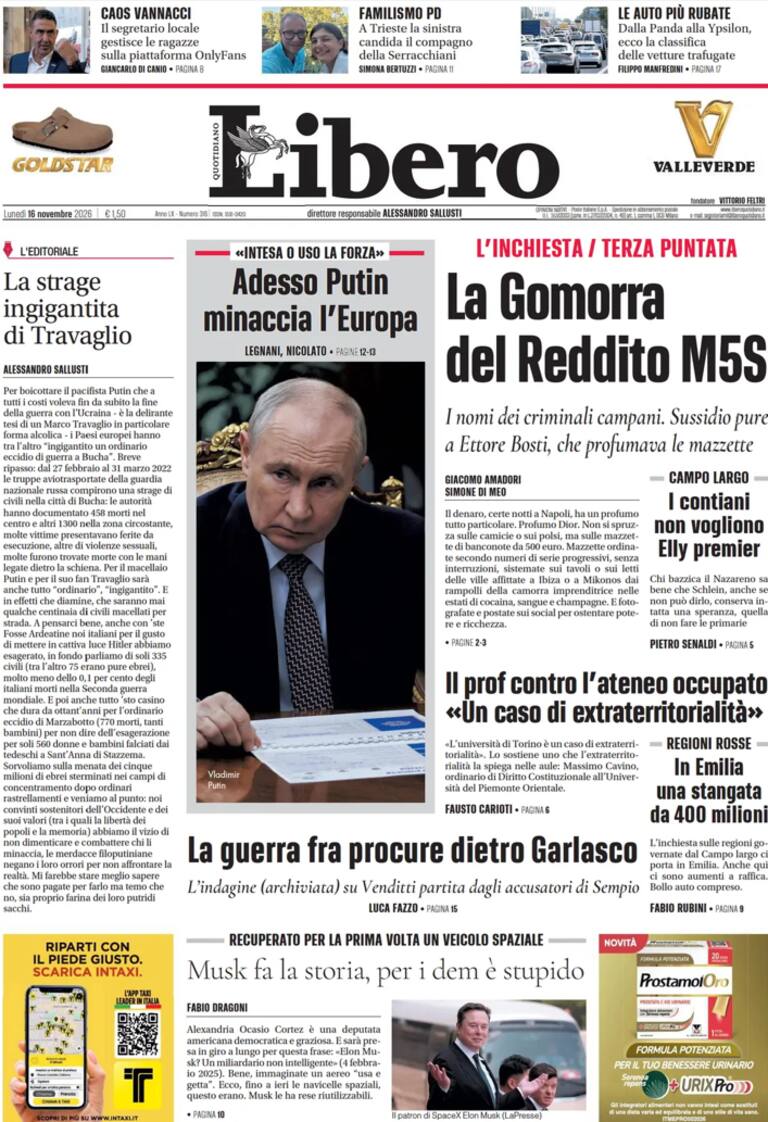
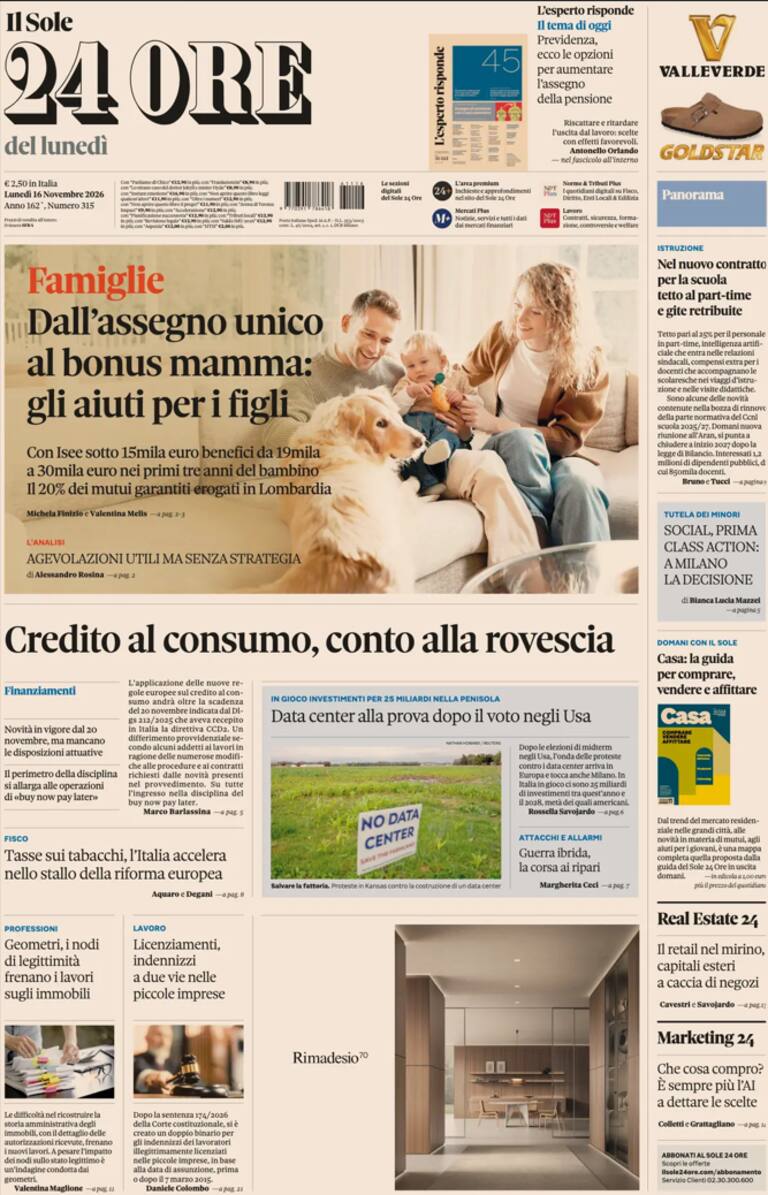
Libero gives considerable space to its investigation into the citizens’ income scheme and alleged criminal connections. These remain allegations presented by the newspaper, not responsibilities established by this review. Il Giornale’s main lead is a controversy over information and the inauguration of an anti-Islamophobia centre in Milan, expressed in openly judgmental language. Monday’s Il Sole 24 Ore stands apart with practical coverage of support for children and consumer credit. Its approach adds household-budget questions to political confrontation; a headline cannot replace checking the eligibility rules for individual benefits.
Local affairs and sport are not peripheral
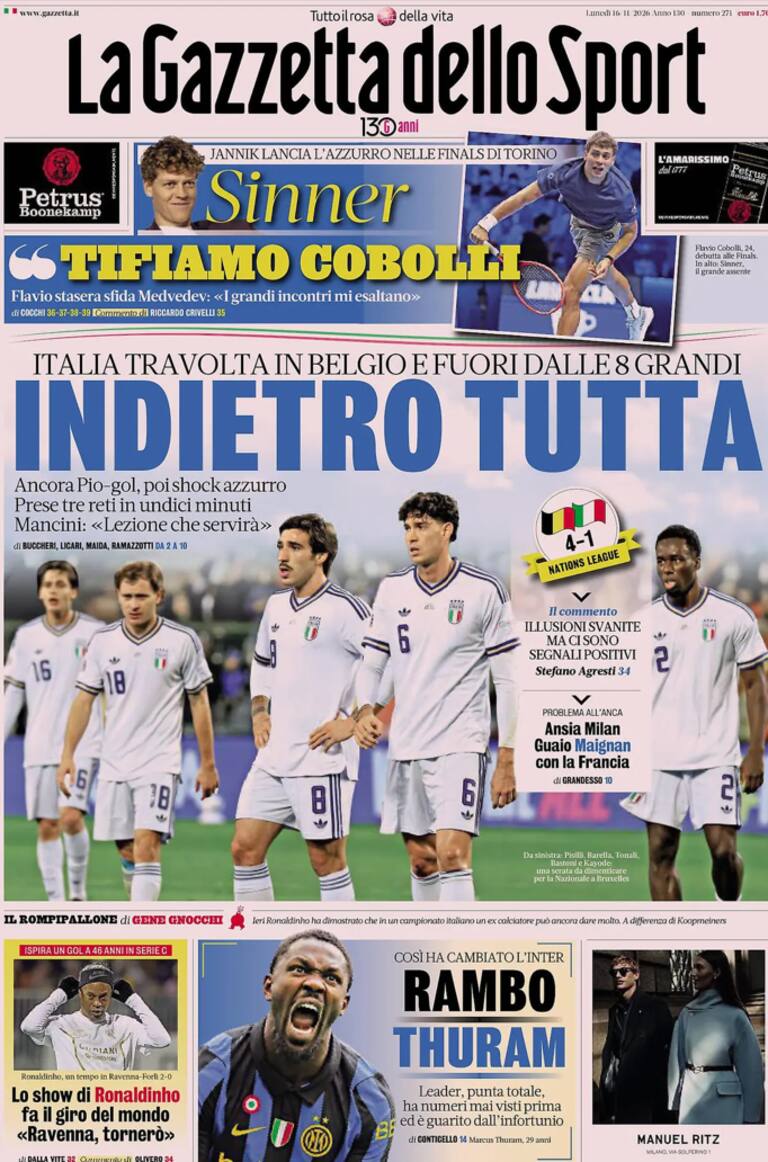
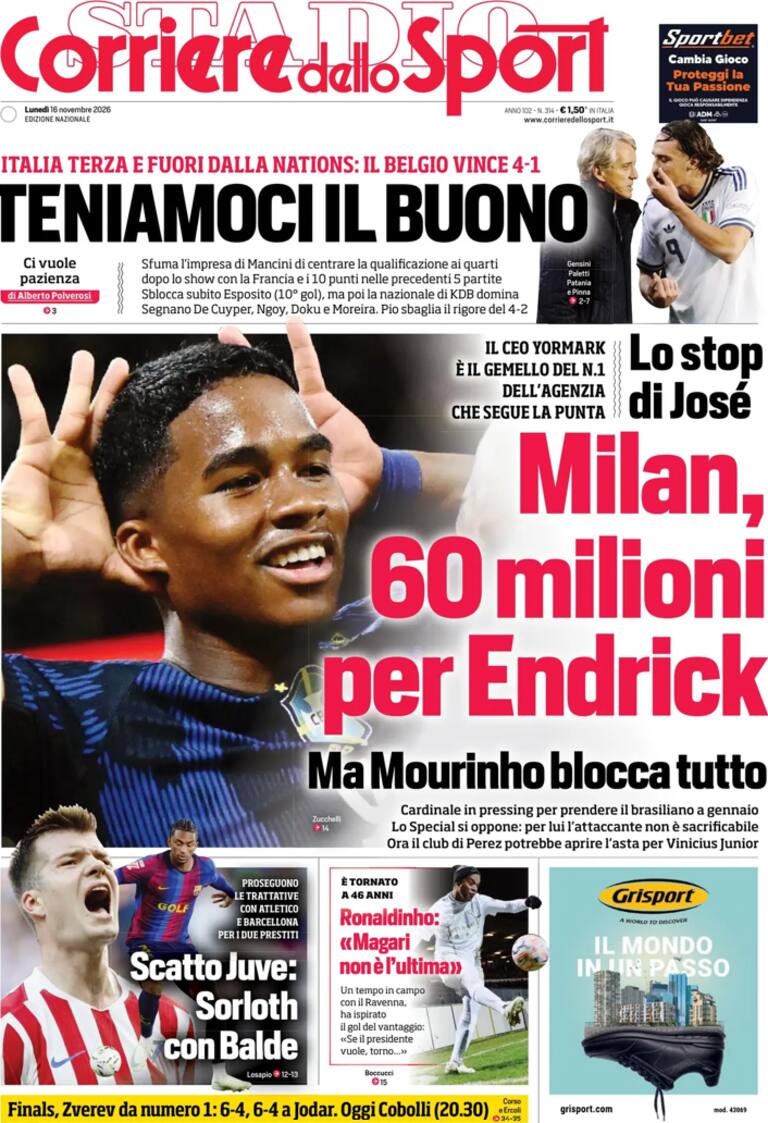
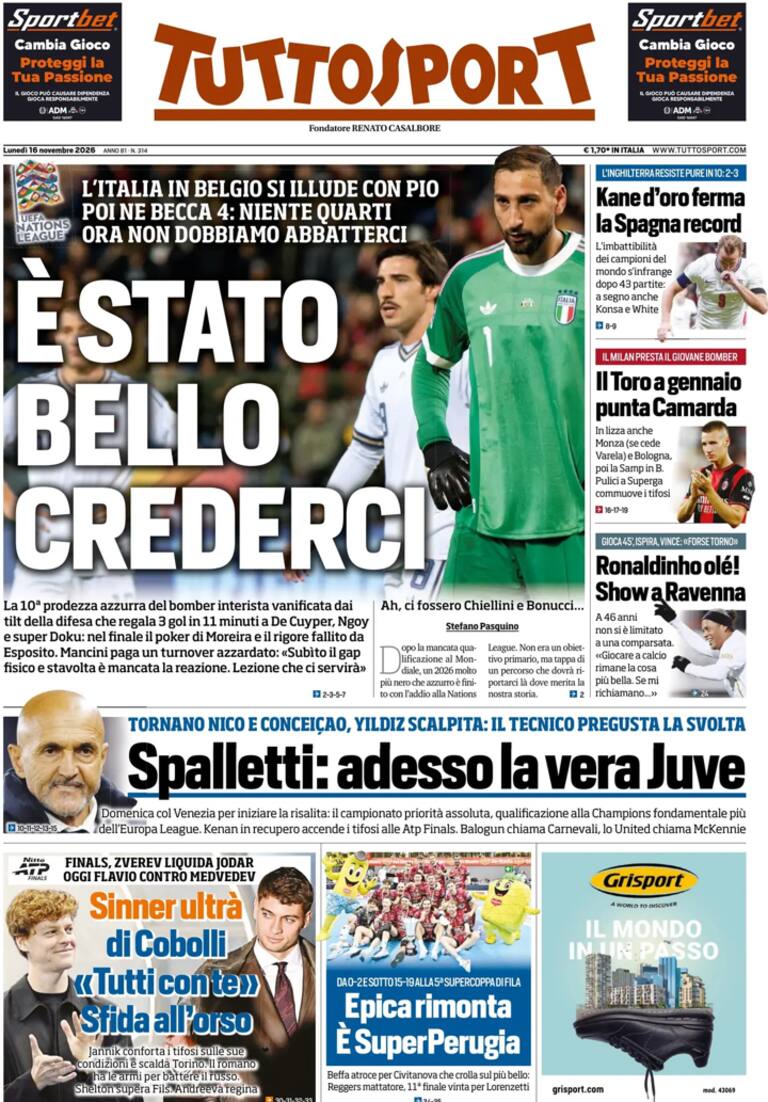
Il Secolo XIX highlights Genoa’s shipping event; Il Mattino prominently features Napoli’s basketball victory. Il Gazzettino places a local investigation in Padua alongside international affairs. Italy’s defeat in Belgium appears in several newspapers, with the 4–1 score and Nations League elimination; La Stampa also gives Turin tennis substantial prominence. These combinations show how the same day can be understood through international security, incomes, cities or sport. This review compares those hierarchies without reproducing front-page images: links to all sixteen newspapers lead to their official websites.