Italy’s front pages, 26 November: De Gennaro’s letters, judges’ pay and Brignone’s farewell
Gianni De Gennaro’s letters divide the front pages of Italy’s newspapers on Thursday, 26 November. Alongside a case linking justice to the legacy of the mafia massacres, the papers focus on judges’ pay, renewed trade tensions with the United States and Federica Brignone’s retirement from competitive skiing. The same events produce markedly different accounts, shaped by each newspaper’s priorities and interpretation.
## De Gennaro: letters and competing interpretations
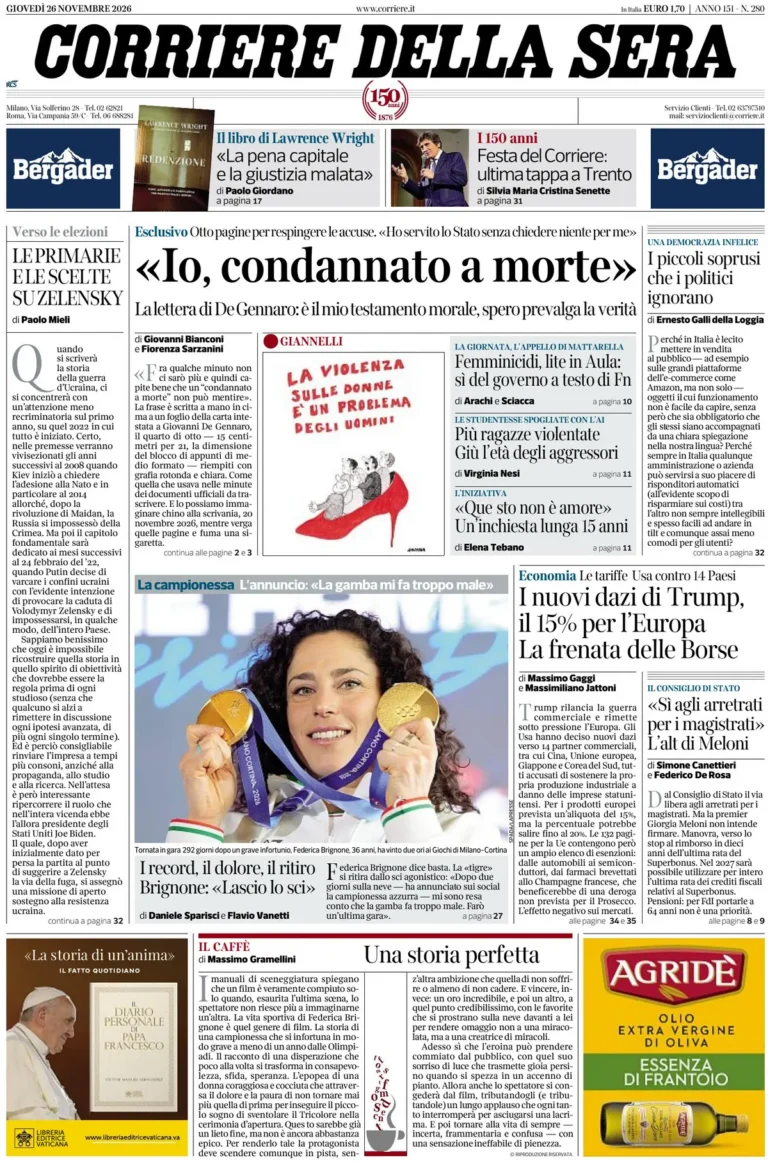
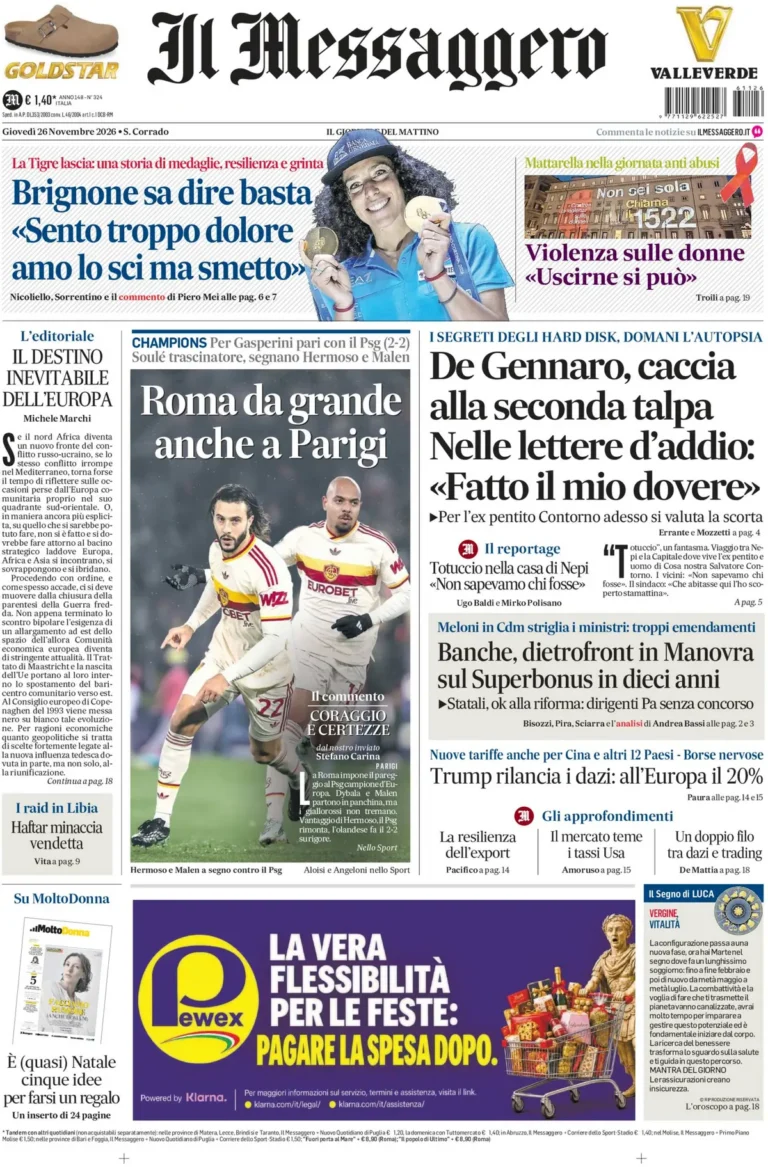
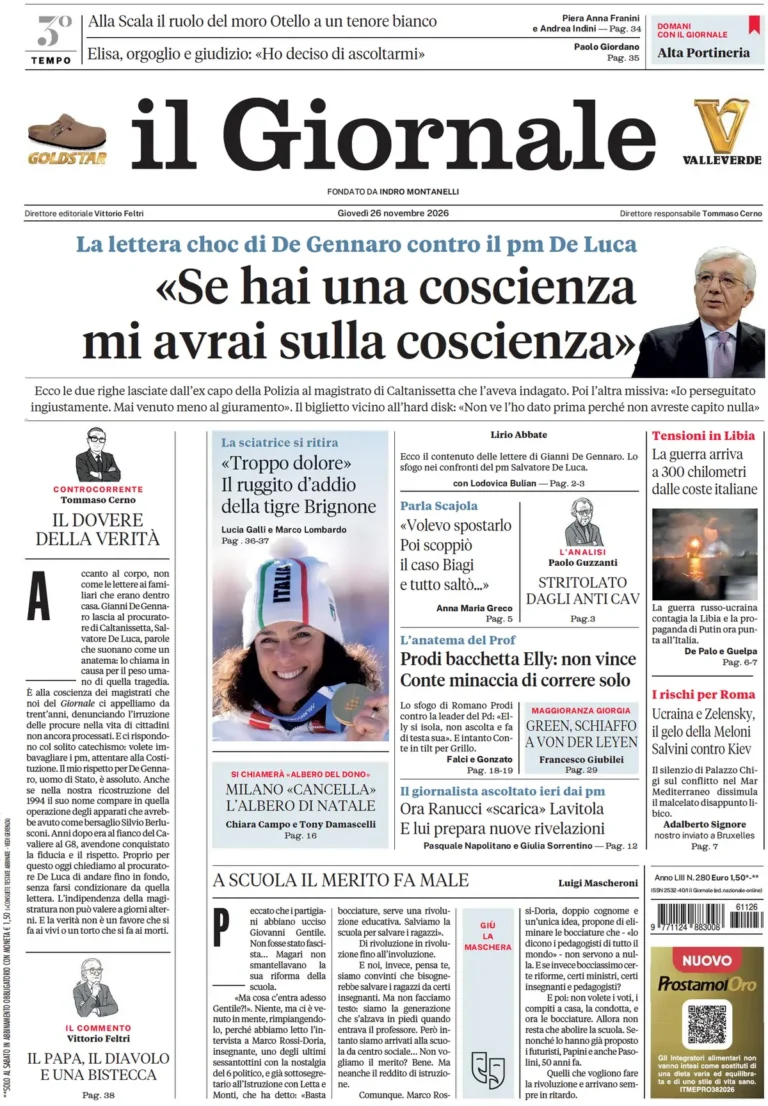
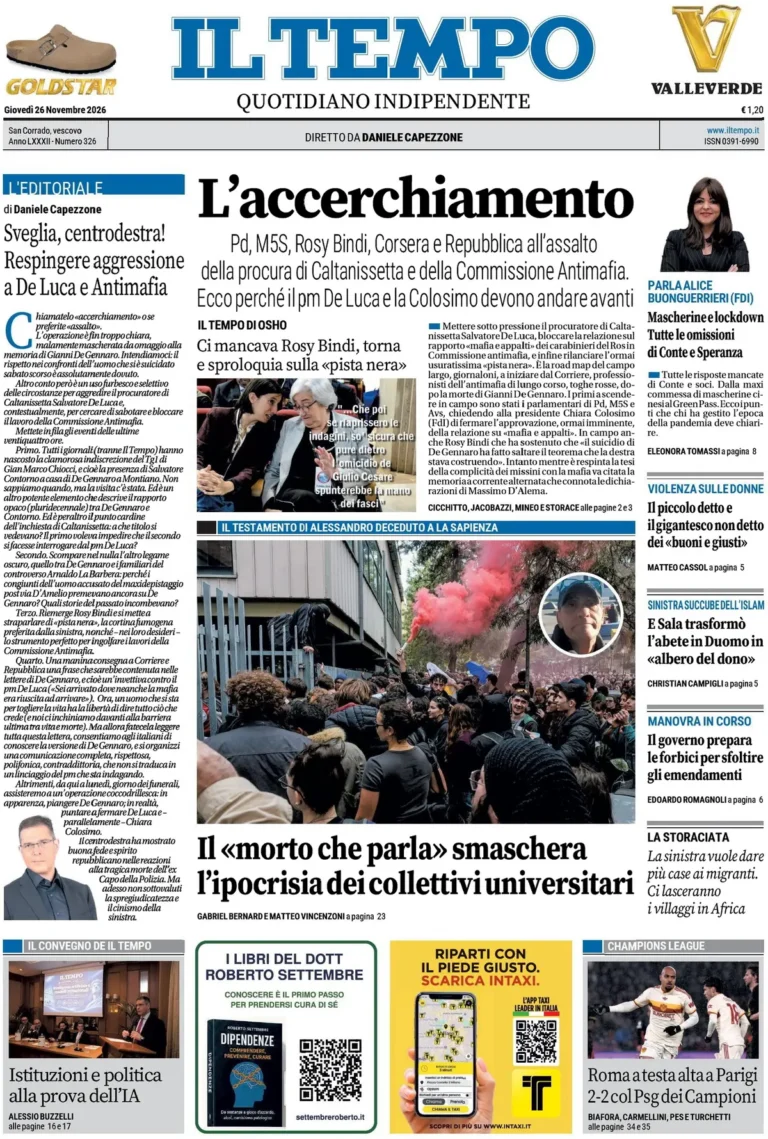
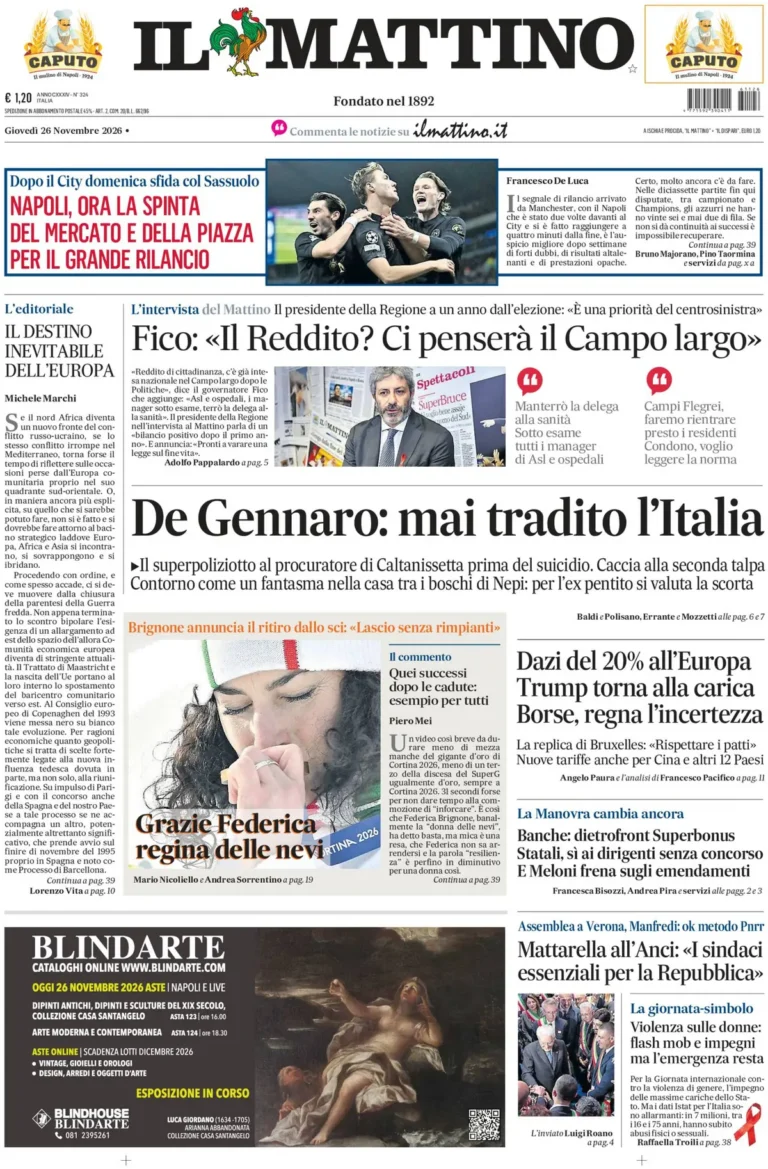
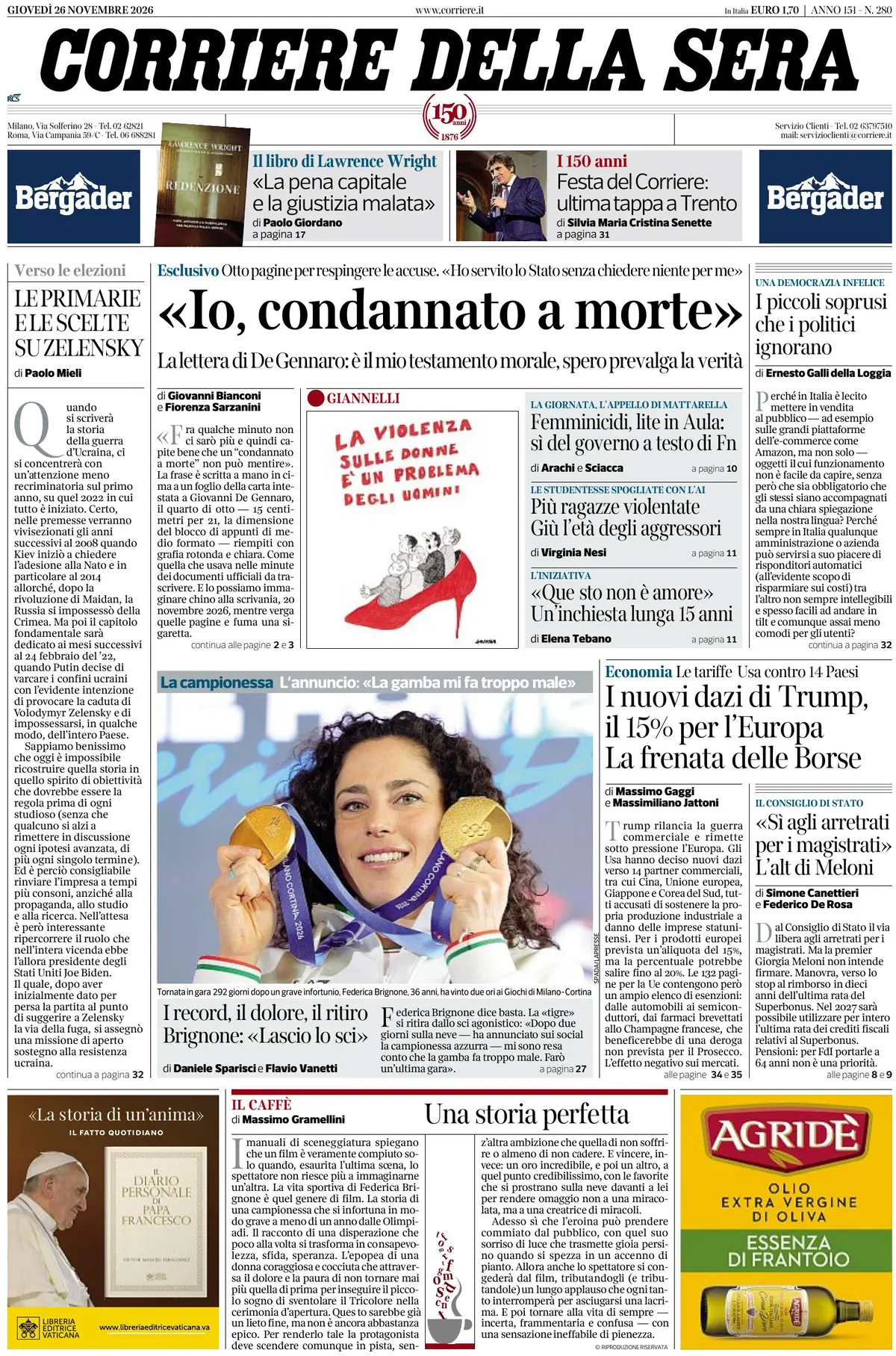
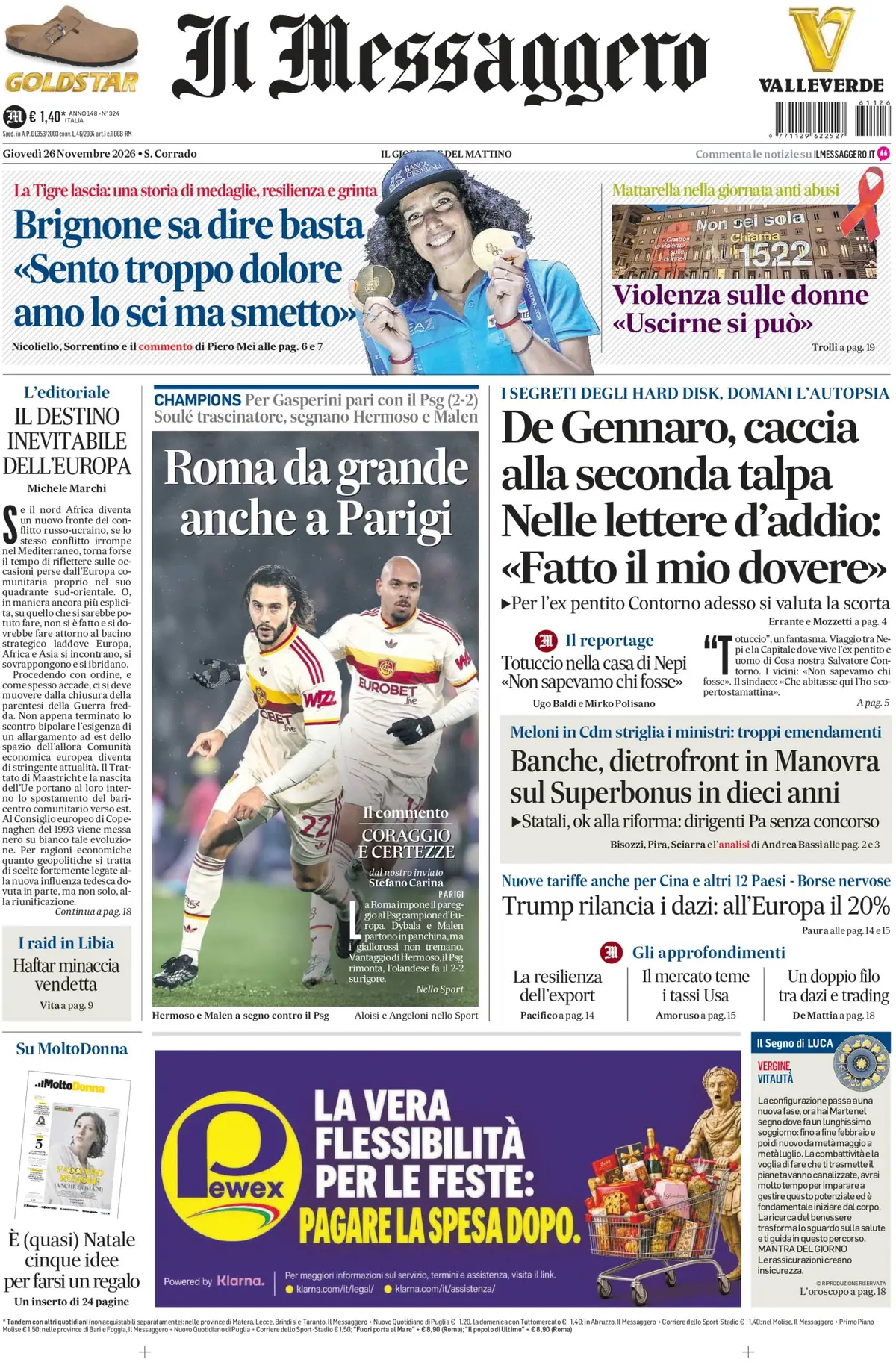
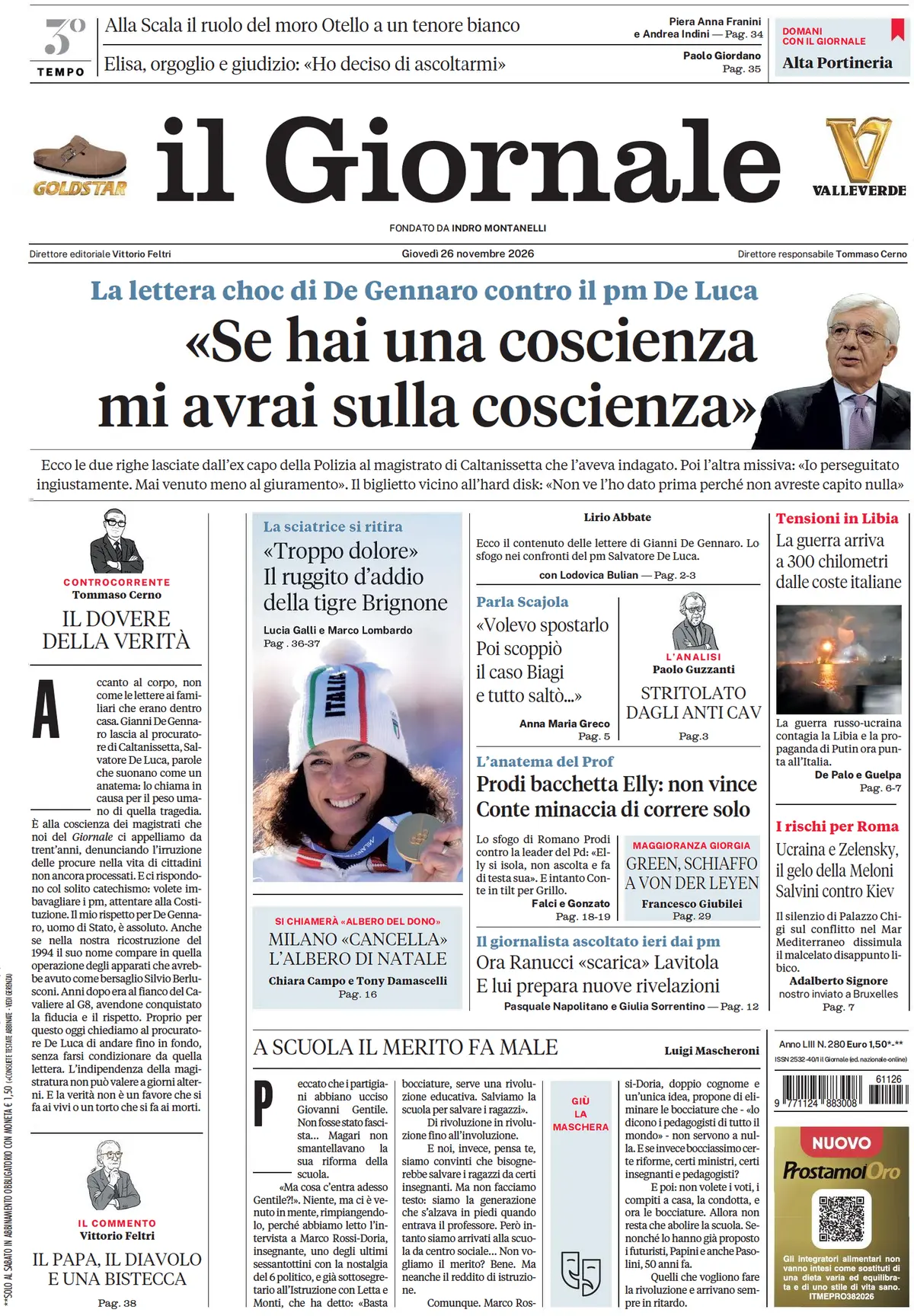
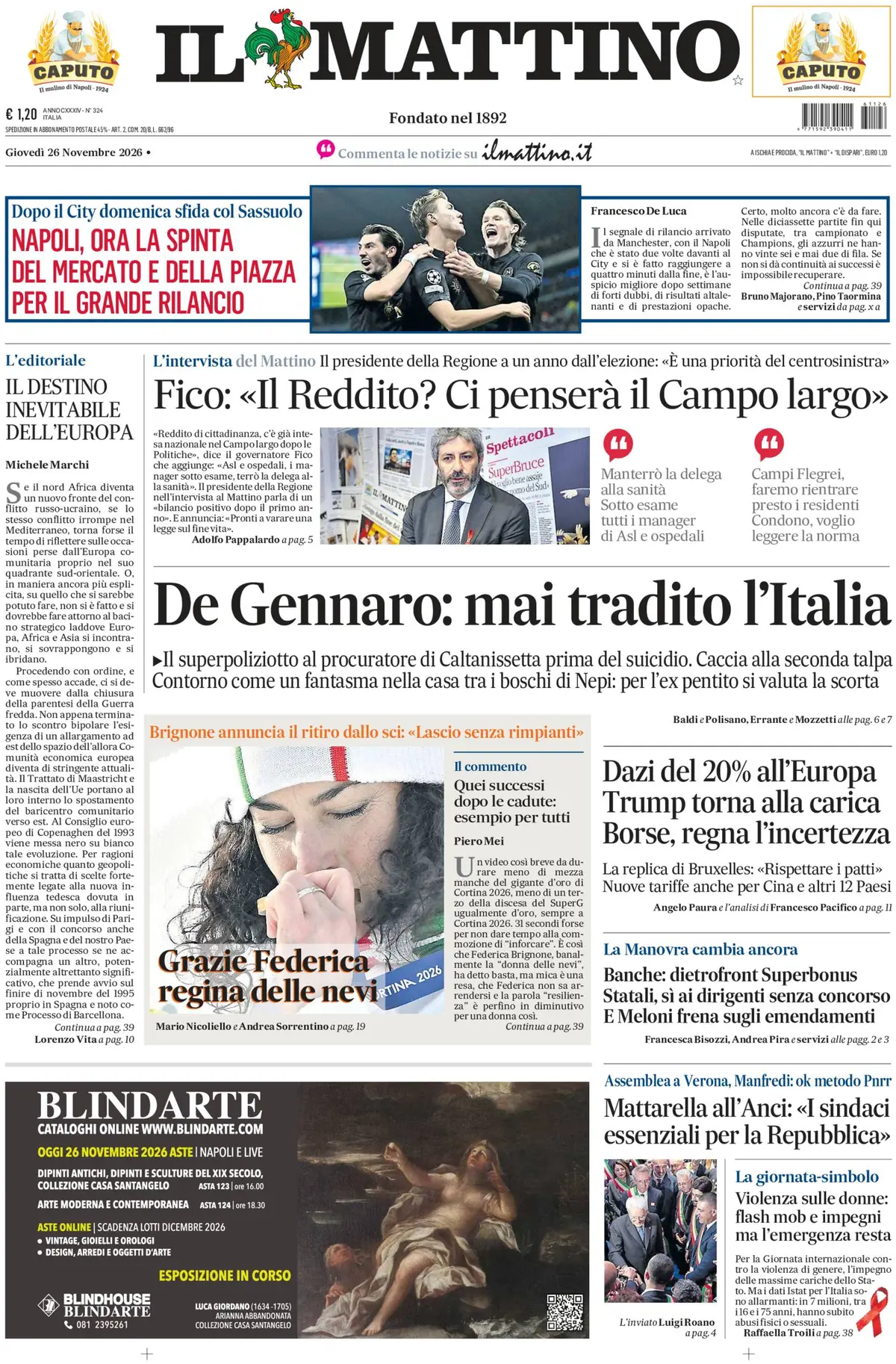
Corriere della Sera leads with De Gennaro’s moral testament and his statement that he felt condemned to death. Il Giornale highlights the words addressed to the Caltanissetta prosecutor. Il Messaggero broadens the focus to the search for a second mole and the protection of former mafia informant Contorno, while Il Mattino emphasises De Gennaro’s insistence that he had remained loyal to Italy.
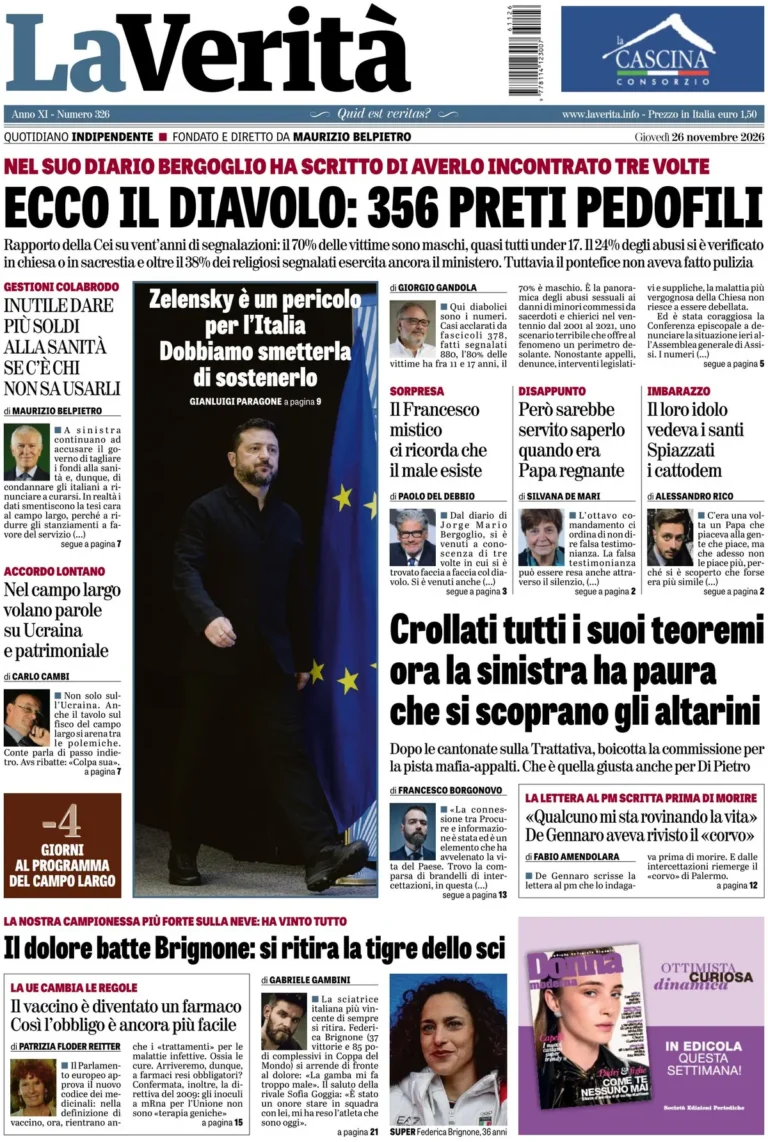
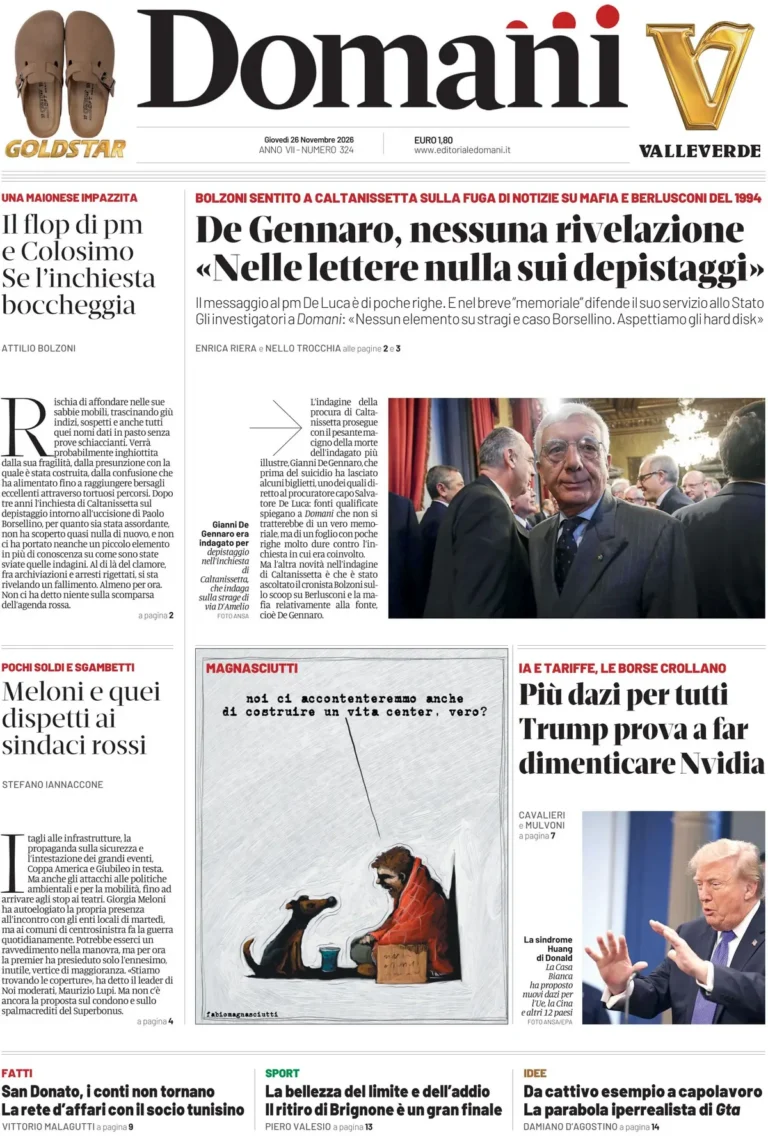
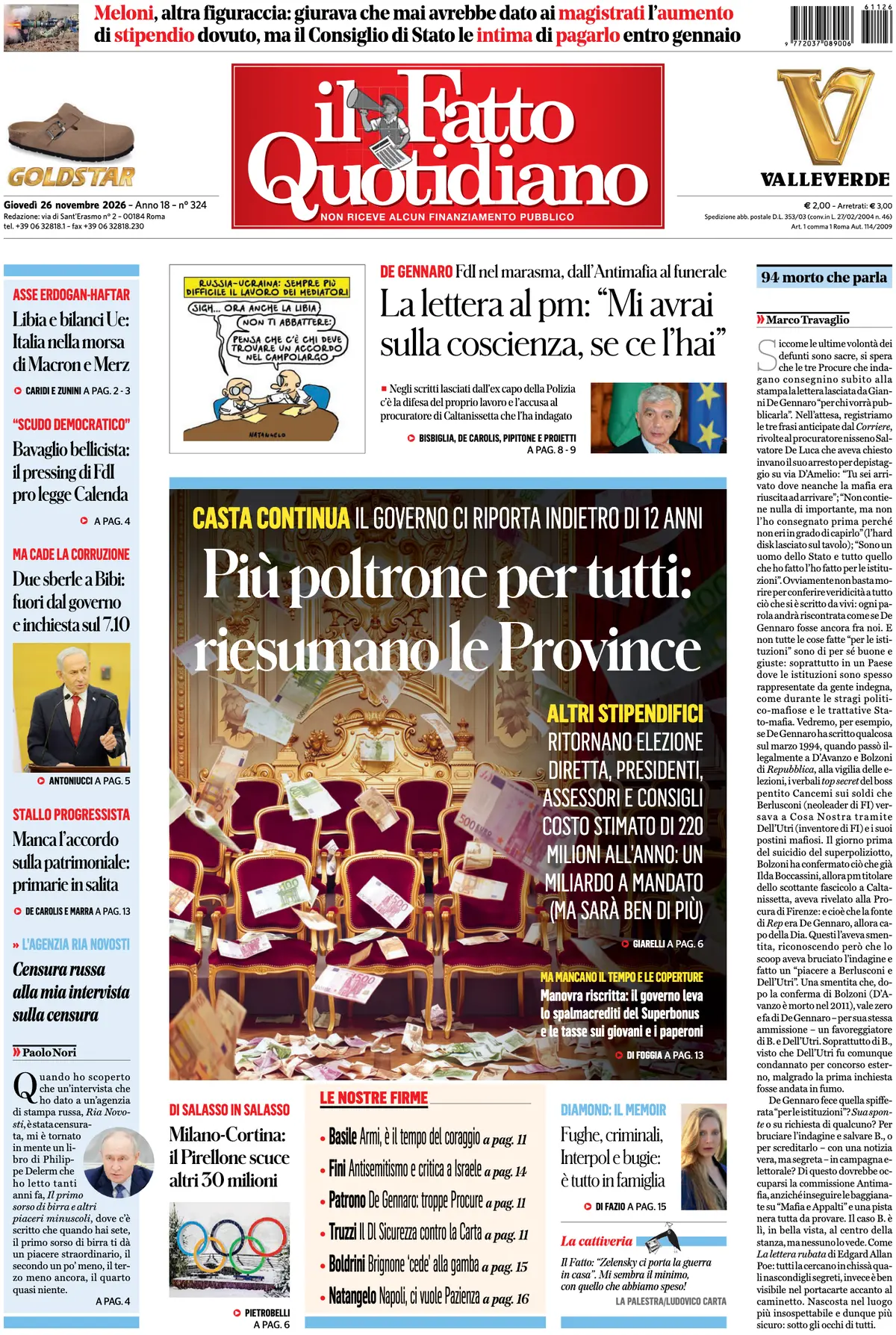
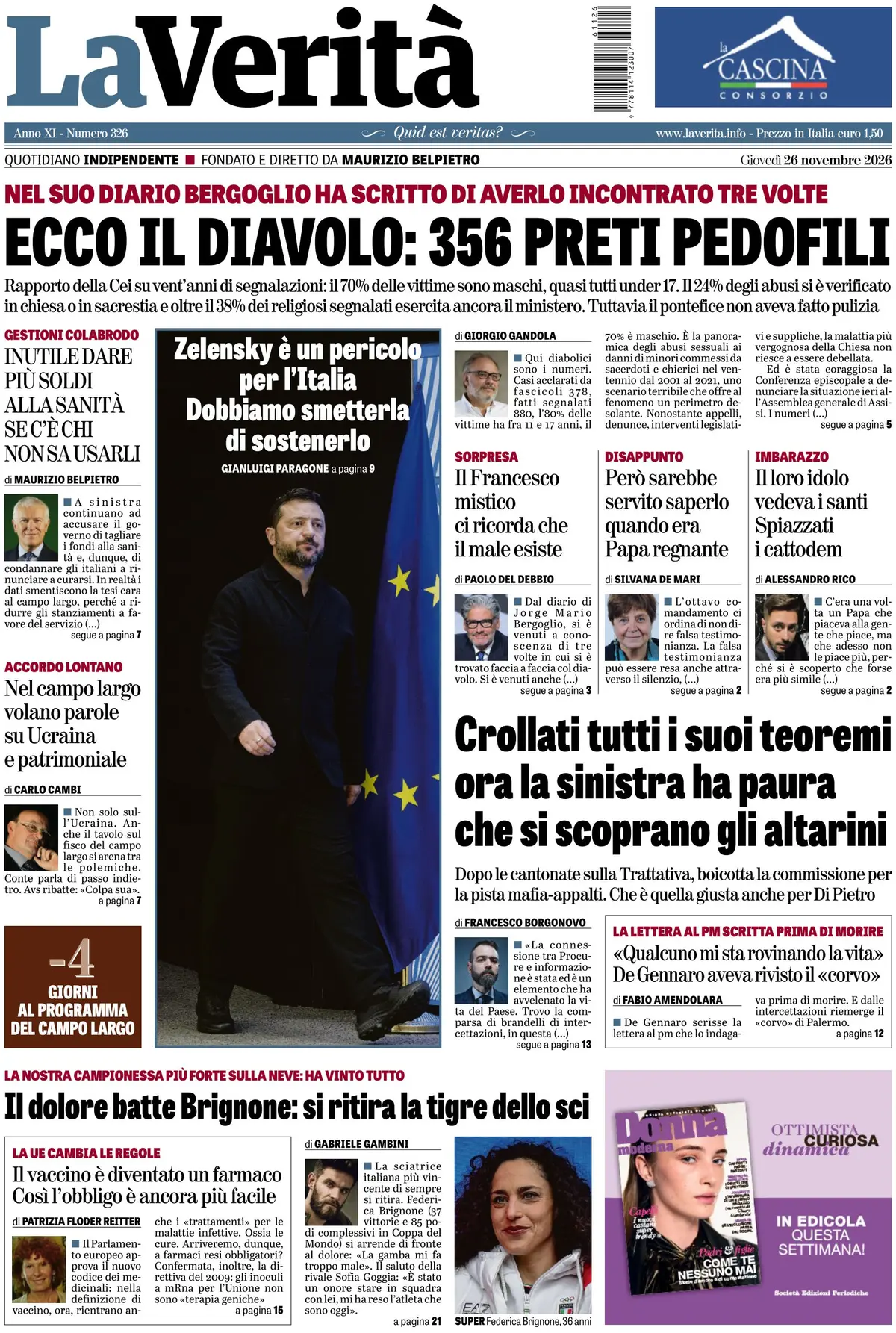
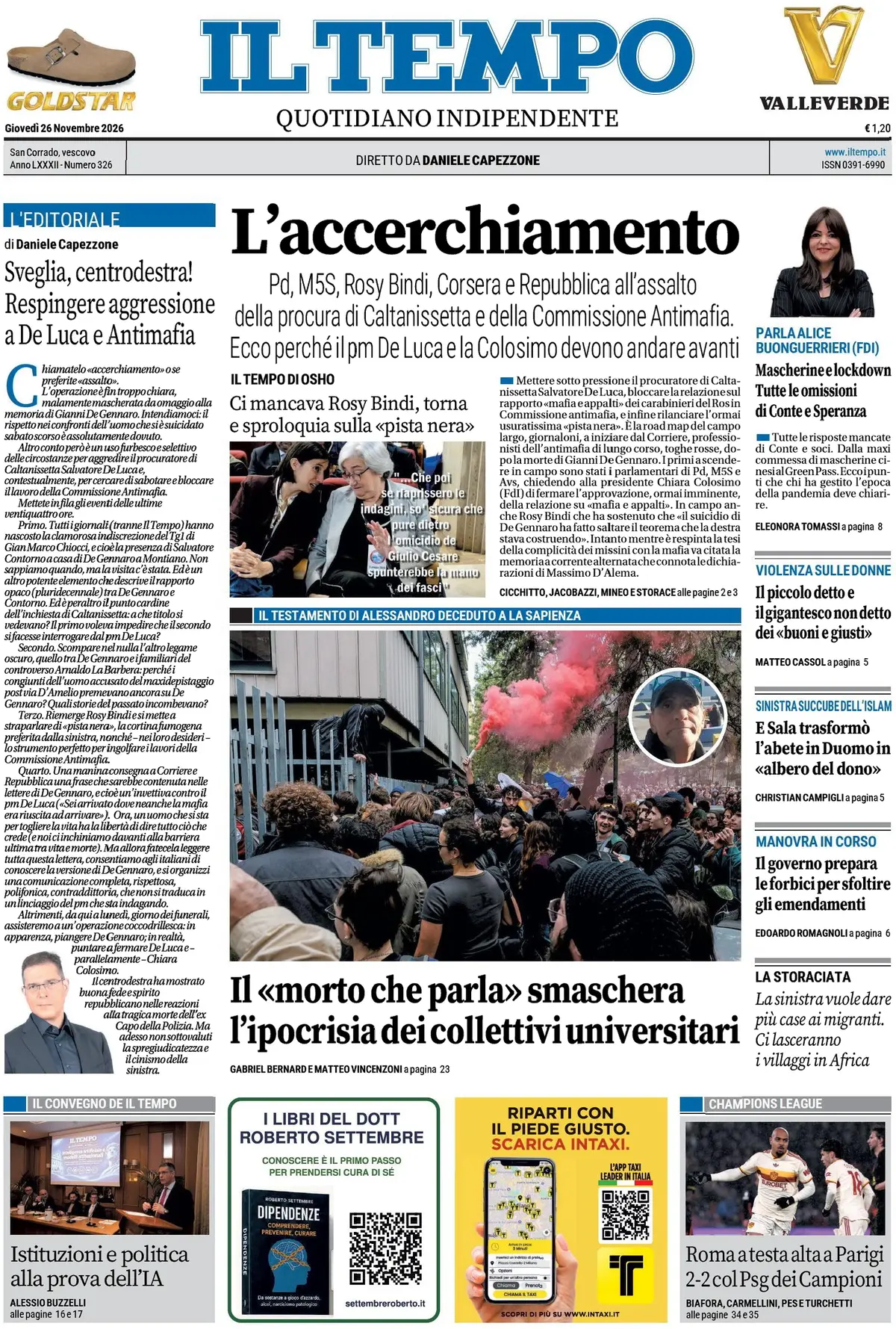
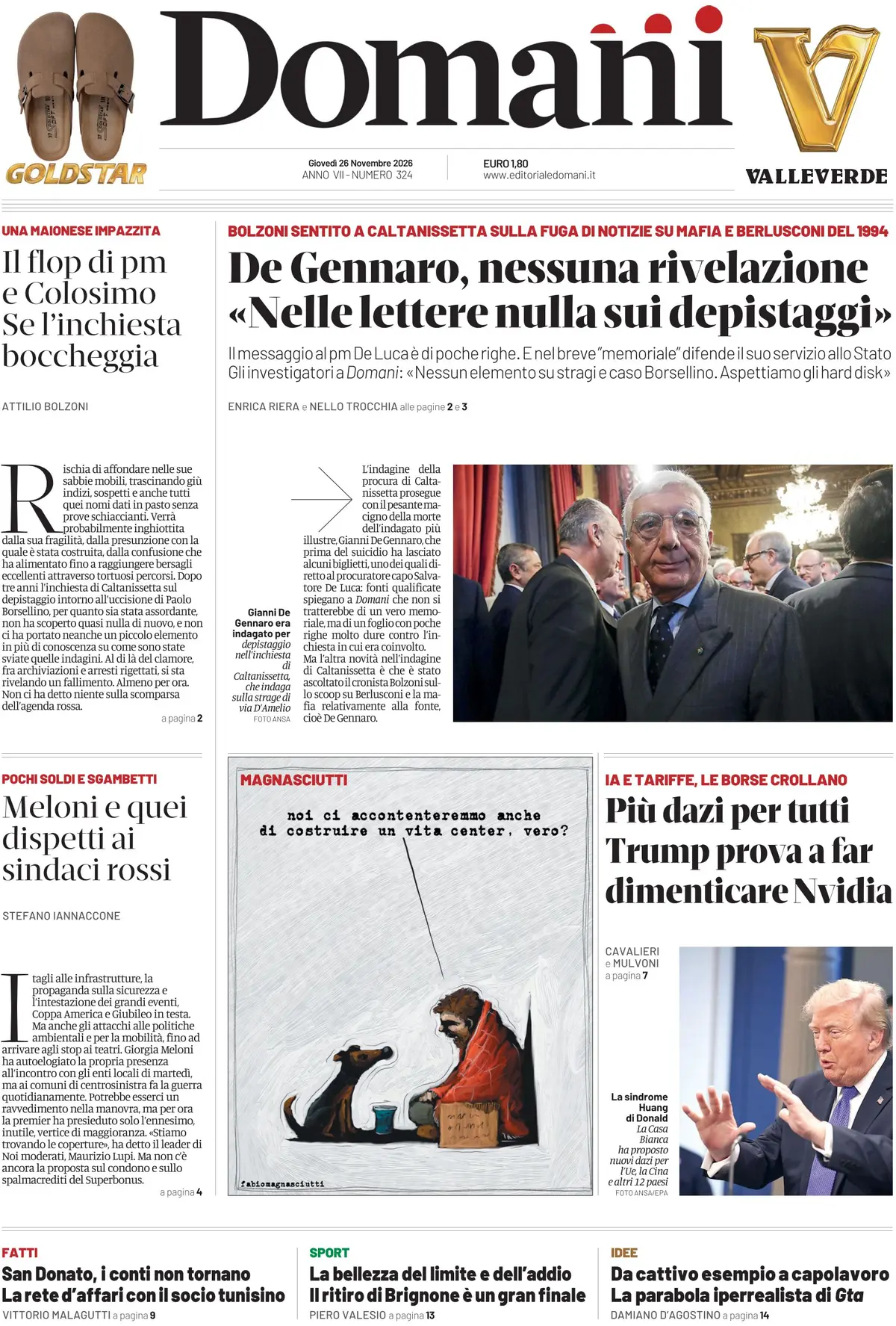
The sharpest contrast concerns what the letters reveal. Domani stresses the absence of new disclosures about alleged investigative cover-ups. Il Tempo focuses on criticism of the prosecutor’s office and the parliamentary anti-mafia commission. La Verità places the affair within its interpretation of the political dispute over the massacres. These are different editorial readings: statements in the letters and newspaper commentary do not, in themselves, amount to judicial findings.
## Judges, provinces and a contested budget
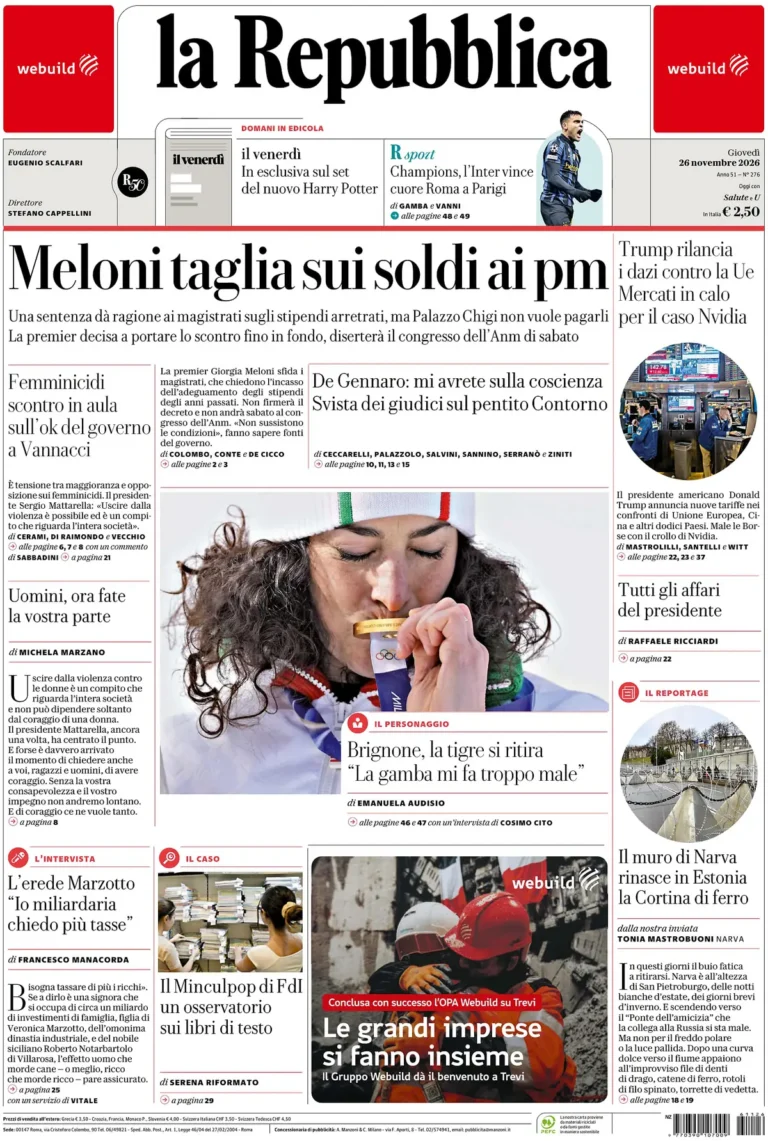
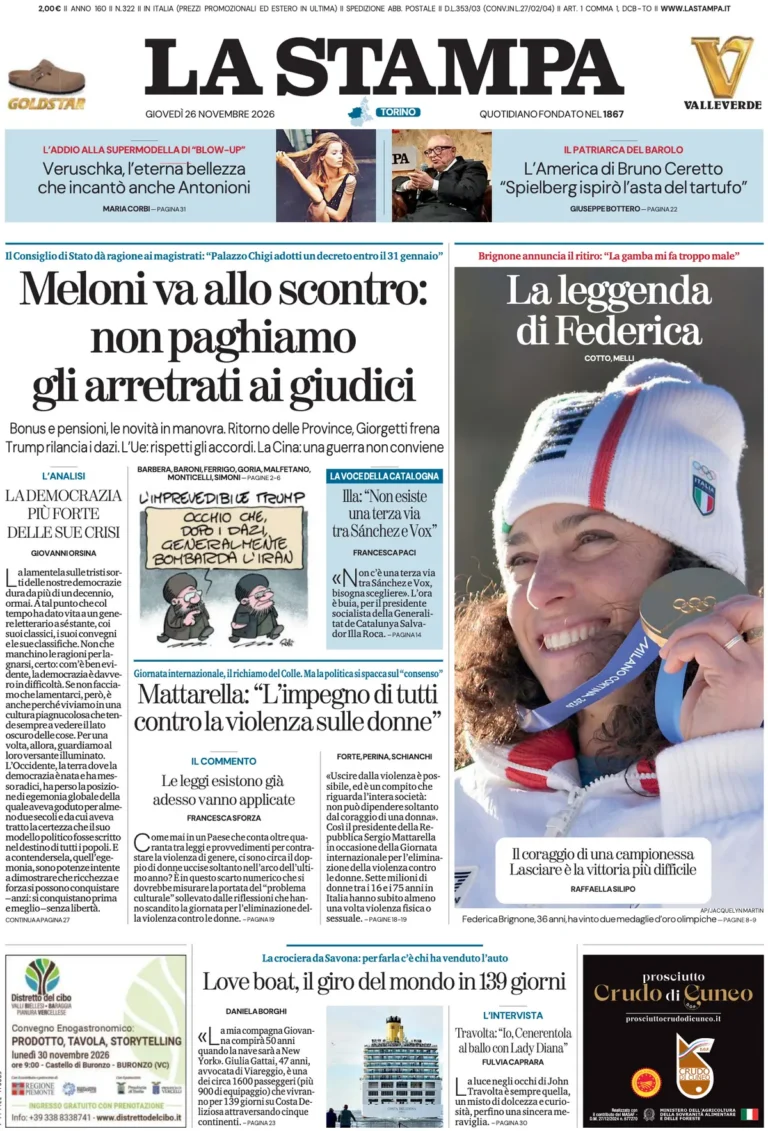
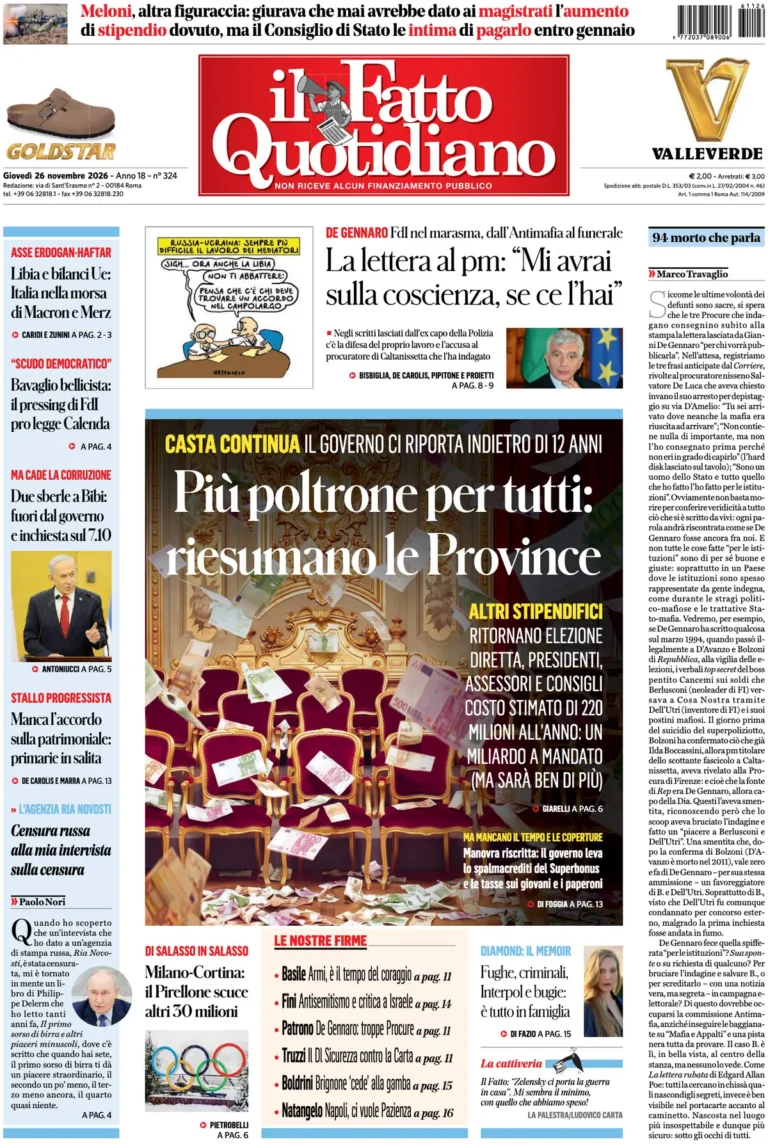
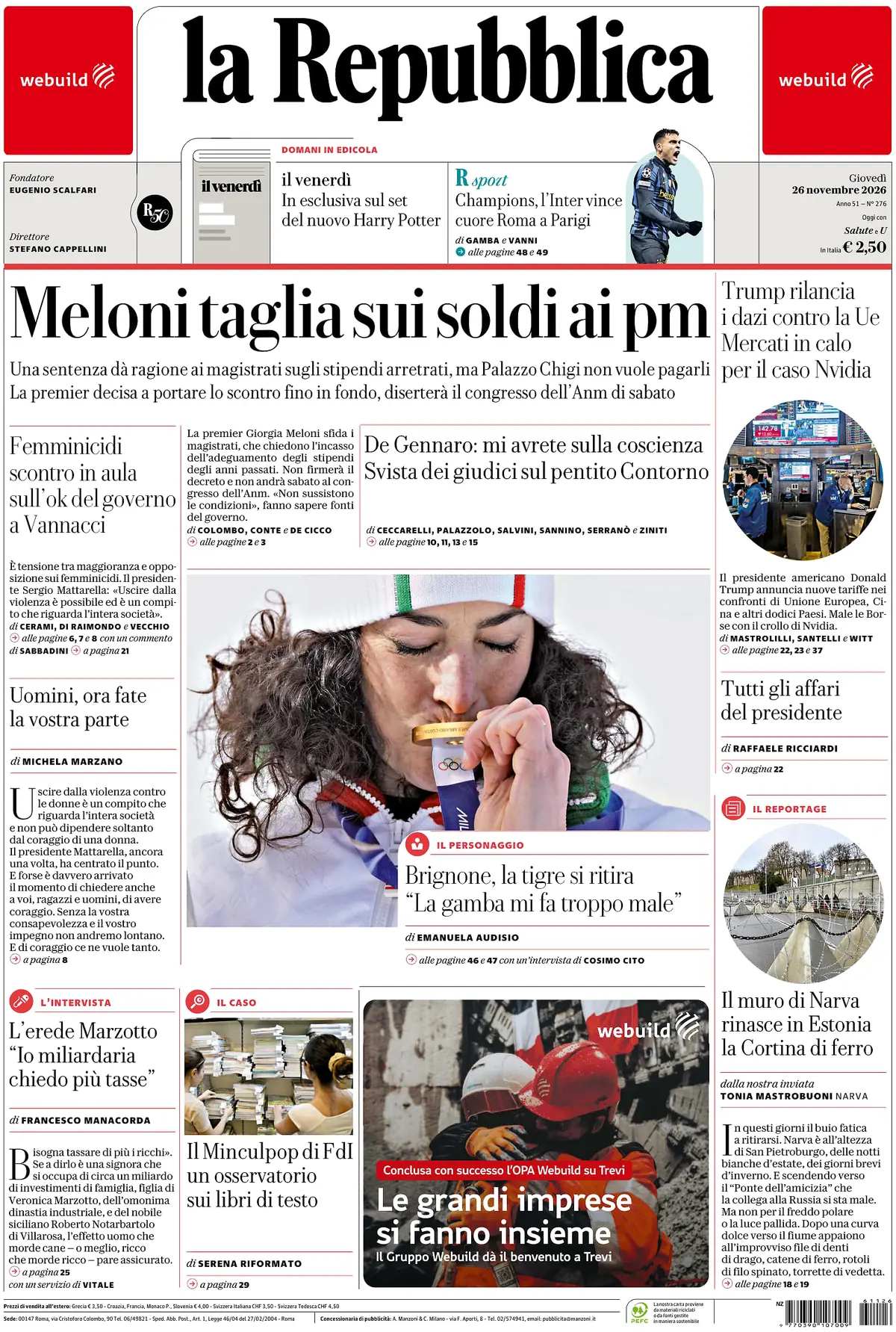
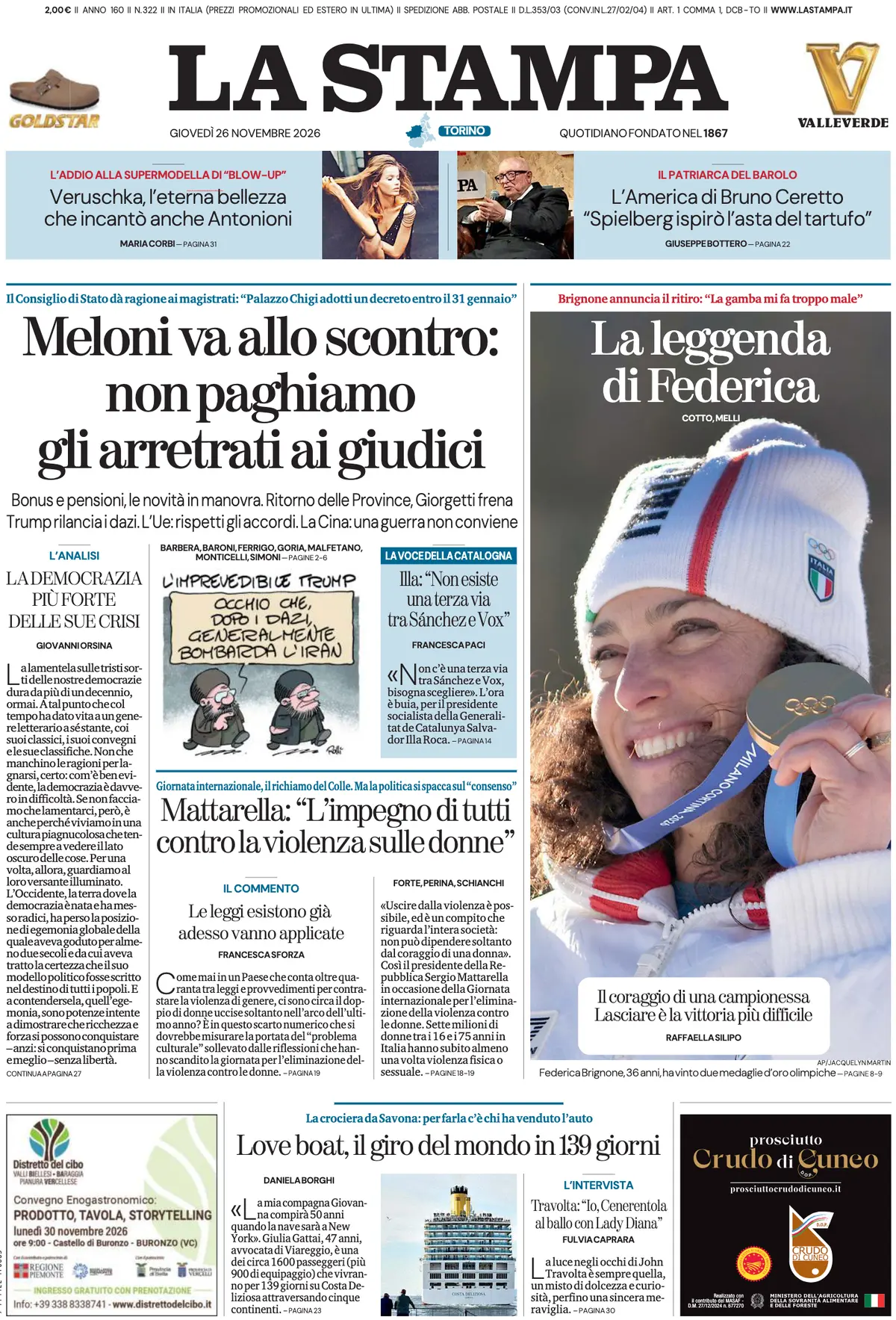
Repubblica leads with the dispute between the government and judges over back pay, also prominently covered by La Stampa. Both papers underline the distance between a ruling favourable to the judiciary and the government’s position. Il Fatto Quotidiano instead chooses the proposed restoration of provincial institutions, concentrating on political offices and the costs of the reform.
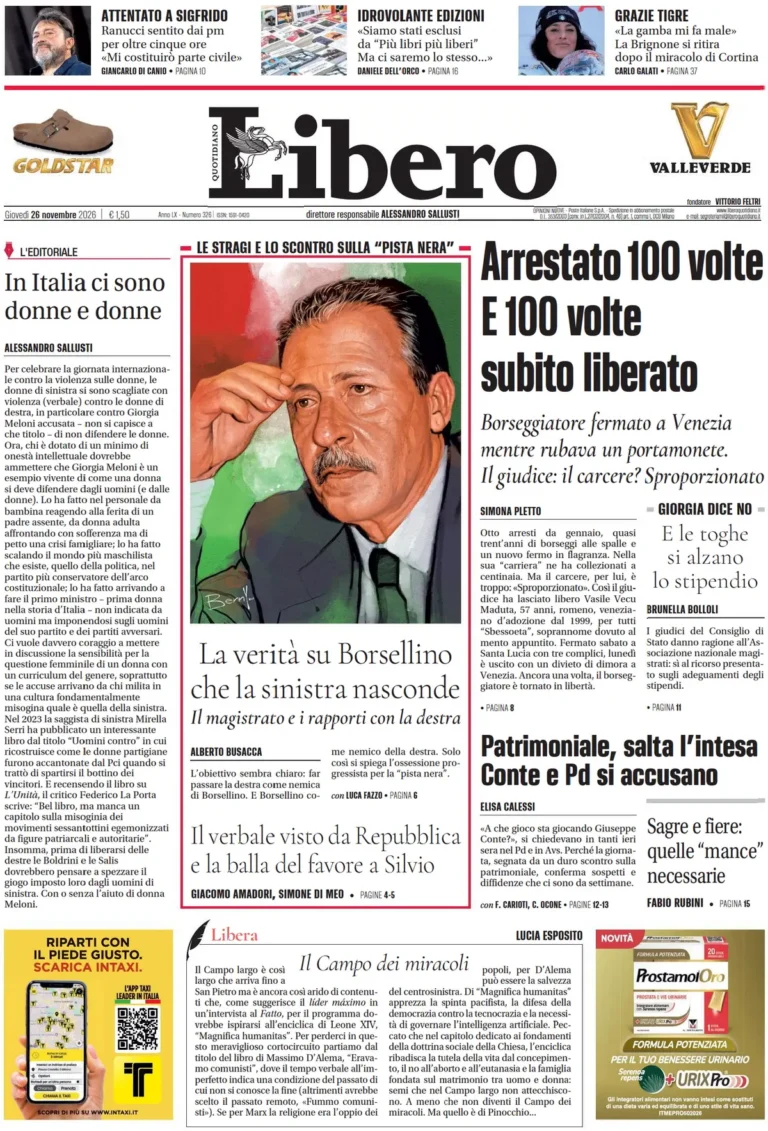
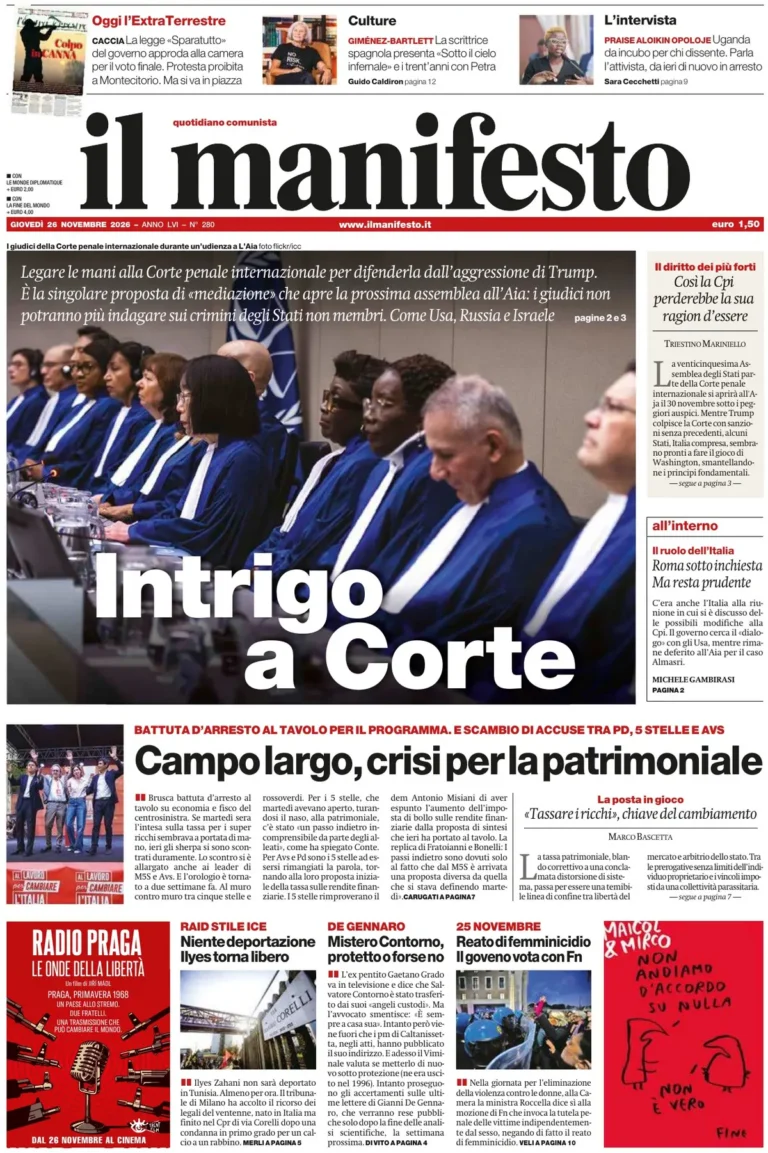
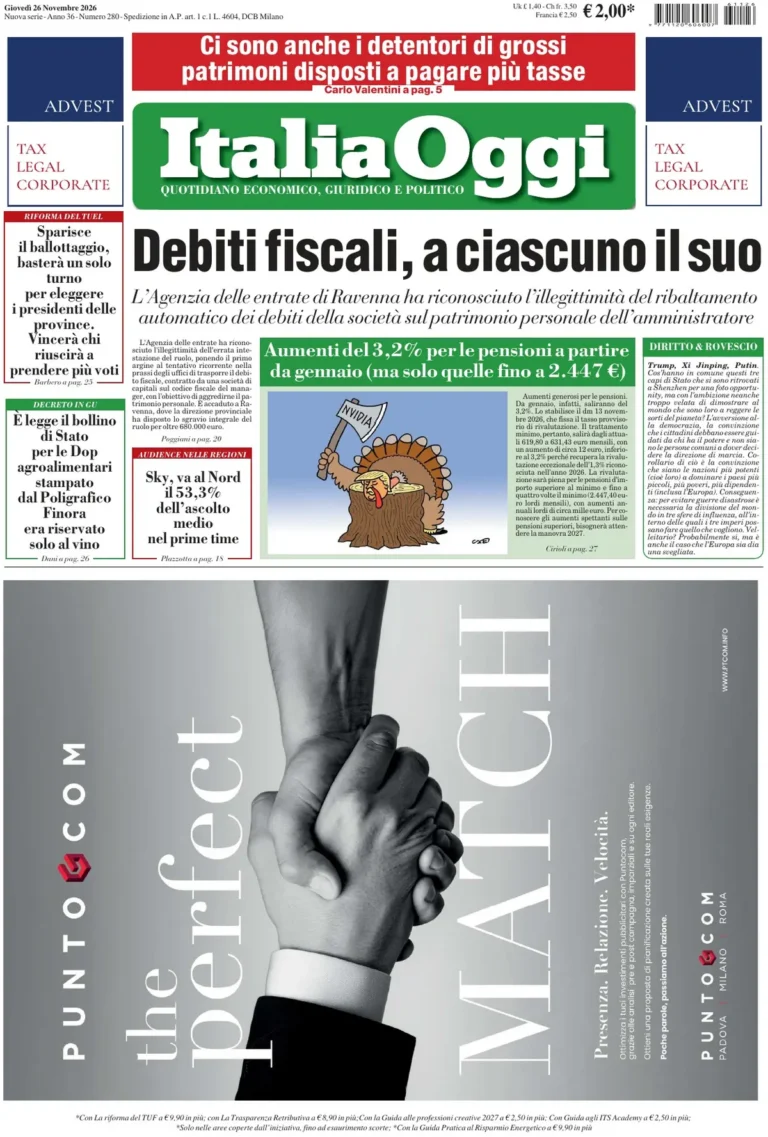
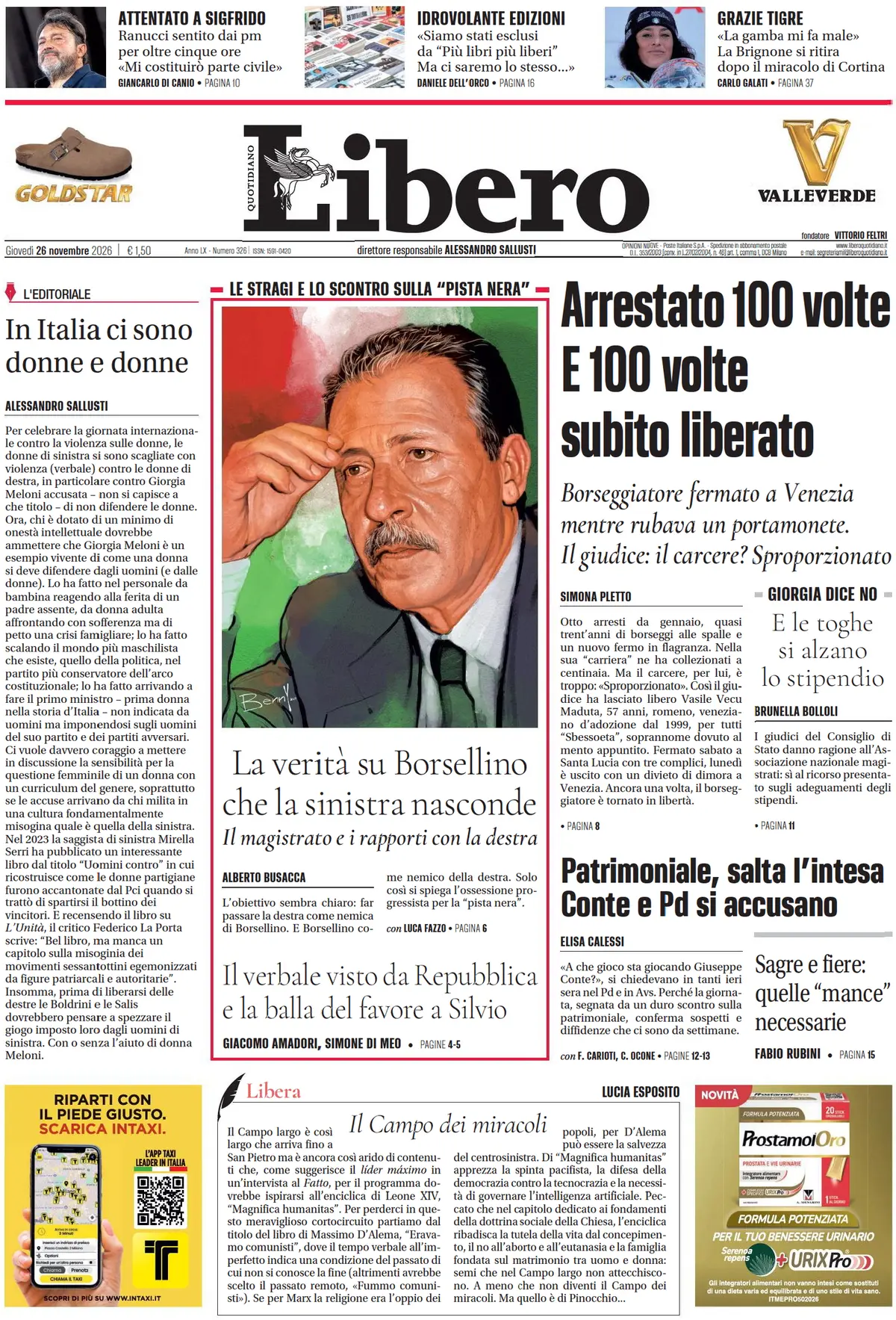
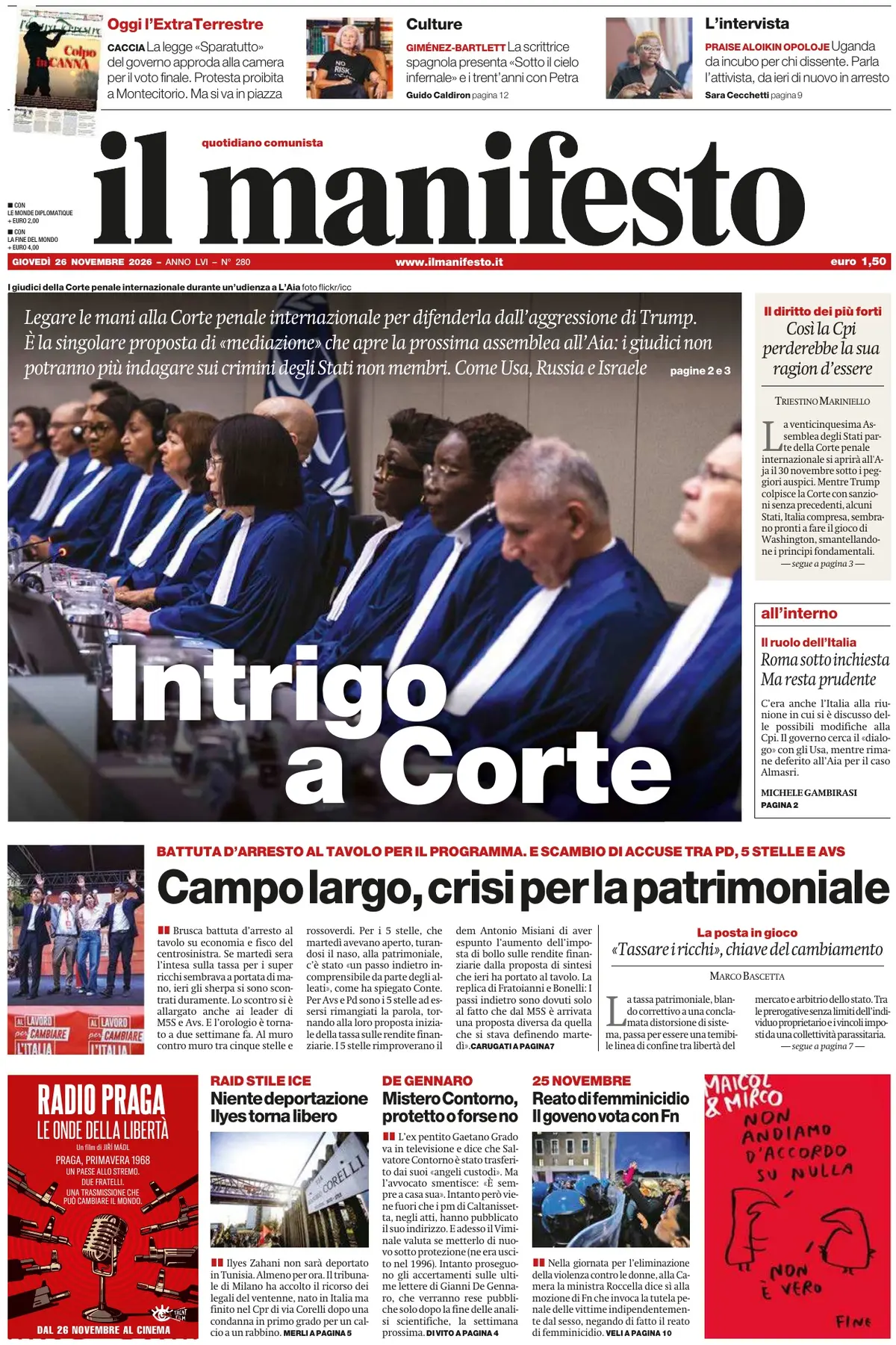
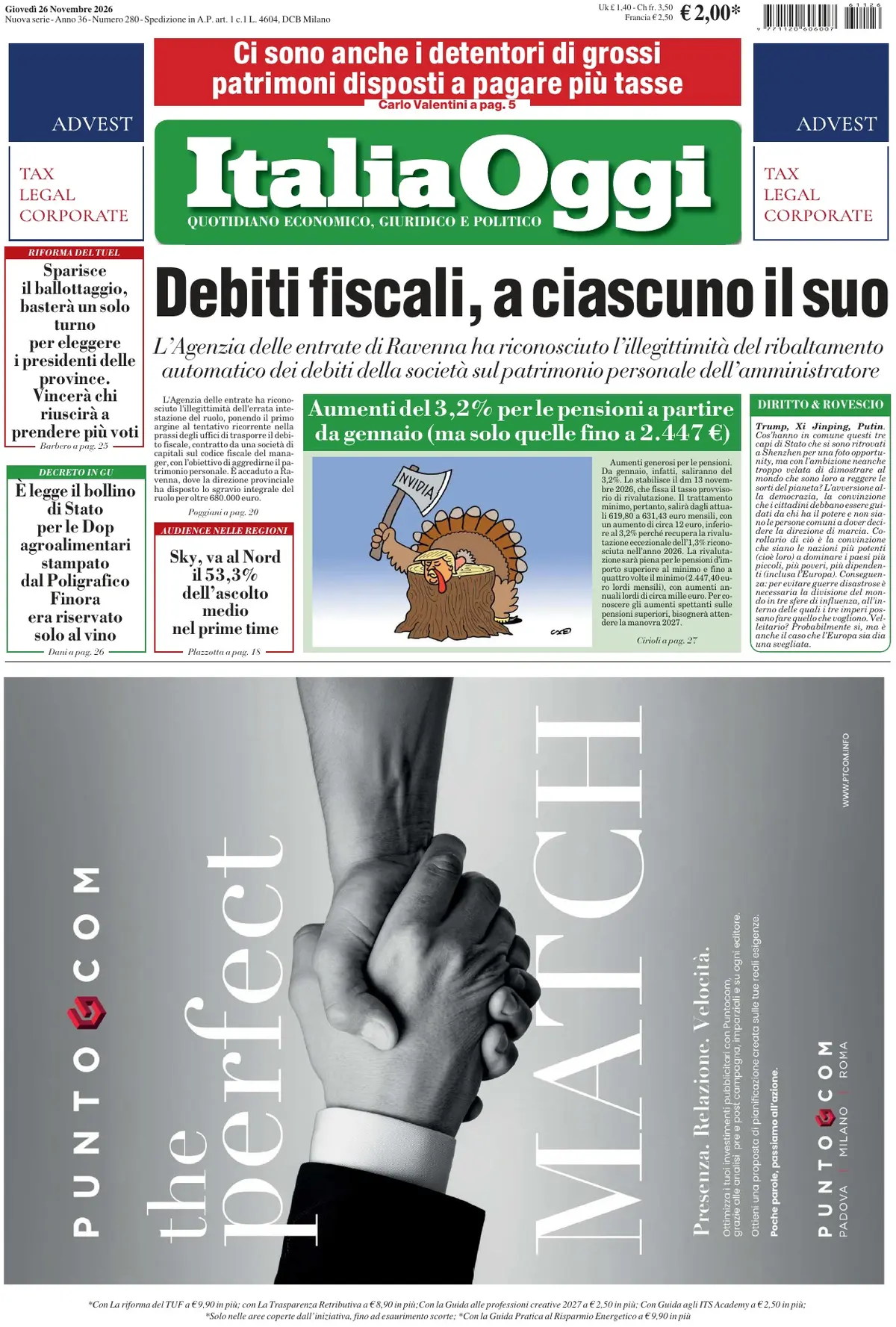
Economic policy also exposes divisions within the opposition. Il manifesto highlights a crisis in the broad centre-left alliance over a wealth tax, while Libero focuses on mutual accusations between Giuseppe Conte and the Democratic Party. ItaliaOggi notes the willingness of some wealthy individuals to pay more tax, but leads on liability for tax debts. Il Mattino adds a Campania perspective with an interview with Roberto Fico about the centre-left’s priorities.
## Tariffs, technology and pensions
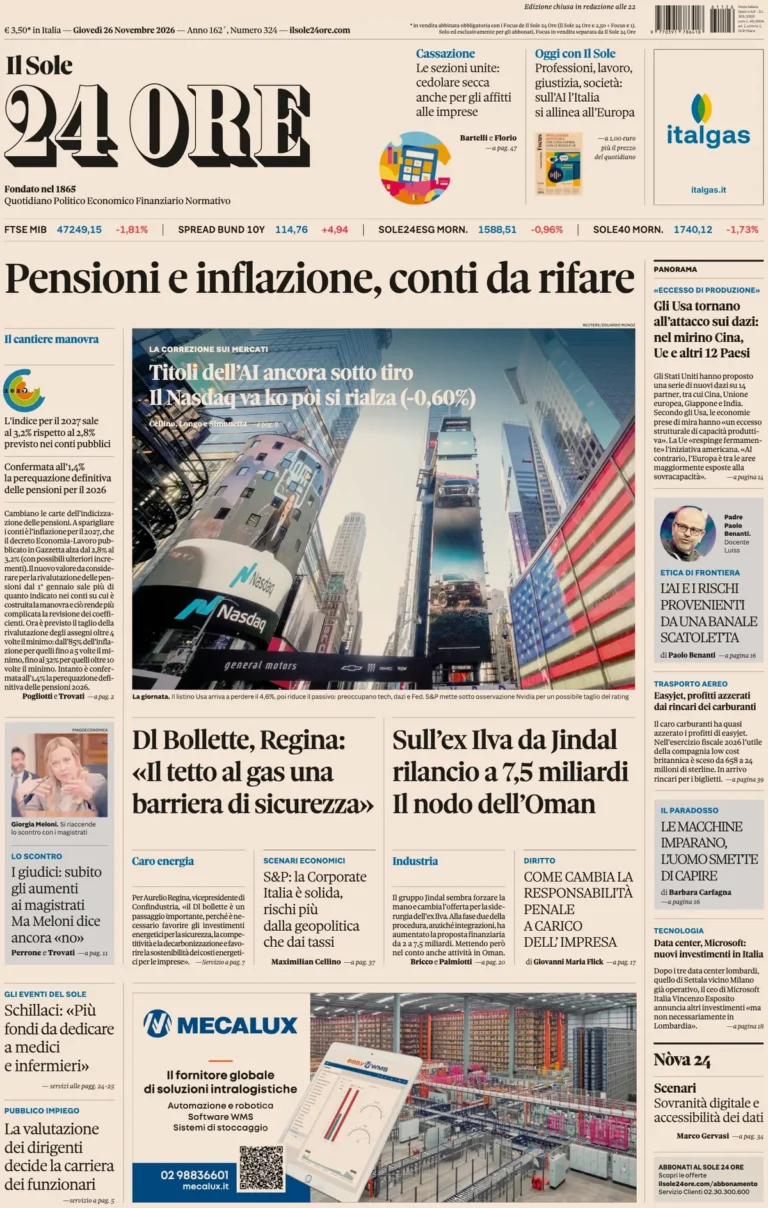
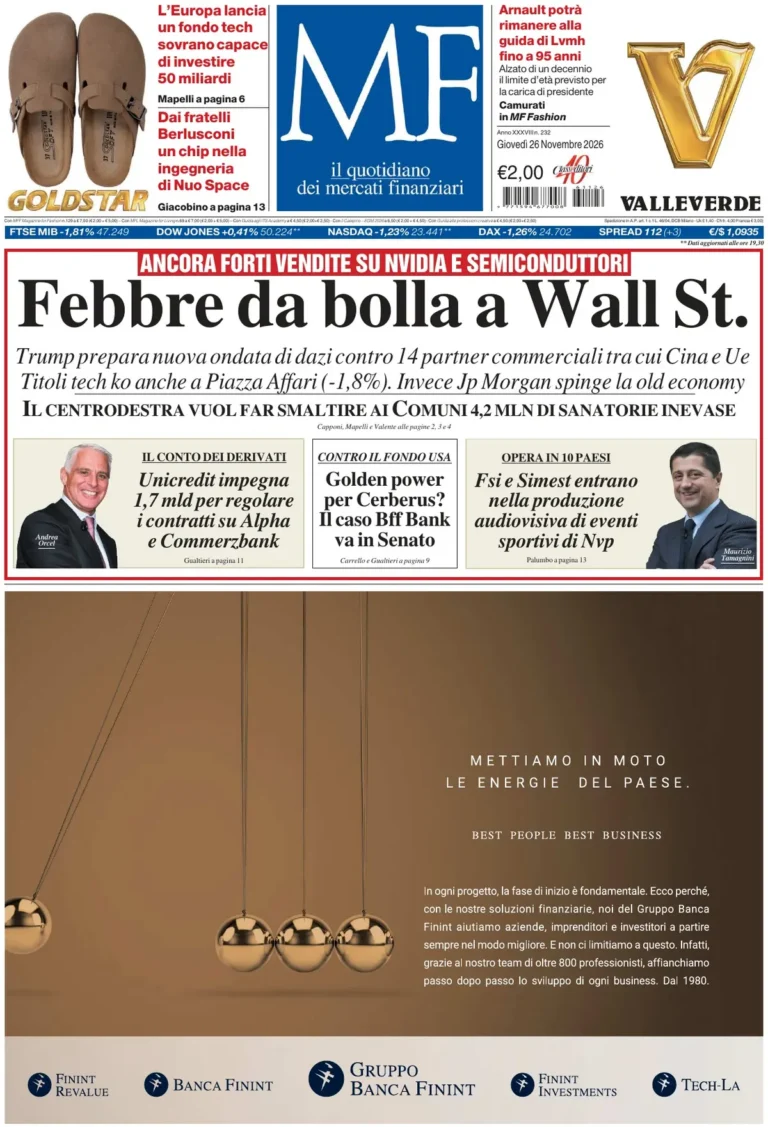
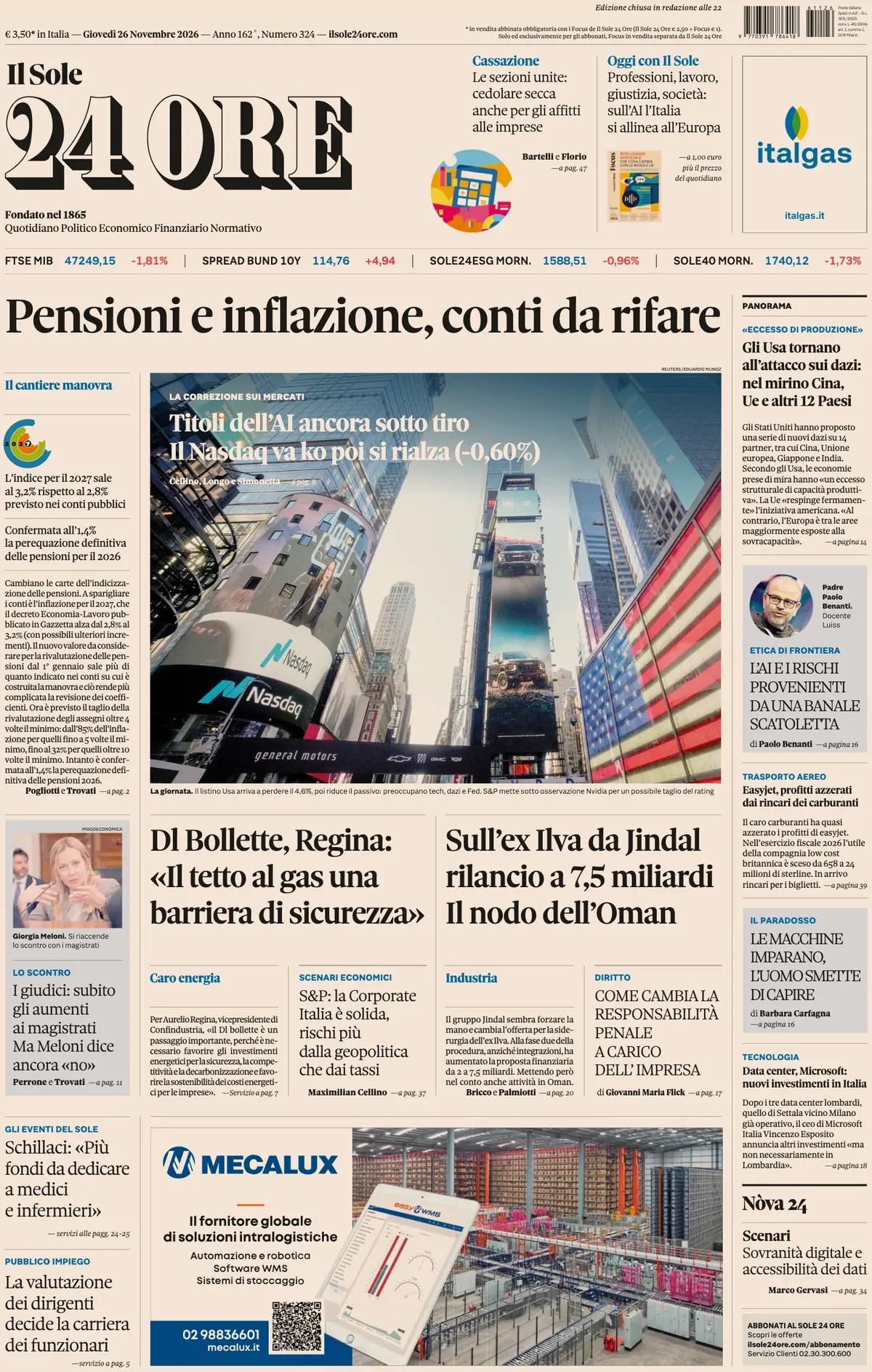
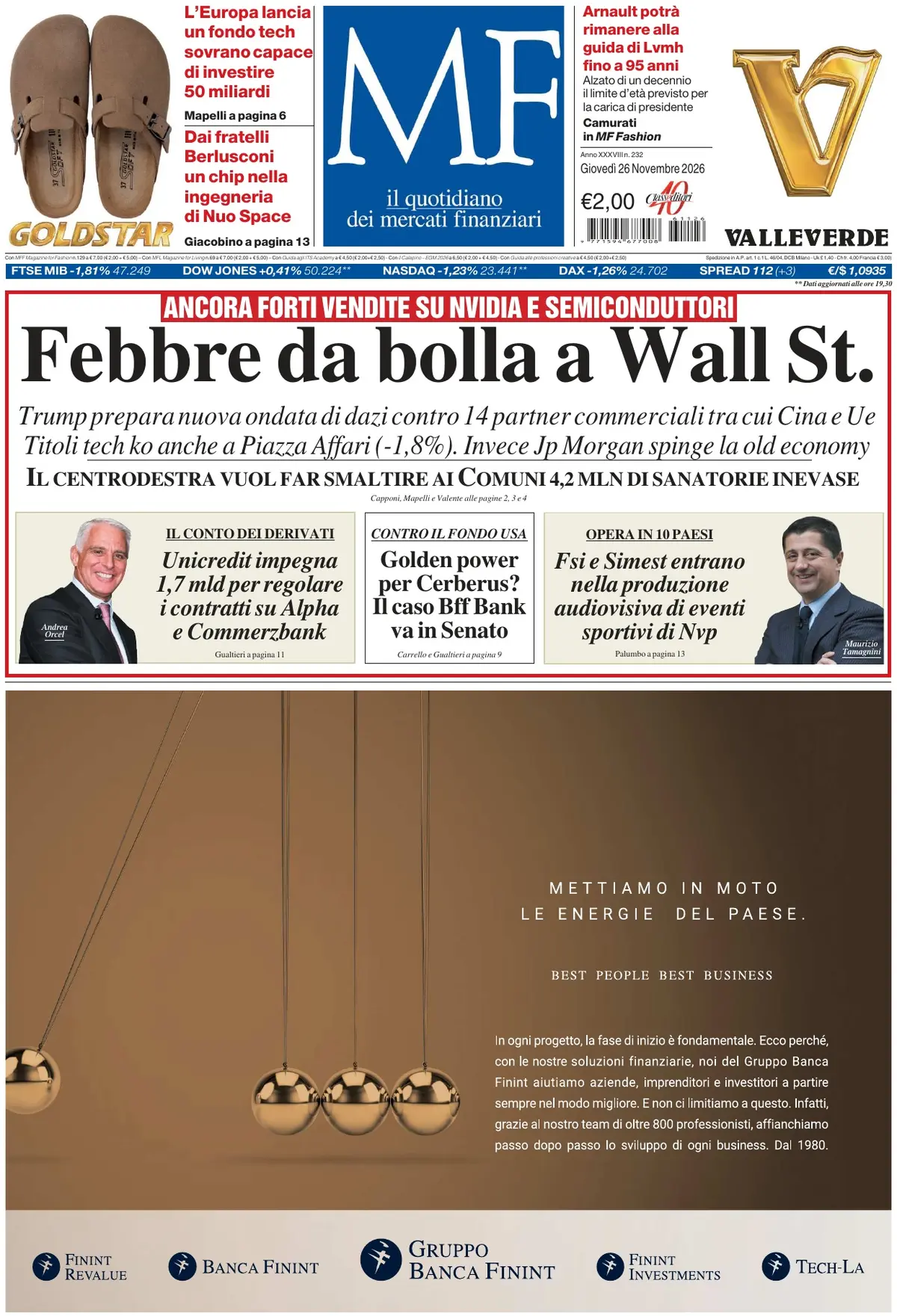
The financial newspapers connect renewed American tariff threats with weakness in technology stocks. MF Milano Finanza leads on fears of a Wall Street bubble and selling in Nvidia and semiconductor shares. Il Sole 24 Ore gives its main headline to pensions and inflation, alongside market corrections and the former Ilva steelworks. Tariffs also feature in the general-interest papers, although their front pages do not all report the same rates. Their common thread is uncertainty about trade relations and the consequences for Europe.
## Violence against women, abuse and international justice
On the day after 25 November, violence against women remains prominent in Corriere della Sera, Repubblica, La Stampa and Il Messaggero. Reports and commentaries connect President Sergio Mattarella’s remarks, parliamentary debate and the cultural responsibility to prevent abuse.
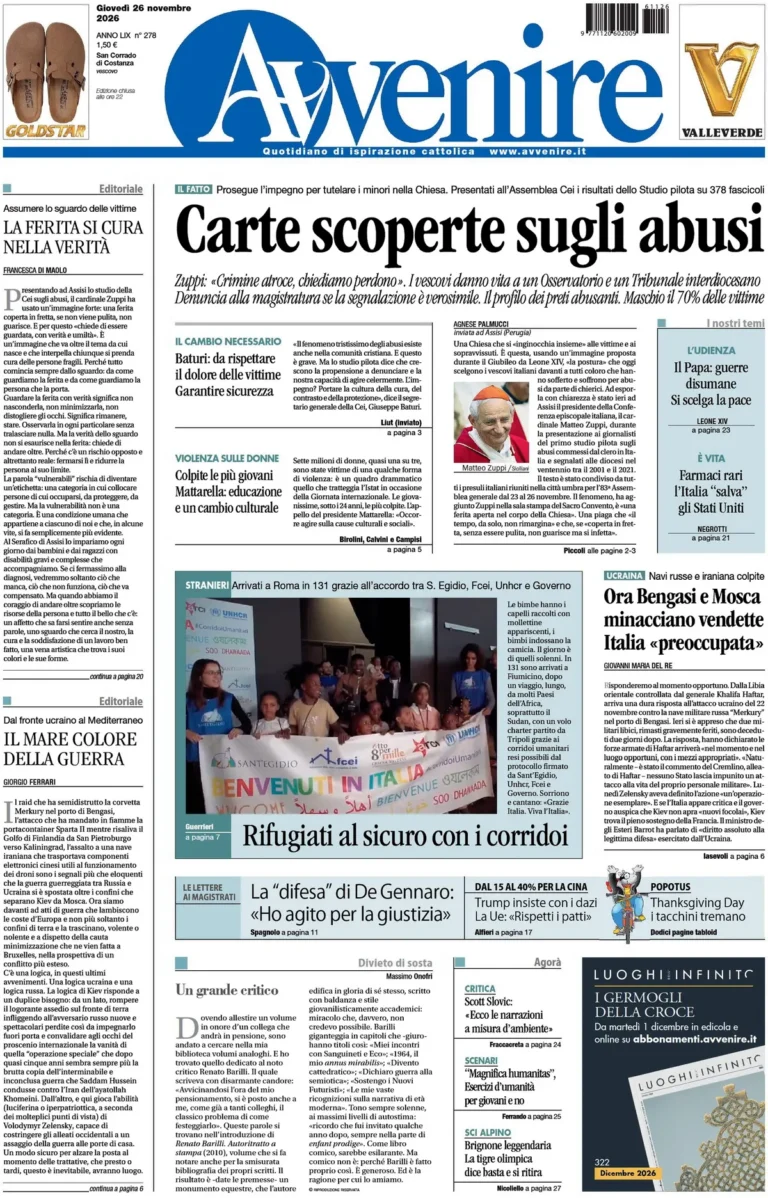
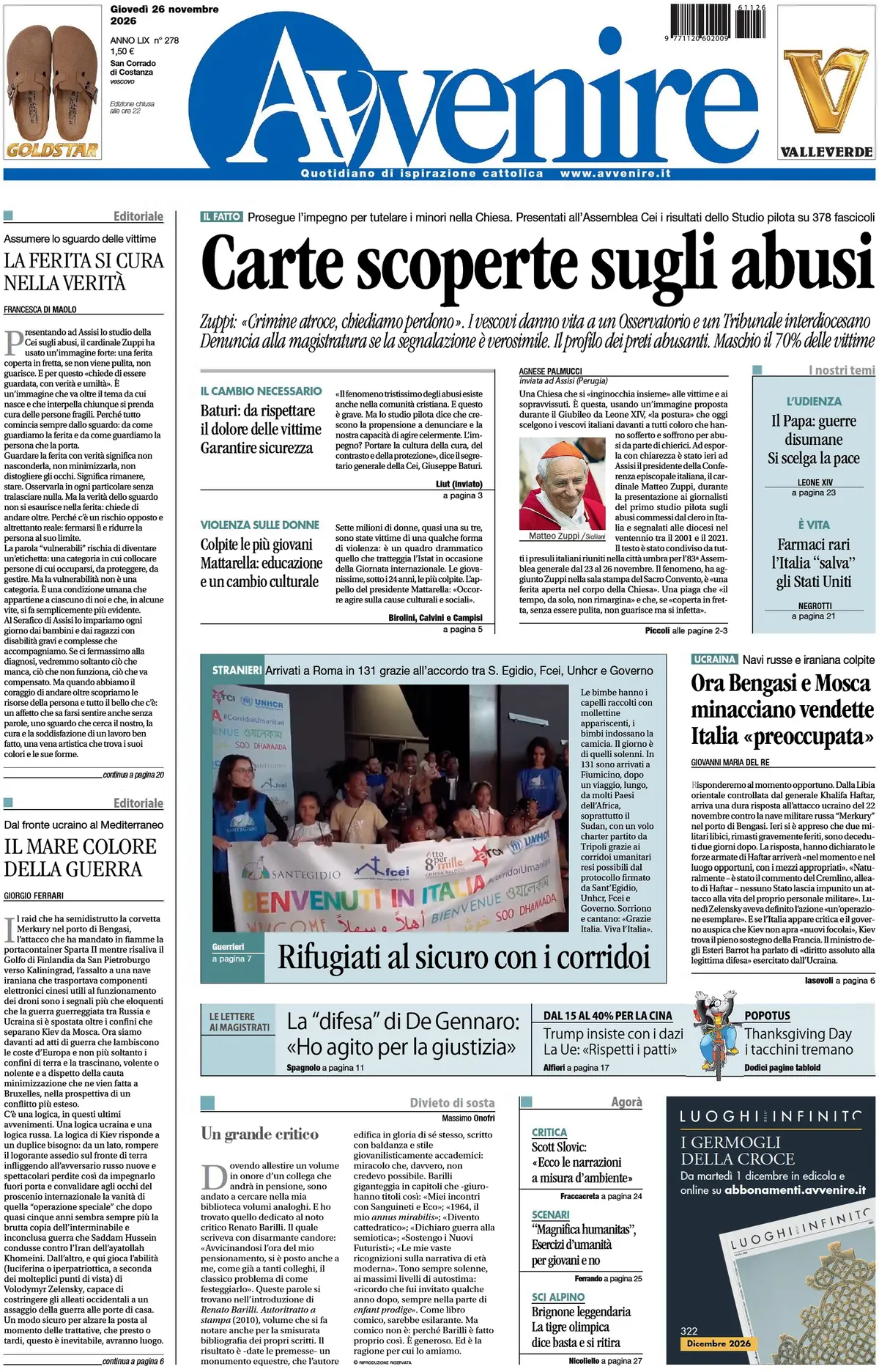
Avvenire leads on a study of abuse within the Church, emphasising transparency and protection for victims. La Verità gives the subject a markedly different treatment. Il manifesto chooses the International Criminal Court and proposals which, in its account, would restrict investigations involving citizens of non-member states. Avvenire also gives space to the arrival of refugees through humanitarian corridors.
## Brignone’s farewell reaches beyond sport
Federica Brignone’s retirement is another story shared across the front pages. La Stampa gives her a large photograph, Corriere della Sera connects her achievements with the decision to leave, and Repubblica and Il Messaggero highlight the pain in her leg. Il Giornale, Libero, La Verità and Il Mattino also feature the farewell. The departure of a champion provides a common emotional thread in a press review otherwise marked by opposing political interpretations.