Front pages, 23 November: De Gennaro’s letters, climate talks and contrasting newspaper perspectives
# Front pages, 23 November 2026: letters, interpretations and climate talks
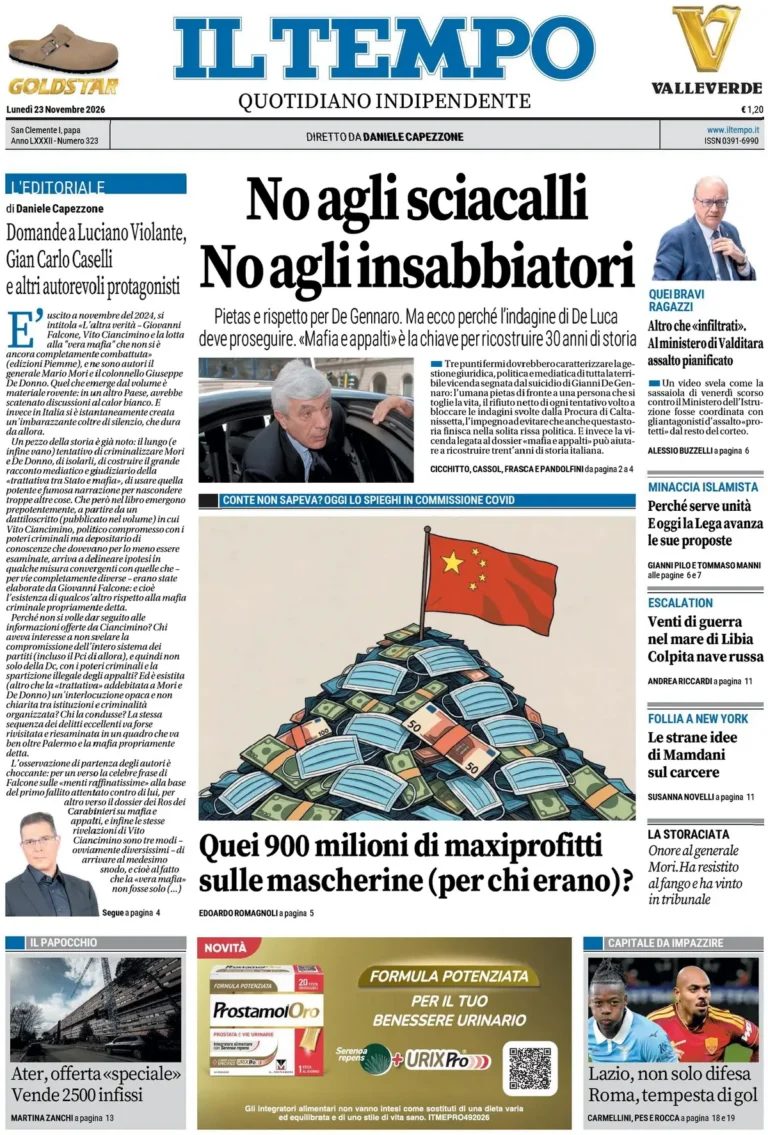
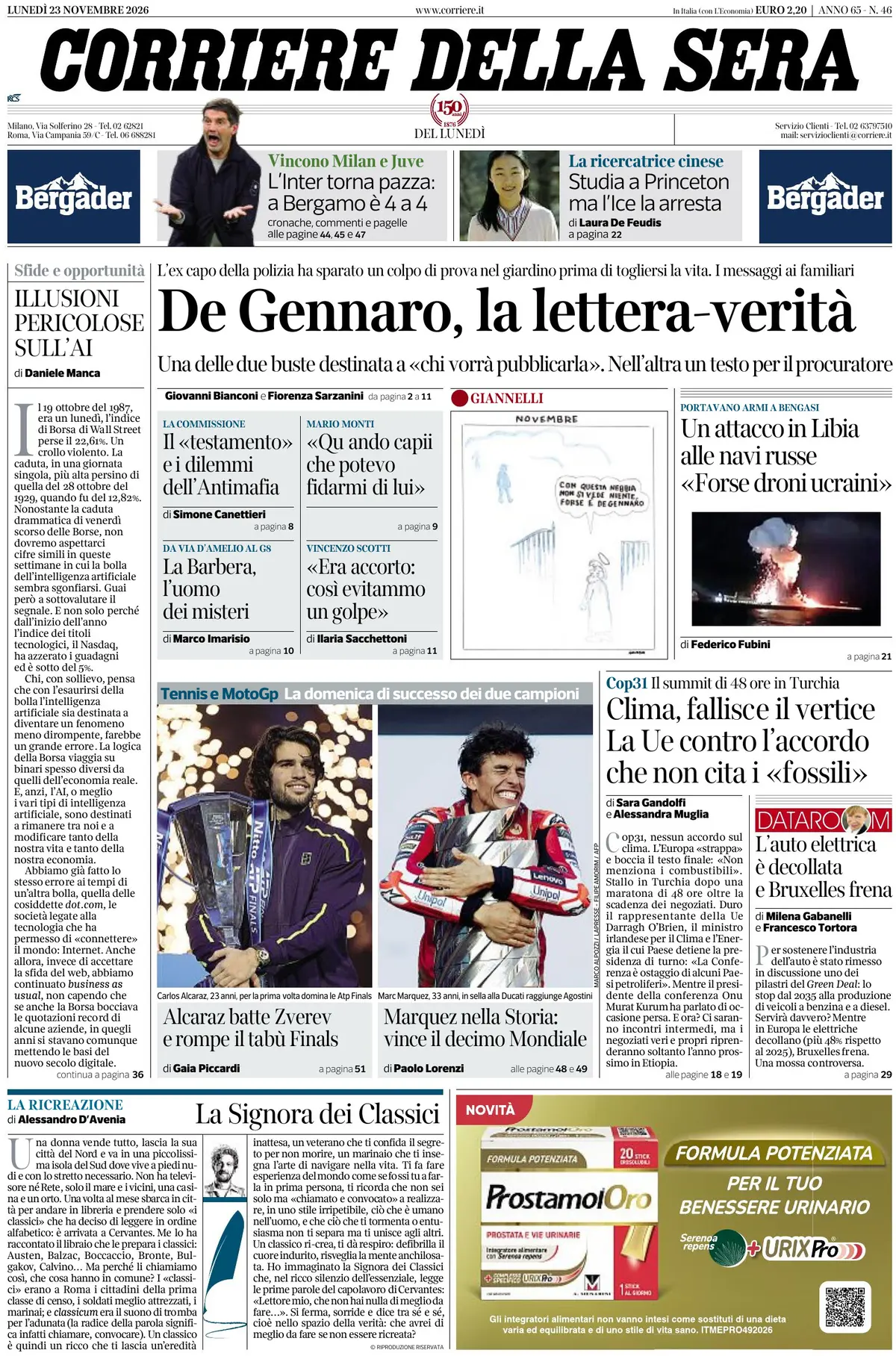
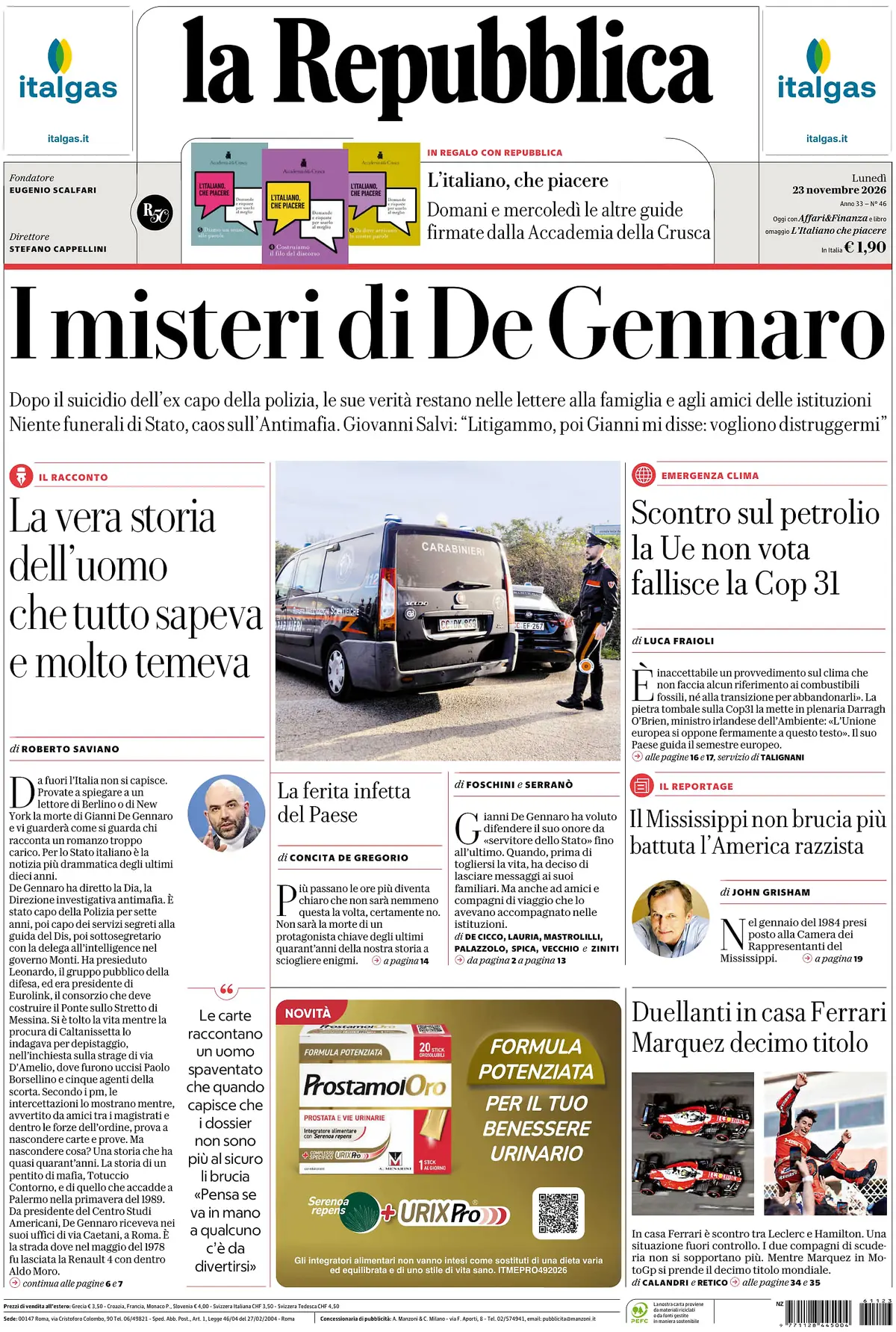
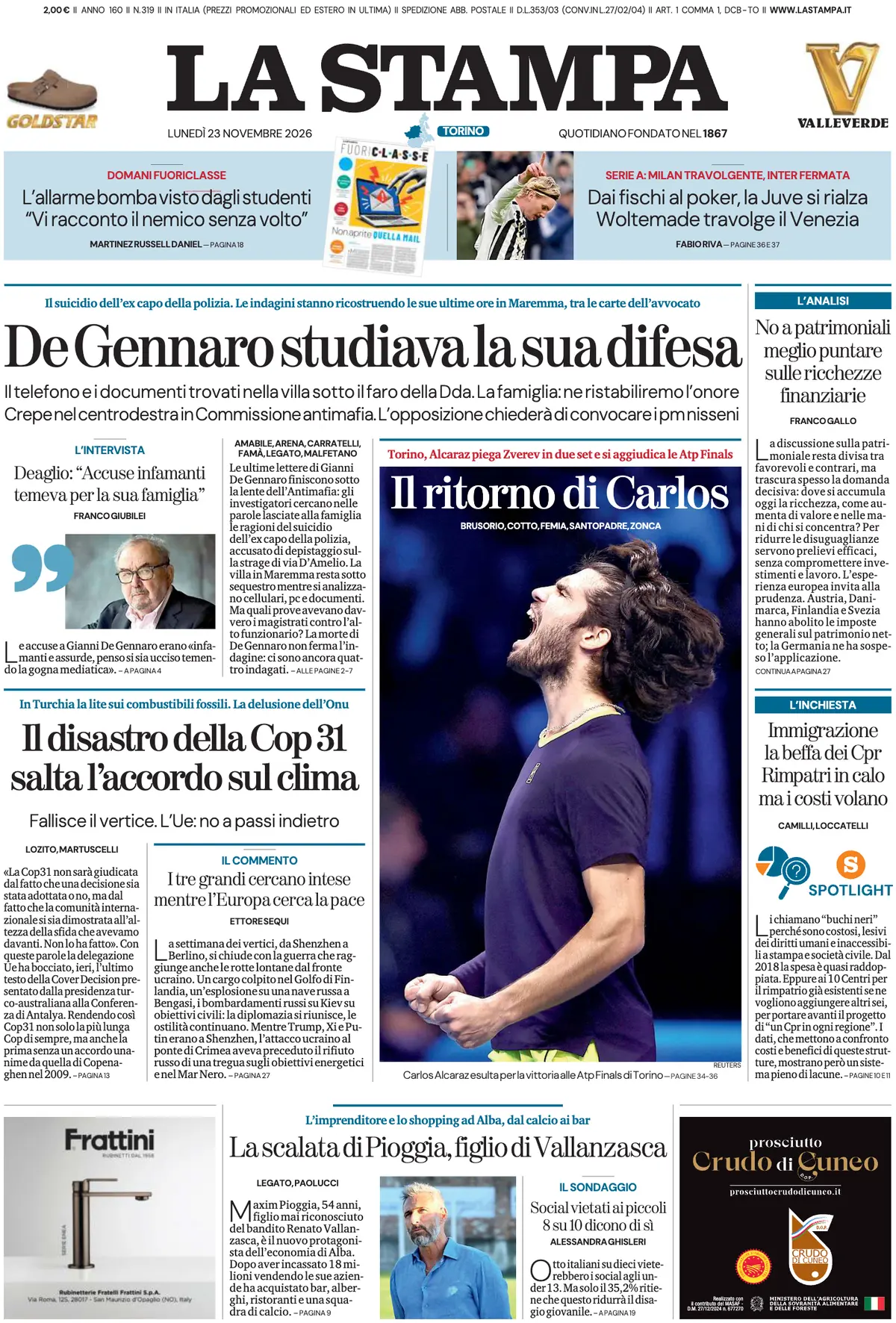
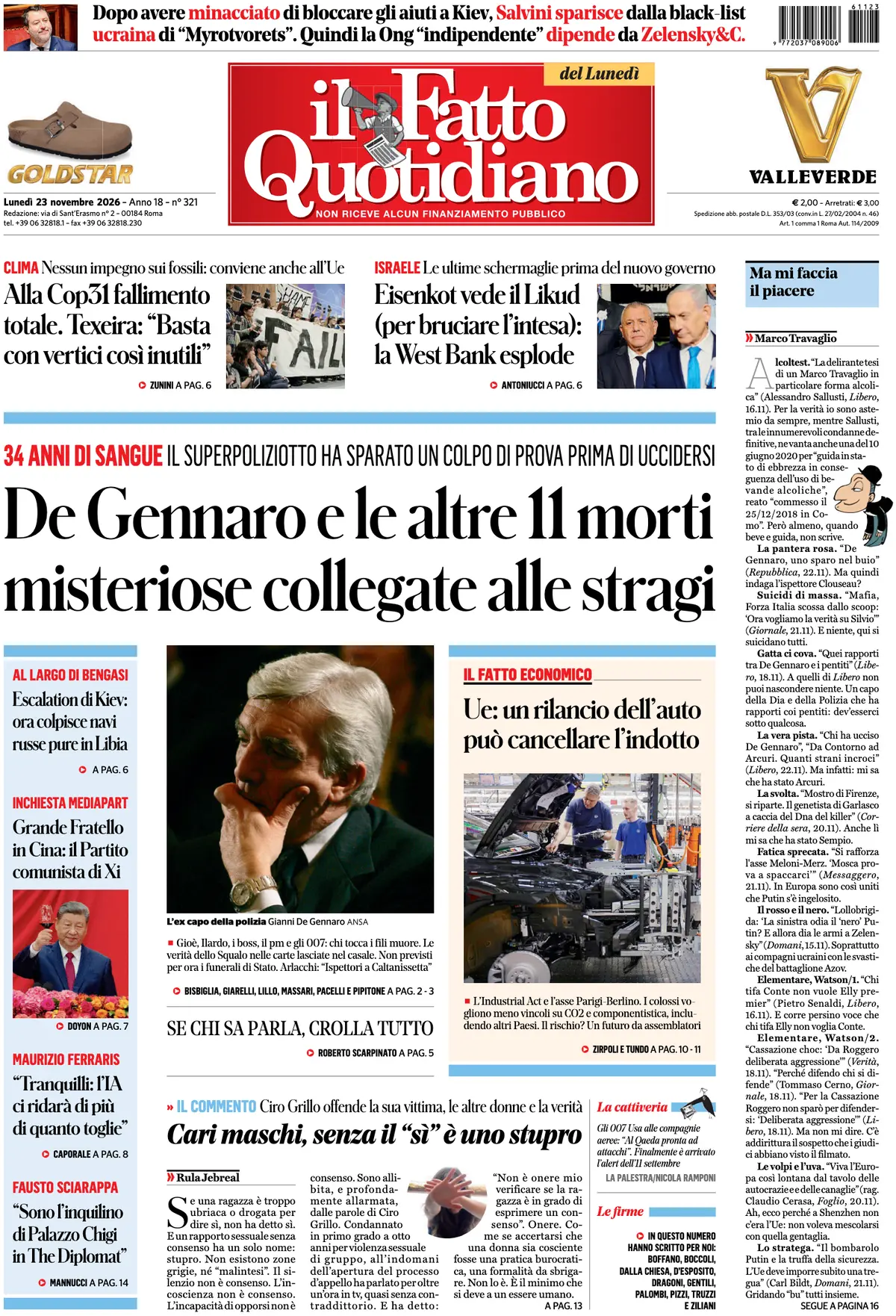
The letters left by Gianni De Gennaro are the common focus of this Monday's front pages. Agreement on the subject does not mean agreement on its interpretation: the sixteen newspapers reviewed give different weight to unanswered questions, assessments of the investigations and political repercussions. Alongside the main story, the conclusion of Cop31 features across several papers. Business and sport offer different perspectives on the transition from the weekend to a new week.
## Documents are central, but not a conclusion in themselves
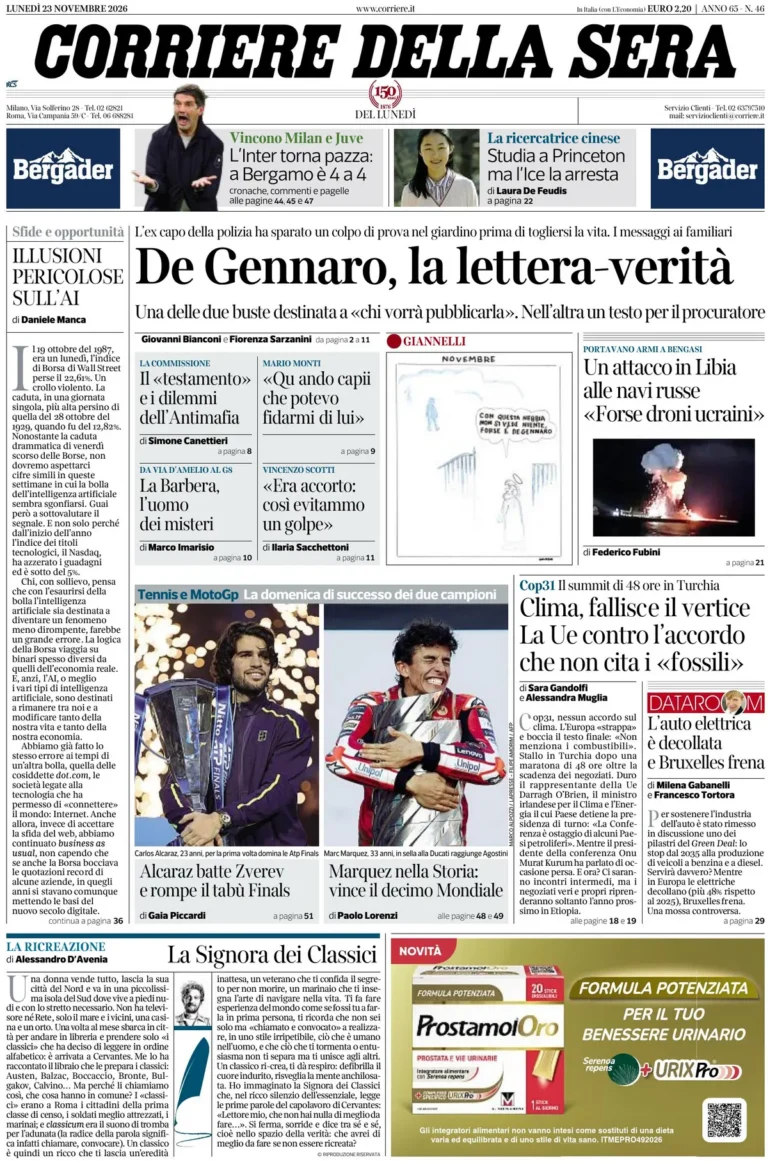
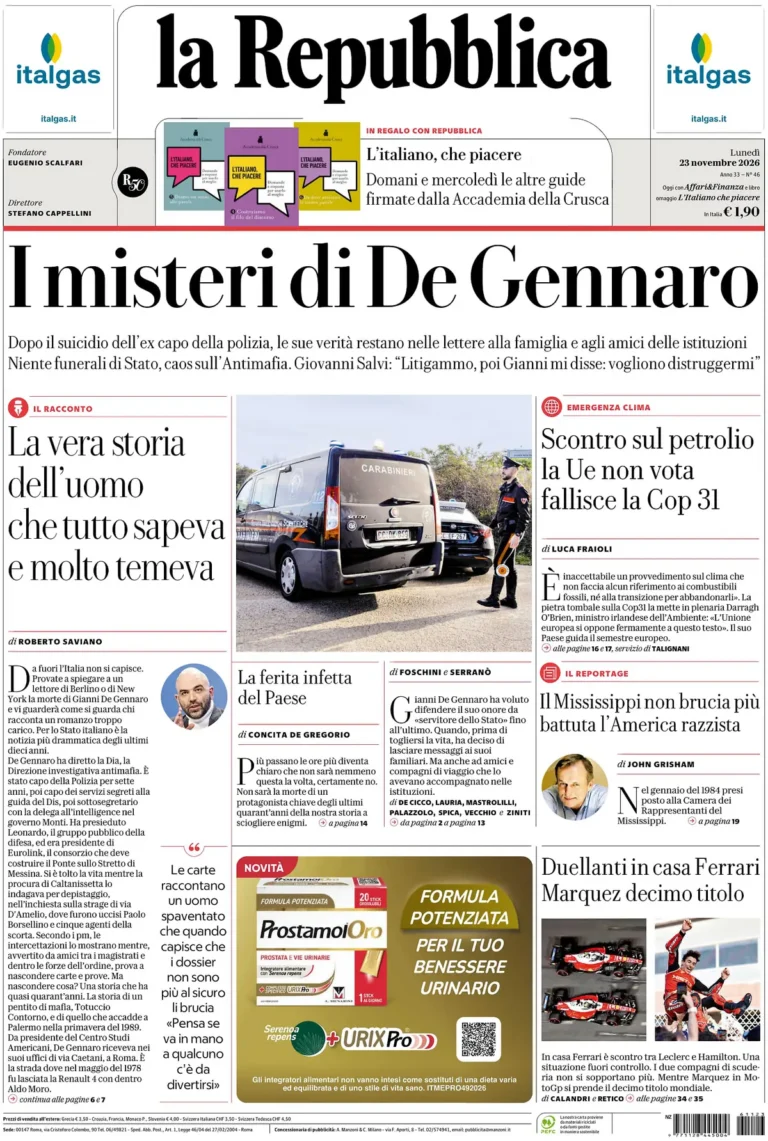
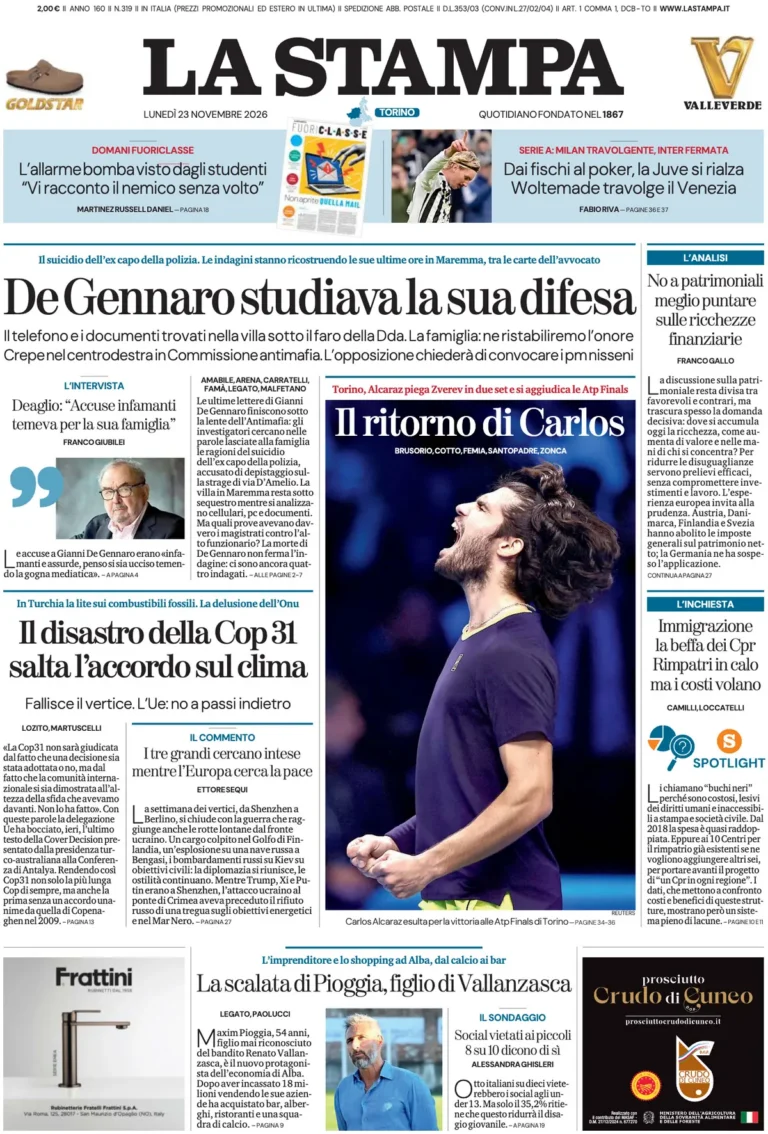
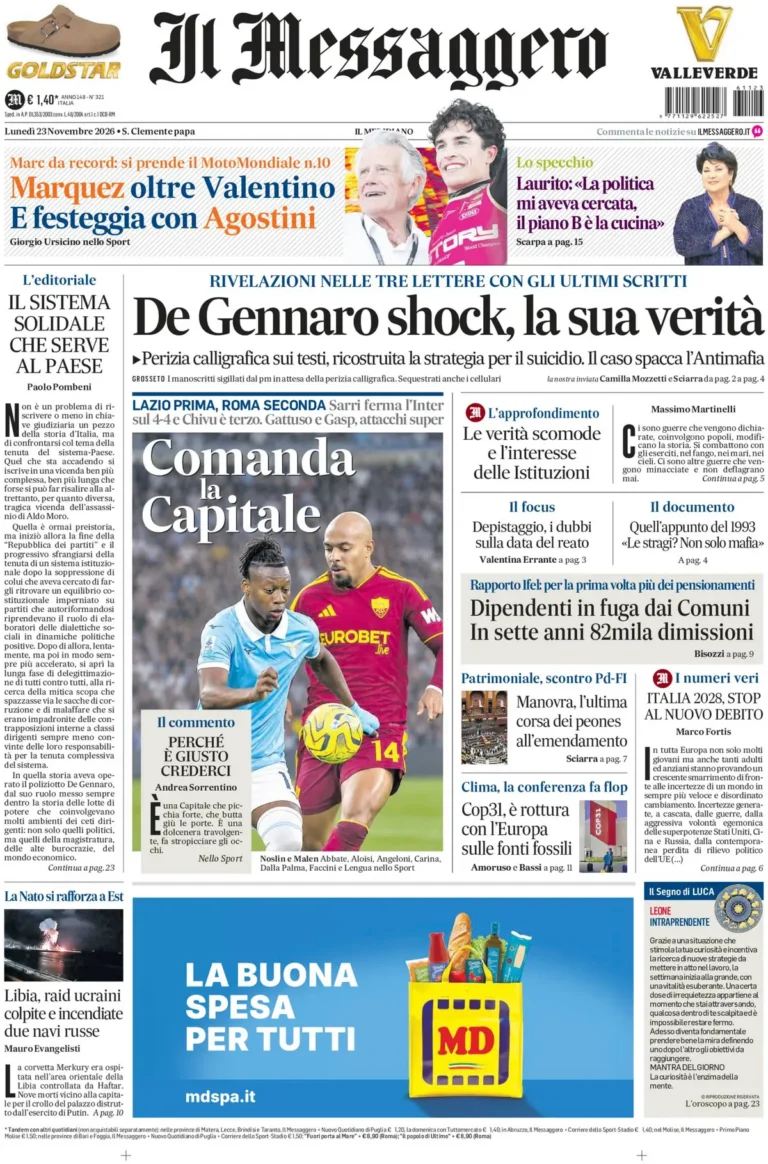
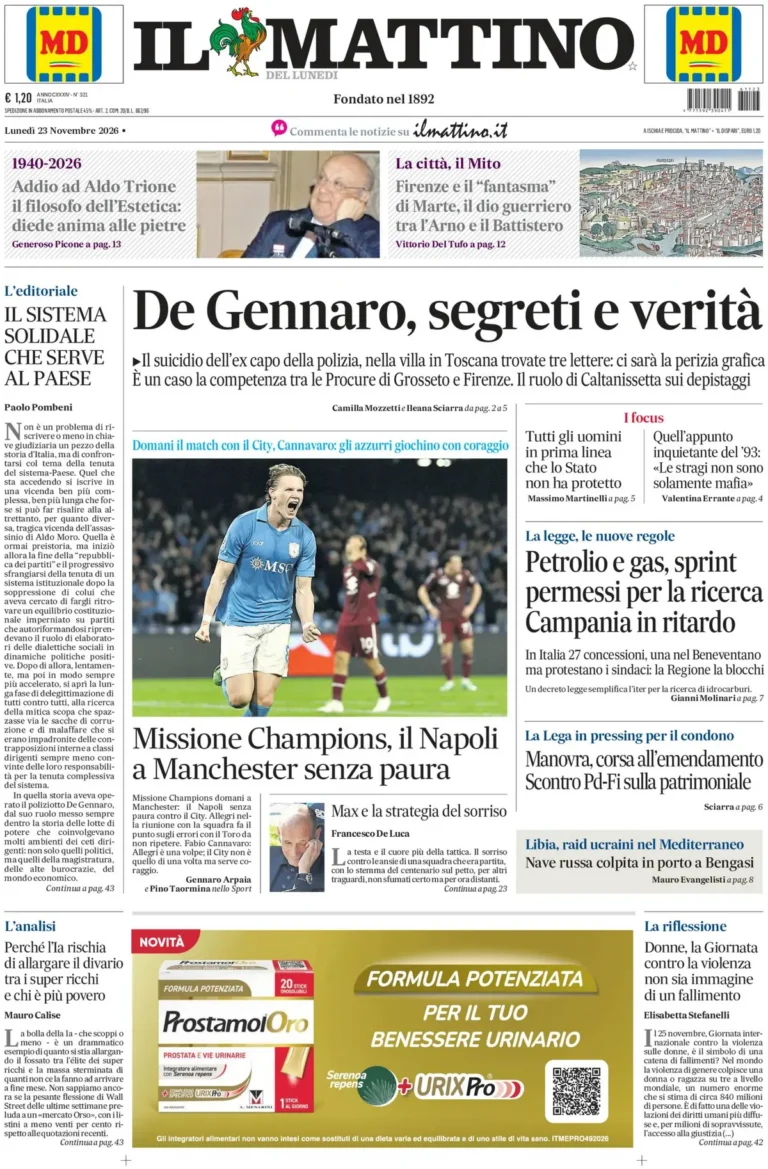
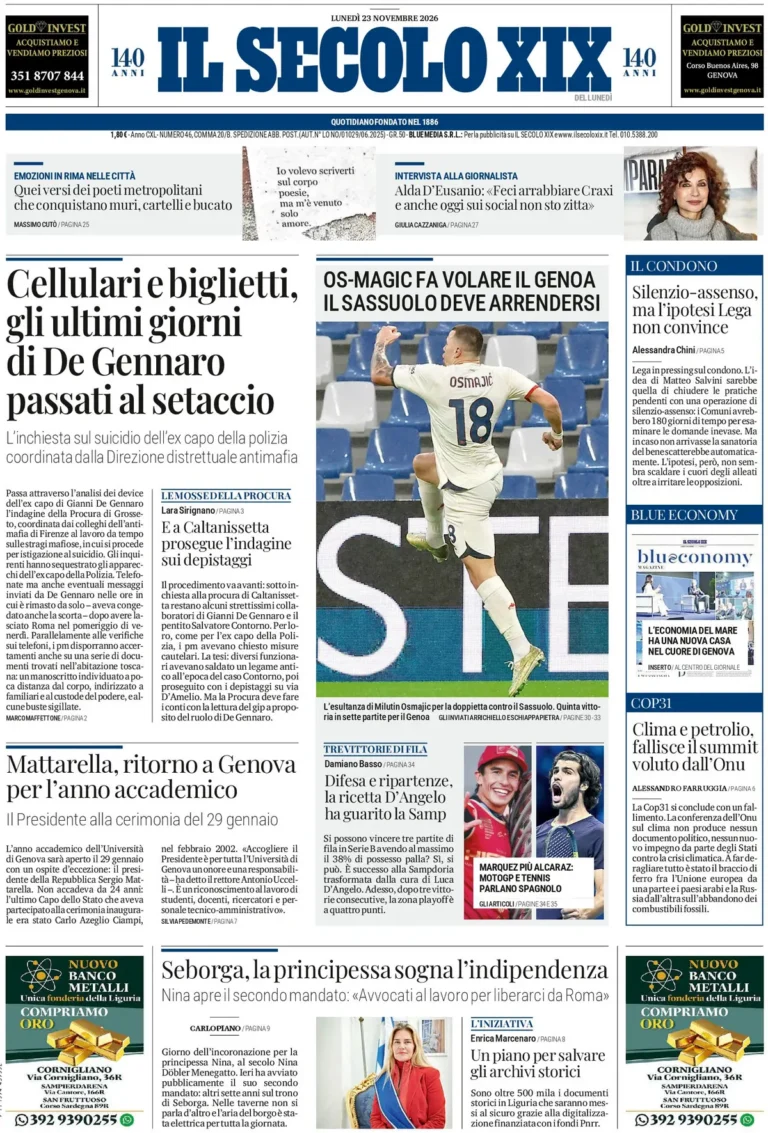
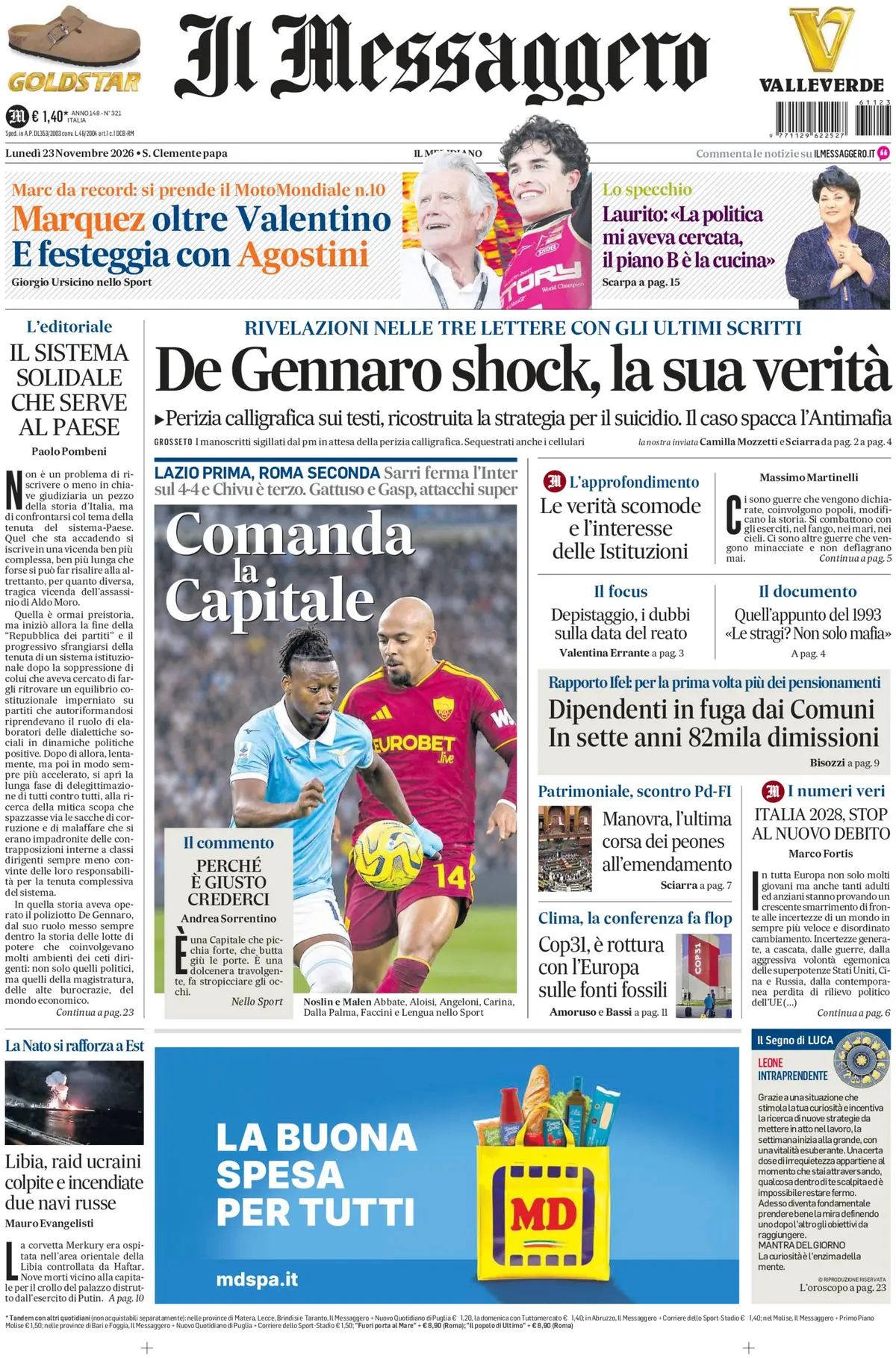
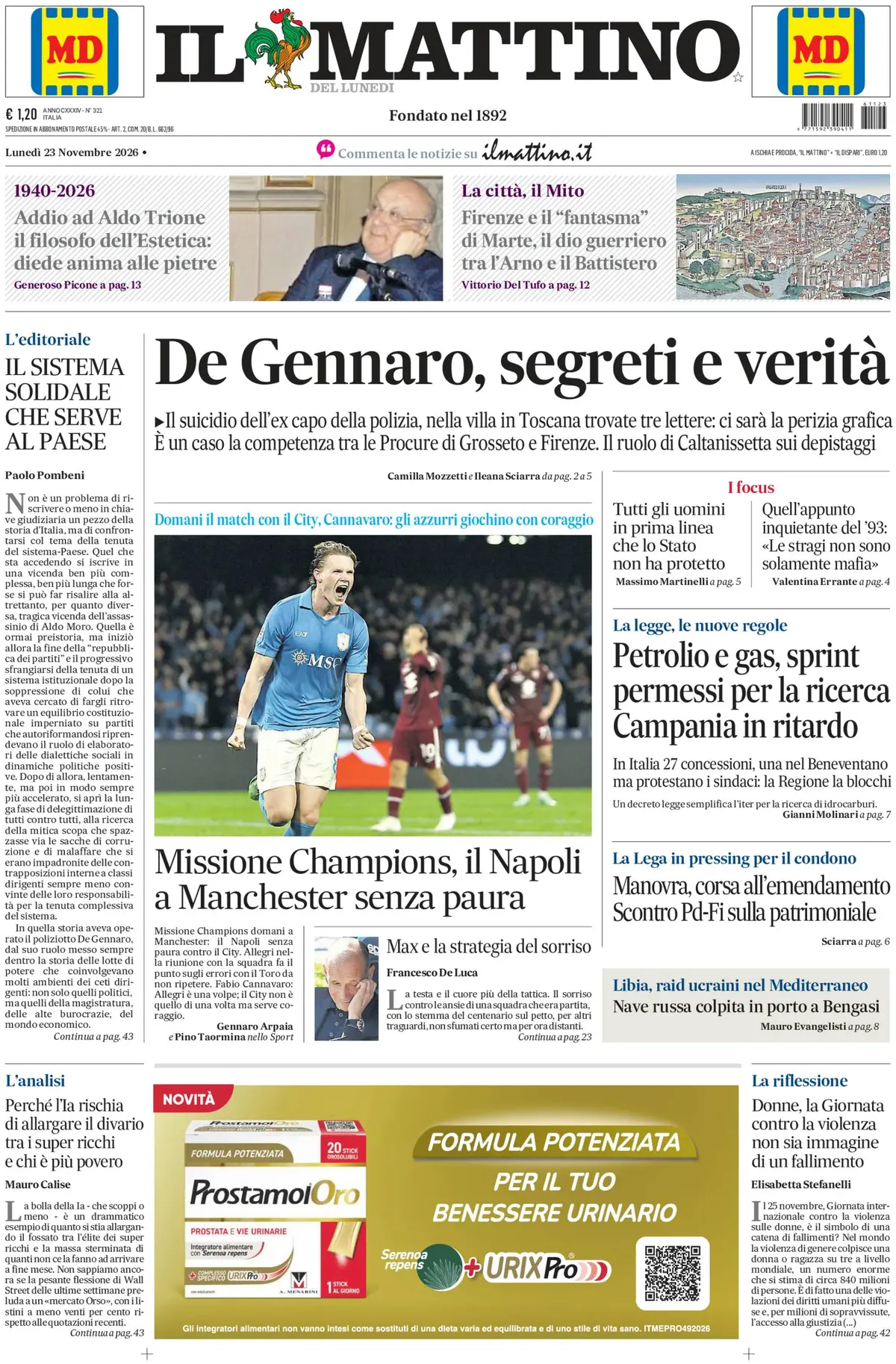
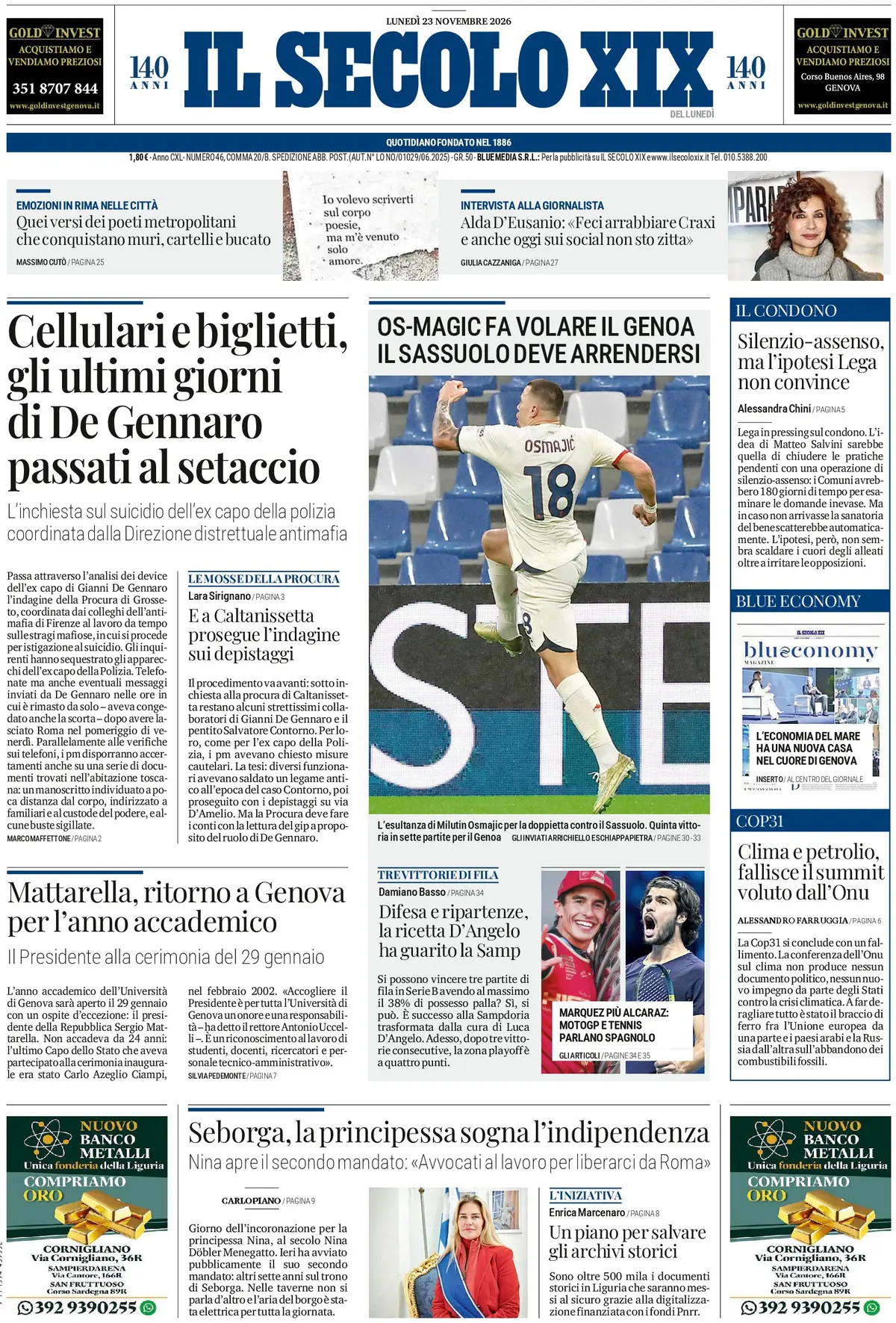
Corriere della Sera focuses on the letter and envelopes intended for different recipients. La Repubblica emphasises the remaining mysteries, while La Stampa highlights that De Gennaro was preparing his defence. Il Messaggero and Il Mattino stress the truth and secrets entrusted to the documents. Il Secolo XIX takes an investigative angle, concentrating on the examination of phones and notes from his final days.
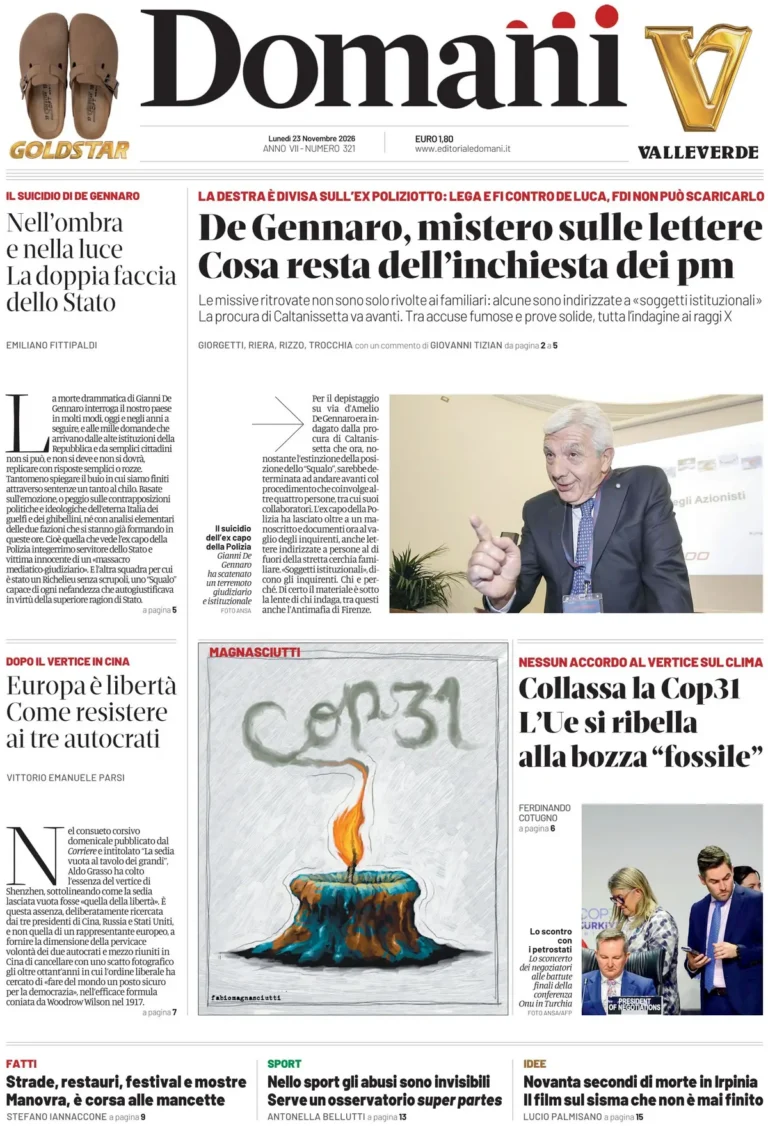
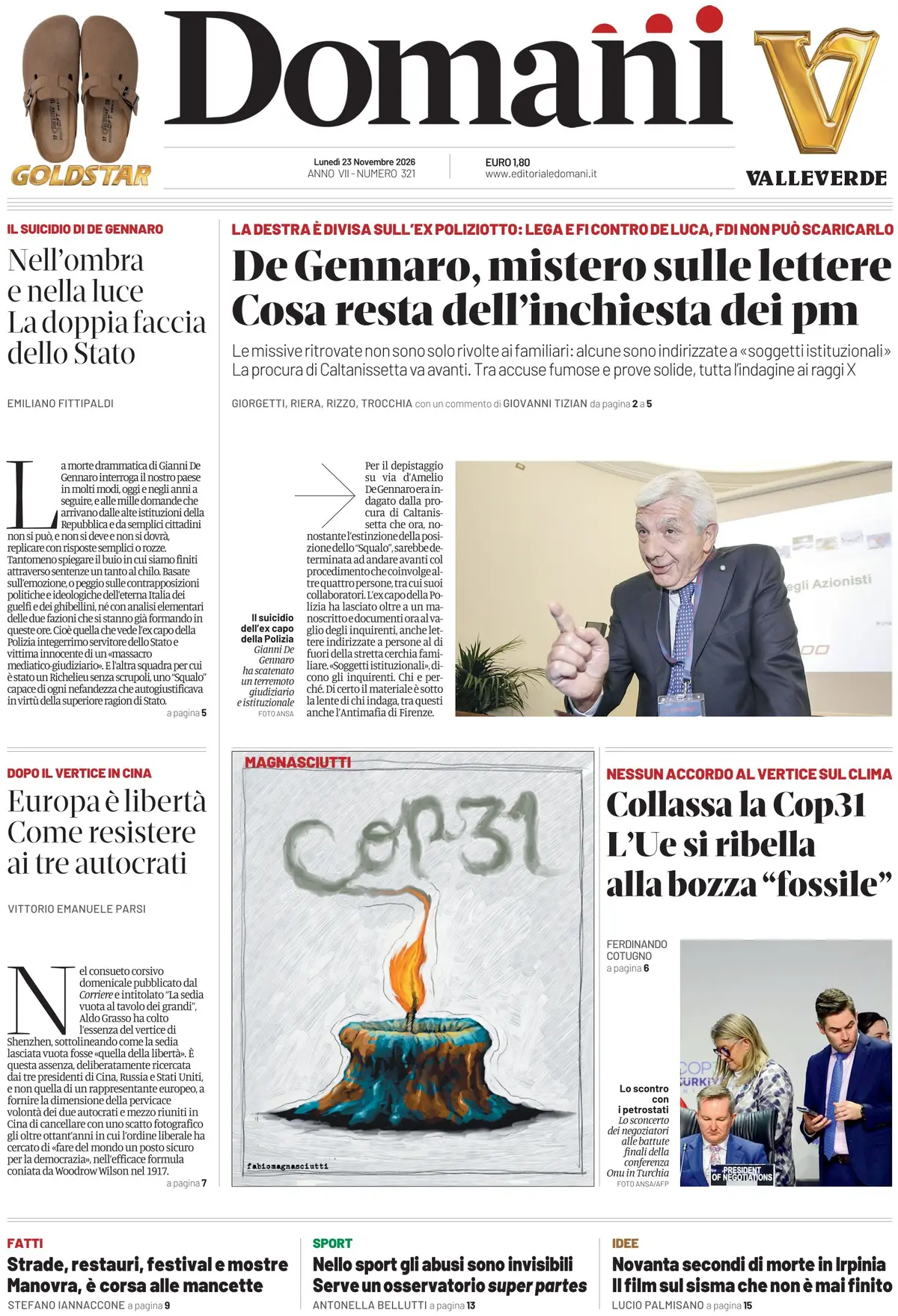
These openings distinguish two issues: the existence of documents, also reported by the official newspaper websites consulted, and what those documents may actually establish. The latter remains a matter for reporting and verification, rather than an answer already supplied by the word “truth”. Domani makes that caution explicit by pairing the mystery surrounding the letters with a question about what remains of the prosecutors' investigation.
## The gap between reporting and political judgement
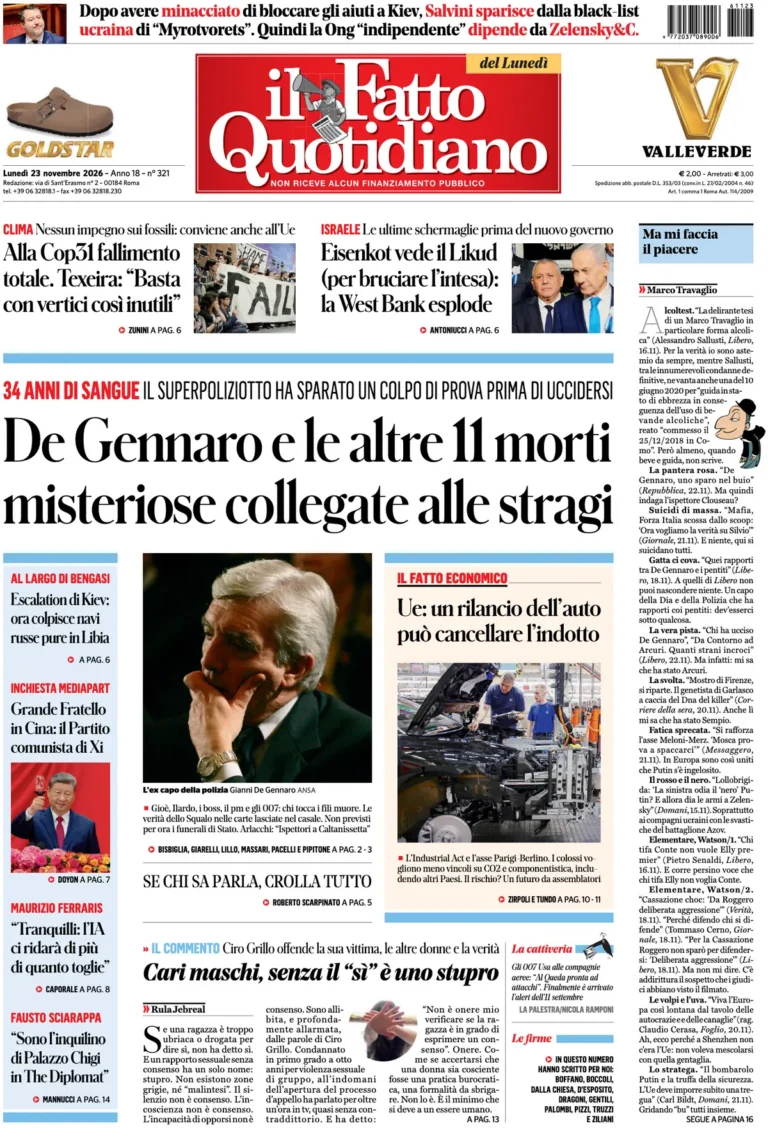
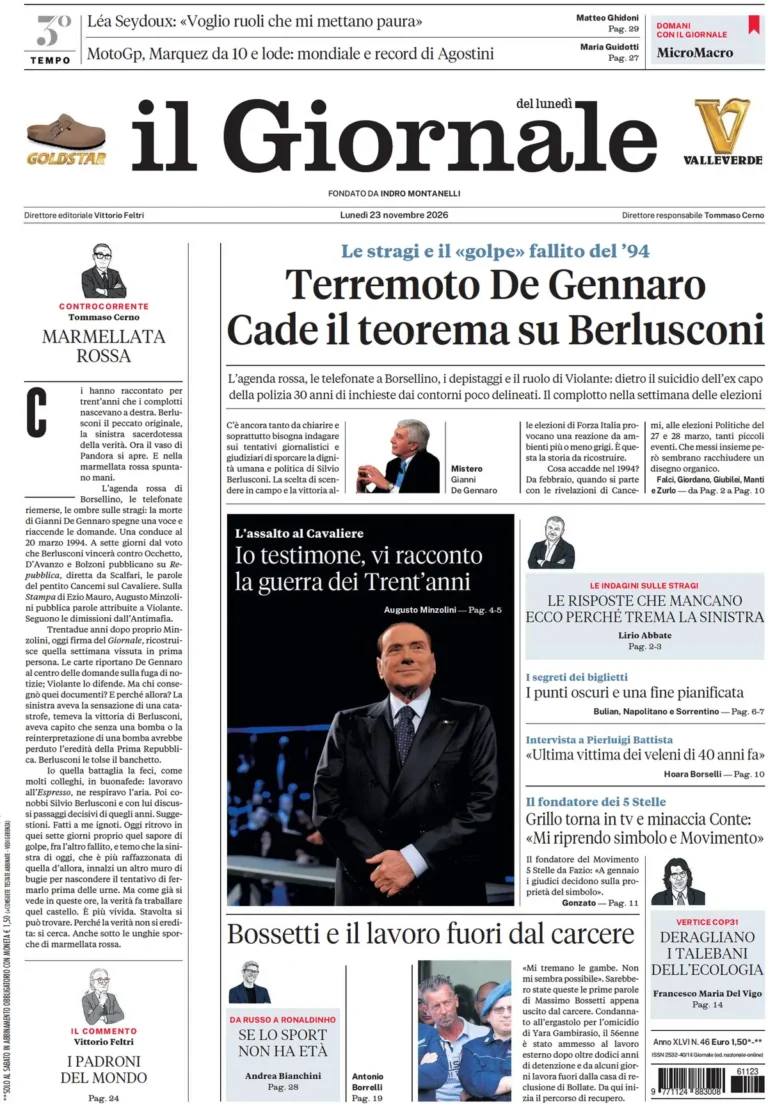
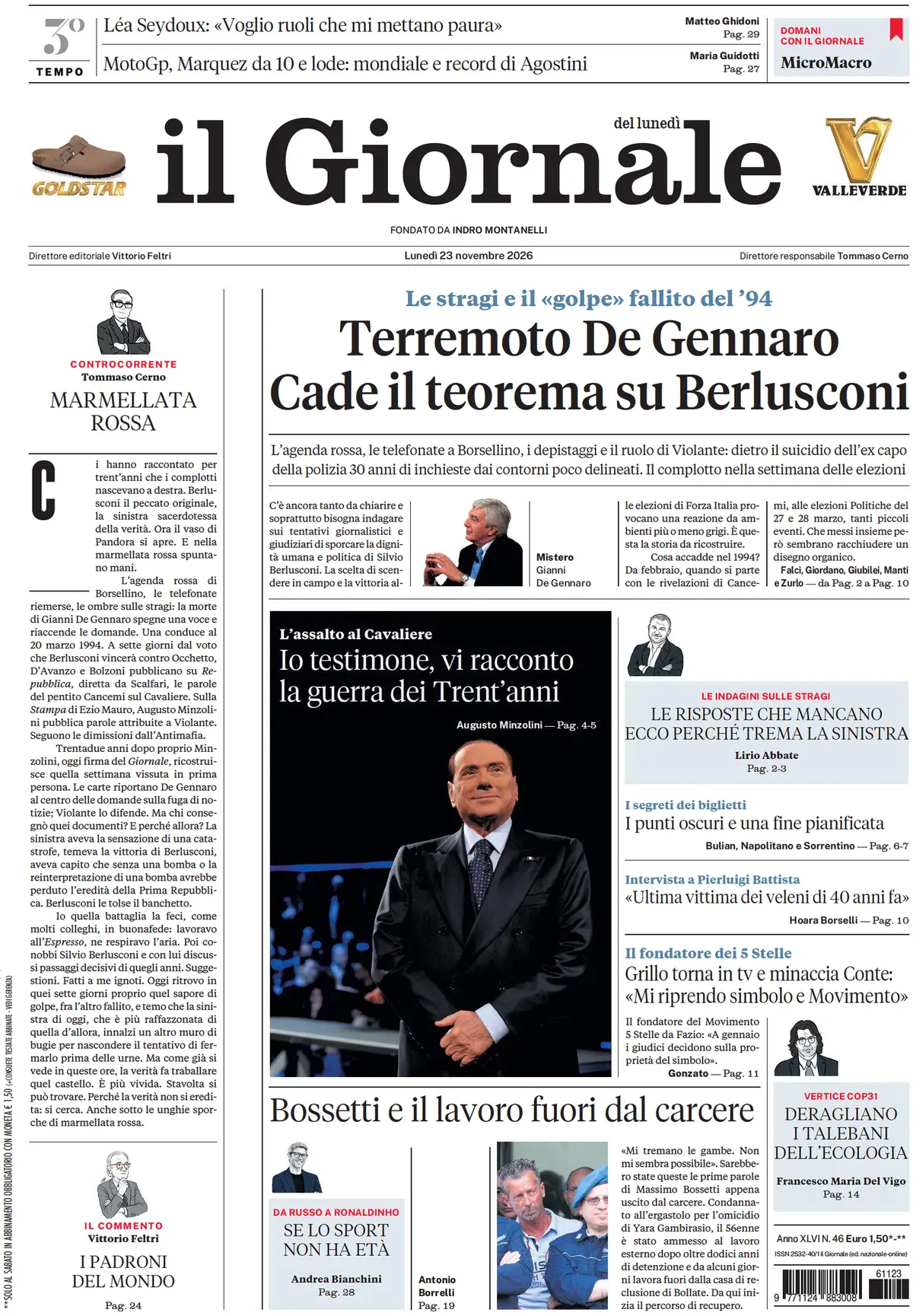
Il Fatto Quotidiano places De Gennaro's death alongside other deaths it describes as mysterious and connected with the massacres. That is the newspaper's chosen frame: the headline alone does not demonstrate a causal link between separate events. From a contrasting perspective, Il Giornale treats the case as a turning point undermining the “theory” concerning Berlusconi. This, too, is an editorial conclusion, not a judicial outcome independently established by this review.
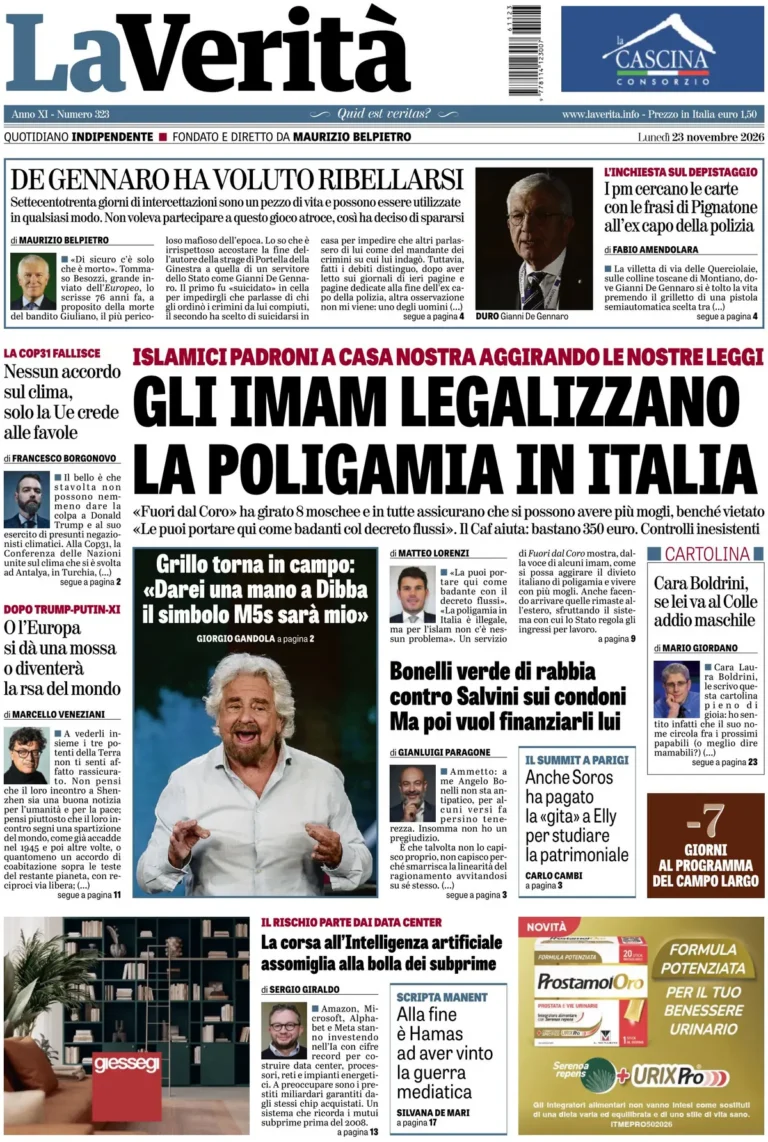
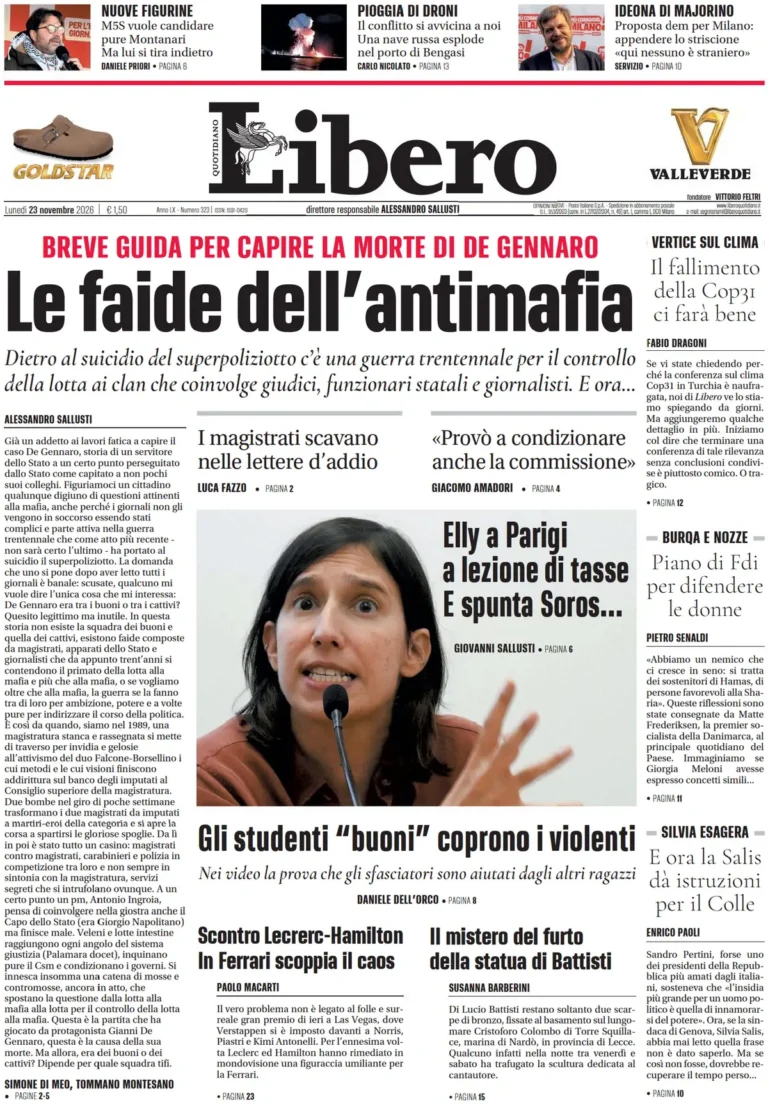
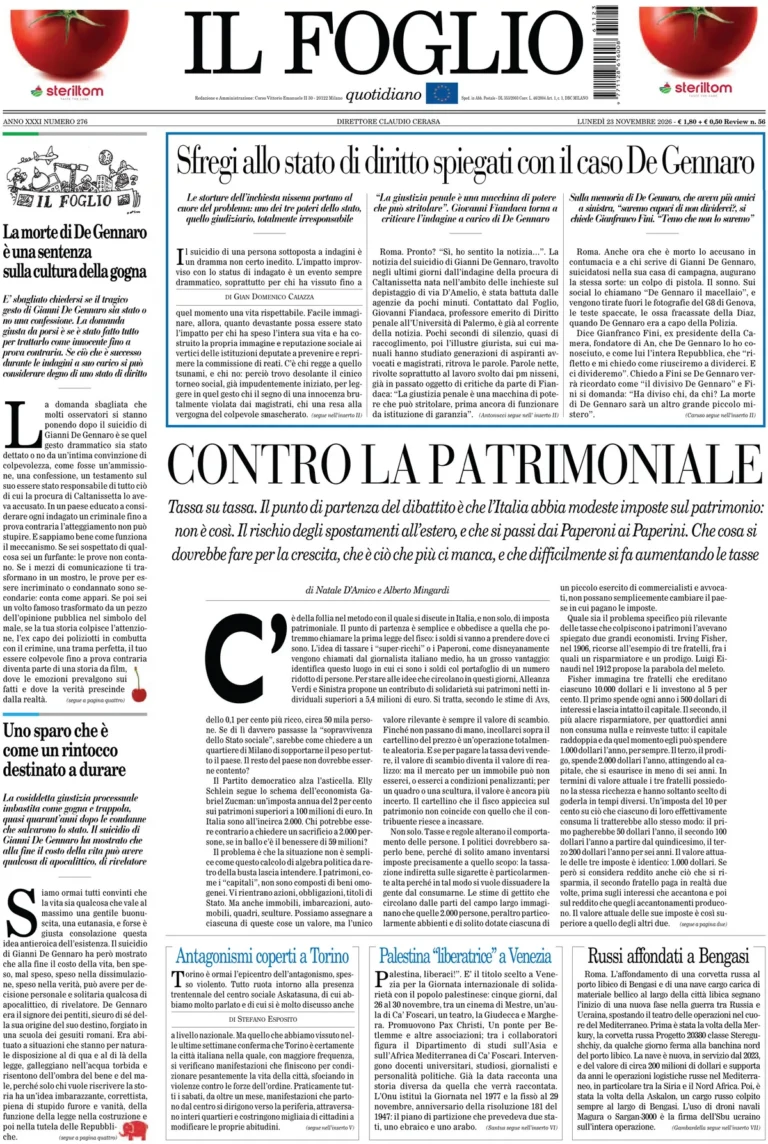
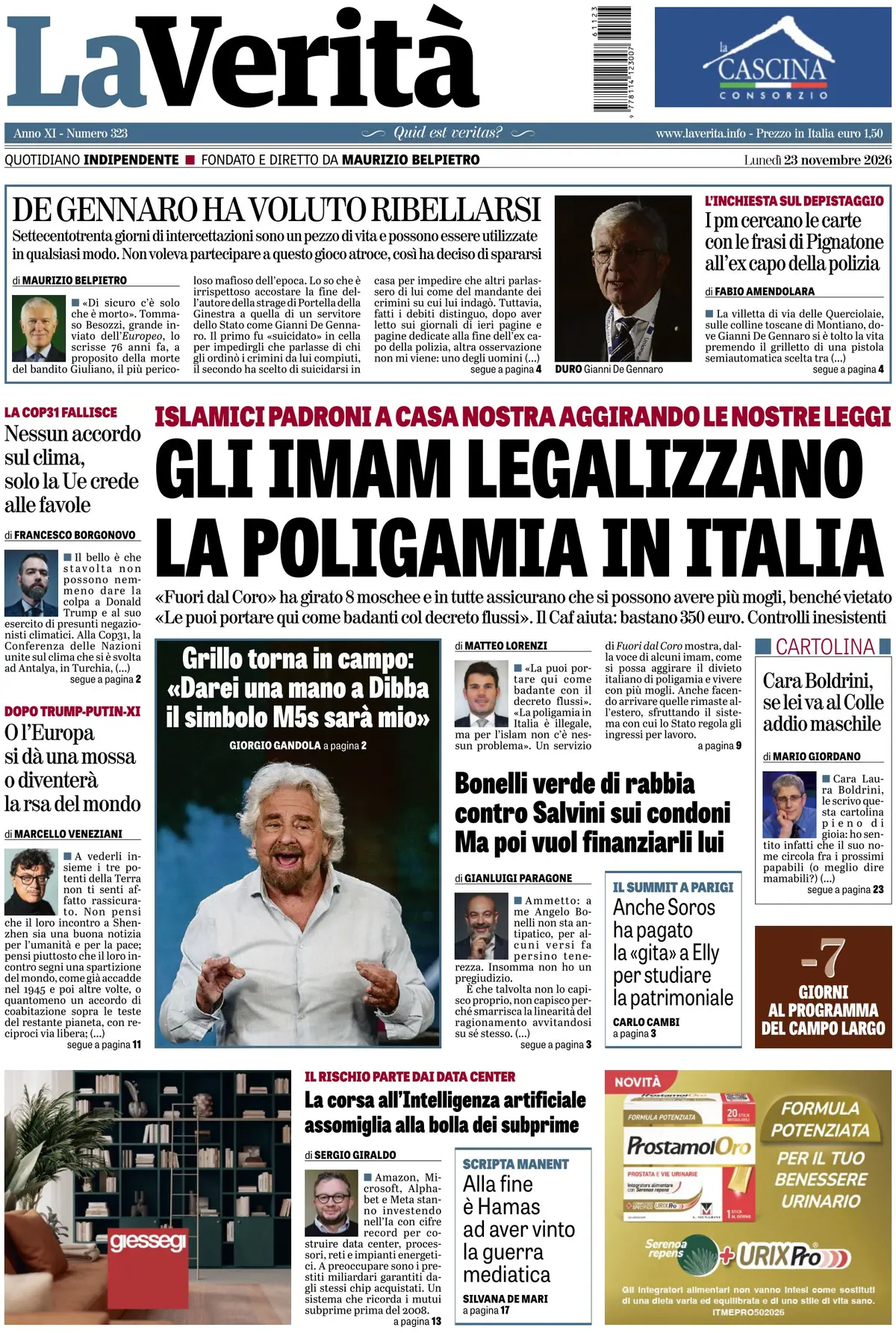
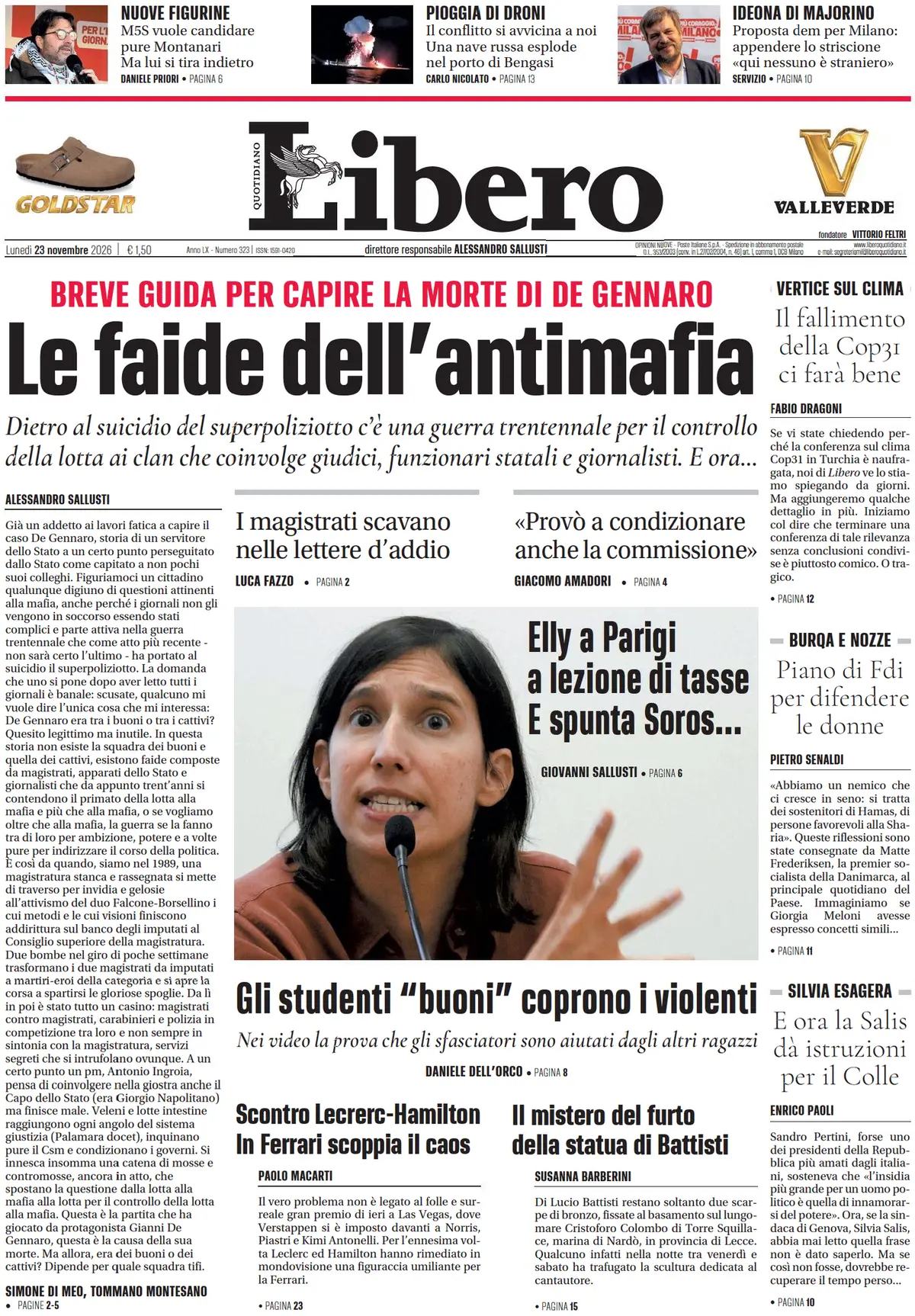
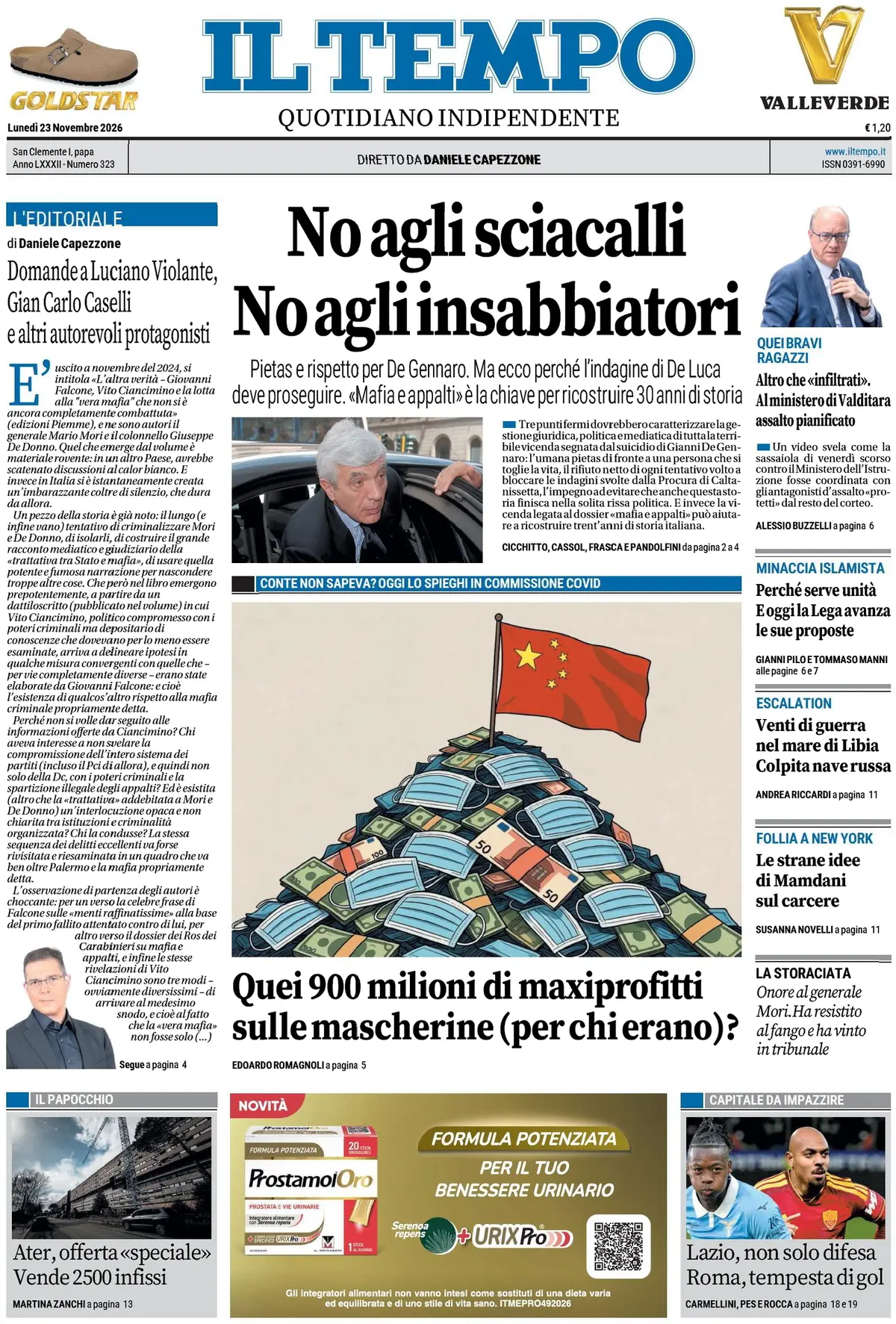
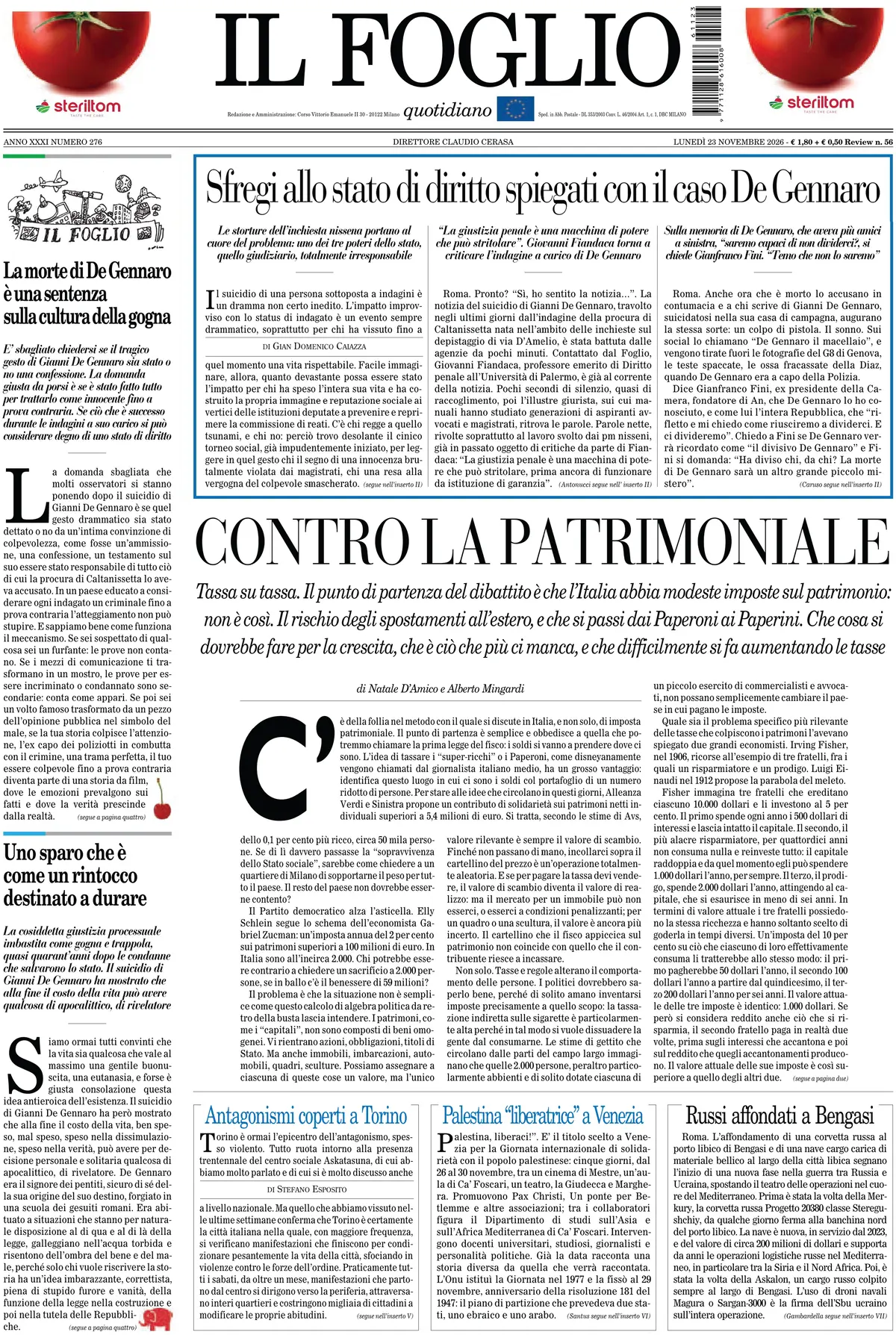
Libero focuses its interpretation on conflict within the anti-mafia world. Il Tempo rejects both the polemical exploitation of the death and cover-ups. Il Foglio moves the discussion onto the rule of law and uses its large central feature to argue against a wealth tax. La Verità makes a different choice for its main lead, addressing polygamy and the role of imams, while retaining a prominent reference to De Gennaro above it. This comparison maps newspapers' priorities and arguments; it does not endorse their accusations or generalisations.
## Cop31: a second shared story
Corriere, Repubblica, Stampa and Domani highlight the lack of a climate agreement and European objections to the text on fossil fuels. La Stampa calls it a disaster and Domani a collapse: their language conveys strongly negative assessments. The common ground is the failure of negotiations as reported by the newspapers; political responsibility and practical consequences require careful distinctions between the participants' positions. The story is not unimportant simply because it appears below the dominant news item.
## Business and sport reorder the agenda
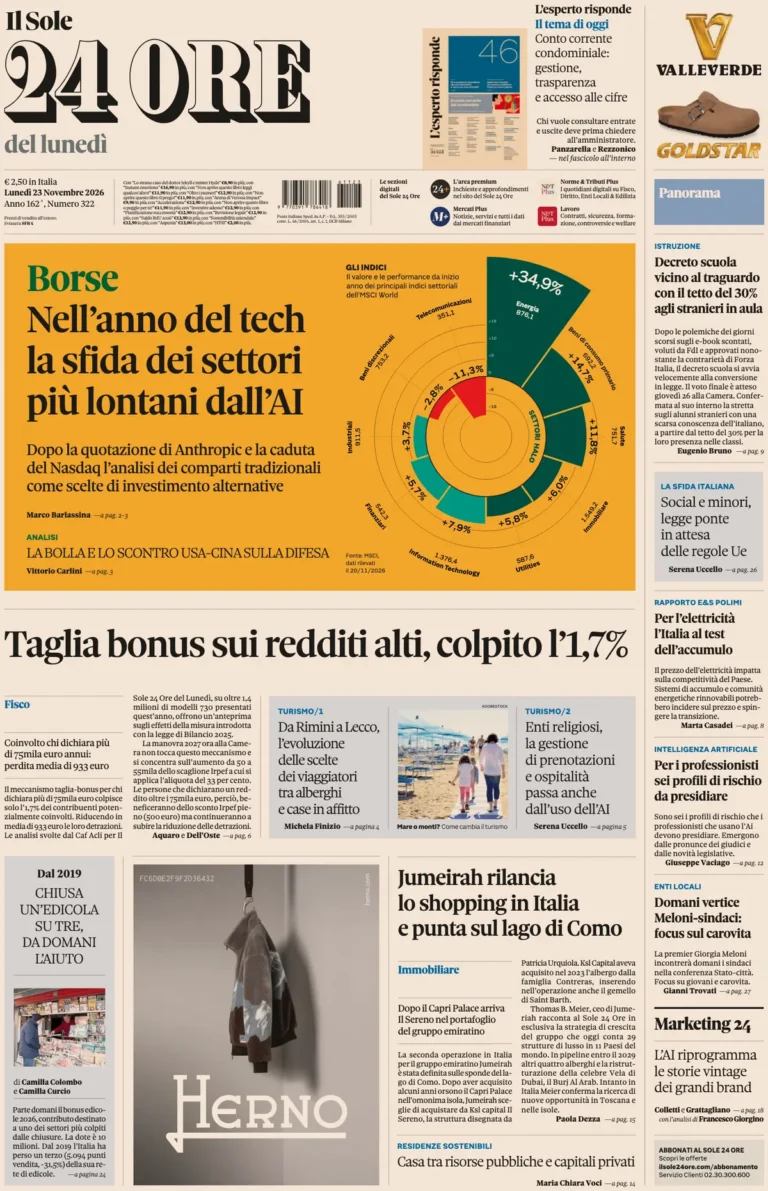
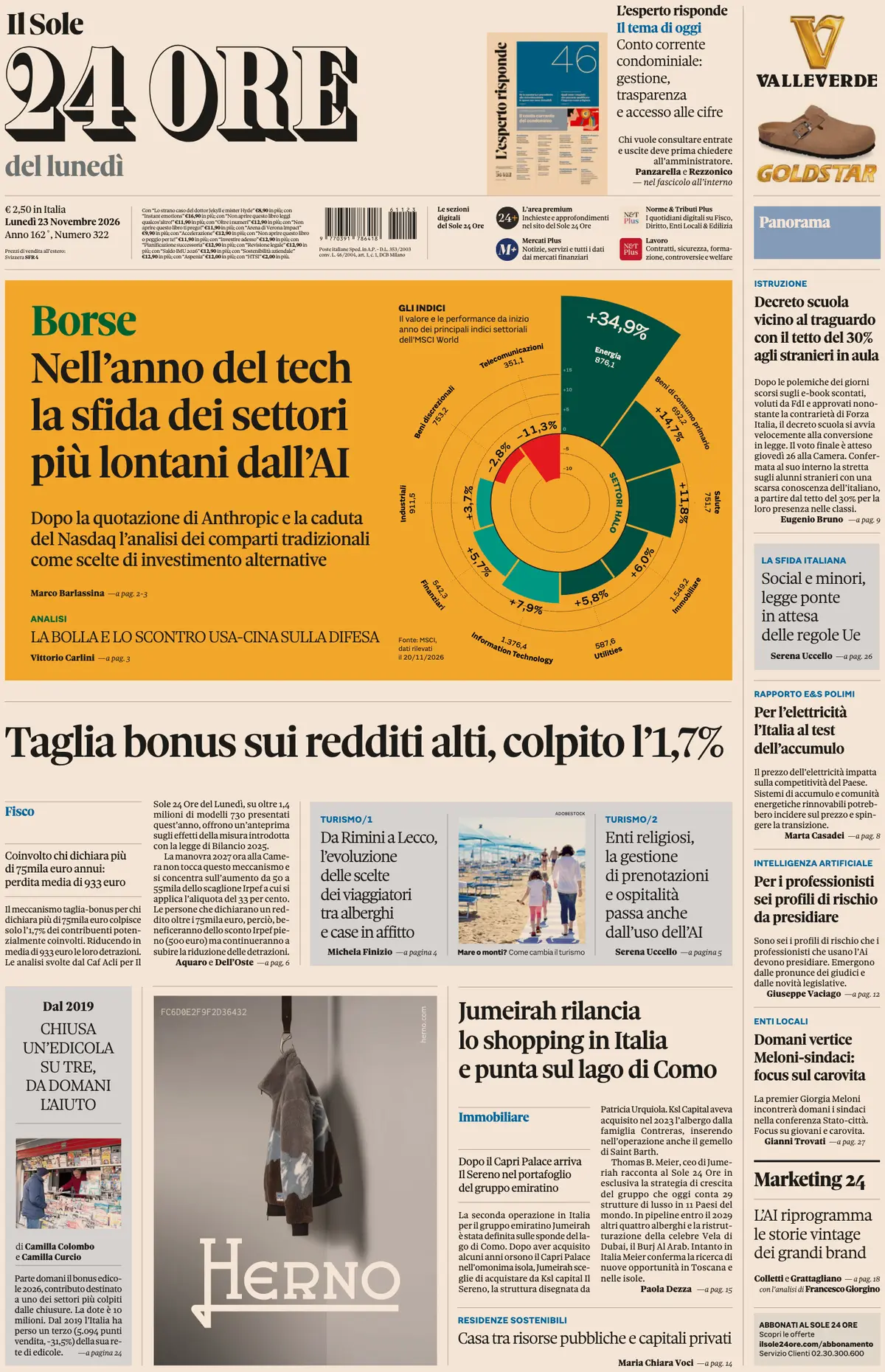
Il Sole 24 Ore leads on financial markets, contrasting technology's prominence with opportunities in sectors further removed from artificial intelligence. Its accompanying headline on cuts to bonuses for higher earners shifts attention towards the distributional effects of taxation. This is a different agenda from the general-interest papers: investment, household finances and economic decisions.
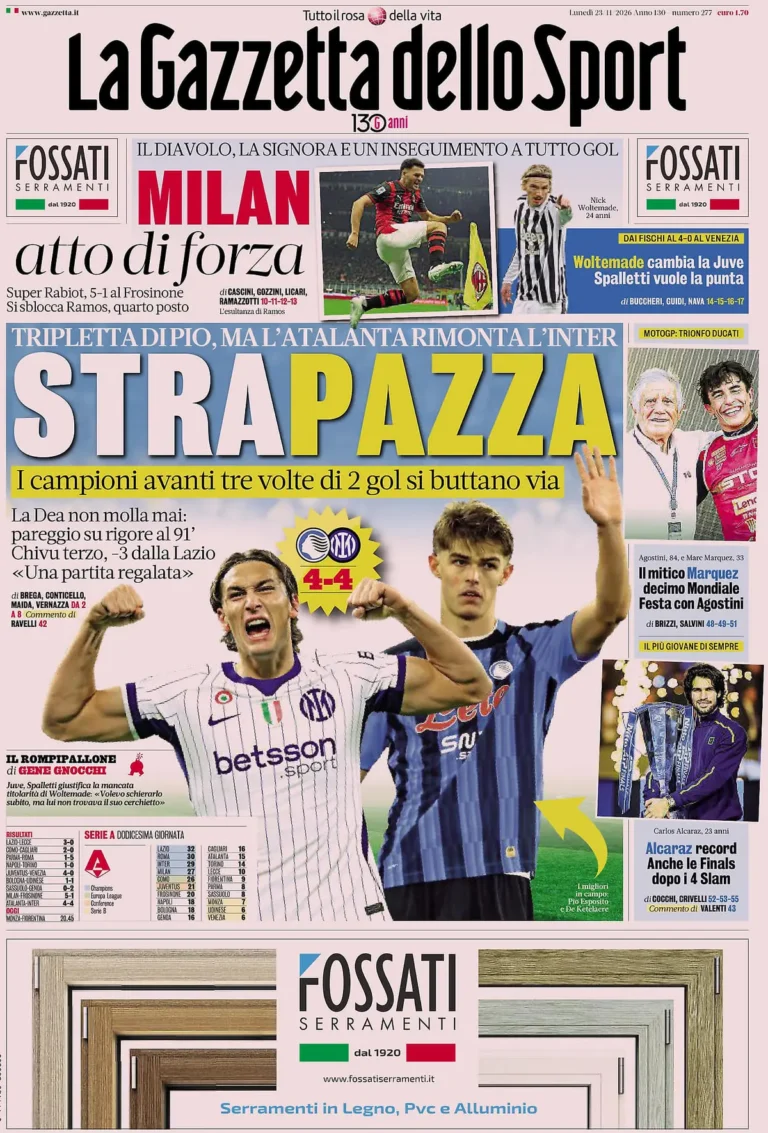
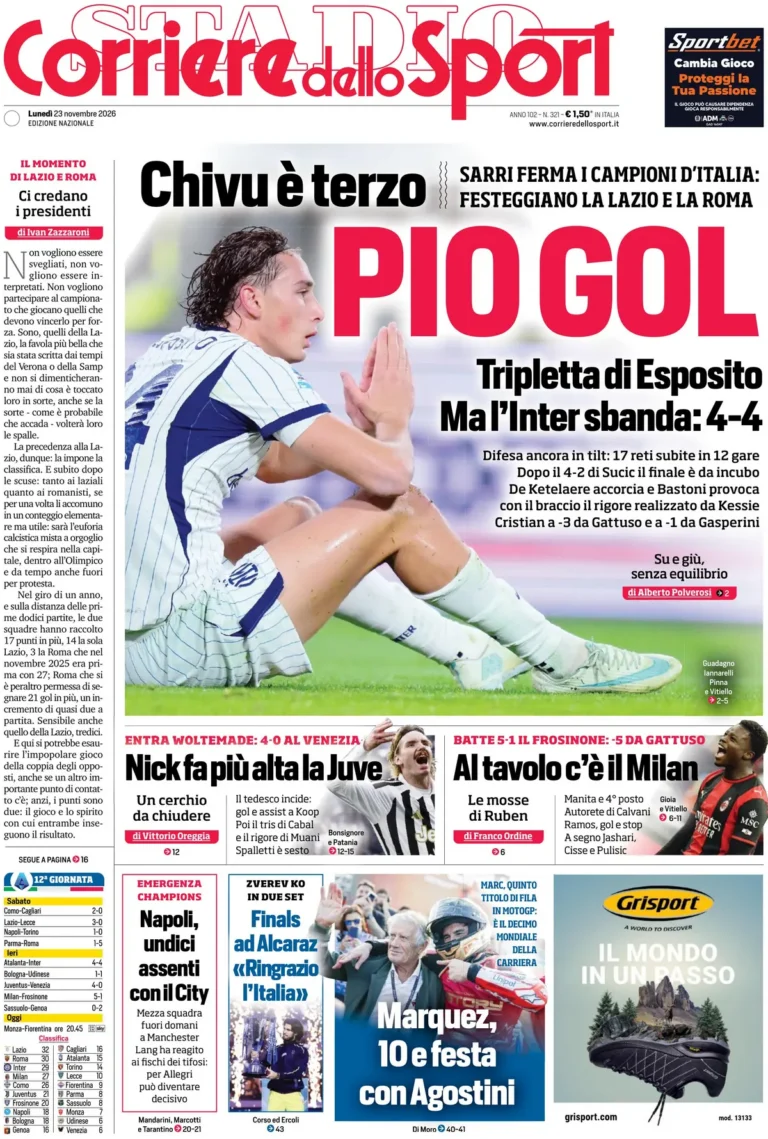
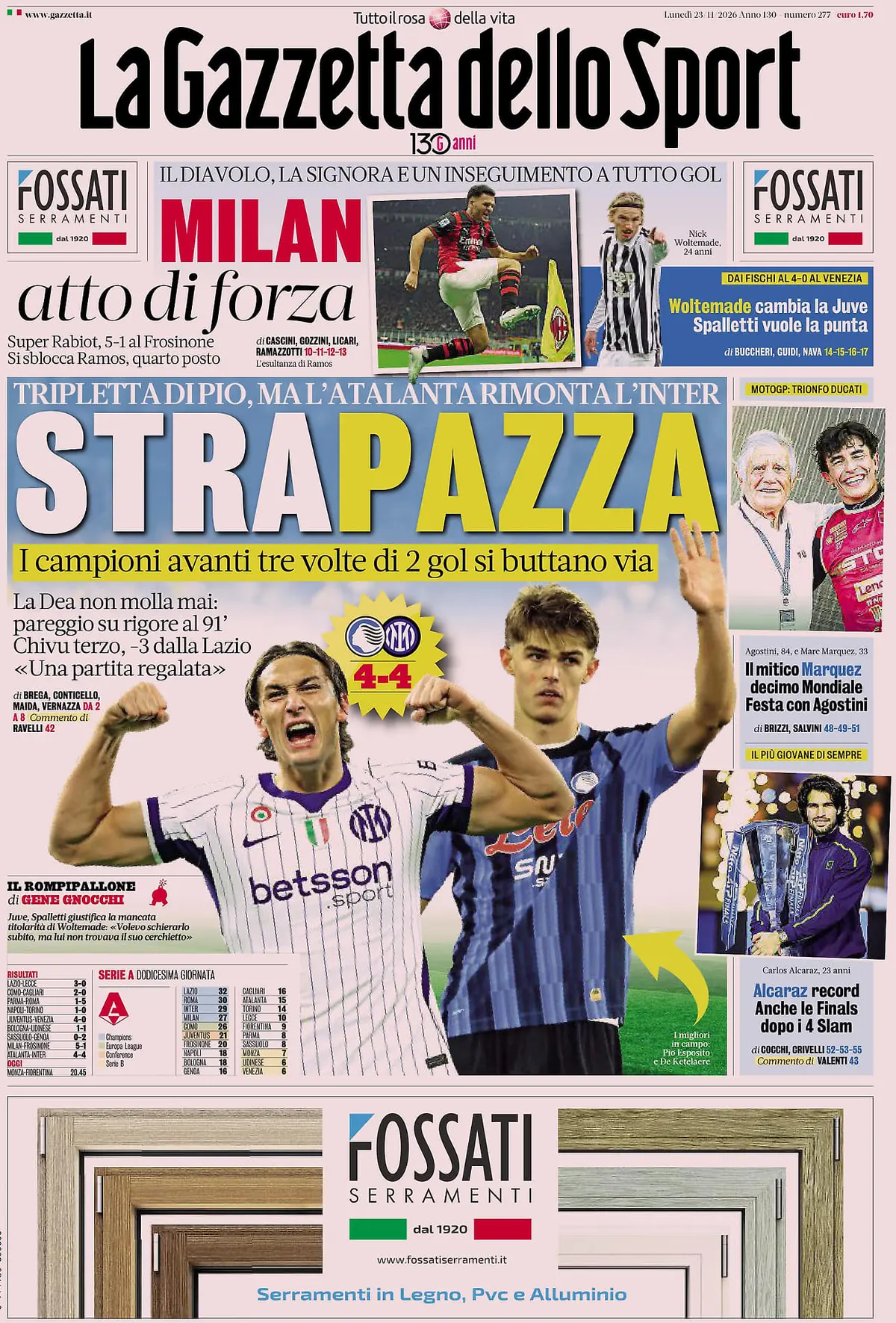
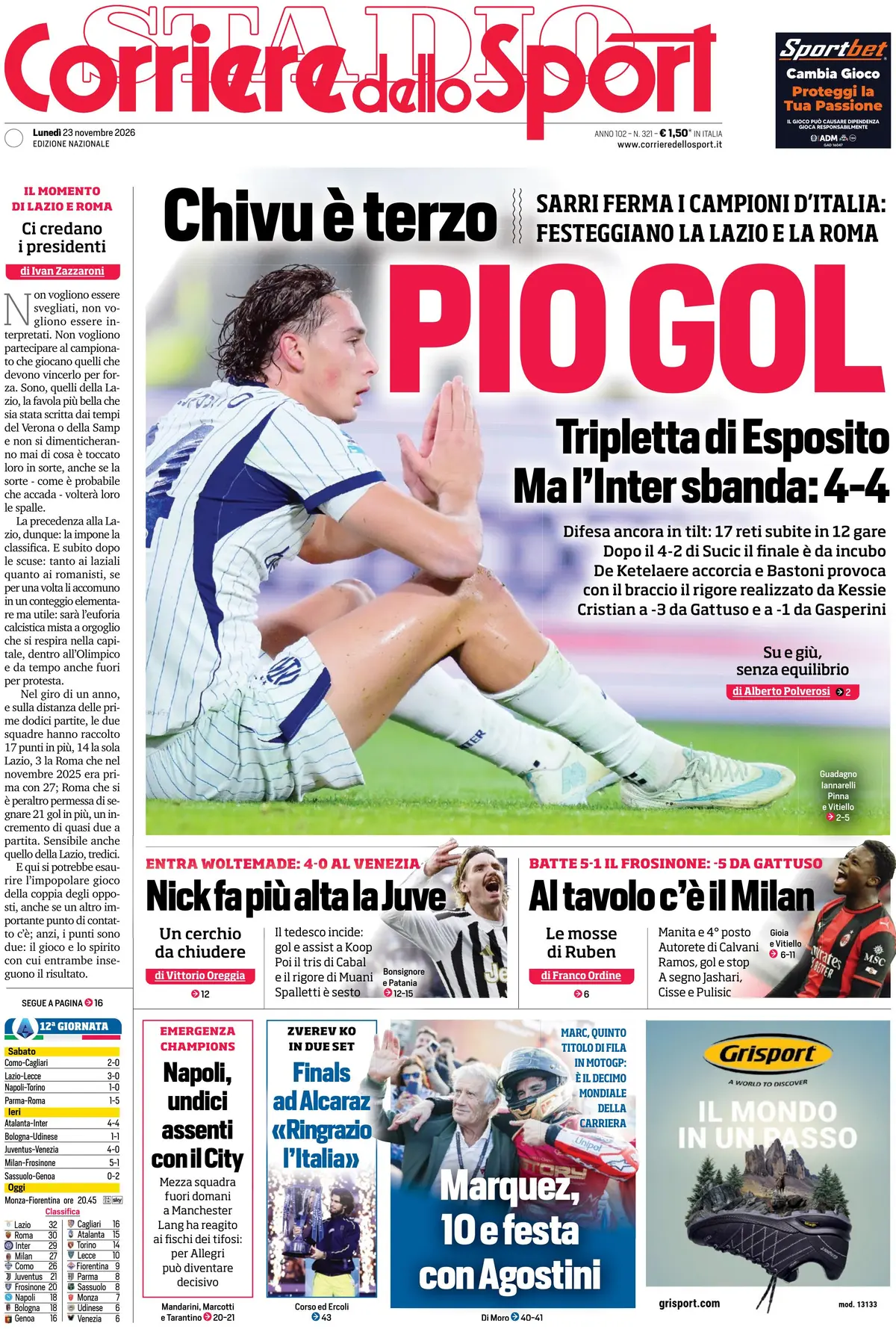
La Gazzetta dello Sport and Corriere dello Sport focus on Atalanta's 4–4 draw with Inter, including Pio Esposito's hat-trick, and Milan's 5–1 victory over Frosinone. Those results are also corroborated by the official Repubblica website consulted. Both covers give space to Alcaraz and Marc Marquez, combining league football with leading figures from other sports. Il Mattino adds anticipation of Napoli's Champions League match to the national agenda, showing how the same day can acquire a different regional perspective.
The review's common thread is therefore the gap between a document and its meaning, or between a result and the judgement attached to it. Reading across several newspapers helps make that gap visible.