Front pages, 22 November 2026: how newspapers frame De Gennaro’s death
# Front pages, 22 November 2026: one story, many frames
Gianni De Gennaro's death dominates this Sunday's front pages. Comparing sixteen newspapers reveals more than agreement on the leading story: their language, the questions they ask readers and the balance between reporting, institutional history and political judgement differ substantially. This review describes those editorial choices, keeping reported facts separate from the interpretations conveyed by headlines.
## Reporting the death and the unanswered questions
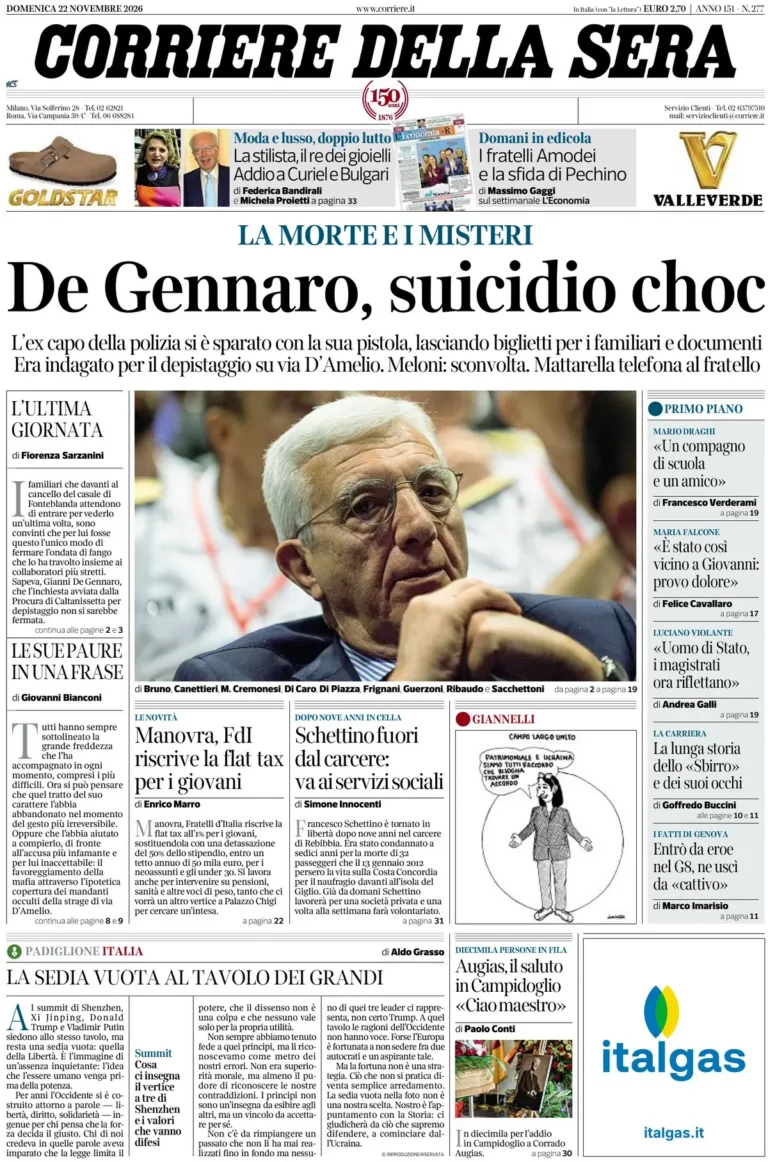
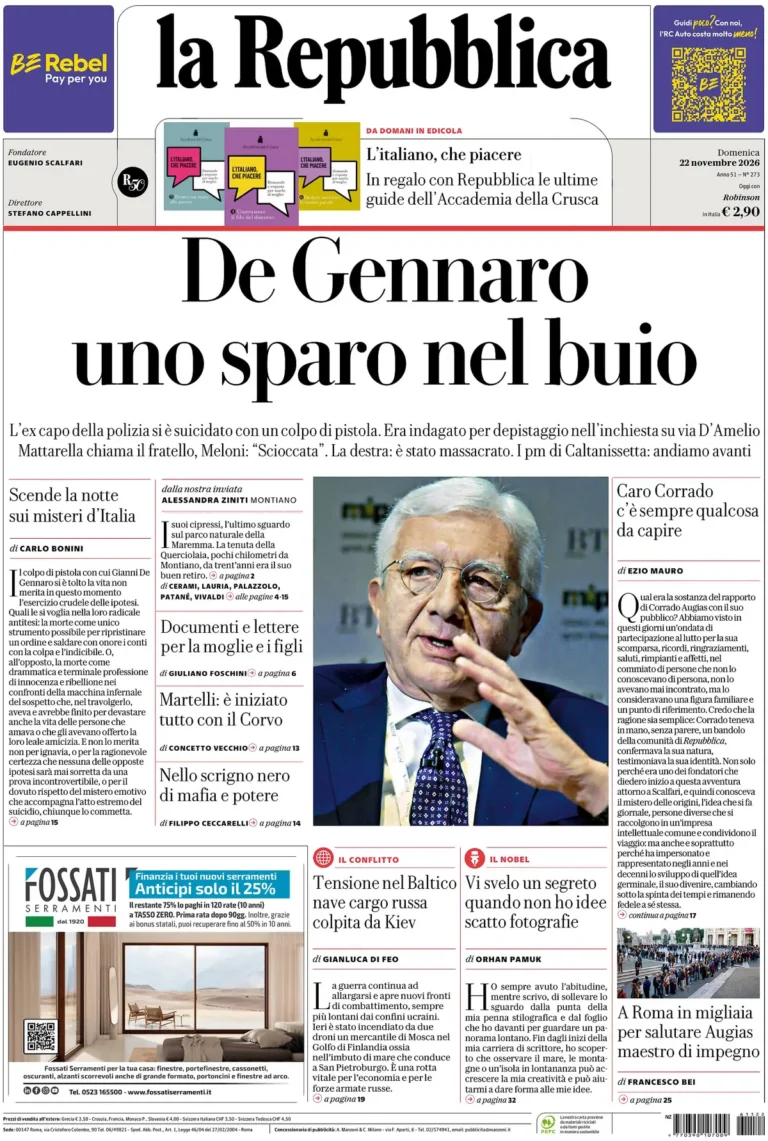
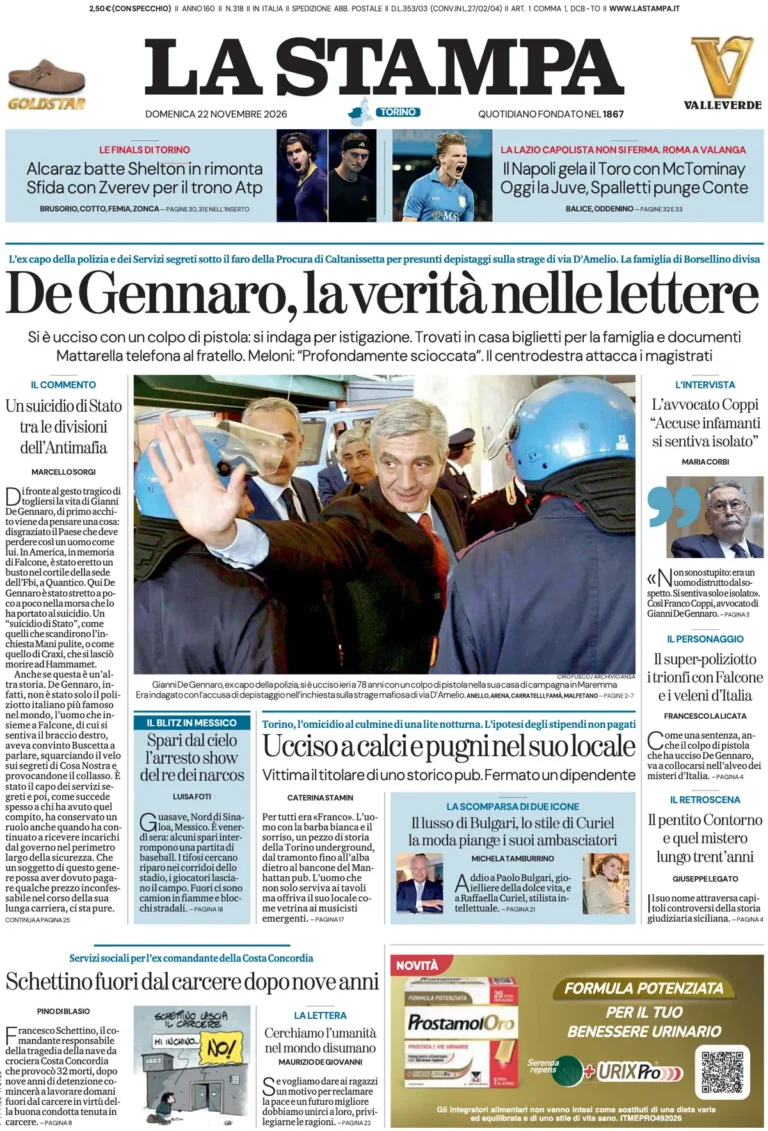
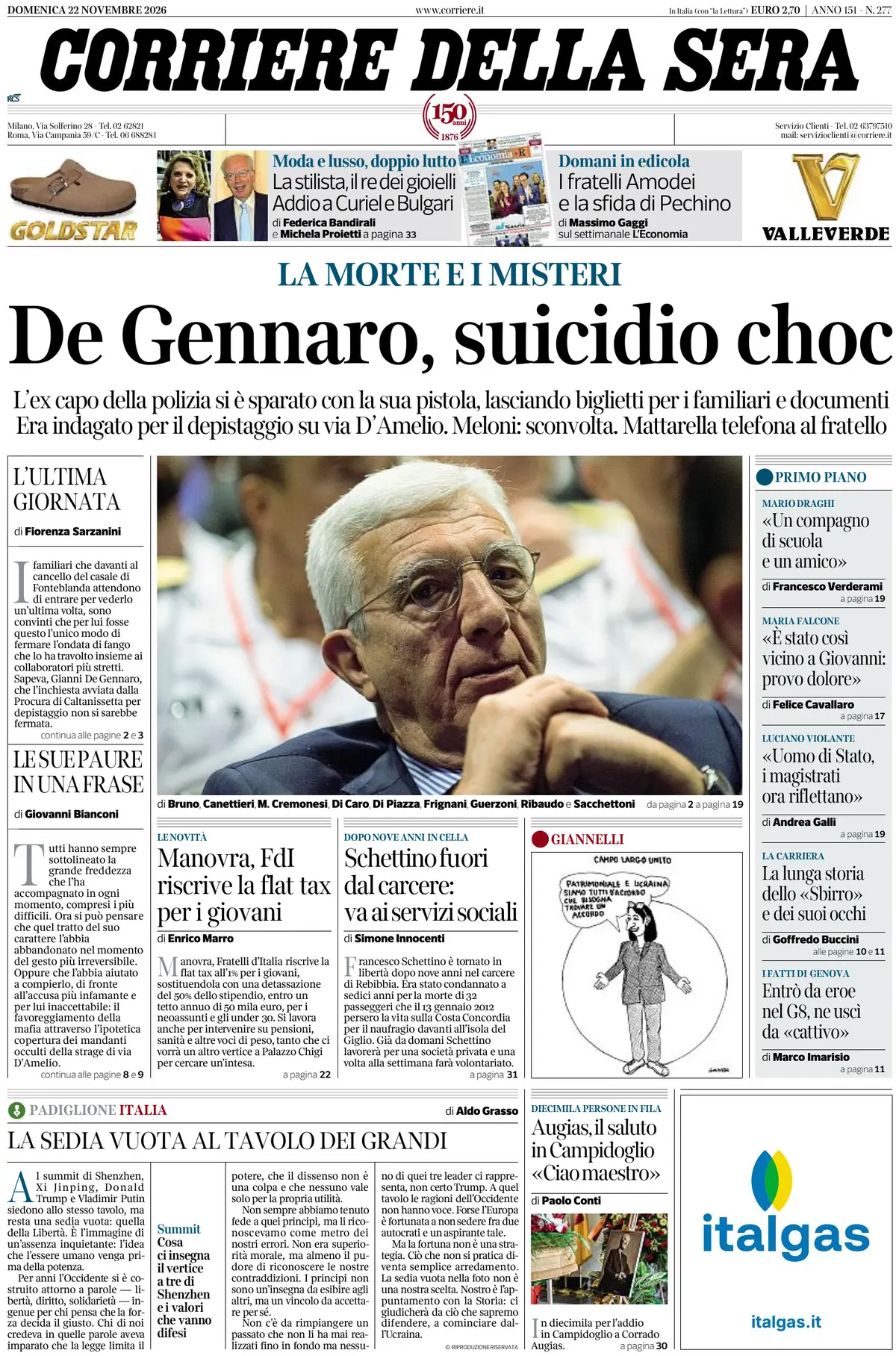
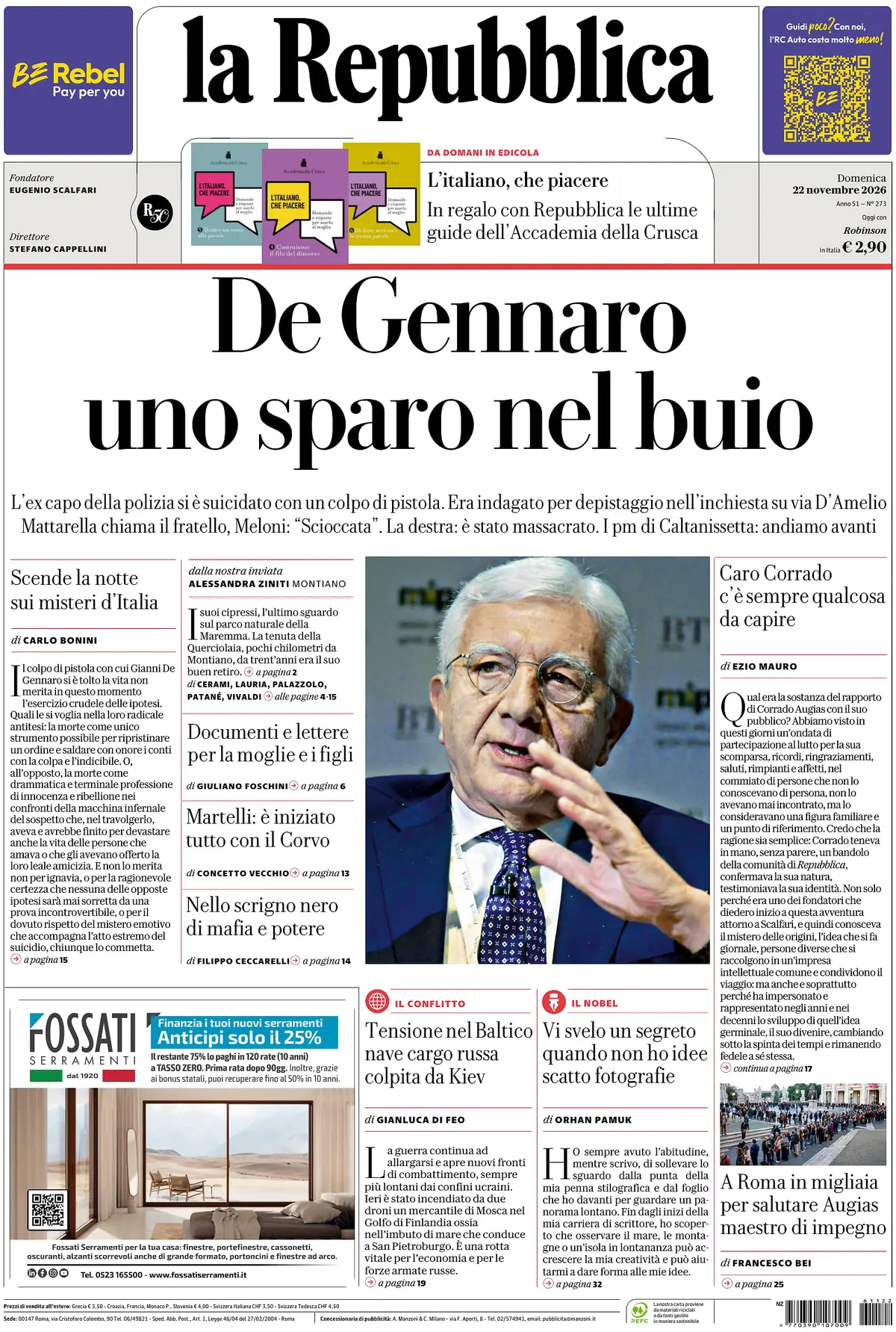
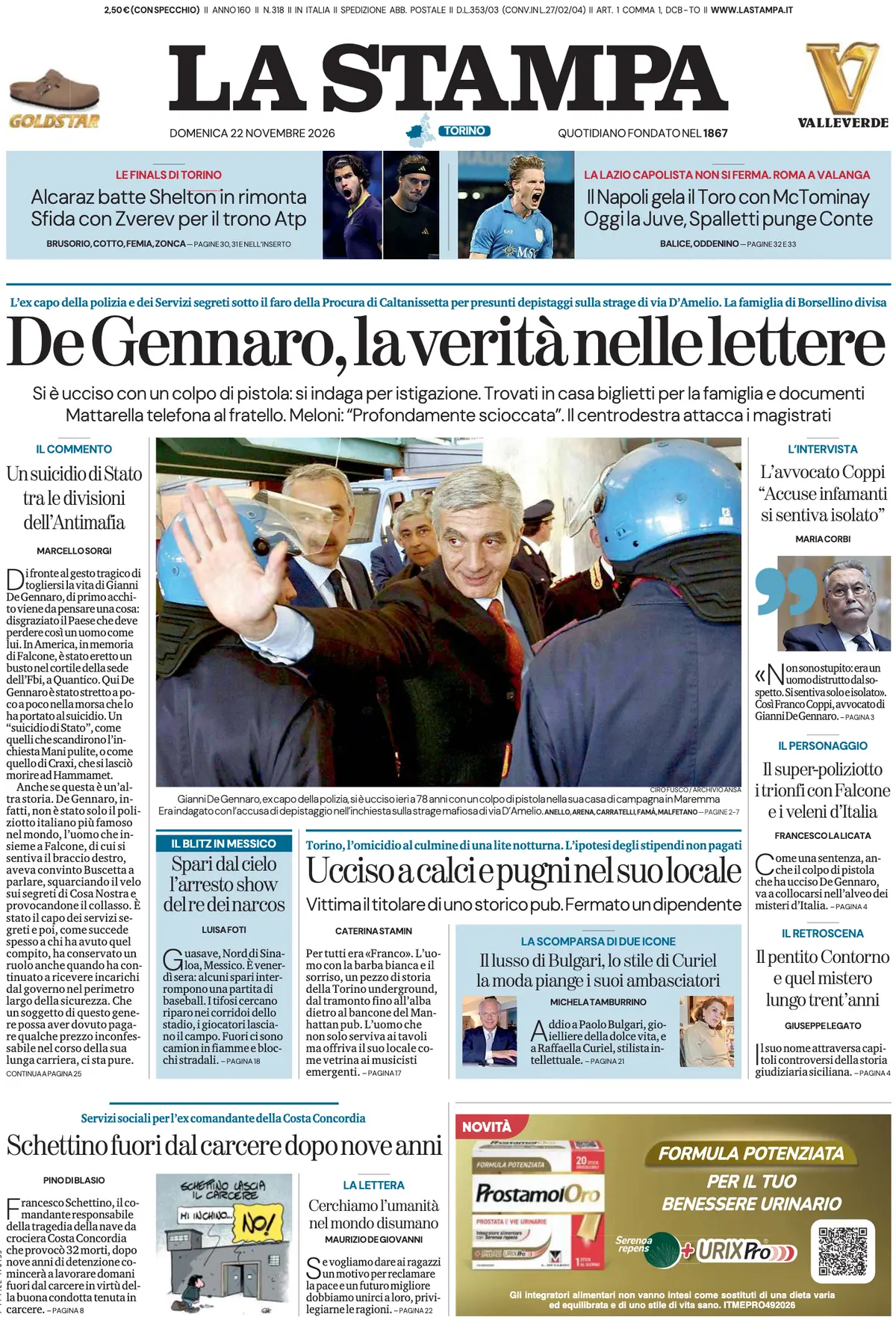
Corriere della Sera leads on the shock of De Gennaro's suicide, introducing the story with a reference to death and mysteries. La Repubblica describes a shot in the dark, emphasising what remains unclear. La Stampa directs attention towards the letters and the truth they might contain. These are three different entrances into the same story: immediate impact, uncertainty and the potential significance of documents.
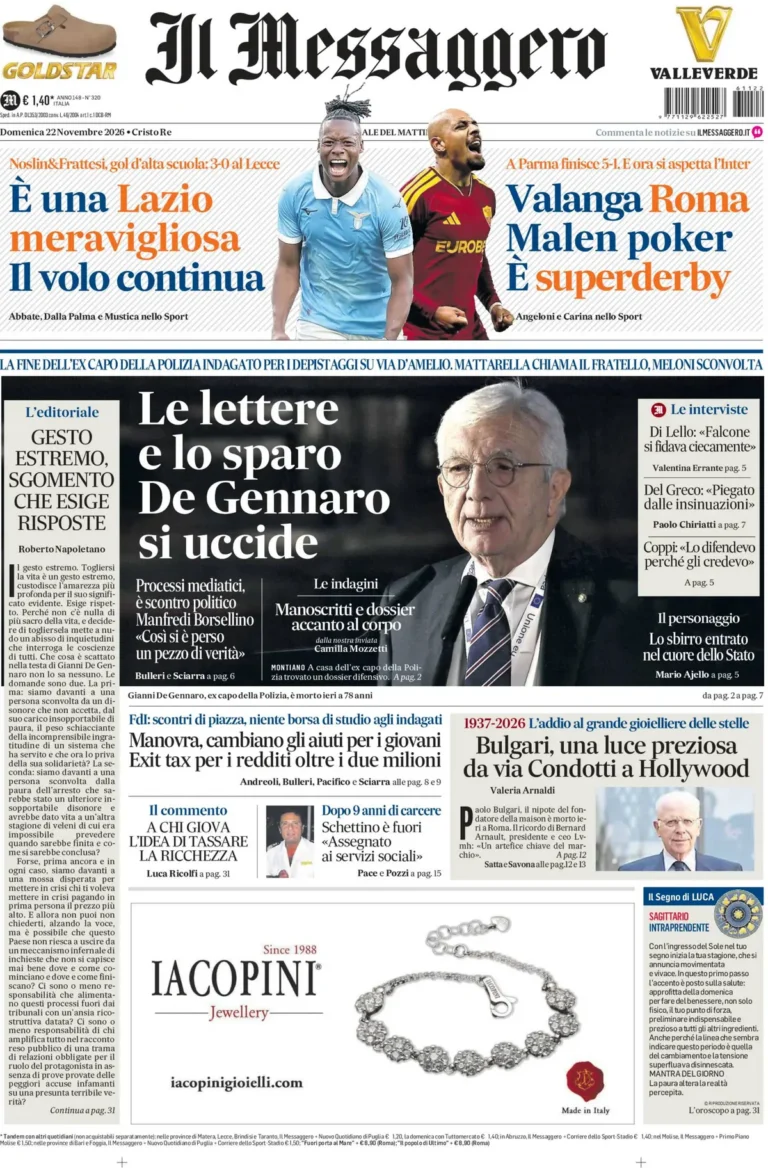
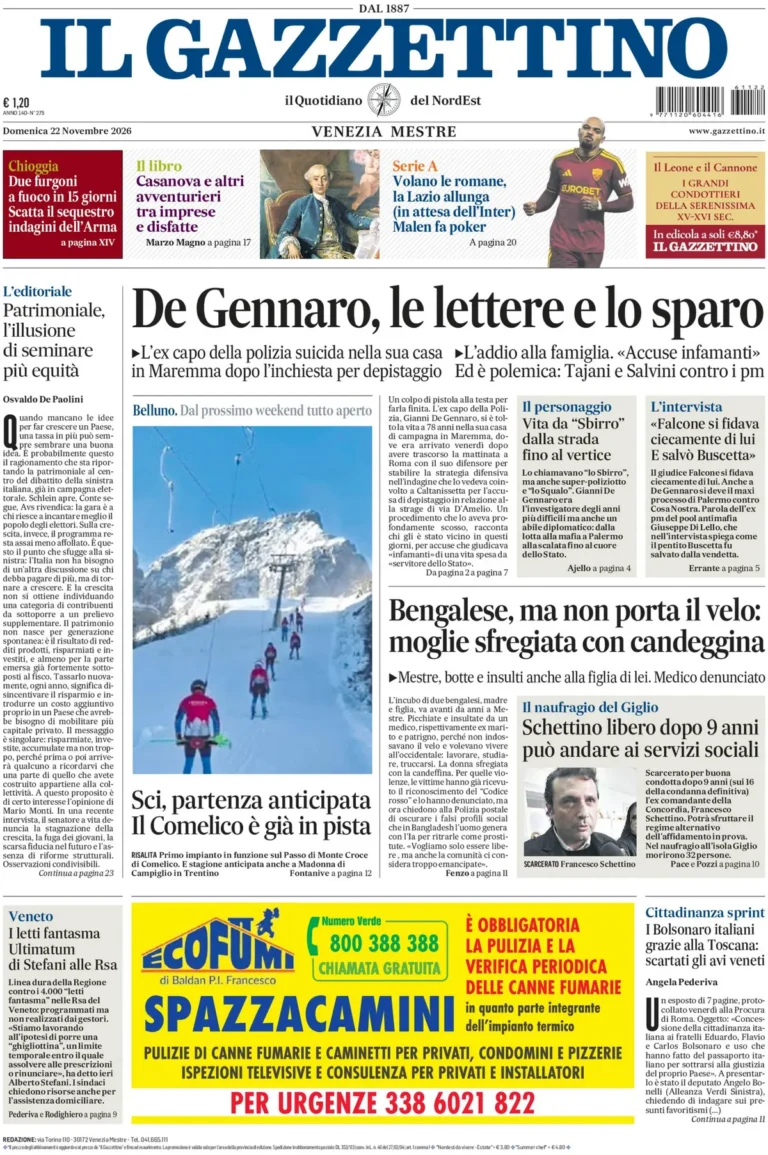
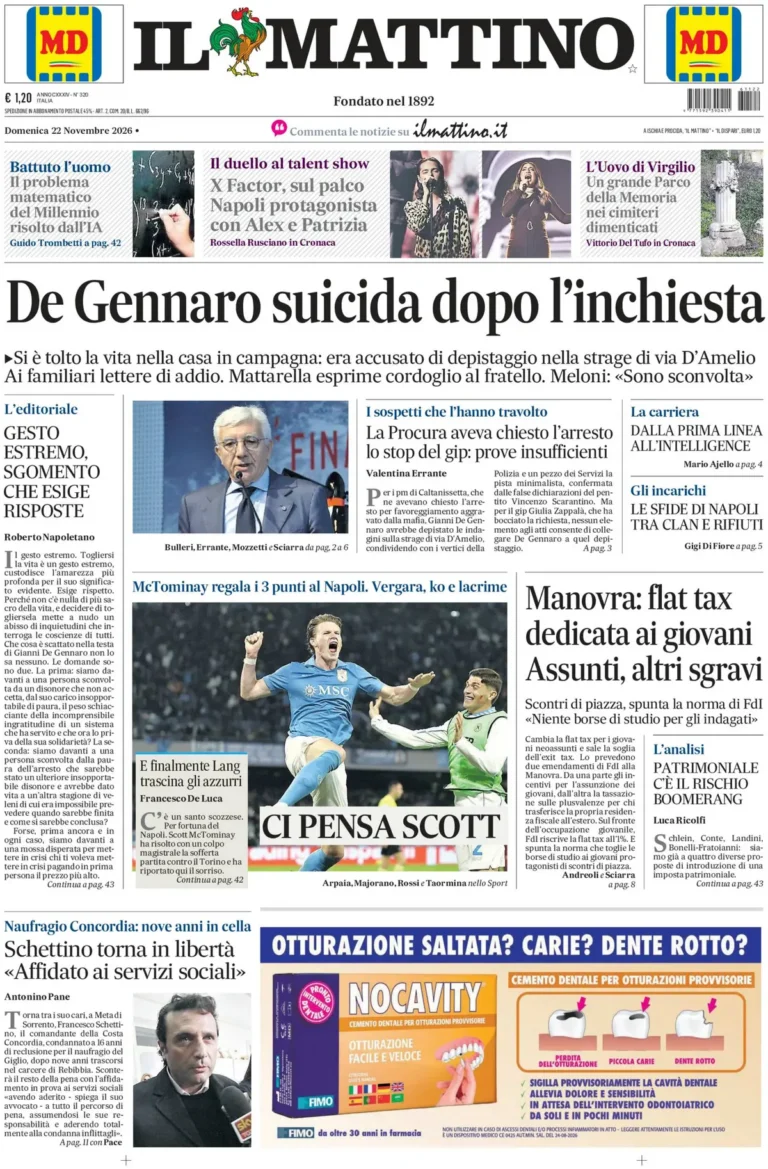
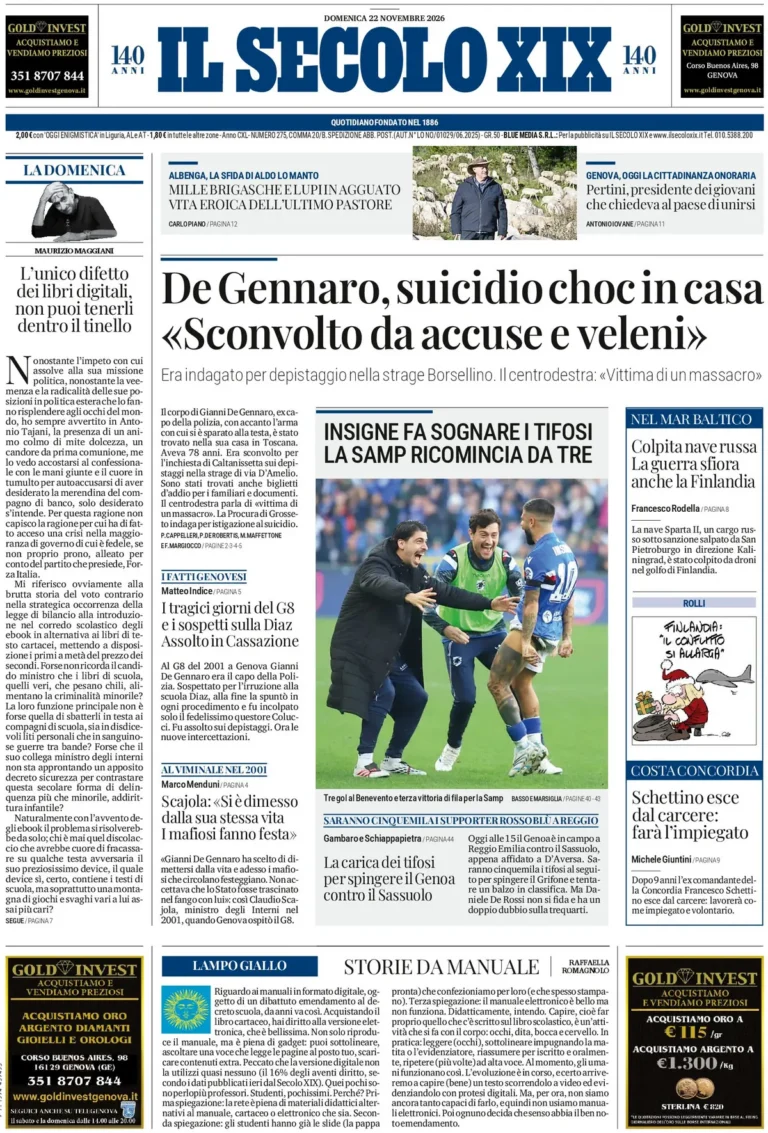
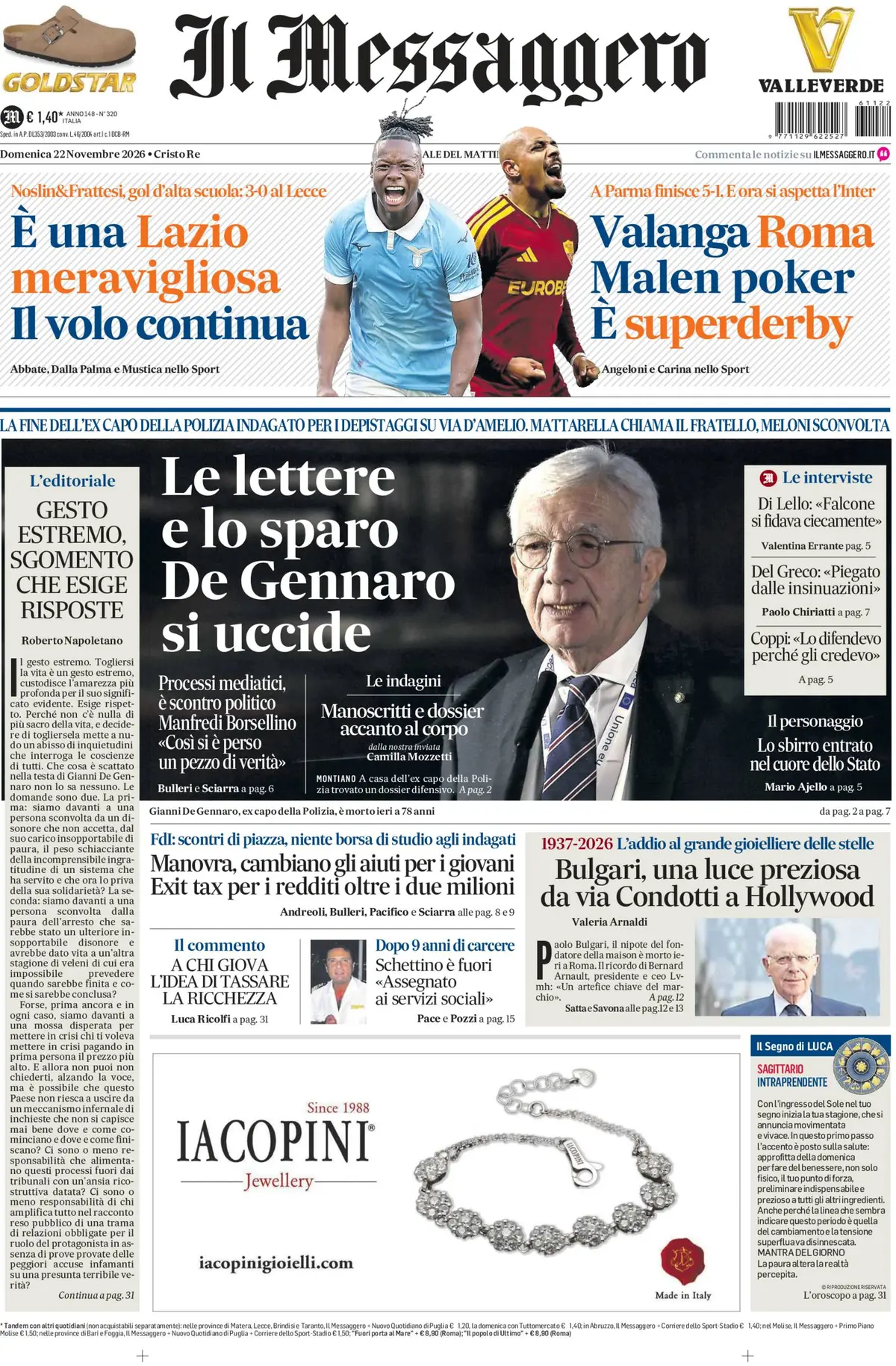
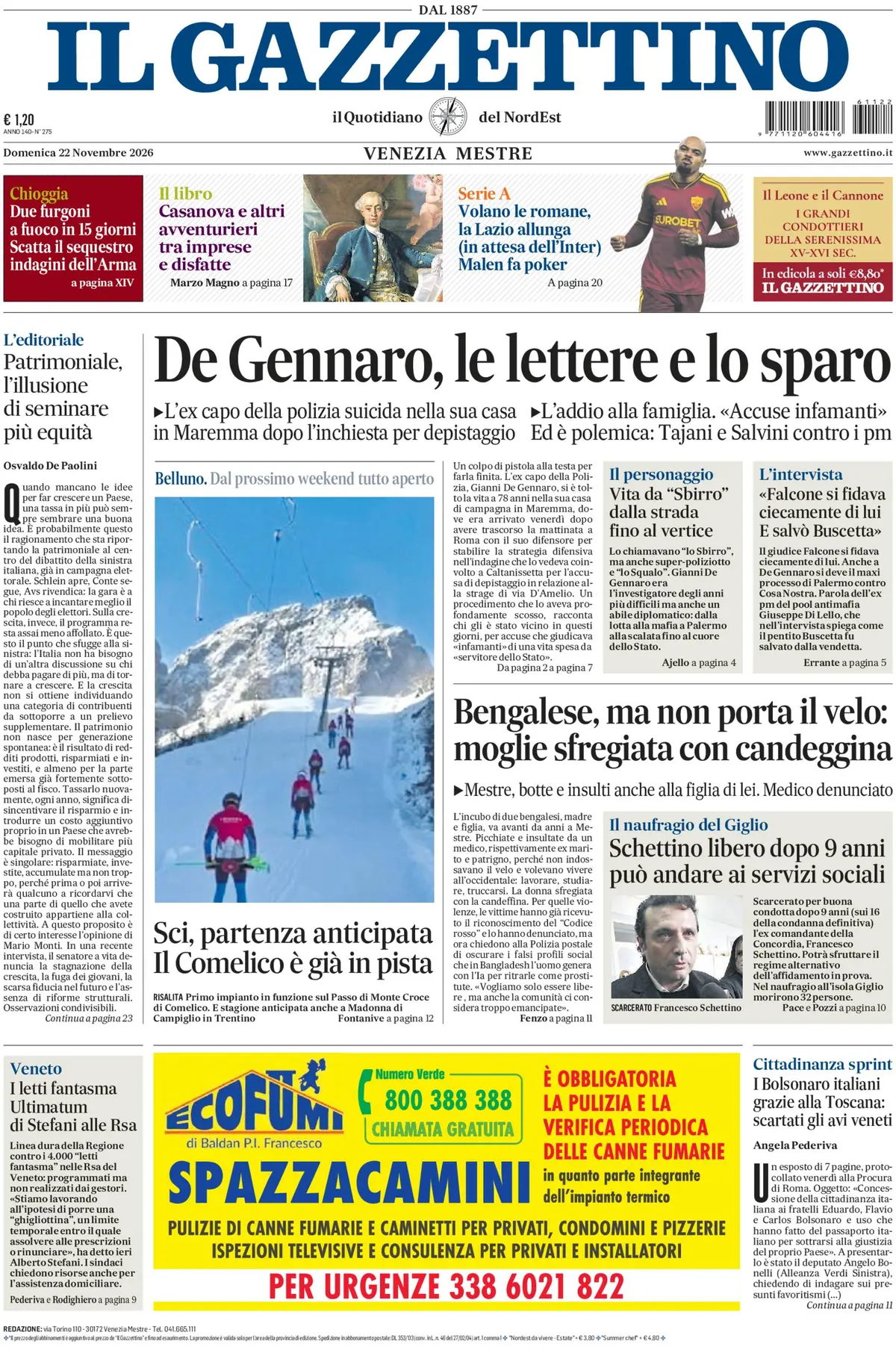
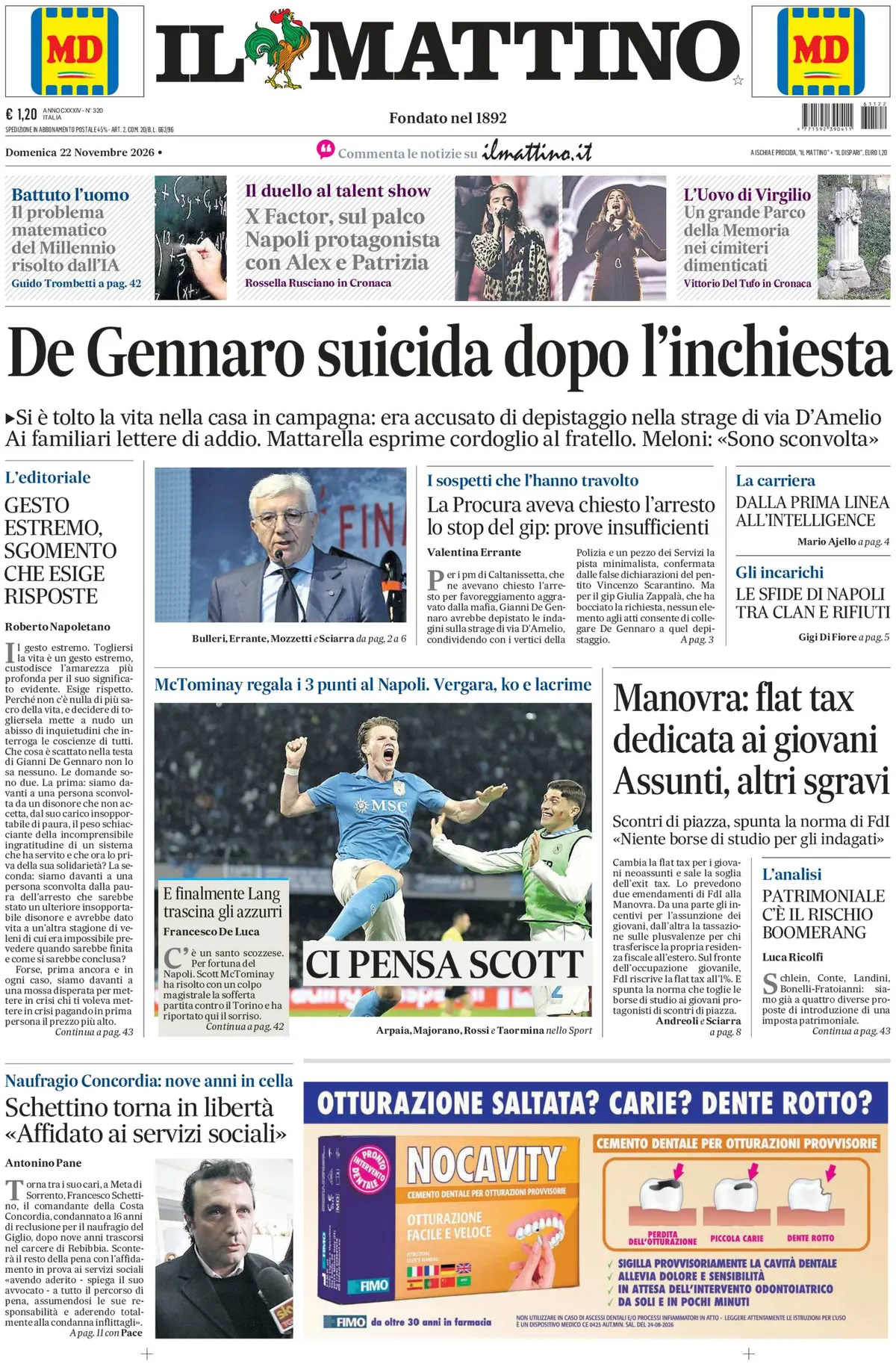
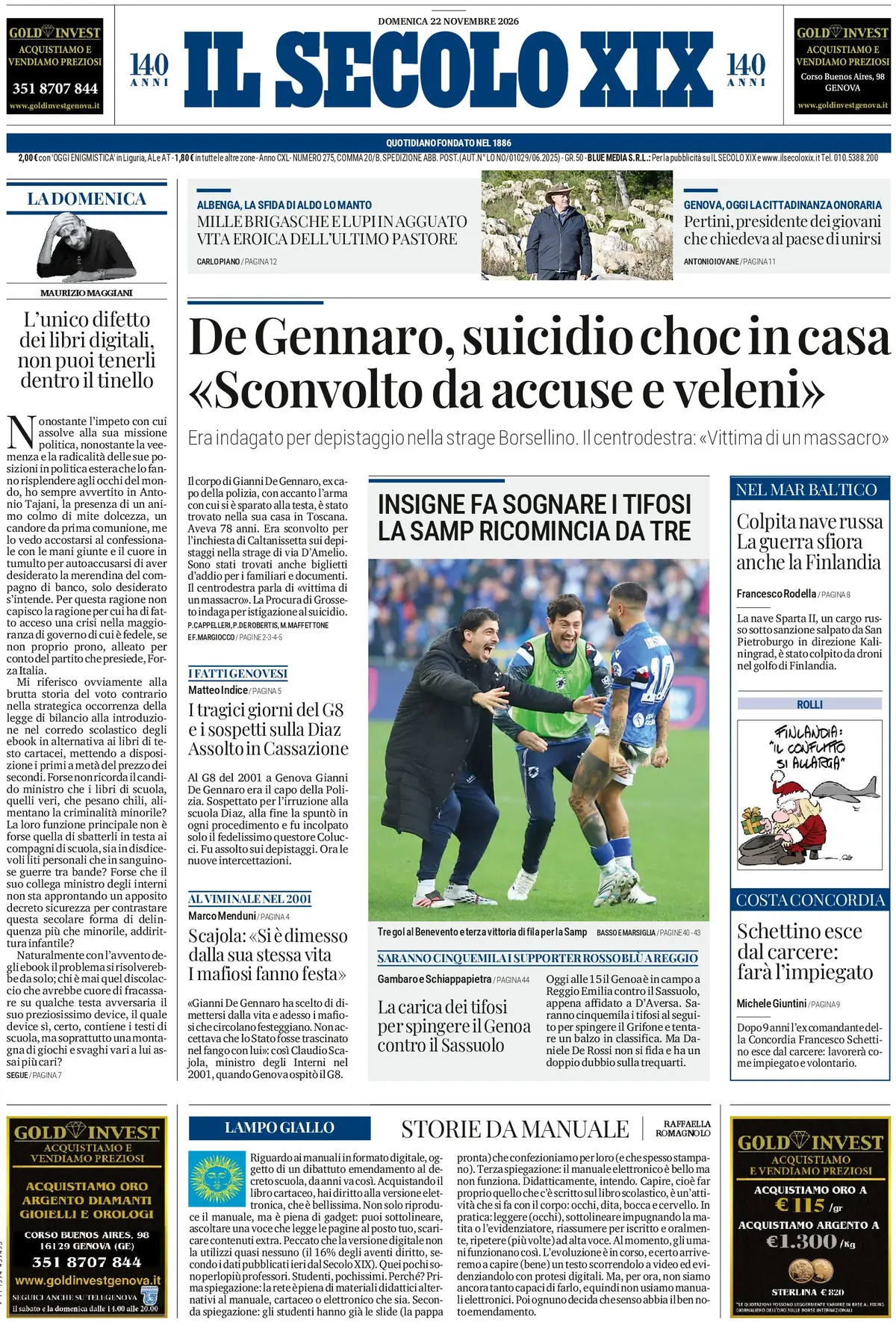
Il Messaggero brings together the letters and the gunshot, a pairing also used by Il Gazzettino. Il Mattino places the death after the investigation in its headline, while Il Secolo XIX highlights the distress associated with accusations and poisonous controversy. The official Corriere and Repubblica homepages consulted for cross-checking also report that documents and letters were found. That does not, by itself, establish that their contents are already known or that they answer the outstanding questions.
## When the headline becomes an interpretation
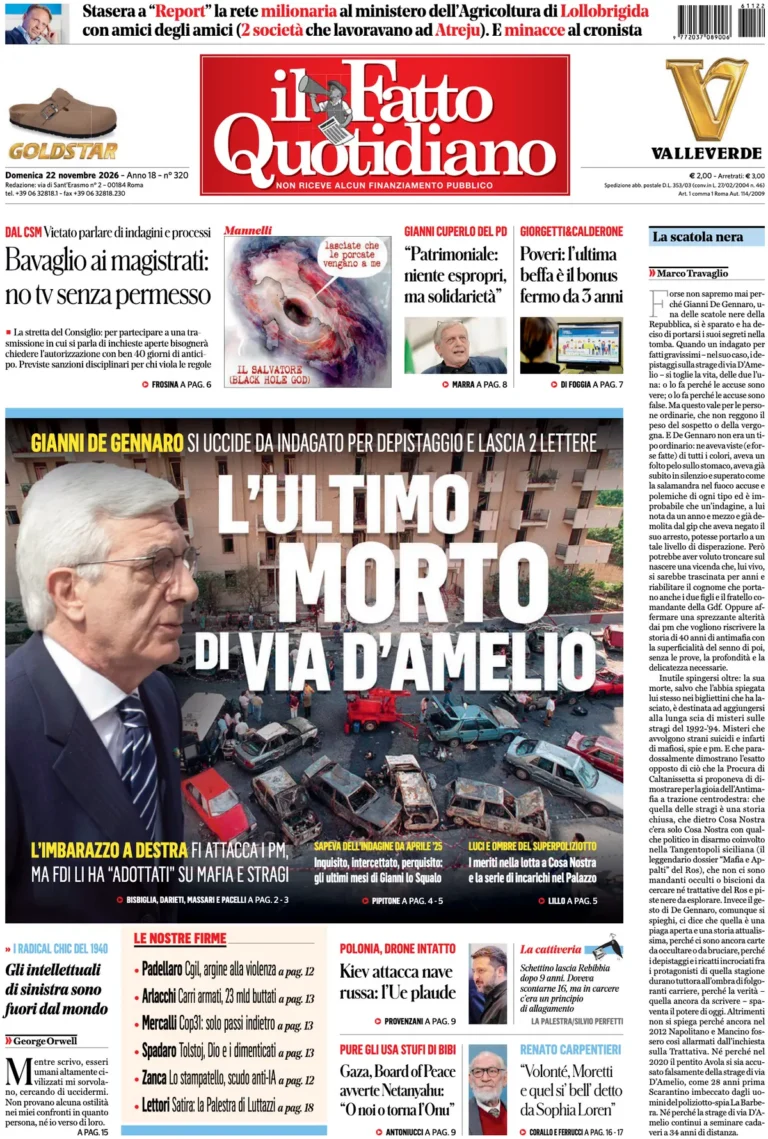
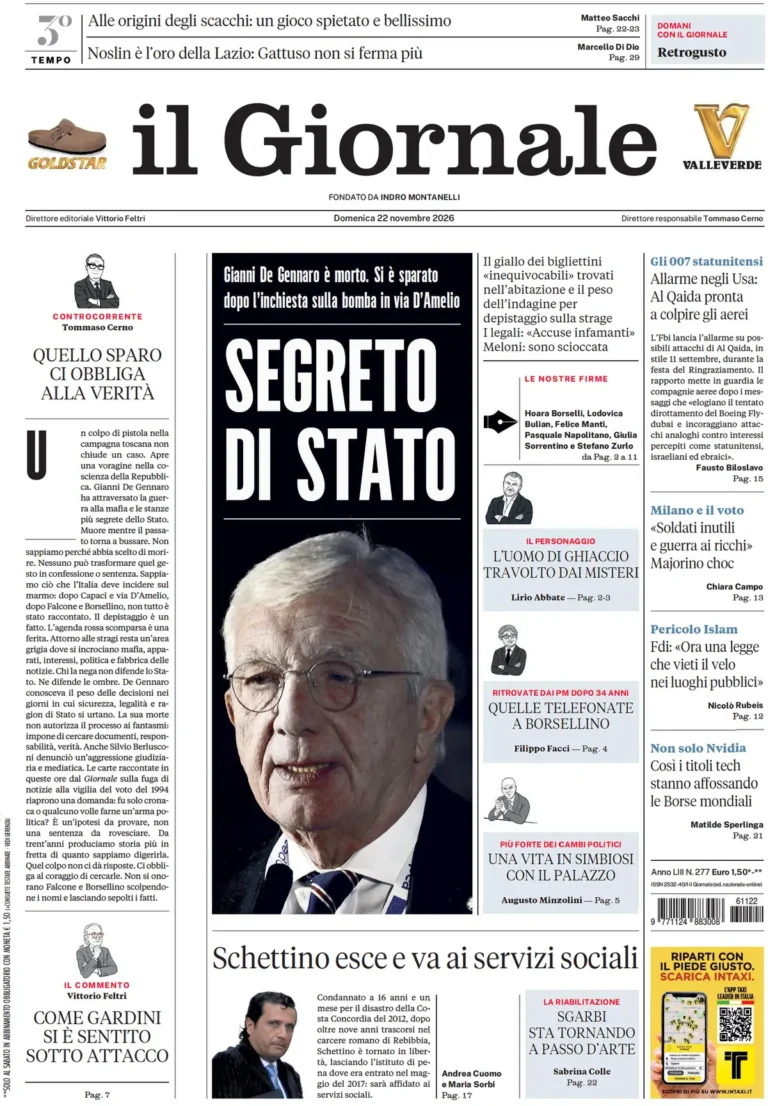
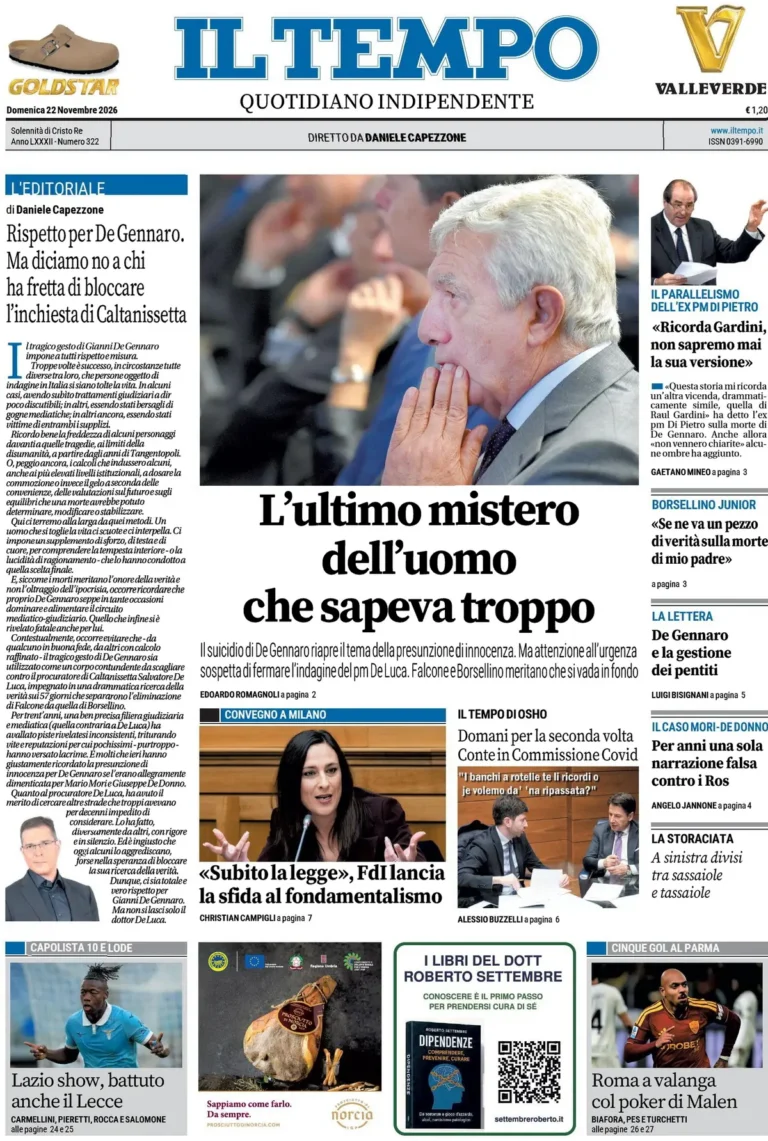
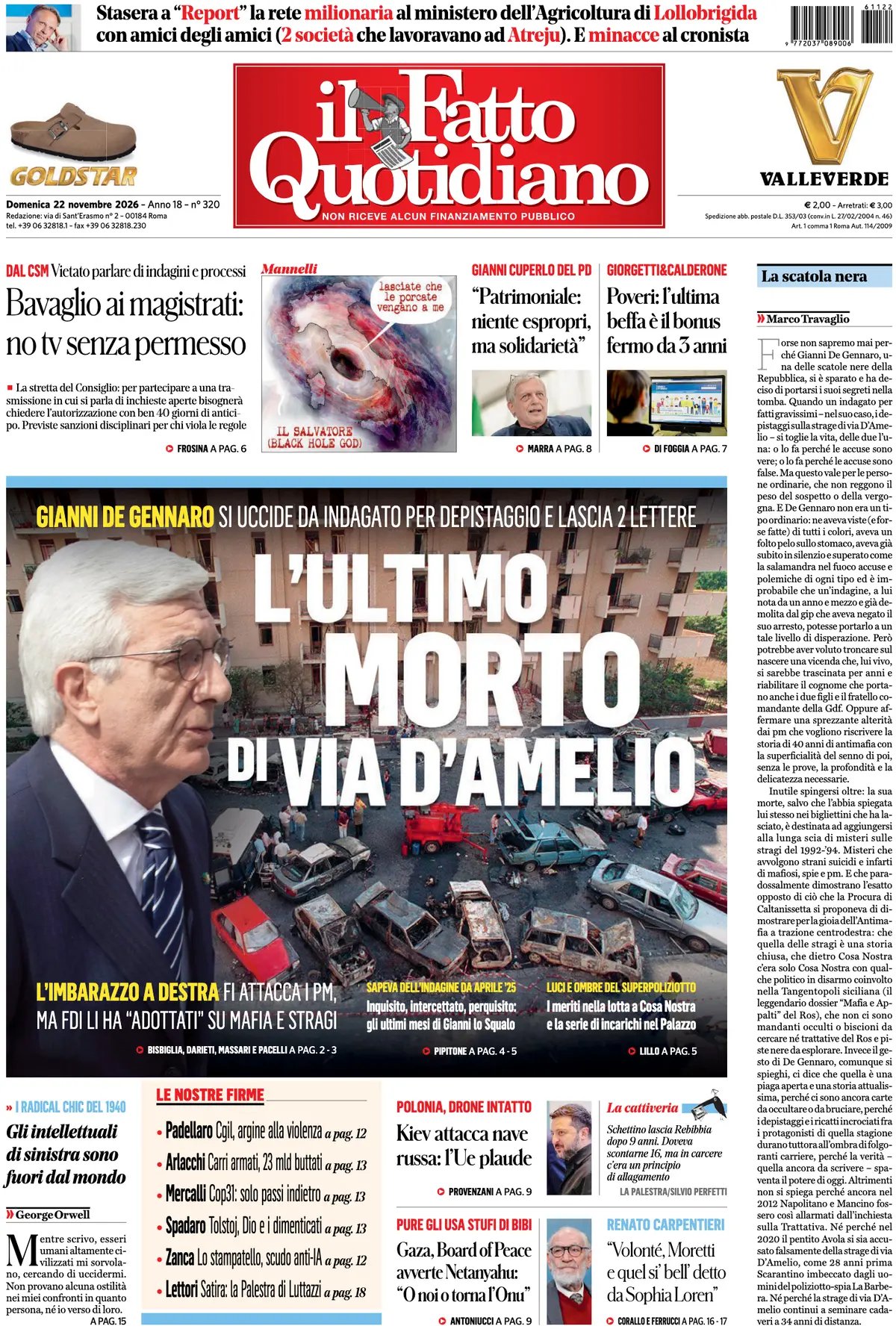
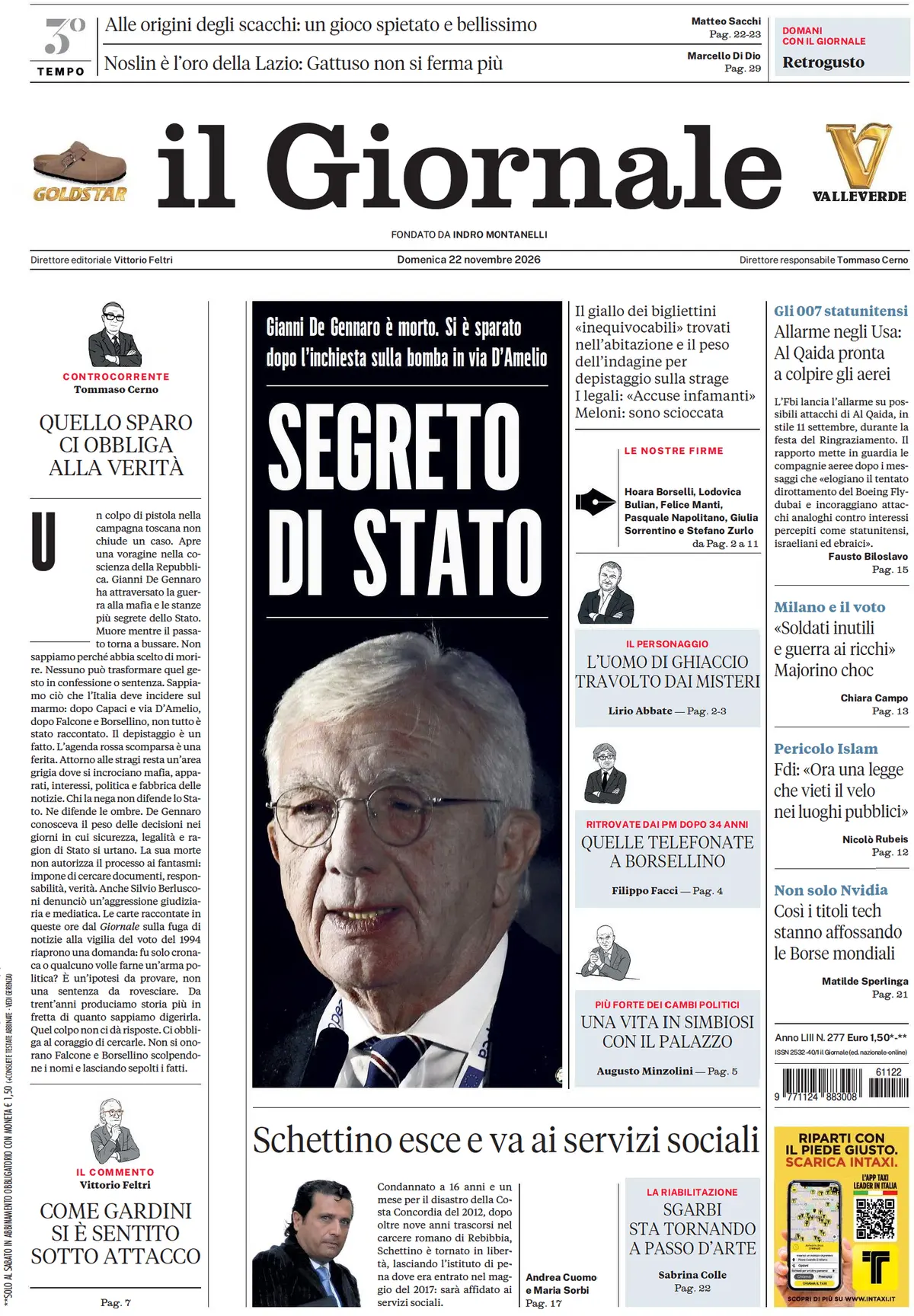
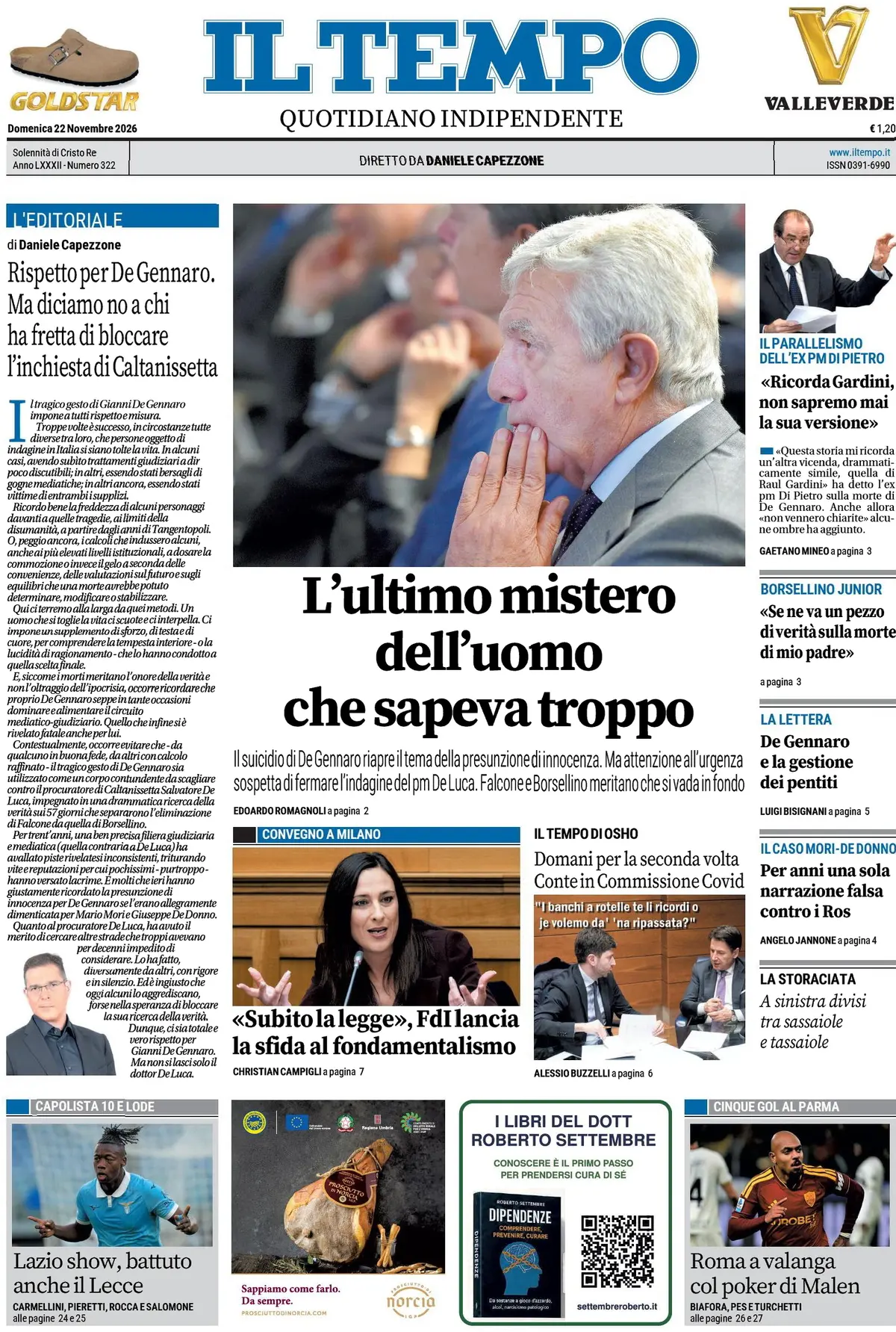
Il Fatto Quotidiano adopts a historical frame by presenting De Gennaro as the latest death linked to the Via D'Amelio story. Il Giornale chooses the idea of a state secret; Il Tempo focuses on the final mystery of a man who knew too much. These formulations evoke the history of institutions and investigations, but do not themselves provide new evidence of responsibility or causation.
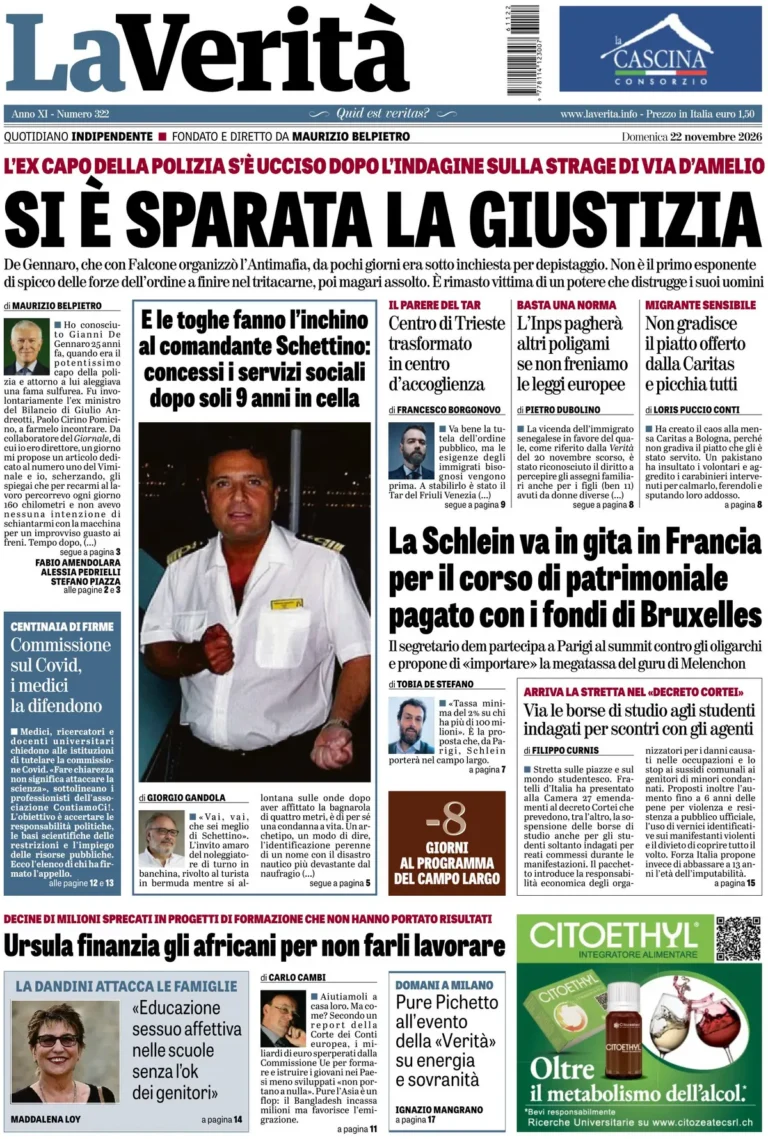
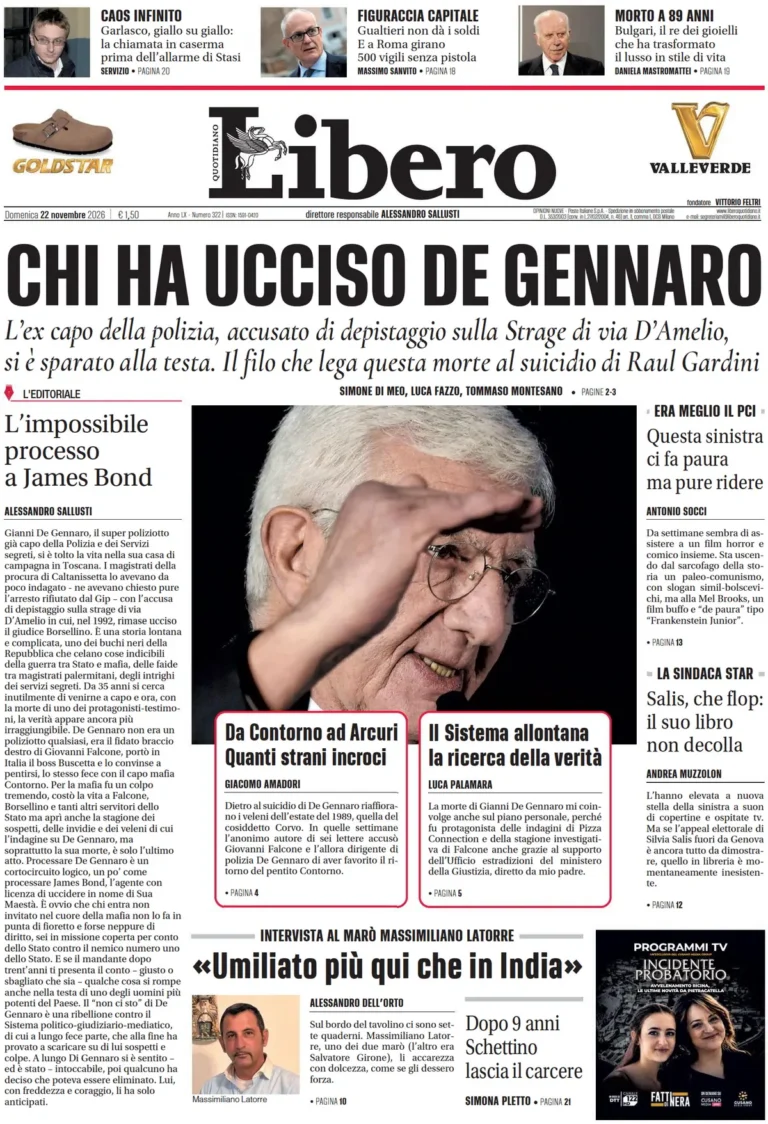
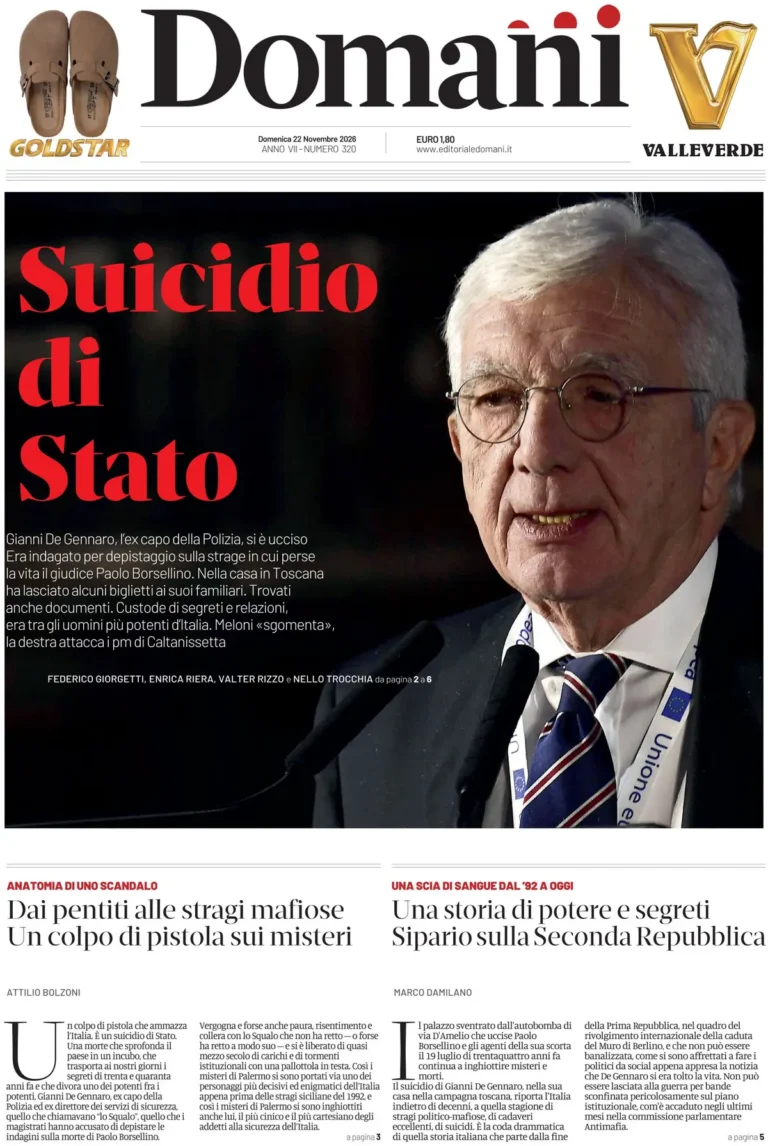
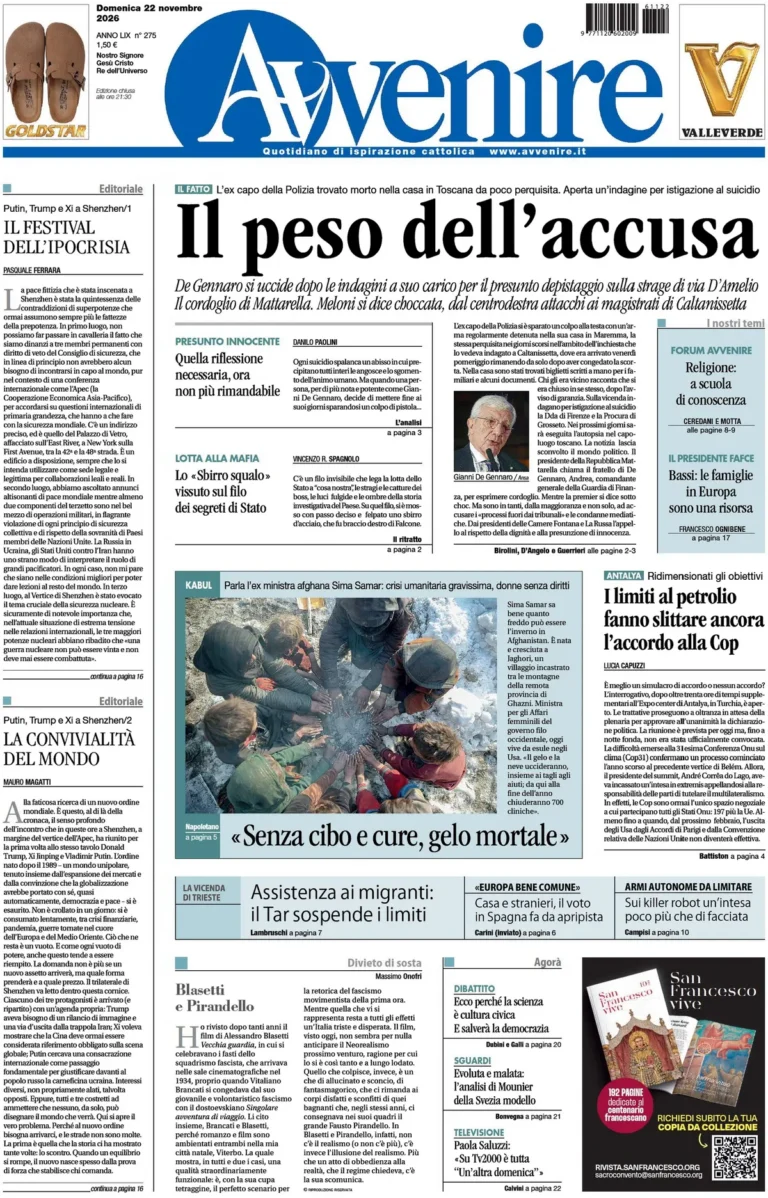
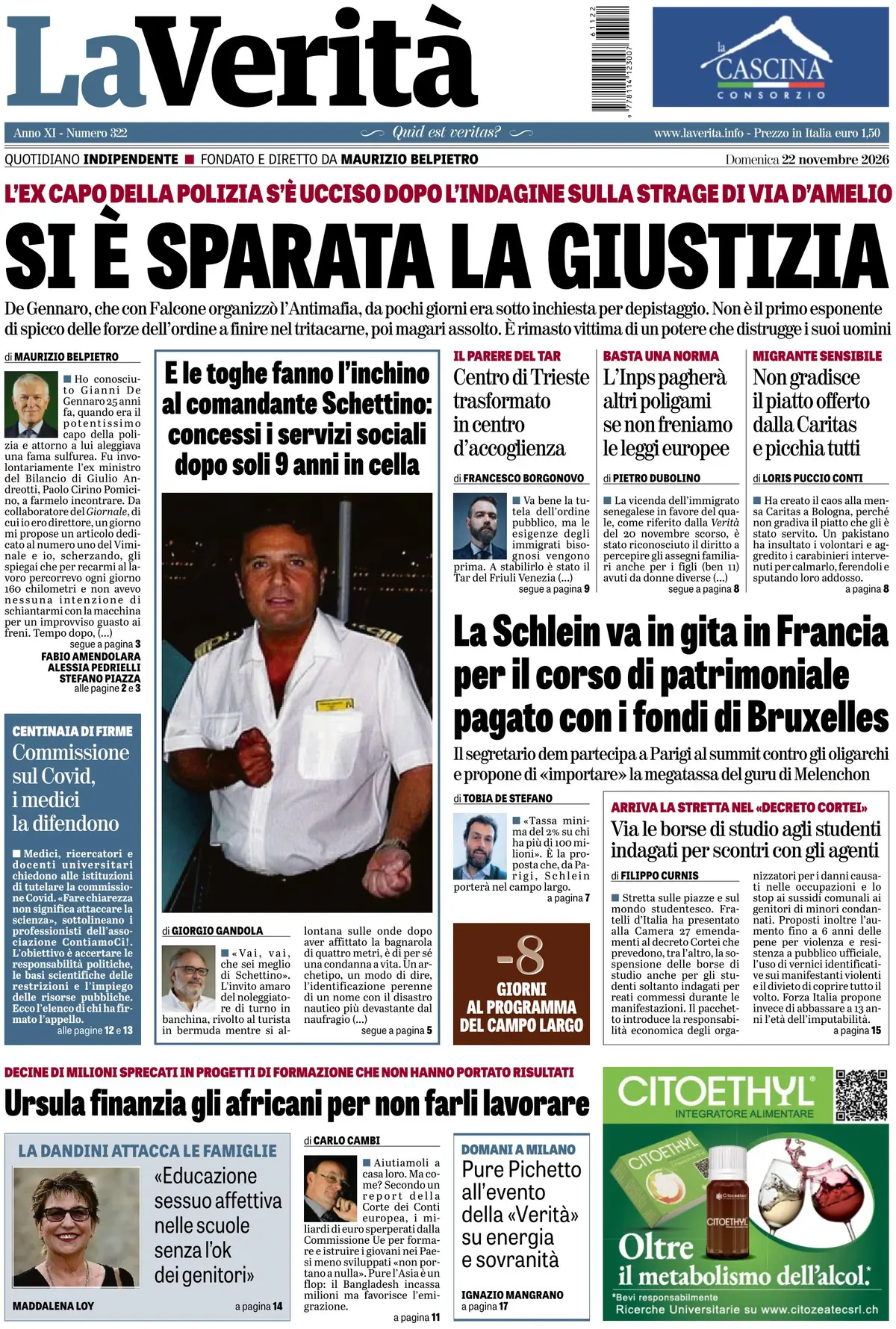
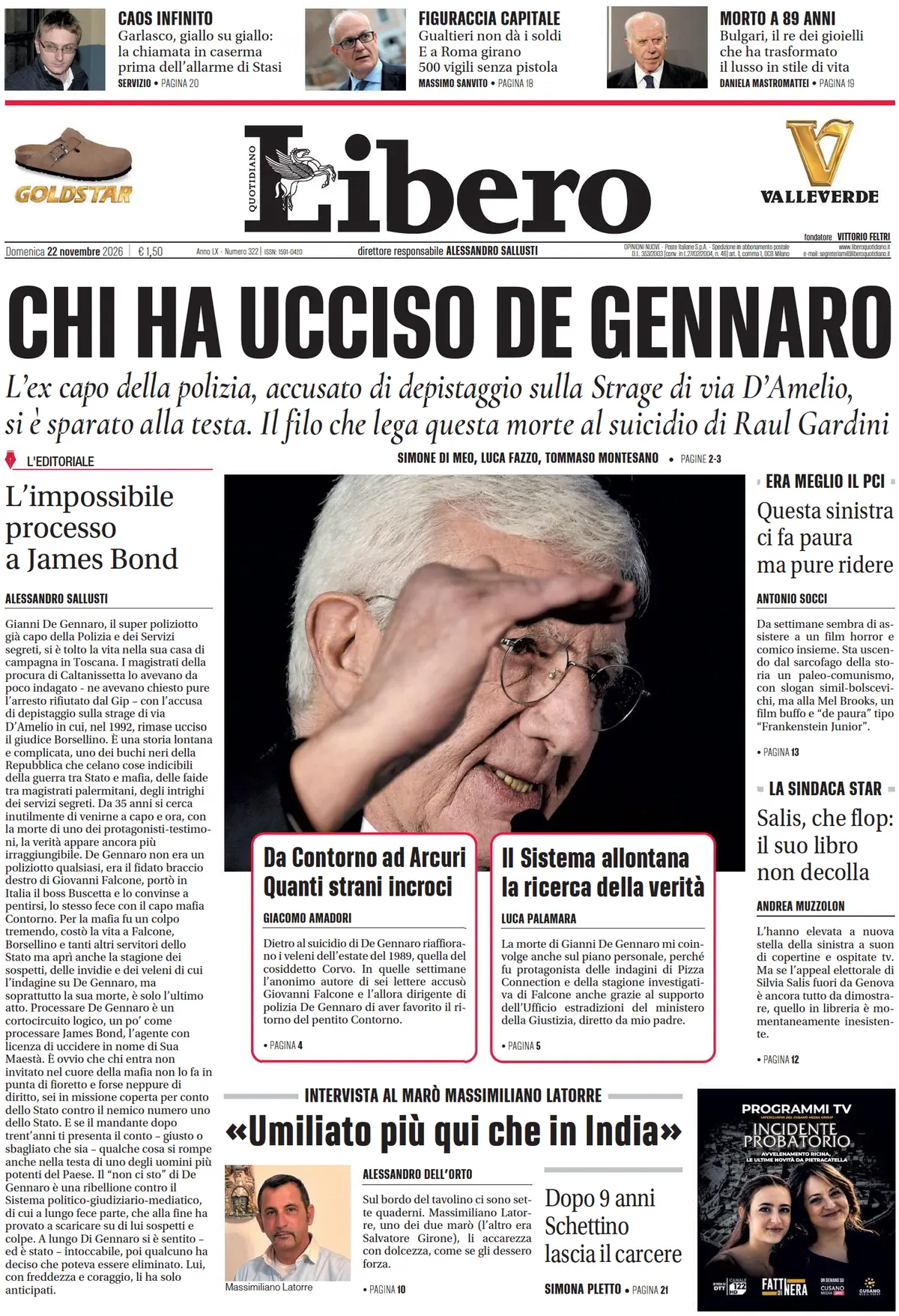
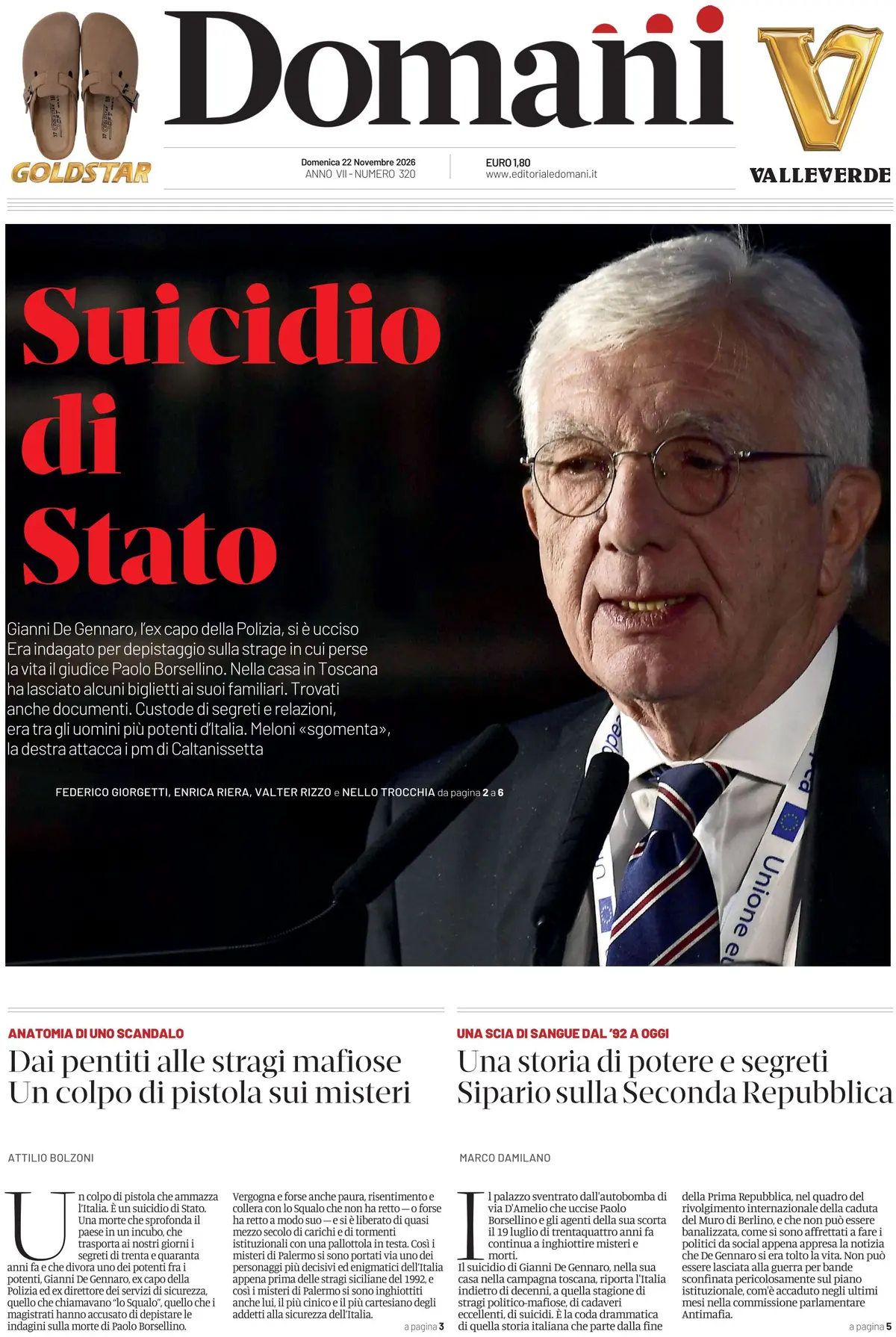
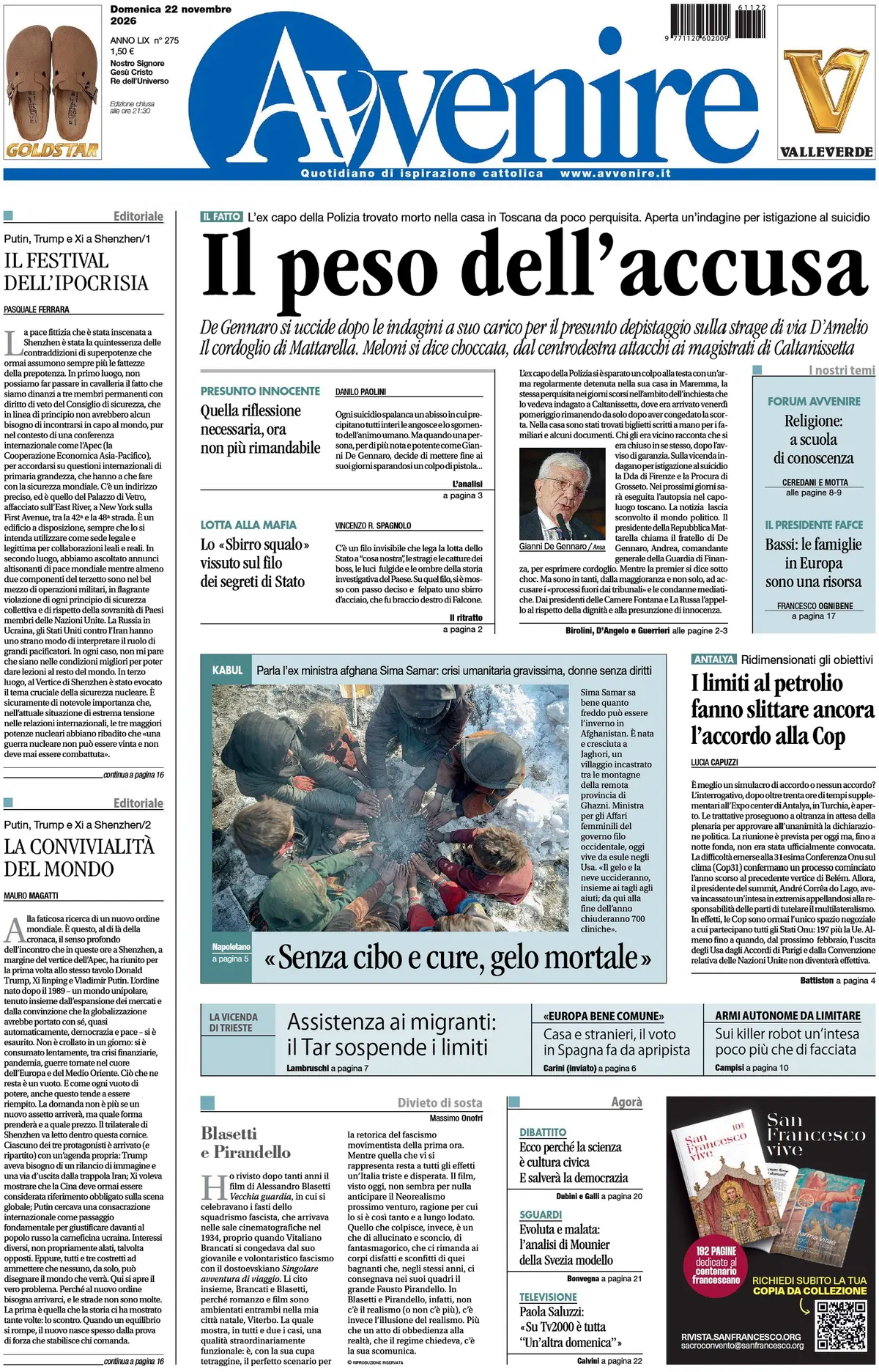
The political frames diverge still more sharply. La Verità uses the metaphor of justice shooting itself; Libero asks who killed De Gennaro; Domani calls the death a suicide of the state. These must be read as the respective newspapers' editorial choices. Libero's question is not a finding of homicide, and references to the state or the justice system are not judicial conclusions. Avvenire's focus on the weight of the accusation instead foregrounds the human dimension of being investigated.
## The openings that retain a different agenda
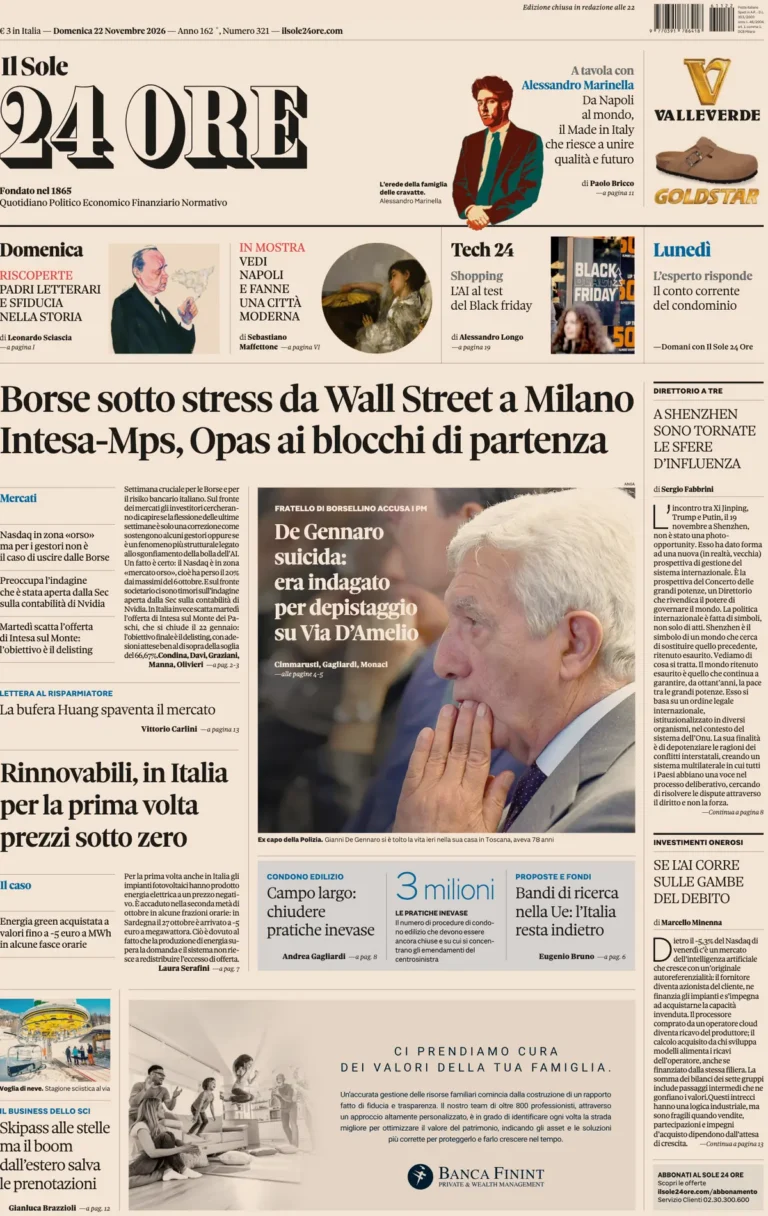
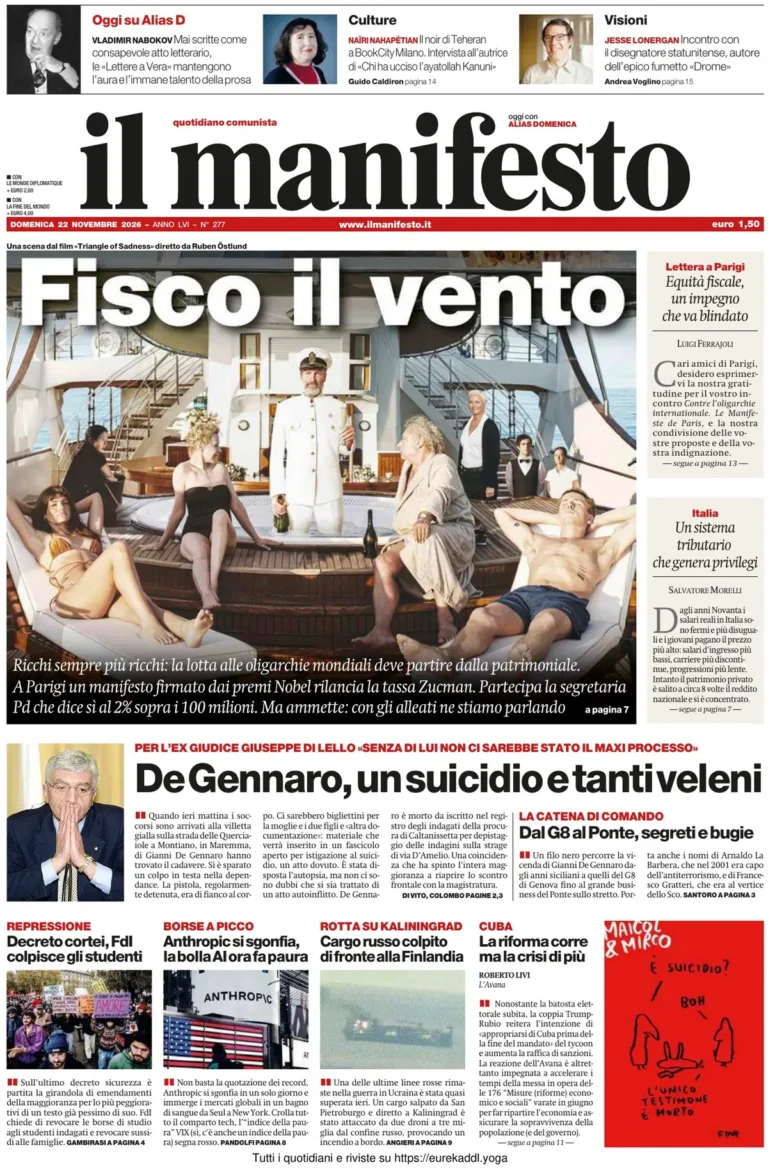
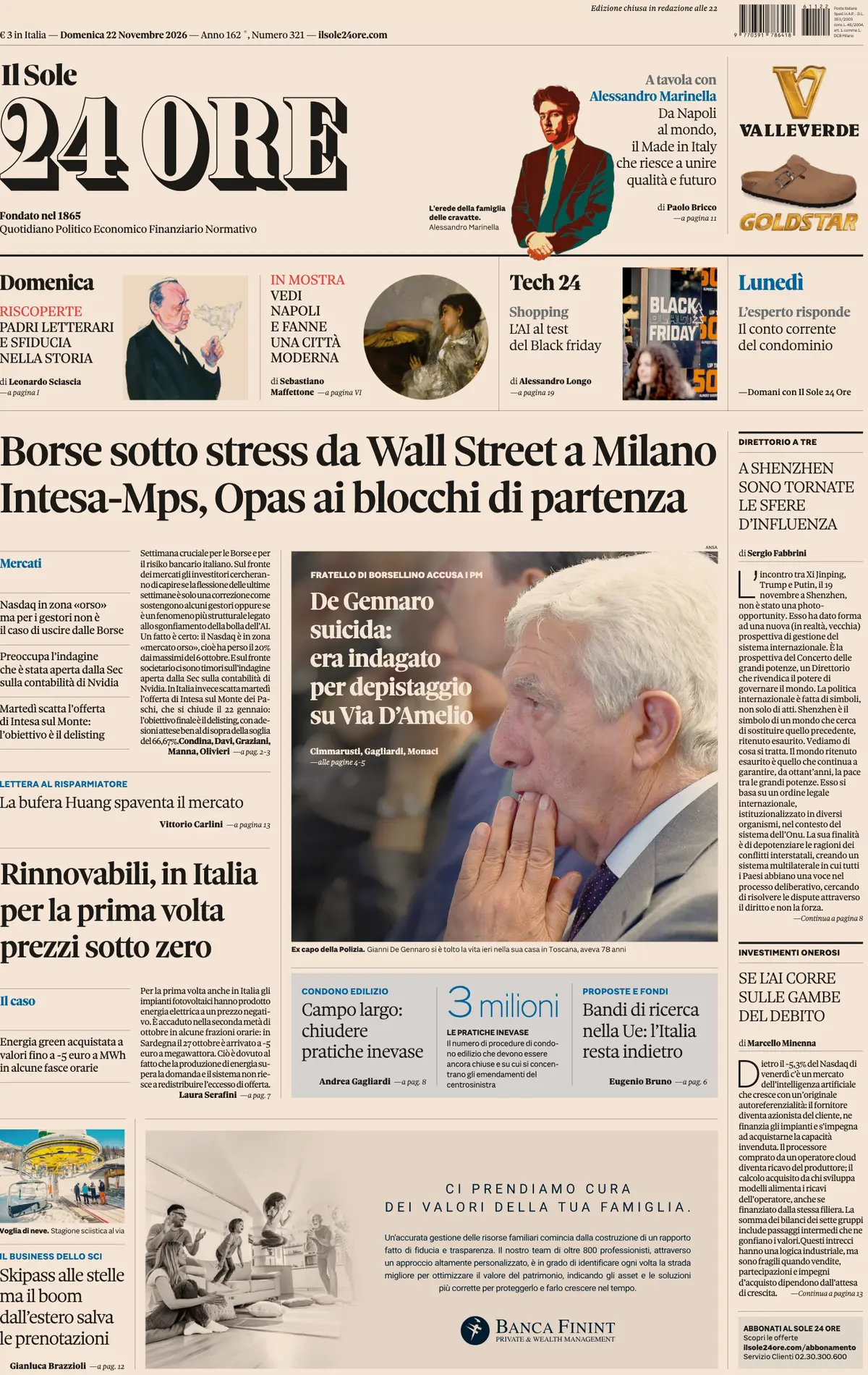
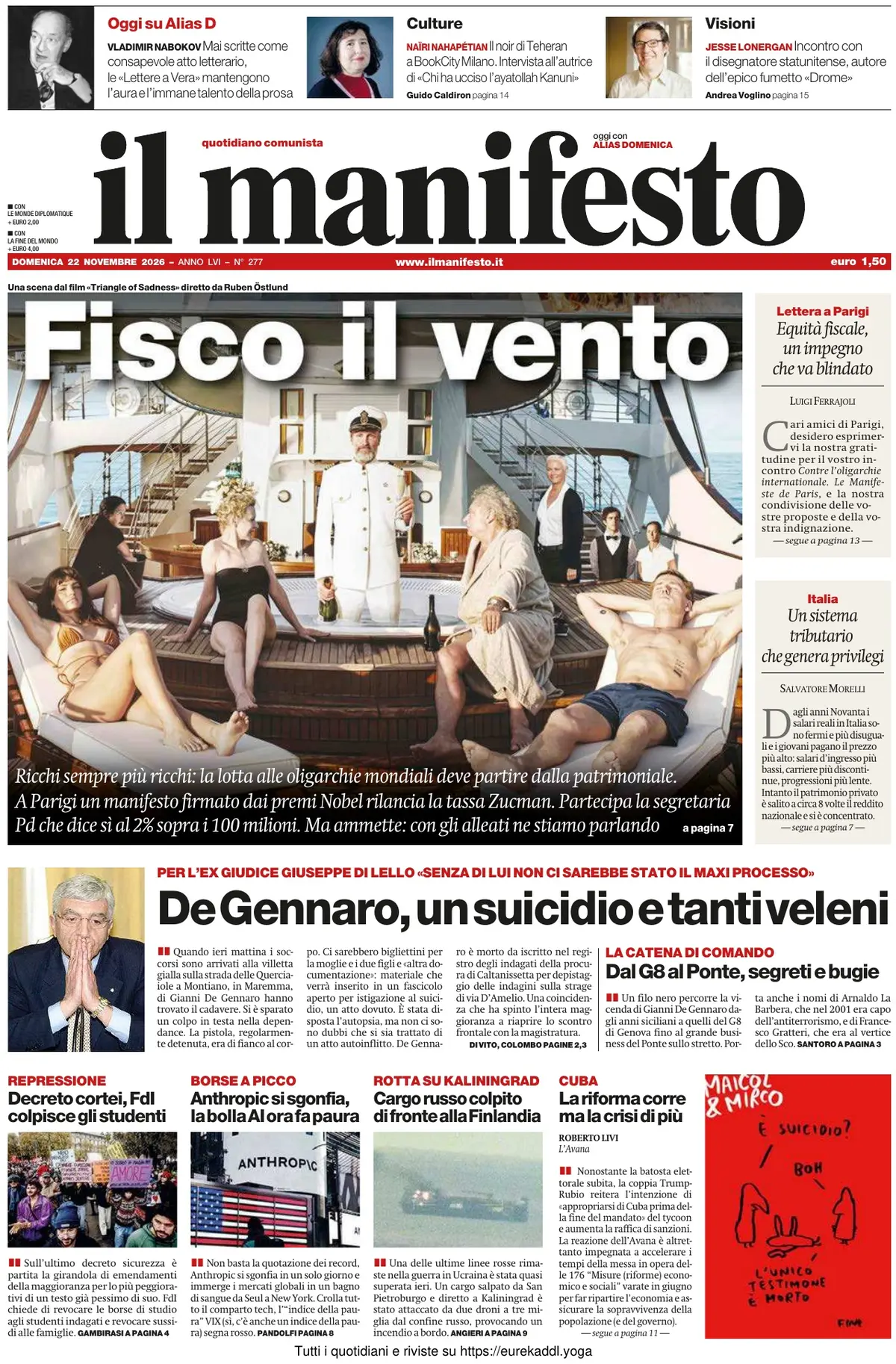
Il Sole 24 Ore keeps financial markets at the centre of its front page, with pressure on exchanges from Wall Street to Milan and the Intesa-Mps transaction. The former police chief's death nevertheless remains highly visible. Il manifesto leads instead on the wealth-tax debate under a headline built around taxation and shifting winds; it gives the De Gennaro story a separate prominent slot about suicide and bitter controversy. Economics and taxation have not disappeared, but share space with a story occupying much of the national news agenda.
## Sport as a second narrative
The upper sections of Il Messaggero and La Stampa also feature Saturday's football and the tennis tournament in Turin. Il Messaggero highlights Lazio and Roma's wins; La Stampa looks ahead to the ATP Finals match between Alcaraz and Zverev. These choices show how general-interest newspapers preserve several layers of coverage even when one story dominates.
The common feature this Sunday is therefore the prominence given to De Gennaro; the essential difference is how that space is used. Keeping reporting, open questions and commentary separate makes it possible to compare newspapers without treating the most emphatic headline as an already established truth.